Montipora
A diverse coral genus with the smallest corallites of any family.

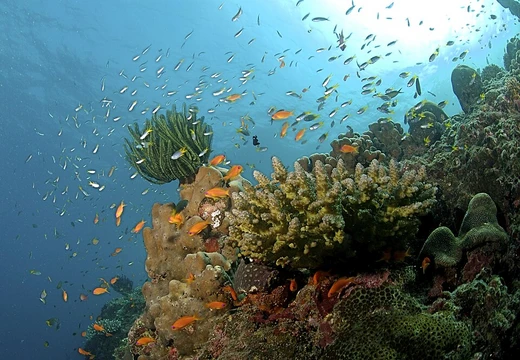
Montipora is a genus of stony corals belonging to the phylum Cnidaria. With eighty-five known species, it ranks as the second most diverse coral genus, behind only Acropora. These corals can take on a variety of growth forms, including submassive, laminar, foliaceous, encrusting, and branching, and it is common for a single colony to combine multiple shapes. When healthy, Montipora appears in colors such as orange, brown, pink, green, blue, purple, yellow, grey, or tan; while most colonies are uniform in color, some species like Montipora spumosa and Montipora verrucosa show a mottled pattern.
Montipora corals have the smallest corallites of any coral family and lack columellae. Both the coenosteum and corallite walls are porous, which can lead to intricate structures. The coenosteum varies by species, making it a key feature for identification. Polyps usually emerge only at night. These corals are often confused with Porites due to visual similarities, but examining corallite structure reveals the difference.
Montipora is common on reefs and in lagoons of the Red Sea, the western Indian Ocean, and the southern Pacific Ocean, but is entirely absent from the Atlantic. Ecologically, they are hermaphroditic broadcast spawners that typically spawn in spring. Their eggs already contain zooxanthellae, passed directly from parent to offspring—a process called vertical transmission. Predators include corallivorous fish like butterflyfish, and they host both endo- and ectoparasites such as Allopodion mirum and Xarifia extensa. An undescribed nudibranch species in the genus Phestilla has also been reported to feed on them. Montipora faces the same environmental stresses as other stony corals, including pollution, sediment, algal overgrowth, and competition from other organisms.
Evolutionarily, a 2007 study showed that Montipora forms a strongly supported genetic clade with Anacropora, making that genus its closest relative. It is believed that Anacropora evolved from Montipora relatively recently.
Quick Facts
- Taxon
- Montipora
Facts from the source article.
Lore & Background
Montipora corals have the smallest corallites of any coral family and lack columellae. Their coenosteum and corallite walls are porous, which can result in elaborate structures. The coenosteum of each species is different, making it useful for identification. Polyps are typically only extended at night. Montipora corals are commonly mistaken for members of the genus Porites based on visual similarities, but Porites can be distinguished by examining corallite structure.
Montipora corals are hermaphroditic broadcast spawners, with spawning typically happening in spring. Their eggs already contain zooxanthellae, so none is obtained from the environment—a process known as direct or vertical transmission. They are preyed upon by corallivorous fish such as butterflyfish, and host endo- and ectoparasites such as Allopodion mirum and Xarifia extensa. A currently undescribed species of nudibranch in the genus Phestilla has also been reported to feed on the genus.
A 2007 study found that the genus Montipora formed a strongly supported clade with Anacropora, making it the genus with the closest genetic relationship. It is thought that Anacropora evolved from Montipora relatively recently.
Reader's Guide
Montipora is notable as the second most species rich coral genus, with eighty five known species. Its members exhibit a wide range of growth morphologies—submassive, laminar, foliaceous, encrusting, and branching—and a single colony may display more than one form. Healthy colonies can be found in many colors, and some species show a mottled appearance. Montipora corals have the smallest corallites of any coral family and lack columellae, with porous coenosteum and corallite walls that can create elaborate structures. The coenosteum is species-specific and useful for identification. They are common on reefs and lagoons of the Red Sea, western Indian Ocean, and southern Pacific Ocean, but are entirely absent in the Atlantic. Ecologically, they are hermaphroditic broadcast spawners that transmit zooxanthellae directly to their eggs. They face predation from butterflyfish and host various parasites, including a currently undescribed nudibranch species. Montipora is susceptible to anthropogenic pollution, sediment, algal growth, and other competitive organisms. Genetically, a 2007 study placed Montipora in a strongly supported clade with Anacropora, suggesting a relatively recent evolutionary divergence.
Frequently Asked Questions
Who is Montipora?
Montipora is a genus of stony corals within the phylum Cnidaria, recognized for having eighty-five described species. It holds the title of the second most species-rich coral genus, trailing only Acropora in overall diversity.
What growth forms can a Montipora colony take?
A single colony may display submassive, laminar, foliaceous, encrusting, or branching shapes, and it is quite common for one individual to blend several of these morphologies at once. This versatility in form is one of the genus's most distinctive traits.
What colors does Montipora come in?
Healthy colonies range across orange, brown, pink, green, blue, purple, yellow, grey, and tan, with most individuals showing a uniform hue. A few species, such as M. spumosa and M. verrucosa, instead display a mottled color pattern rather than a single solid tone.
Where is Montipora found in the wild?
This genus inhabits the Red Sea, the western Indian Ocean, and the southern Pacific Ocean. Notably, it is entirely absent from the Atlantic Ocean.
How does Montipora reproduce?
Montipora species are hermaphroditic broadcast spawners that typically release their gametes into the water column during the spring. This simultaneous external fertilization strategy is shared across the genus.
More in Coral Reefs, Part 2 1-24
Spotted an error? Know more?
Reader corrections go straight into our review queue. Suggest an edit · How this site is sourced