Minerva Reefs
Two submerged atolls disputed by Fiji and Tonga.

The Minerva Reefs, known in Tongan as Ongo Teleki, are two submerged atolls in the Pacific Ocean, situated between Fiji and Tonga. These reefs are contested by Fiji and Tonga, and were once the site of a short-lived micronation called the Republic of Minerva, established by American libertarians.
The name comes from the whaleship *Minerva*, which wrecked on what is now South Minerva in 1829 after departing Sydney. Other vessels met a similar fate, such as the *Strathcona*, which ran aground in 1914 while sailing north from Auckland. In both cases, most crew members escaped in whaleboats or rafts and made it to Fiji’s Lau Islands.
European knowledge of the reefs began with the brig *Rosalia*, commanded by Lieutenant John Garland, which was shipwrecked there in 1807. The *Oriental Navigator* of 1816 recorded this as “Rosaretta Shoal,” warning of a dangerous shoal where the *Rosaretta*, a prize of HMS *Cornwallis*, was lost in 1807 while traveling from Peru to Port Jackson. The description noted the shoal was made of “hard coarse sand and coral,” likely from Garland’s report, and that its full extent was unknown due to the distress of the prize-master. The coordinates given differed from Garland’s: 30°10 South, longitude 173°45' East. The reefs were charted by Captain John Nicholson of the LMS *Haweis* in December 1818, as reported in *The Sydney Gazette* on 30 January 1819. Captain H. M. Denham of HMS *Herald* surveyed them in 1854 and renamed them after the *Minerva*, which had grounded on South Minerva in 1829.
In 1972, real-estate millionaire Michael Oliver, part of the Phoenix Foundation, aimed to create a libertarian nation on the reefs. He formed the Ocean Life Research Foundation, with offices in New York and London and substantial funding. In 1971, a steel tower was built on the reef. The Republic of Minerva declared independence on 19 January 1972, with Morris Davis elected as president. However, Tonga also claimed the area. To enforce its claim, Tonga sent an expedition of 90 prisoners to build an artificial island with permanent structures above the high-tide mark. They arrived on 18 June 1972, raised the Tongan flag on North Minerva the next day, and on South Minerva on 21 June. King Tāufaʻāhau Tupou IV announced annexation on 26 June, renaming North Minerva as Teleki Tokelau and South Minerva as Teleki Tonga.
- Location
- Pacific Ocean between Fiji and Tonga
- Area north reef diameter
- about 6.8 km (4.2 mi)
- Area south reef diameter
- about 4.8 km (3.0 mi)
- Distance from tongatapu group
- about 485 km (301 mi) southwest
- First european discovery year
- 1807
- Shipwreck naming year
- 1829
- Micronation declaration date
- 19 January 1972
- Tongan annexation date
- 26 June 1972
Lore & Background
The reefs were first known to Europeans by the crew of the brig Rosalia, wrecked there in 1807 under Lieutenant John Garland. They were later named after the whaleship Minerva, wrecked on South Minerva in 1829. Captain H. M. Denham of HMS Herald surveyed the reefs in 1854 and gave them the name Minerva. In 1972, real-estate millionaire Michael Oliver of the Phoenix Foundation sought to establish a libertarian micronation, the Republic of Minerva, issuing a declaration of independence on 19 January 1972. Tonga responded by sending an expedition of 90 prisoners to build an artificial island, raising the Tongan flag on North and South Minerva in June 1972, and King Tāufaʻāhau Tupou IV announced annexation on 26 June. In 1982, a group of Americans led by Morris Davis tried to occupy the reefs but were forced off by Tongan troops after three weeks. The territorial dispute continued into the 2000s and 2010s, with Fiji lodging complaints with the International Seabed Authority and destroying navigation equipment, while Tonga sent naval ships to reassert its claim. In 2014, Tonga proposed giving the reefs to Fiji in exchange for the Lau Group.
Reader's Guide
The Minerva Reefs hold significance as a site of repeated shipwrecks, including the brig Rosalia in 1807 and the whaler Minerva in 1829, as well as the Tongan vessel Tuaikaepau in 1962, whose survivors built a raft to reach Fiji. The reefs are also notable for the failed micronation Republic of Minerva, which attempted to establish a libertarian country in 1972 but was thwarted by Tongan annexation. The ongoing territorial dispute between Fiji and Tonga has involved diplomatic complaints, destruction of navigation aids, and naval confrontations, with Tonga proposing a land swap in 2014. Geologically, the reefs are two atolls on dormant volcanic seamounts, with a limestone base from uplifted coral formations. They serve as anchorages for private yachts traveling between New Zealand and Tonga or Fiji, with North Minerva offering a protected lagoon. The legacy of the reefs includes remnants of shipwrecks and platforms, as well as functioning navigation beacons, and they remain a point of contention in maritime claims under UNCLOS.
Did You Know?
- The Republic of Minerva micronation was declared on 19 January 1972 by American Libertarians.
- Tonga annexed the reefs on 26 June 1972 after sending 90 prisoners to build an artificial island.
- In 1962, the Tongan vessel Tuaikaepau wrecked on the reefs; survivors built a raft and sailed to Fiji in one week.
From Wreck to Name: European Encounters with the Reefs
The Minerva Reefs first entered European awareness through tragedy rather than exploration. In 1807, the brig Rosalia, captained by Lieutenant John Garland, was wrecked on the shoals while traveling from Pisco, Peru, to Port Jackson. A 1816 edition of the Oriental Navigator recorded the incident under the name Rosaretta Shoal, describing the formation as hard coarse sand and coral, though it acknowledged that Garland's distressed circumstances meant the shoal's true extent remained uncertain. The coordinates cited in that publication differed from Garland's own report. It was not until December 1818 that Captain John Nicholson of the LMS Haweis placed the reefs on official charts, as reported in The Sydney Gazette the following January. The name in common use today arrived later: in 1854, Captain H. M. Denham of HMS Herald surveyed the site and renamed it after the Australian whaleship Minerva, which had run aground on South Minerva Reef in September 1829 after departing Sydney. The reefs proved persistently deadly to passing vessels. The Strathcona, sailing north out of Auckland in 1914 shortly after her completion, met a similar fate. In each disaster, most surviving crew reached the Lau Islands in Fiji by way of whaleboats or improvised rafts.
The Libertarian Experiment: Republic of Minerva (1971–1972)
In the early 1970s, the Minerva Reefs became the unlikely stage for a libertarian political experiment. Michael Oliver, a real-estate millionaire associated with the Phoenix Foundation, assembled a syndicate called the Ocean Life Research Foundation, which maintained offices in New York City and London and possessed considerable financial resources for the venture. In 1971, the organization erected a steel tower on the reef. On 19 January 1972, a declaration of independence was issued, and Morris Davis was elected president. The experiment, however, collided almost immediately with Tonga's competing sovereignty claim. An expedition of ninety prisoners arrived on 18 June 1972 to construct an artificial island with permanent structures above the high-tide mark. The Tongan flag was raised on North Minerva the following day and on South Minerva on 21 June. King Tāufaʻāhau Tupou IV announced the annexation on 26 June, renaming the atolls Teleki Tokelau and Teleki Tonga. By September 1972, the South Pacific Forum recognized Tonga as the only plausible owner, though it stopped short of explicitly affirming sovereign title. A second American attempt in 1982, again led by Morris Davis, was forcibly ended by Tongan troops after three weeks.
Fiji, Tonga, and the Ongoing Maritime Standoff
The Minerva Reefs remain a flashpoint between Fiji and Tonga. In 2005, Fiji publicly declared that it did not recognize any maritime water claims Tonga might assert around the reefs under UNCLOS agreements, and it lodged a formal complaint with the International Seabed Authority. Tonga responded with a counter-claim. Tensions escalated into physical confrontations: in 2010 the Fijian Navy destroyed navigation lights at the lagoon entrance, and in late May 2011 it again demolished navigational equipment that Tongans had installed. In early June 2011, two Royal Tongan Navy vessels arrived to replace the damaged gear and reassert Tonga's territorial claim; Fijian Navy ships in the vicinity reportedly withdrew as the Tongans approached. Seeking a diplomatic resolution, Tonga's government revealed a proposal in early July 2014 to transfer the Minerva Reefs to Fiji in exchange for the Lau Group of islands. Lands Minister Lord Maʻafu Tukuiʻaulahi announced he would present the offer to Fiji's Foreign Minister, Ratu Inoke Kubuabola. The proposal reflected deep historical ties: some Tongans trace ancestry to Lau, and many Lauans have Tongan roots. The minister himself bears the name of Enele Ma'afu, the Tongan prince who originally staked Tongan claims over parts of Lau.
Submerged Geography and a Yachtmaker's Haven
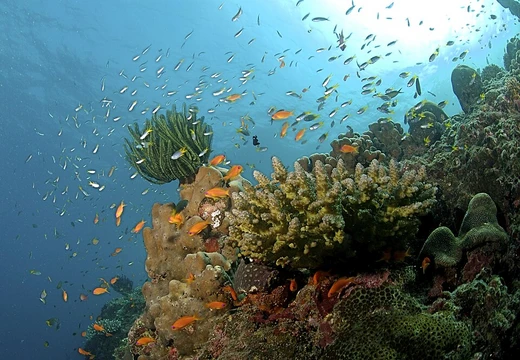
The Minerva Reefs consist of two submerged atolls resting on dormant volcanic seamounts, situated 485 kilometres southwest of the Tongatapu Group. Both sit on a shared submarine platform ranging from 549 to 1,097 metres below sea level. Geologically, they are limestone formations built from uplifted coral elevated by now-inactive volcanic activity. North Minerva is circular with a diameter of about 6.8 kilometres, ringed by a small sand bar that awashes at high tide, and offers a single west-facing pass into a flat, calm lagoon with a deep harbor. South Minerva, shaped like an infinity symbol, is divided into East and West Reefs, each about 4.8 kilometres across, with its eastern lobe partially open to the ocean on the northern side. Remnants of shipwrecks and platforms still dot the atolls alongside functioning navigation beacons. The climate is subtropical, with a warm season from December through April pushing temperatures above 32 °C and a cooler stretch from May to November rarely exceeding 27 °C. Annual rainfall ranges from 1,700 to 2,970 mm, and mean daily humidity hovers around 80 percent. Both reefs serve as anchorages for private yachts traveling between New Zealand and the Fiji-Tonga corridor, with North Minerva offering the more sheltered mooring.
Frequently Asked Questions
What are the Minerva Reefs?
The Minerva Reefs, called Ongo Teleki in Tongan, are a pair of submerged atolls sitting in the Pacific Ocean between Fiji and Tonga. They lie roughly 485 km southwest of the Tongatapu island group.
How did the Minerva Reefs get their name?
The name traces back to the whaleship Minerva, which broke apart on what is now South Minerva in 1829 after leaving Sydney. Other vessels, including the Strathcona in 1914, also met similar fates on these reefs.
What was the Republic of Minerva?
It was a brief micronation declared on the reefs by a group of American libertarians. The state never achieved lasting international recognition and dissolved quickly.
Why are the Minerva Reefs a territorial dispute?
Both Fiji and Tonga claim sovereignty over the two atolls, making them a contested maritime area. The reefs remain fully submerged, which complicates any practical administration of the territory.
How large are the Minerva Reefs?
The northern atoll spans roughly 6.8 km across, while the southern one measures about 4.8 km in diameter. Both sit beneath the ocean surface rather than breaking it.
More in Coral Reefs, Part 2 1-24
Spotted an error? Know more?
Reader corrections go straight into our review queue. Suggest an edit · How this site is sourced