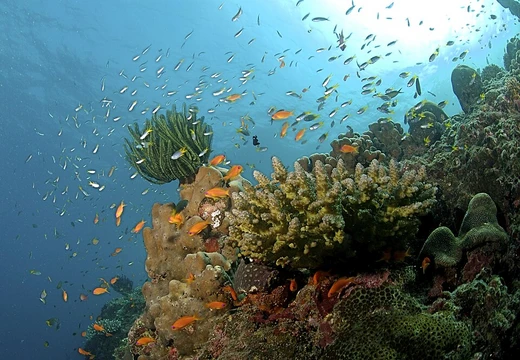
Villa Blanca Reef
Coral reef on Cozumel's west coast, outside national park boundaries.

Villa Blanca Reef is a coral reef on the western side of Cozumel, an island off Mexico’s Yucatán Peninsula. It sits in the northern part of the Mesoamerican Barrier Reef System, the world’s second-largest reef system, and lies just outside Arrecifes de Cozumel National Park. The reef includes both shallow areas and deeper mesophotic ecosystems.
The reef runs along a narrow insular shelf with stepped terraces, dropping from shallow zones to depths over 50 meters. Currents from the Yucatán Channel drive sediment and nutrients through the area. Marine life is diverse: about 42.5% of fish species are shared between shallow and mesophotic zones, including many commercially important ones. In deeper parts, the reef structure relies mainly on calcareous algae, sponges, gorgonians, and black corals, with fewer hard corals. Scleractinian corals like *Montastraea* and *Porites* appear on the seafloor, though hurricane damage has altered coral cover over time. Algae such as *Halimeda* and red coralline algae help build sediment and stabilize the reef.
Because Villa Blanca Reef is close to Cozumel’s main port and city, it faces threats from cruise tourism and coastal development. Hurricanes like Wilma and Emily in 2005 caused significant coral death. A proposed expansion of the cruise port, backed by MSC Cruises, would build a new dock directly over the reef. Environmental groups warn this could increase sedimentation, degrade water quality, and physically damage the reef. Legal efforts initially won a federal injunction that paused construction, but the injunction was later lifted, allowing preparatory work to resume on top of the reef. In response, coral restoration sites have been set up within Villa Blanca Reef to encourage coral growth and boost marine biodiversity while managing tourism impacts.
Quick Facts
- Location
- Caribbean Sea
- Island Type
- Reef
- Country
- Mexico
Facts from the source article.
Lore & Background
Villa Blanca Reef lies on a narrow insular shelf characterized by stepped terraces, with depths ranging from shallow zones down to mesophotic depths exceeding 50 meters. Ocean currents in the region, including the Yucatán Channel current, influence the reef's ecological processes and contribute to sediment transport and nutrient circulation. The reef supports a variety of marine life, with fish communities including species found on both shallow and mesophotic reefs; approximately 42.5% of fish species are shared between these habitats, including many of commercial importance. In the deeper mesophotic areas, the reef structure is mainly formed by calcareous algae, sponges, gorgonians, and black corals, with fewer hard corals. The seafloor communities include species of scleractinian corals such as Montastraea and Porites, though coral cover has changed over time due to hurricanes. The reef also contains various types of algae, including Halimeda and red coralline algae, which help create sediment and stabilize the reef.
Reader's Guide
Villa Blanca Reef is significant as part of the northern sector of the Mesoamerican Barrier Reef System, the second-largest coral reef system in the world. Its location outside Arrecifes de Cozumel National Park places it in a unique regulatory context, exposing it to threats from human activity including cruise tourism and coastal development due to its proximity to Cozumel's main port and city. The reef has been impacted by hurricanes such as Hurricane Wilma and Hurricane Emily in 2005, which caused significant coral mortality. A proposed expansion of Cozumel's cruise port infrastructure, backed by MSC Cruises, has raised concerns about further impacts, including increased sedimentation, water quality degradation, and physical damage to the reef structure. Legal efforts were initially undertaken to halt construction, including a federal injunction that temporarily suspended development activities, but the injunction was later lifted, allowing preparatory work to resume on top of Villa Blanca Reef. In response to these threats, coral restoration sites have been placed within the reef to promote coral growth and enhance marine biodiversity while managing tourism impacts.
Did You Know?
- Villa Blanca Reef lies outside the boundaries of Arrecifes de Cozumel National Park.
- Approximately 42.5% of fish species are shared between the reef's shallow and mesophotic habitats.
- The reef was impacted by Hurricane Wilma and Hurricane Emily in 2005.
- A proposed cruise port expansion backed by MSC Cruises would involve constructing a new dock over the reef.
More in Coral Reefs, Part 2 1-24
Spotted an error? Know more?
Reader corrections go straight into our review queue. Suggest an edit · How this site is sourced