Reef burials
Cremation ash and concrete create seafloor habitats for marine life.

Reef burials are a form of green burial that some view as an eco-friendly option compared to conventional interment. In this practice, cremated remains are blended with concrete to create structures placed on the ocean floor, aiming to boost marine life in areas where it has declined. The concrete is made with fiberglass instead of metal to prevent rust and to match the sea’s pH balance.
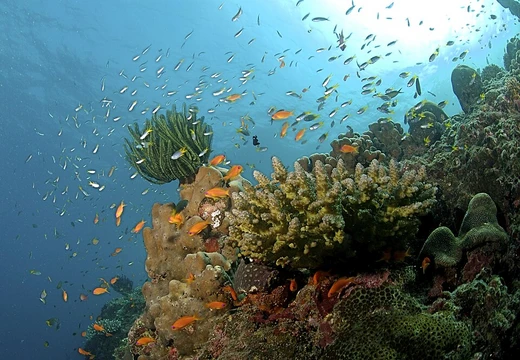
This approach is relatively new and has grown in popularity. Instead of earth burial, a person’s ashes are combined with pH-balanced concrete to form items like perforated domes called “reef balls,” pyramids, or other memorial shapes suited to the location. These structures are placed on the seabed to help restore marine habitats, much like natural coral reefs. In places where the seafloor or coral reefs have been damaged, the structures create new homes for fish and crustaceans, renewing sea life. They are designed to last about 500 years. Reef balls weigh between 800 and 4,000 pounds (360 to 1,810 kg), and their holes keep storm pressure from shifting them on the ocean floor.
Reef burials appeal especially to divers and ocean lovers. Some feel the deceased gain a second life as part of a living reef. Loved ones receive GPS coordinates of the site so they can dive to visit. A memorial plaque lists the person’s name, birth date, and death date. Thousands of reef balls are placed in oceans each year. Large reef memorials can hold multiple sets of remains, allowing families to be included together.
In the United States, over thirty permitted locations exist, including off Florida’s coast at Mexico Beach, Egg Harbor near Atlantic City, New Jersey, and Texas. In the UK, the Crown Estate, which owns the seabed, has designated a square-kilometer site off Weymouth and Portland in the “Wreck to Reef” area, focusing on structures that shelter young lobsters until their shells grow. Artificial reef balls were first used at Jurien Reef in Western Australia in 2015. In Bali, Resting Reef runs two memorial sites in areas hit hard by unsustainable fishing and coral mining, aiming to restore marine ecosystems and create local jobs. In 2019, the first reef burials were placed in the Venice lagoon in Italy using a crane.
Despite rising interest, the process involves cremation and concrete, both with environmental costs.
- Weight range pounds
- 800 to 4,000
- Expected lifespan years
- 500
- Co2 per cremation pounds
- 540
- Concrete global co2 percent
- 8
- Reef ball first use location
- Jurien reef, Western Australia
- Year first reef burial placed venice
- 2019
- Permitted locations us
- more than thirty
Lore & Background
Reef burials are a new burial practice gaining a degree of popularity. Rather than being buried in the earth, a person's remains are cremated and the resulting ash is mixed with pH-balanced concrete to create structures which are placed on the seabed to help restore marine habitats similar to a coral reef. The structures are variously perforated domes called 'reef balls', pyramids, or similar memorial-style shapes chosen to be appropriate to the location. Reef balls weigh between 800 and 4,000 pounds (360 and 1,810 kg) and their perforations ensure that storm pressure doesn't move them out of place on the sea floor. Thousands of reef balls are put into oceans each year. Large reef memorials can accommodate multiple sets of remains, so that families can be included and placed together.
In the United States there are more than thirty permitted locations for reef memorials, including off the coasts of Florida at Mexico Beach, Egg Harbor, near Atlantic City, New Jersey and Texas. In the UK, where the Crown Estate owns the UK seabed, a square-kilometre site off the coast of Weymouth and Portland has been designated for this use in the 'Wreck to Reef' area, with a particular focus on creating structures to shelter young lobsters until their shells grow. Artificial reef balls were first used at Jurien reef in Western Australia in 2015. In Bali, Resting Reef operates two memorial sites in areas severely affected by unsustainable fishing and coral mining. In 2019, the first reef burials were placed in the water using a crane in the Venice lagoon in Italy.
Reader's Guide
Reef burials are notable as a burial practice that aims to restore marine ecosystems in areas where sea life has been diminished. The structures are expected to last for 500 years and are placed on the seafloor to encourage wildlife. Depending on the locations, different varieties of coral can grow on the surface of the concrete, and algae, diatoms, eels, fish and invertebrates will come to live on the structure. Each one contributes to a unique ecosystem and provides a permanent environment for all marine life. In the most established memorial reefs, such as Neptune Memorial Reef in Florida, a marine study survey estimated that the population numbers of wild sea life went from close to zero to thousands in the space of two years. The survey found spotted eagle rays, damsel fish and puffer fish. Since then the numbers have continued to grow; a survey in 2018 showed the reef supports more than 65 different fish, shrimp and lobster and 75 other species including sponges, and corals. The Solace Reef in Weymouth Bay, England is seeded with baby lobsters. Despite growing popularity, the process still involves both cremation and concrete, both of which carry an environmental cost. Cremation, depending on the age of the crematorium, releases around 540 pounds (240 kg) of CO2 and the concrete sector is responsible for 8 percent of global CO2 production.
More in Coral Reefs, Part 2 1-24
Spotted an error? Know more?
Reader corrections go straight into our review queue. Suggest an edit · How this site is sourced