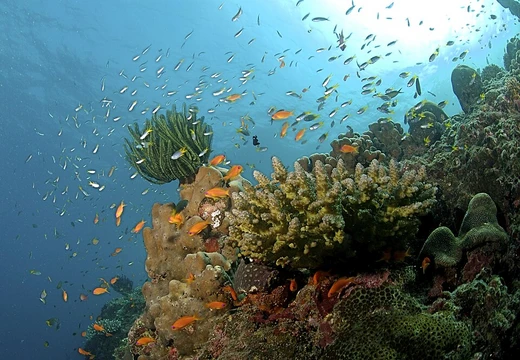
Réunion's coral reef
A fringing reef rich in biodiversity, threatened by pollution and warming.

Réunion's coral reef is a fringing reef located along the western coast of the island, between St Leu and St Gilles. It is notable for its rich biodiversity, supported by nearby deeper ocean currents, and for being a concentrated reef system on an island distant from the continental shelf.
- Location
- Between St Leu and St Gilles, western littoral of Réunion
- Length
- More than 9 km (5.6 mi)
- Width range
- 50 m (160 ft) in the north at St. Gilles to 600 m (2,000 ft) in the south
- Optimal water temperature
- 23 °C to 28 °C
- Coral growth rate
- About 10 cm (3.9 in) per year
- Marine nature reserve created
- 2007
Lore & Background
The coral reef fringing Réunion is a rich habitat for soft and hard corals, which provide food and habitat for abundant fish and shellfish. Corals feed on plankton and algae caught with their tentacles. Their growth cycle is slow, about 10 cm per year. Male corals disseminate sperm cells into the water to fertilize free-floating eggs released by females, but reproduction is limited due to the proportionately small number of male corals.
The reef's integrity has recently become threatened by increased pollution and human exploitation. Ocean water quality and coral health are symbiotic and reflexive; polluted water harms corals, and unhealthy reefs degrade water quality. Studies show that ocean pollution inhibits coral growth and contributes to algal blooms, leading to hypoxic conditions. Coral is very sensitive to water temperature variations; optimal temperature is between 23 °C and 28 °C. Increased surface water temperature from global warming contributes to disease and bleaching, as apparent on Réunion.
Natural cyclones and anthropogenic disturbances such as urban development of catchment areas affect the reefs, increasing nutrient levels via submarine groundwater discharge. This has modified benthic flora and fauna. The reef acts as a natural barrier protecting the coast from typhoons.
Reader's Guide
The coral reef is an important resource for Réunion, sustaining standards of living through tourism profits and influence on real estate prices. Activities organized around the reef include scuba diving, snorkelling, boat trips, fishing, helicopter flights, and paragliding. Diving schools offer training and first dives at reef sites. Local businesses and government organize photography contests and events to boost tourism. A recent study estimated benefits of leisure activities: scuba diving above €2,076,150, water sports above €118,018, and diving boats and submarines above €1,851,614. The reef influences local housing prices; homes close to a beach protected by corals enjoy lower real estate prices.
The Marine Nature Reserve, created in 2007, works to protect the reef by educating visitors, instilling respect for regulations, and decreasing poaching, and has made some progress in returning the reef to health. The International Coral Reef Initiative (ICRI), in partnership with the Global Fund for Coral Reefs (GFCR) and the UN Climate Change High-Level Climate Champions, launched the Coral Reef Breakthrough, aiming to secure the future of at least 125,000 km² of shallow-water tropical coral reefs by 2030 through investments of at least US$12 billion, focusing on mitigating local drivers of loss, doubling protected reef area, accelerating restoration, and securing investments.
Did You Know?
- The reef is more than 9 km long and ranges in width from 50 m to 600 m.
- Optimal water temperature for coral at Réunion is between 23 °C and 28 °C.
- The Marine Nature Reserve was created in 2007 to protect the reef.
- A recent study estimated scuba diving benefits above €2,076,150.
More in Coral Reefs, Part 2 1-24
Spotted an error? Know more?
Reader corrections go straight into our review queue. Suggest an edit · How this site is sourced