Fornax
A southern constellation named for a chemical furnace.

Fornax is a constellation in the southern celestial hemisphere, partly ringed by the celestial river Eridanus. Its name is Latin for furnace. It was named by French astronomer Nicolas Louis de Lacaille in 1756 and is one of the 88 modern constellations. It is notable for containing the Hubble Space Telescope's Ultra-Deep Field, the Fornax Dwarf galaxy, and the Fornax Cluster of galaxies.
Quick Facts
- Abbreviation
- For
- Genitive
- Fornacis
- Pronounce
- ˈ · f · ɔːr · n · æ · k · s, genitive f · ɔːr · ˈ · n · eɪ · s · ᵻ · s
- Symbolism
- the brazier
- Ra
- 3
- Dec
- −30
- Family
- La Caille
- Quadrant
- SQ1
- Areatotal
- 398
- Arearank
- 41st
- Numbermainstars
- 2
- Numberbfstars
- 27
Facts from the source article.
Lore & Background
The French astronomer Nicolas Louis de Lacaille first described the constellation in French as le Fourneau Chymique (the Chemical Furnace) with an alembic and receiver in his early catalogue, before abbreviating it to le Fourneau on his planisphere in 1752, after he had observed and catalogued almost 10,000 southern stars during a two-year stay at the Cape of Good Hope. He devised fourteen new constellations in uncharted regions of the Southern Celestial Hemisphere not visible from Europe. All but one honoured instruments that symbolised the Age of Enlightenment. Lacaille Latinised the name to Fornax Chimiae on his 1763 chart.
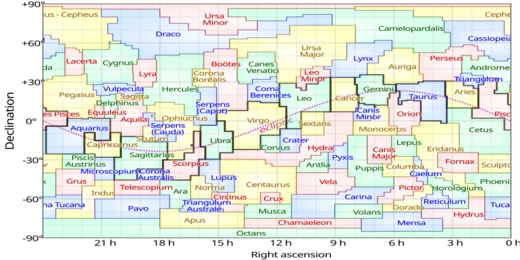
The constellation Eridanus borders Fornax to the east, north and south, while Cetus, Sculptor and Phoenix gird it to the north, west and south respectively. Covering 397.5 square degrees and 0.964% of the night sky, it ranks 41st of the 88 constellations in size. The three-letter abbreviation for the constellation, as adopted by the International Astronomical Union in 1922, is 'For'. The official constellation boundaries, as set by Belgian astronomer Eugène Delporte in 1930, are defined by a polygon of eight segments. In the equatorial coordinate system, the right ascension coordinates of these borders lie between 01h 45m 24.18s and 03h 50m 21.34s, while the declination coordinates are between −23.76° and −39.58°. The whole constellation is visible to observers south of latitude 50°N.
Reader's Guide
Fornax is significant as one of the 14 constellations created by Lacaille to fill uncharted southern skies, symbolizing Enlightenment-era instruments. Its three brightest stars—Alpha, Beta and Nu Fornacis—form a flattened triangle facing south. Alpha Fornacis, the brightest, is a binary star resolvable by small amateur telescopes. The constellation hosts six star systems with exoplanets, including Lambda2 Fornacis with a Neptune-mass planet and HR 858 with at least three transiting exoplanets discovered by TESS. Deep-sky objects include the Fornax Dwarf galaxy, a satellite of the Milky Way; NGC 1316, a relatively close radio galaxy; and the Fornax Cluster, the second richest galaxy cluster within 100 million light-years after the Virgo Cluster. The Hubble Space Telescope's Ultra-Deep Field is located within Fornax, making it a key target for deep-space imaging. The constellation also contains NGC 1360, a planetary nebula five times the size of the Ring Nebula, and the barred spiral galaxies NGC 1097 and NGC 1365, both Seyfert galaxies with active galactic nuclei.
Did You Know?
- Fornax is Latin for furnace and was originally called le Fourneau Chymique (the Chemical Furnace) by Lacaille.
- The Fornax Dwarf galaxy is a small faint satellite galaxy of the Milky Way.
- Six star systems in Fornax have been found to have exoplanets.
More in Constellations, Part 2 1-24
Spotted an error? Know more?
Reader corrections go straight into our review queue. Suggest an edit · How this site is sourced