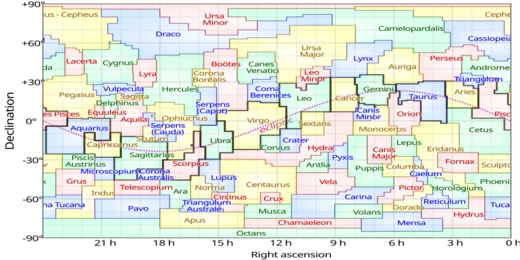
Canis Minor
A small northern constellation representing the lesser dog following Orion.

Canis Minor, a faint constellation in the northern sky, takes its Latin name from the "lesser dog," a counterpart to the larger dog, Canis Major. In classical depictions, both canine figures trail behind the hunter Orion. Ptolemy cataloged it in the second century as one of his 48 constellations, though he identified only a two-star pattern; it survives today among the 88 modern constellations.
Only two stars in Canis Minor outshine the fourth magnitude: Procyon (Alpha Canis Minoris, magnitude 0.34) and Gomeisa (Beta Canis Minoris, magnitude 2.9). Procyon, the eighth-brightest star in the night sky and one of the closest to Earth, is a yellow-white main-sequence star with a white dwarf companion. Gomeisa is a blue-white main-sequence star. Johann Bayer named eight stars here, including Alpha and Beta, while John Flamsteed numbered fourteen. Luyten's Star, a ninth-magnitude red dwarf, is the next closest stellar neighbor to the Solar System within the constellation after Procyon; the two stars lie just 1.12 light-years apart, making Procyon the brightest star in Luyten's Star's sky. The fourth-magnitude HD 66141, an orange giant nearing the end of its life, was found to host a planet in 2012. Two faint deep-sky objects lie within the constellation's borders, and the 11 Canis-Minorids meteor shower occurs in early December.
Though strongly tied to Greek uranography, Canis Minor originated in ancient Mesopotamia. Around 1100 BC, the Three Stars Each tablets called Procyon and Gomeisa MASH.TAB.BA, or "twins." In the later MUL.APIN, this name also applied to the pairs Pi3 and Pi4 Orionis and Zeta and Xi Orionis. The meaning evolved into the twin deities Lulal and Latarak, placed opposite Papsukkal, the True Shepherd of Heaven, in Babylonian mythology. The MUL.APIN also gave Canis Minor the name DAR.LUGAL, defining its position as "the star which stands behind it [Orion]" and depicting the constellation as a rooster; this name may have also referred to Lepus. DAR.LUGAL was also written DAR.MUŠEN and DAR.LUGAL.MUŠEN in Babylonia, and in Akkadian astronomy it was called tarlugallu.
The Greeks called the constellation προκυων (Procyon), meaning "coming before the dog," which Cicero and others transliterated into Latin as Antecanis or Praecanis.
Quick Facts
- Abbreviation
- CMi
- Genitive
- Canis Minoris
- Pronounce
- ˌ · k · eɪ · n · ᵻ · s · _ · ˈ · m · aɪ · n · ər KAY · niss · _ · MY · nər, genitive ˌ · k · eɪ · n · ᵻ · s · _ · m · ᵻ · ˈ · n · ɔr · ᵻ · s KAY · niss · _ · min · OR · iss
- Symbolism
- The Lesser Dog
- Ra
- 07 · 06.4–08 · 11.4
- Dec
- 13.22–−0.36
- Areatotal
- 183
- Arearank
- 71st
- Numbermainstars
- 2
- Numberbfstars
- 14
- Numbernearbystars
- 4
- Brighteststarname
- Procyon (α CMi)
Facts from the source article.
Lore & Background
Though strongly associated with the Classical Greek uranographic tradition, Canis Minor originates from ancient Mesopotamia. Procyon and Gomeisa were called MASH.TAB.BA or 'twins' in the Three Stars Each tablets, dating to around 1100 BC. In the later MUL.APIN, this name was also applied to other star pairs, and the meaning evolved to become the twin deities Lulal and Latarak. Canis Minor was also given the name DAR.LUGAL, representing a rooster, and was called tarlugallu in Akkadian astronomy. Canis Minor was one of the original 48 constellations formulated by Ptolemy in his second-century Almagest, in which it was defined as a specific pattern of stars; Ptolemy identified only two stars and hence no depiction was possible. The Ancient Greeks called the constellation προκυων/Procyon, 'coming before the dog', transliterated into Latin as Antecanis, Praecanis, or variations thereof. Roman writers also appended descriptors such as parvus, minor, or minusculus. In Greek mythology, Canis Minor was sometimes connected with the Teumessian Fox, a beast turned into stone with its hunter Laelaps by Zeus, who placed them in heaven as Canis Major and Canis Minor. Eratosthenes accompanied the Little Dog with Orion, while Hyginus linked the constellation with Maera, a dog owned by Icarius of Athens. The medieval Arabic astronomers maintained the depiction of Canis Minor as a dog; in his Book of the Fixed Stars, Abd al-Rahman al-Sufi included a diagram with a canine figure. The ancient Egyptians thought of this constellation as Anubis, the jackal god.
Reader's Guide
Canis Minor is notable for containing Procyon, the eighth-brightest star in the night sky and one of the closest. Procyon is a yellow-white main-sequence star with a white dwarf companion. The constellation also contains Gomeisa, a blue-white main-sequence star, and Luyten's Star, a ninth-magnitude red dwarf that is the Solar System's next closest stellar neighbour in the constellation after Procyon. Procyon and Luyten's Star are only 1.12 light-years apart, and Procyon would be the brightest star in Luyten's Star's sky. The fourth-magnitude HD 66141, an orange giant, was discovered to have a planet in 2012. There are two faint deep-sky objects within the constellation's borders. The 11 Canis-Minorids are a meteor shower visible in early December. In non-Western astronomy, the stars of Canis Minor lie in the Vermilion Bird of the South in Chinese astronomy, where Procyon, Gomeisa and Eta Canis Minoris form an asterism known as Nánhé, the Southern River. Polynesian peoples often did not recognize Canis Minor as a constellation, but they saw Procyon as significant and gave it various names. The Wardaman people of Australia gave Procyon and Gomeisa the names Magum and Gurumana. Alternative names have been proposed, including Fovea by Johann Bayer, Morus by others, and Felis by Richard A. Proctor in 1870.
Did You Know?
- Canis Minor contains only two stars brighter than fourth magnitude: Procyon and Gomeisa.
- The 11 Canis-Minorids meteor shower can be seen in early December.
- In Babylonian mythology, Canis Minor was associated with the twin deities Lulal and Latarak.
Mesopotamian Roots and Early Astronomical Identity
The story of Canis Minor stretches far beyond the Greek and Roman traditions most Westerners associate with it. In the Three Stars Each tablets, composed around 1100 BC in ancient Mesopotamia, the two principal stars we now call Procyon and Gomeisa were grouped together under the name MASH.TAB.BA, meaning "twins." This pairing was later echoed in the MUL.APIN compendium, where the same term was also applied to star pairs within Orion. Over time, the meaning shifted: the twins became the deities Lulal and Latarak, positioned opposite Papsukkal, the True Shepherd of Heaven, in Babylonian cosmology. The constellation also carried the name DAR.LUGAL, described as "the star which stands behind" Orion, and was depicted as a rooster rather than a dog. In Akkadian astronomy it was known as tarlugallu. These layered identities reveal that what we casually call the "lesser dog" was once a rooster, a pair of divine twins, and a celestial marker of Orion's rear—a far more complex figure than its two-star silhouette suggests.
Greek and Roman Mythological Traditions
Greek and Roman storytellers wove several distinct narratives around this modest pair of stars. One popular account linked the constellation to the Teumessian Fox, a mythical beast that Zeus petrified alongside its relentless hunter Laelaps; the two were set in the sky as Canis Major and Canis Minor respectively. Eratosthenes preferred to pair the Little Dog with Orion the hunter, while Hyginus told of Maera, the loyal hound of Icarius of Athens. When Icarius died, Maera and his daughter Erigone followed in death, and all three were placed among the stars—Erigone as Virgo, Icarius as Boötes, and the faithful dog along the banks of the Milky Way, which the ancients imagined as a heavenly river ensuring he would never thirst. Roman writers elaborated on the name, appending descriptors like parvus, minor, septentrionalis, primus, and sinister to distinguish it from its brighter counterpart. The Greeks themselves called it Procyon, "coming before the dog," a reference to its earlier rising relative to Sirius, and Latin authors rendered this as Antecanis or Praecanis.
Stellar Residents and Deep-Sky Neighbours
Despite its small angular footprint, Canis Minor hosts a remarkable diversity of stellar types. Procyon, the constellation's jewel at magnitude 0.34, ranks as the eighth-brightest star visible from Earth and is a yellow-white main-sequence star accompanied by a white dwarf. Gomeisa, at magnitude 2.9, is a blue-white main-sequence star that contrasts sharply with its brighter neighbour. Luyten's Star, a faint ninth-magnitude red dwarf, holds the distinction of being the Solar System's next closest stellar neighbour after Procyon; the two are separated by merely 1.12 light-years, and from Luyten's Star's vantage point, Procyon would blaze as the sky's brightest star. The fourth-magnitude star HD 66141 has evolved into an orange giant near the end of its life cycle and was found in 2012 to host a planet. Two faint deep-sky objects also fall within the constellation's borders, and the 11 Canis-Minorids meteor shower offers a brief annual display in early December.
Cross-Cultural Interpretations and Alternative Names
Cultures around the world have projected very different images onto these two stars. Medieval Arabic astronomers preserved the canine depiction; al-Sufi's Book of the Fixed Stars included a diagram with a dog superimposed, and he even claimed the star Mirzam—now assigned to Orion—served as the dog's collar. Procyon was called ash-Shi'ra ash-Shamiya, the "Syrian Sirius," while Gomeisa earned the evocative name ash-Shira al-Ghamisa, "the Sirius with bleary eyes." Among Tunisian Merazig shepherds, the combined stars of both Canis constellations form Merzem, a herald of two weeks of scorching dry weather. In Chinese astronomy, Procyon, Gomeisa, and Eta Canis Minoris form Nánhé, the Southern River, paired with the Northern River in Gemini, while other stars contribute to Shuiwei, a water-level marker. Korean tradition recognized four of the constellation's stars as "the position of the water." The ancient Egyptians saw Anubis, the jackal god, in the pattern. Western alternatives have included Bayer's Fovea, "The Pit," Proctor's Felis, "the Cat," and Caesius's link to Tobias's dog.
More in Constellations, Part 2 1-24
Spotted an error? Know more?
Reader corrections go straight into our review queue. Suggest an edit · How this site is sourced