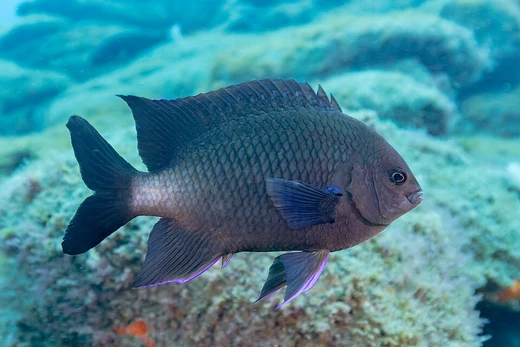
Pomacentridae
A family of hardy, colorful reef fish including clownfish and damselfish.

Hectonichus · CC BY-SA 3.0
Pomacentridae is a family of ray-finned fish, comprising the damselfishes and clownfishes. They are noted for their hardy constitutions and territoriality, and many are brightly colored, making them popular in aquaria. They are primarily marine, though a few species inhabit freshwater and brackish environments.
Quick Facts
- Taxon
- Pomacentridae
- Type Species
- Pomacentrus pavo
- Type Species Authority
- Bloch, 1787
Facts from the source article.
Lore & Background
The family Pomacentridae was formerly placed in the order Perciformes or as indeterminate percomorphs, but is now considered basal blenniiforms. The earliest known fossil damselfish is †Chaychanus from the Early Paleocene of Chiapas, Mexico. The name derives from Greek words meaning 'cover' and 'sting', referring to serrations on the opercular bones. Traditionally classified in four subfamilies (Amphiprioninae, Chrominae, Lepidozyginae, Pomacentrinae), more recent phylogenetic analyses instead support the subfamilies Chrominae, Glyphisodontinae, Microspathodontinae, and Pomacentrinae, with clownfishes nested within the latter. Most species are found on or near coral reefs in the Indo-West Pacific, with the greatest concentration from the Philippines to Australia. Some species are native to freshwater or brackish estuarine environments. Bottom-dwelling species are territorial and some encourage algae growth, earning the name 'farmerfish'. They display a wide range of colors, with young often brighter than adults. They are omnivorous or herbivorous, feeding on algae, plankton, and small crustaceans; only a few genera eat coral. They engage in symbiotic relationships with cleaner gobies and clownfish with anemones.
Reader's Guide
Pomacentridae holds significance as a diverse and ecologically important family of reef fish. The article notes that around 385 species are classified in about 31 genera, with clownfishes (Amphiprion and Premnas) and damselfishes (e.g., Pomacentrus) being the most familiar groups. Their hardy constitutions and bright colors have made them popular in aquaria. The family's territorial behavior, including algae farming by bottom-dwelling species, shapes reef community structure. Their lifecycle involves male nest preparation, courtship displays, external fertilization, and male guarding of eggs for two to seven days. The pelagic larval stage lasts from a week to over a month. In captivity they live up to 18 years, but probably not longer than 10 to 12 years in the wild. The earliest known fossil, †Chaychanus from the Early Paleocene, indicates an ancient lineage. The family's classification has been revised, with recent phylogenetic analyses supporting four subfamilies distinct from traditional groupings. Their distribution is primarily tropical, with the Indo-West Pacific hosting the greatest species concentration, and some species inhabit freshwater or brackish environments. Their symbiotic relationships, such as with cleaner gobies and anemones, highlight their role in reef ecosystems.
Did You Know?
- Some pomacentrids are called 'farmerfish' because they encourage thick mats of algae within their territories.
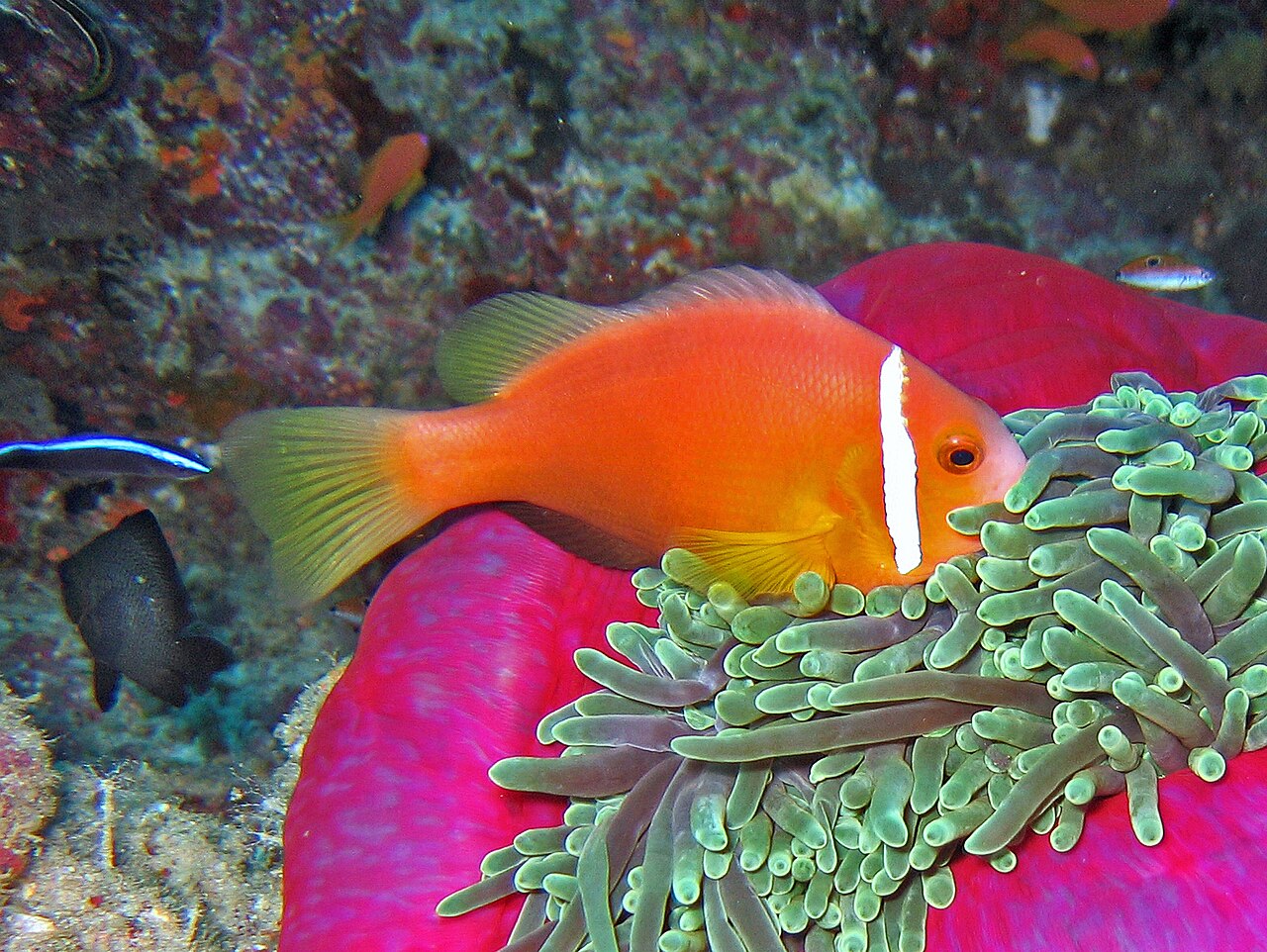
- Clownfish have mutualistic relationships with anemones, which protect them while they rid the anemone of parasites.
Taxonomic Identity and the Name Behind the Family
Pomacentridae encompasses roughly 385 species spread across approximately 31 genera, making it one of the more diverse families within the ray-finned fishes. For much of the twentieth century, these fish were slotted into the broad order Perciformes or left as indeterminate percomorphs, but modern phylogenetic work has repositioned them as basal members of the blenniiform group. The family's very name carries a vivid anatomical reference: the Greek poma, meaning "cover," alludes to the opercula, while kentron, meaning "sting," points to the serrated margins found along those opercular bones in many species. Within the family, two genera—Amphiprion and Premnas—carry the popular name clownfish or anemonefish, while the remaining genera, including the well-known Pomacentrus, are generally called damselfish. Subfamily-level classification has also shifted; older schemes recognized four groups including Amphiprioninae and Lepidozyginae, whereas newer analyses place the clownfishes inside Pomacentrinae alongside Chrominae, Glyphisodontinae, and Microspathodontinae. The family's deep evolutionary roots are hinted at by †Chaychanus, a fossil damselfish recovered from Early Paleocene deposits in Chiapas, Mexico.
Reef Dependency and the Art of Algae Farming
The overwhelming majority of pomacentrids call tropical marine waters home, with their densest concentrations stretching from East Africa across the Indo-West Pacific to Polynesia. The stretch between the Philippines and Australia harbors the richest assemblage of species, while the Atlantic and eastern Pacific hold the remainder. A handful of species, such as Neopomacentrus aquadulcis and Stegastes otophorus, have adapted to freshwater or brackish estuaries, and a few venture into subtropical zones. In terms of depth, most species inhabit shallow reef zones between roughly two and fifteen meters, though outliers like Chromis abyssus have been recorded beyond one hundred meters. What unites nearly all of them is a tight dependency on living coral for shelter; many simply cannot persist without it. They are also remarkably site-specific, each species favoring particular reef microhabitats—sandy lagoons, steep slopes, or wave-battered ledges. One of their most ecologically significant behaviors is what aquarists call "algae farming." Bottom-dwelling individuals stake out and fiercely defend a patch of reef, and by excluding other fish, they inadvertently cultivate thick mats of algae within their territory, earning them the common name farmerfish.
Form, Color, and Symbiotic Partnerships
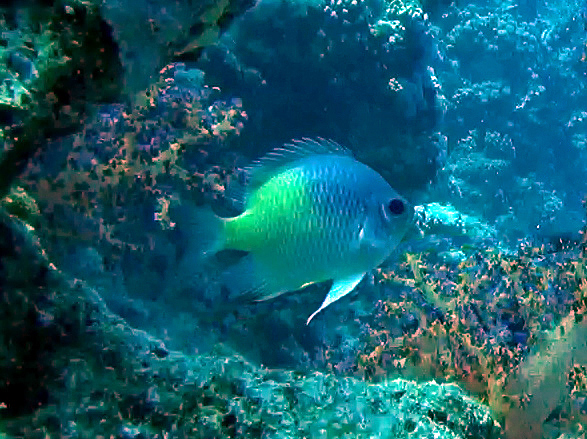
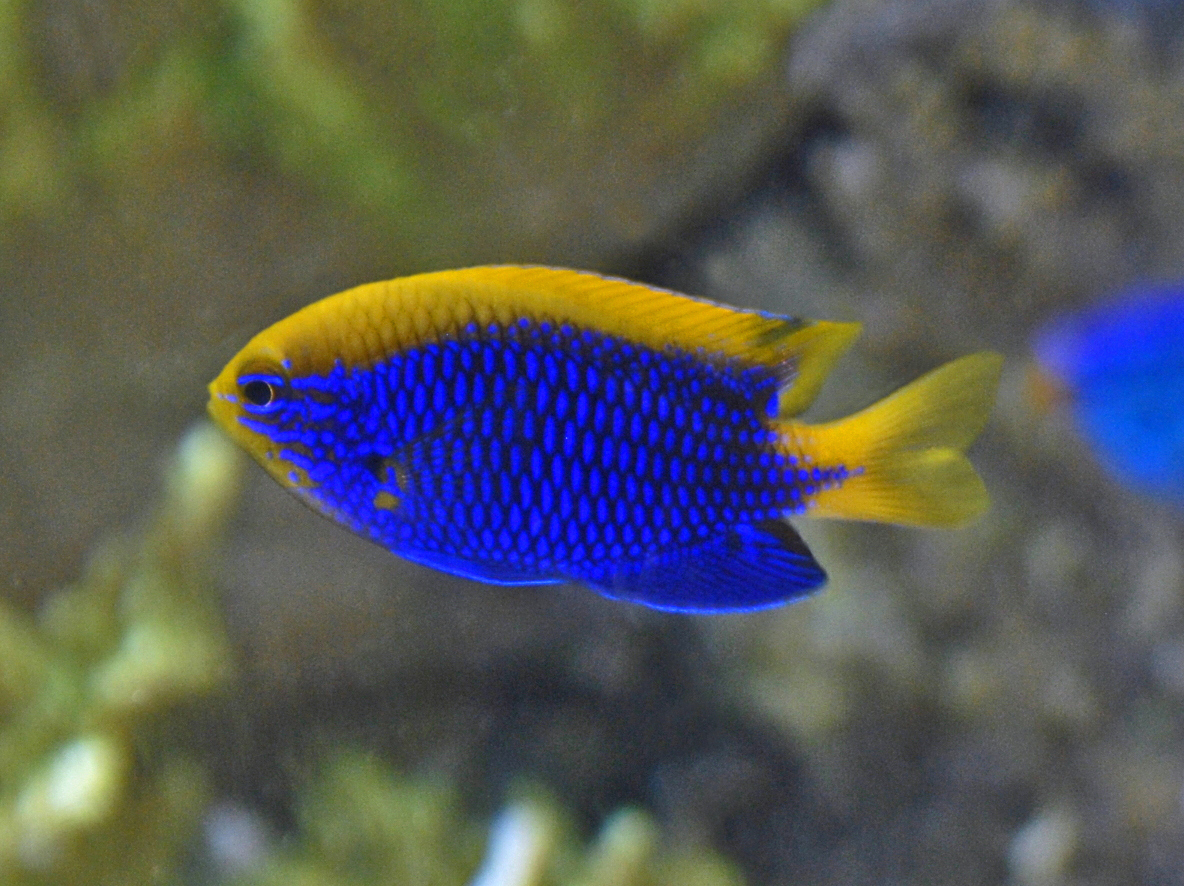
Most pomacentrids are modest in size, though the tribe Microspathodontini—colloquially the giant damselfishes—pushes the upper limit, with four species including Hypsypops rubicundus and Nexilosus latifrons reaching around thirty centimeters. Body shape ranges from rounded to elongated, often laterally compressed, and the lateral line is typically interrupted or incomplete. Most species bear a single nostril per side, though certain Chromis and Dascyllus species have two. Scales are small to medium ctenoid, and the jaw carries one or two rows of teeth that may be conical or spatulate. Coloration is one of the family's most striking features: vivid yellows, reds, oranges, and blues dominate, though some species settle for drab browns, blacks, or greys. Juveniles frequently wear a palette distinct from that of adults. Diet is generally omnivorous or herbivorous, centered on algae, plankton, and small benthic crustaceans, with the notable exception of genera like Cheiloprion, which consume the very coral they inhabit. Symbiosis is another hallmark: many pomacentrids tolerate cleaner gobies of the genus Elacatinus picking ectoparasites from their bodies, and clownfishes maintain a well-known mutualism with sea anemones, in which the anemone offers protection while the fish removes parasites in return.
Courtship, Nest-Guarding, and the Long Road to Adulthood
Reproduction in pomacentrids is a choreography led almost entirely by the male. Before spawning, he clears a patch of substrate of algae and small invertebrates, preparing a nest site. Courtship displays vary by species but commonly include rapid bursts of movement, chasing or nipping the female, hovering in place, or dramatically spreading the fins. Once the female is drawn to the site, she deposits a string of adhesive eggs onto the substrate, and the male swims behind her, fertilizing the eggs externally. Brood sizes span a wide range, from fifty to a thousand eggs depending on the species. After spawning, the male takes sole responsibility for guarding the clutch for two to seven days until the transparent, two-to-four-millimeter larvae hatch. These young then enter a pelagic phase lasting anywhere from a week to over a month, drifting in open water before settling onto a suitable reef and adopting their juvenile coloration. In terms of longevity, pomacentrids in captivity can reach eighteen years, though in the wild their lifespan is thought to top out around ten to twelve years.
Gallery
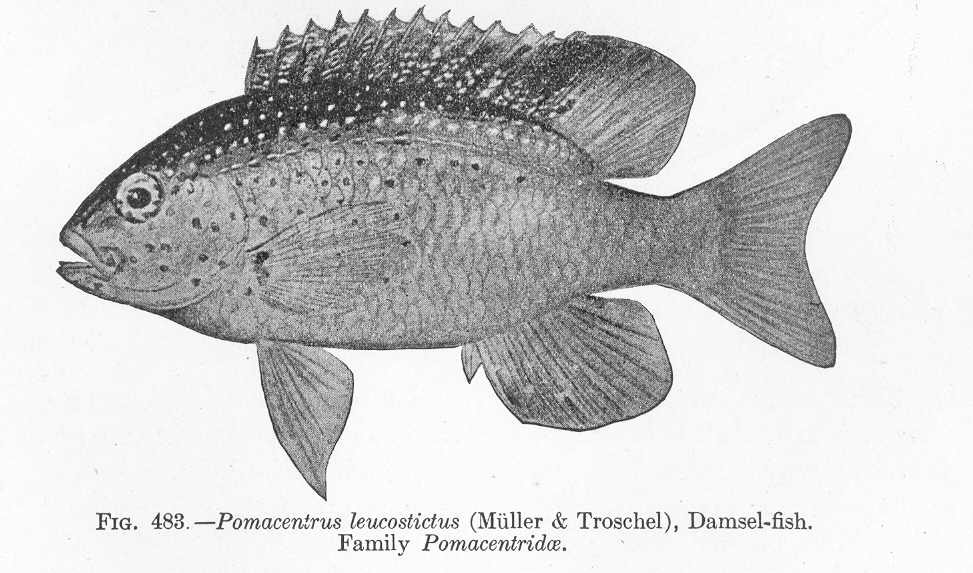
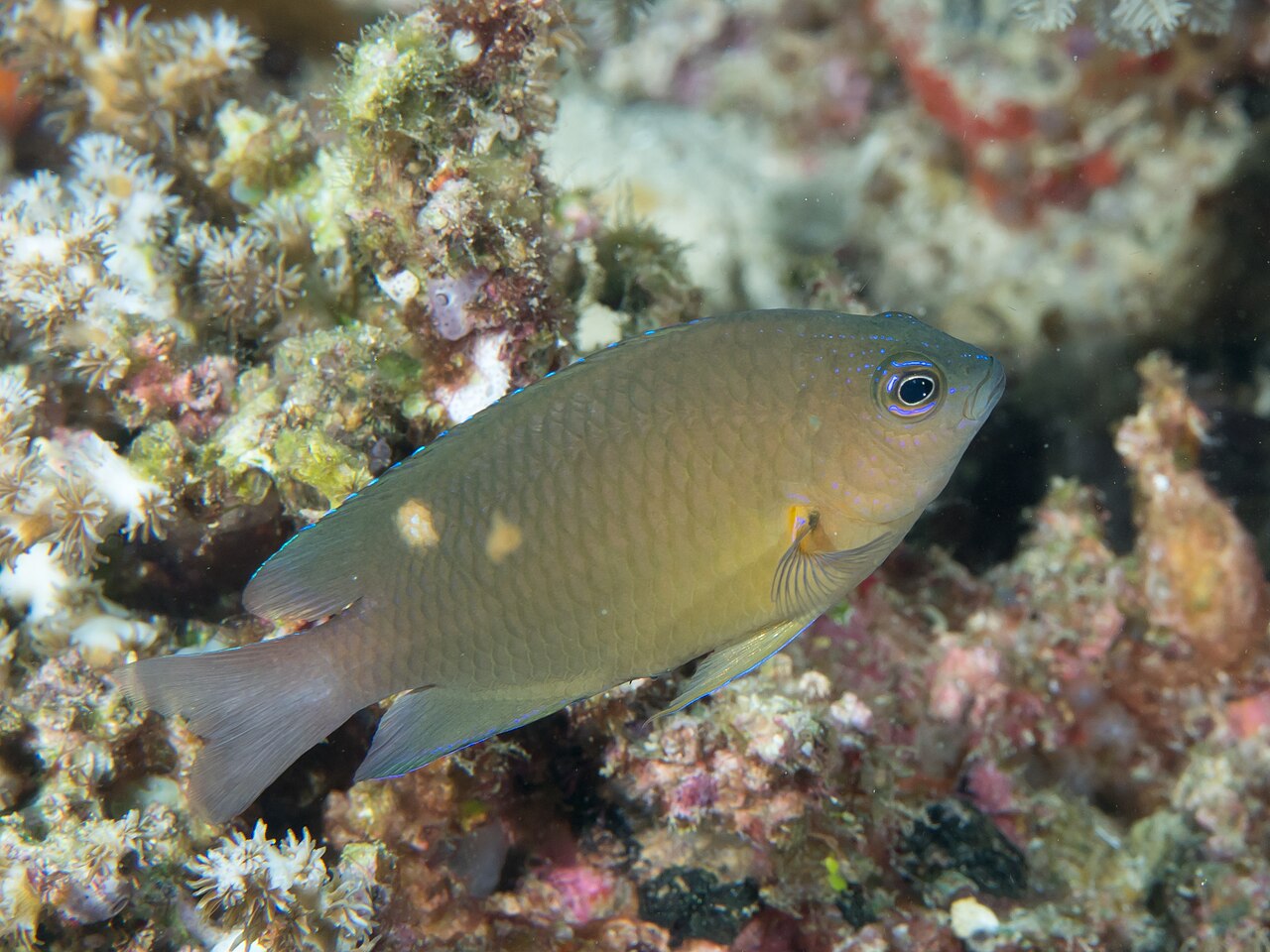
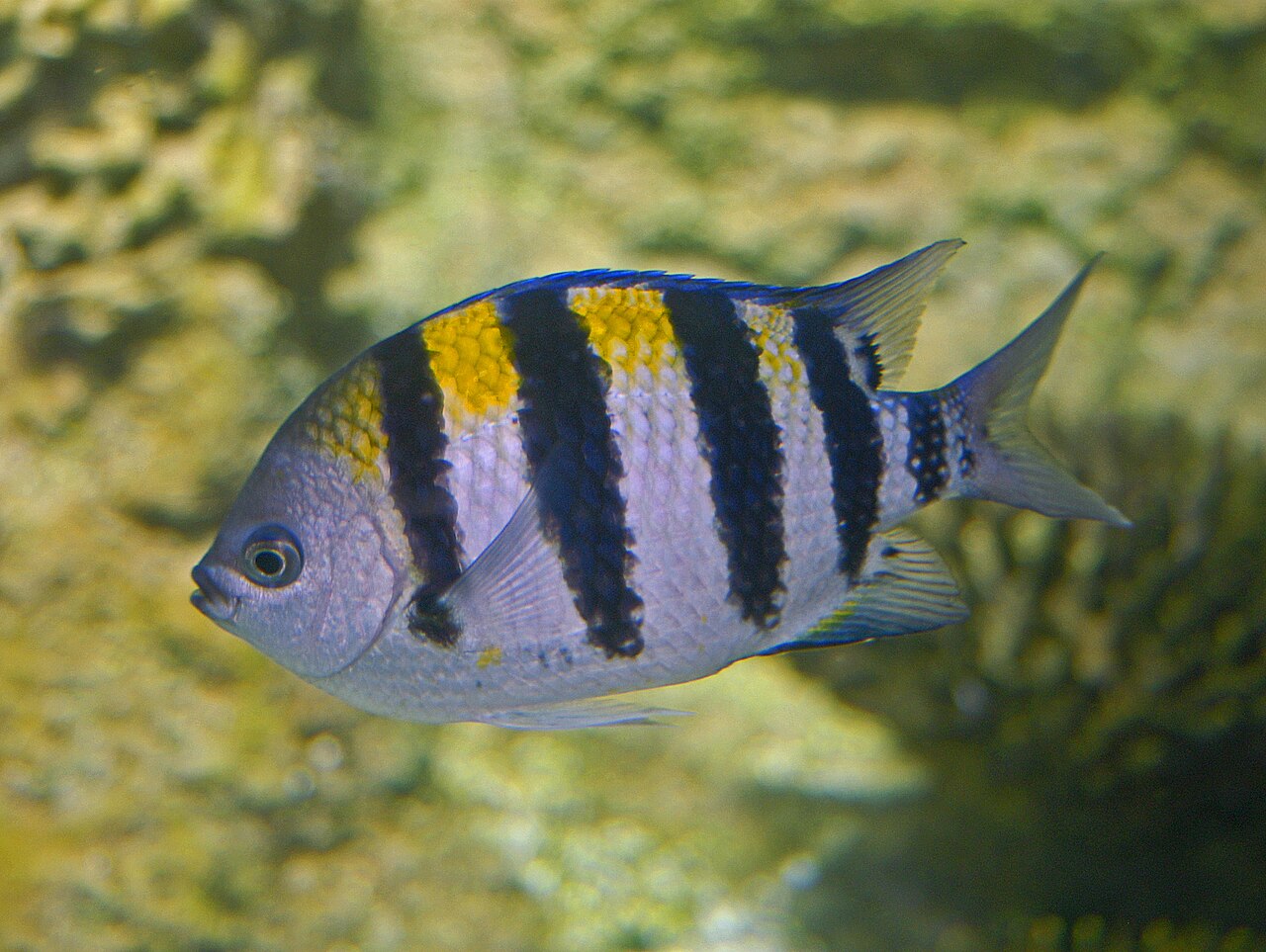
More in Clownfish and Damselfish 1-24
Spotted an error? Know more?
Reader corrections go straight into our review queue. Suggest an edit · How this site is sourced