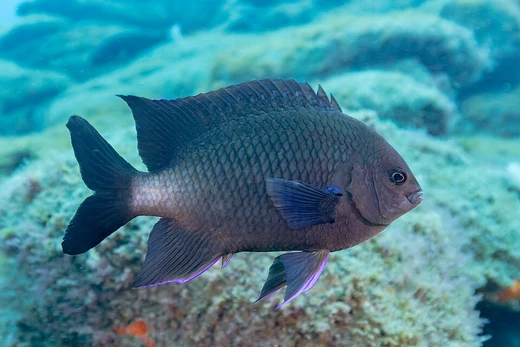
Pomacentrinae
The most diverse subfamily of damselfish and clownfish.

Pomacentrinae is a subfamily within the Pomacentridae family, and it is the most varied of the four subfamilies, with roughly 21 genera and about 200 species. These fish typically have roundish or somewhat stretched bodies, and they lack spiny rays on the tail fin. Most species are territorial, guarding feeding areas from rivals of the same or different species that compete for food. They eat algae and seem to tend their territories to boost algal growth. Many species lay eggs on the seafloor, which the male guards and fans. One species, the freshwater demoiselle (Neopomacentrus taeniurus), can enter estuaries and even travel into the lower parts of streams. According to the 5th Edition of Fishes of the World, Pomacentrinae is likely paraphyletic, though it is not divided into separate lineages there. Other experts, however, split it into the subfamilies Abudefdufinae and Stegastinae, and place clownfishes (Amphiprioninae) as the tribe Amphiprionini within Pomacentrinae.
Quick Facts
- Taxon
- Pomacentrinae
- Type Species
- Pomacentrus pavo
- Type Species Authority
- Bloch, 1787
Facts from the source article.
Lore & Background
Species within the Pomacentrinae have orb-like to moderately elongated bodies and lack spiny caudal rays projecting from the caudal peduncle. The majority display territoriality, defending feeding territories from members of their own species and other competing species. They feed on algae, which they appear to cultivate, actively increasing algal productivity within their territories. Many species lay demersal eggs, which are guarded and fanned by the male. One species, the freshwater demoiselle Neopomacentrus taeniurus, is known to enter estuaries and even reaches into the lowest stretches of streams.
Reader's Guide
The Pomacentrinae is notable as the most diverse subfamily within Pomacentridae, encompassing around 21 genera and roughly 200 species. Its members exhibit distinctive ecological behaviors, including territorial defense of feeding areas and apparent cultivation of algae to boost productivity. Many species also show parental care, with males guarding and fanning demersal eggs. The subfamily's classification is disputed: the 5th Edition of Fishes of the World considers it likely paraphyletic but does not break it into lineages, while other authorities split it into Abudefdufinae and Stegastinae and include the clownfishes (Amphiprioninae) as the tribe Amphiprionini within Pomacentrinae. This uncertainty highlights ongoing taxonomic debate. Additionally, one species, Neopomacentrus taeniurus, demonstrates adaptability by entering estuaries and freshwater streams.
Did You Know?
- Pomacentrinae is the most diverse subfamily in Pomacentridae, with around 21 genera and approximately 200 species.
- Many Pomacentrinae species cultivate algae, actively increasing algal productivity within their territories.
- Males of many species guard and fan demersal eggs.
- The freshwater demoiselle Neopomacentrus taeniurus can enter estuaries and reach into the lowest stretches of streams.
More in Clownfish and Damselfish 1-24
Spotted an error? Know more?
Reader corrections go straight into our review queue. Suggest an edit · How this site is sourced