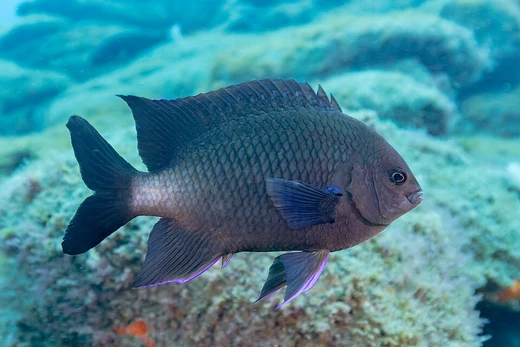
Amphiprion
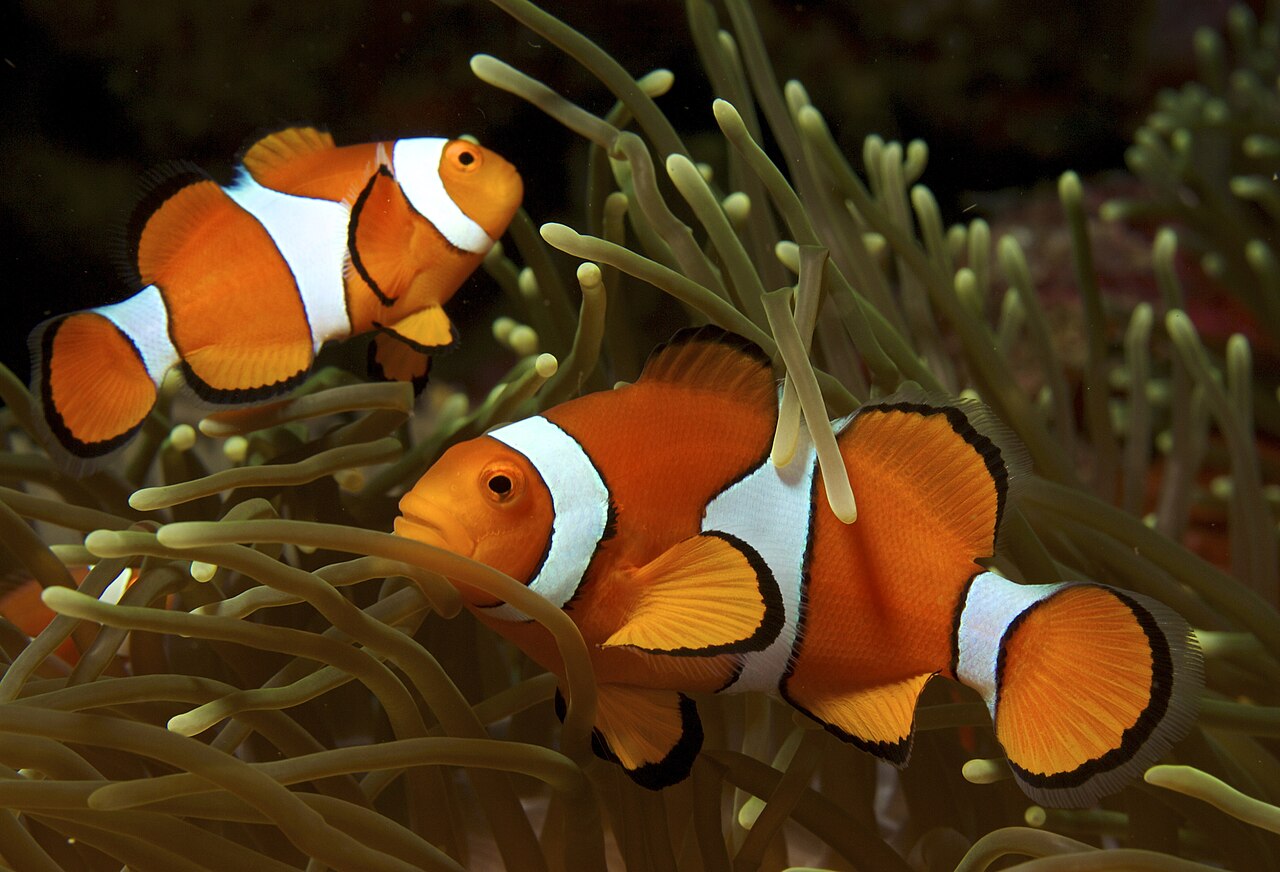
Clownfish are damselfishes with a symbiotic relationship with sea anemones.

Nhobgood Nick Hobgood · CC BY-SA 3.0
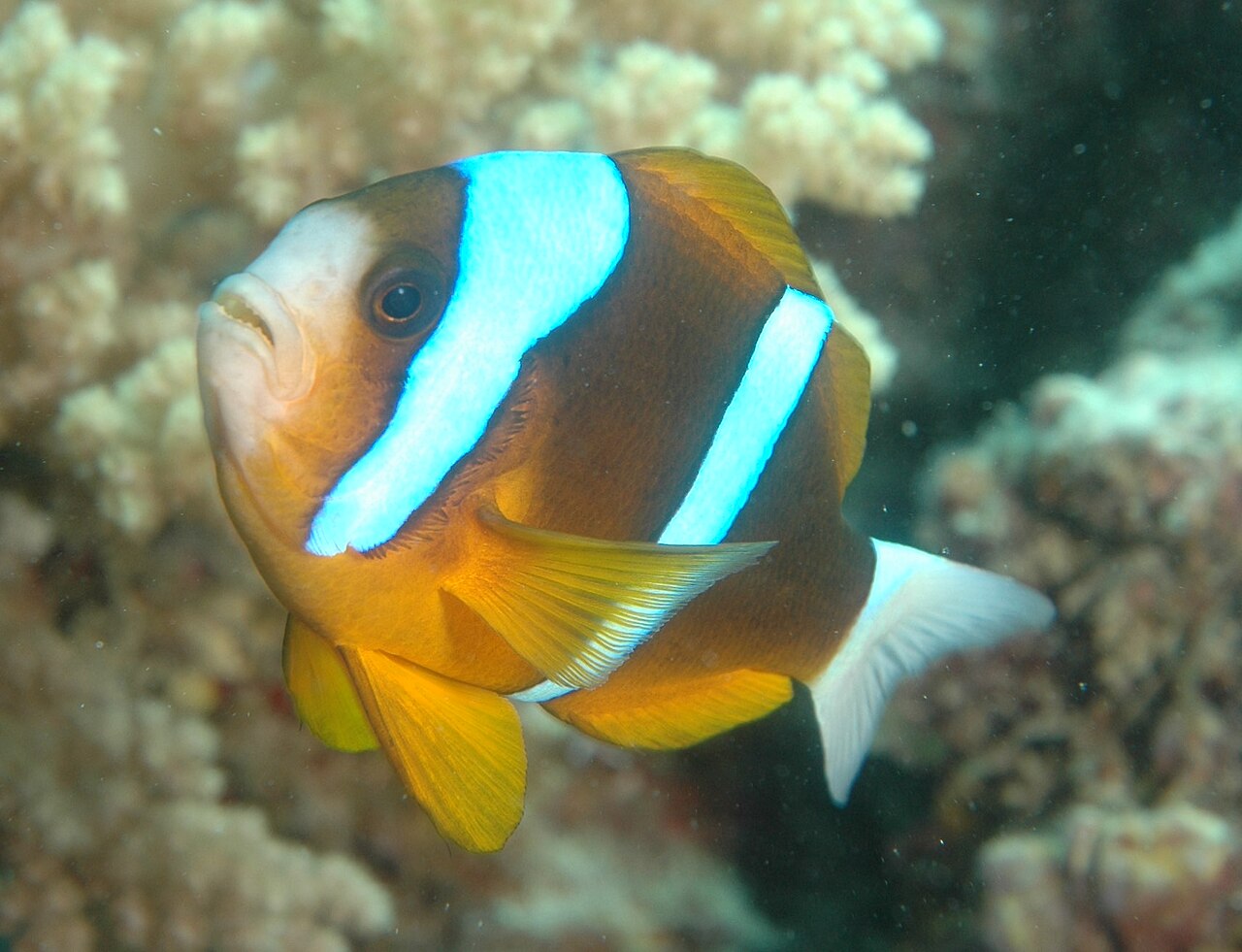
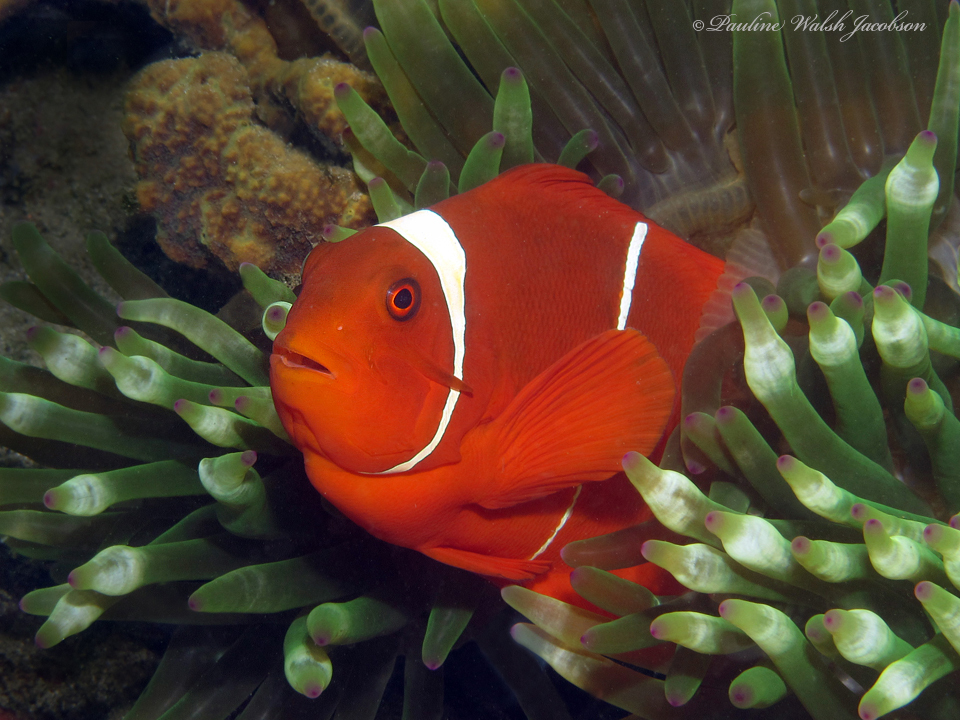
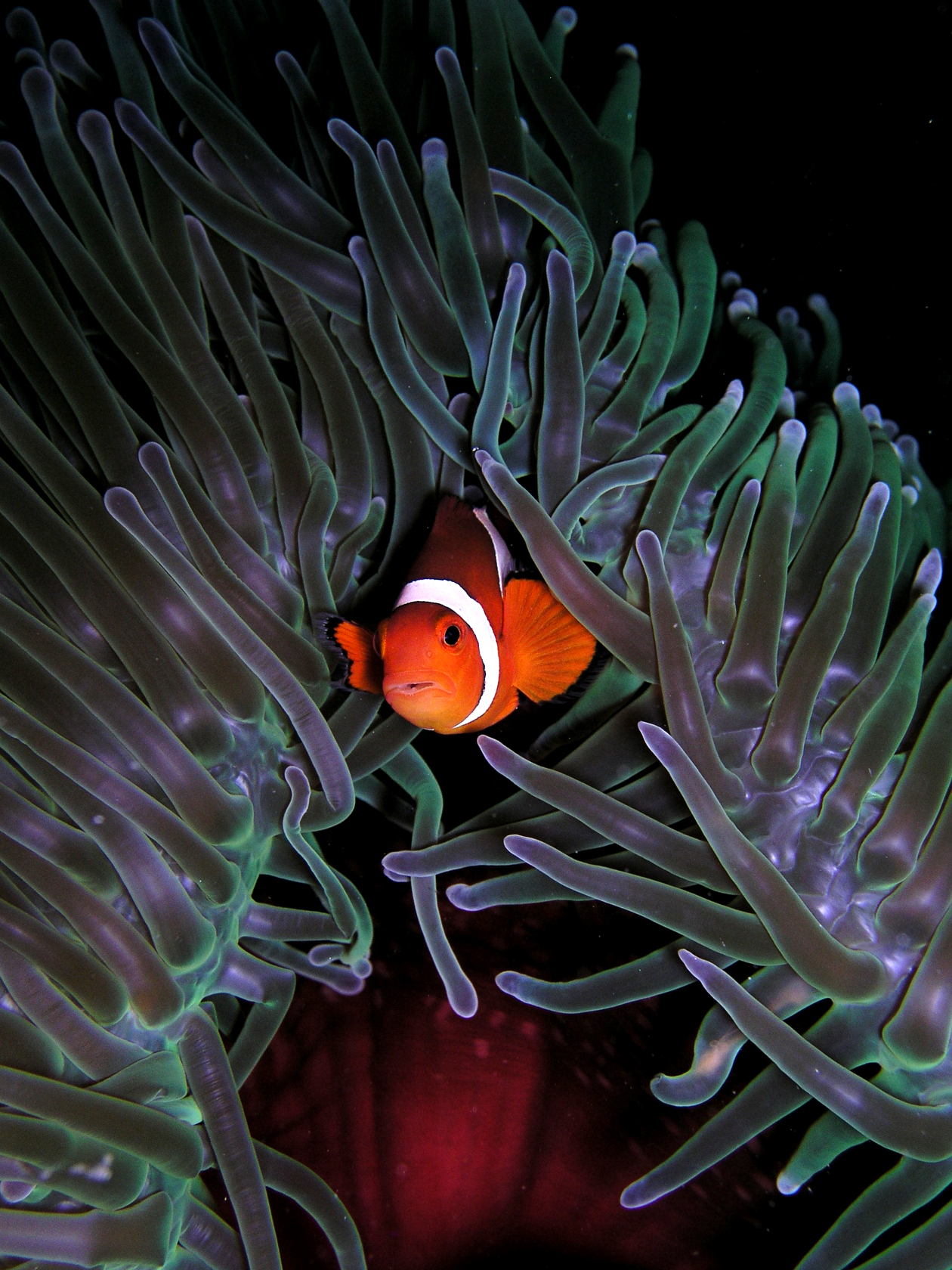
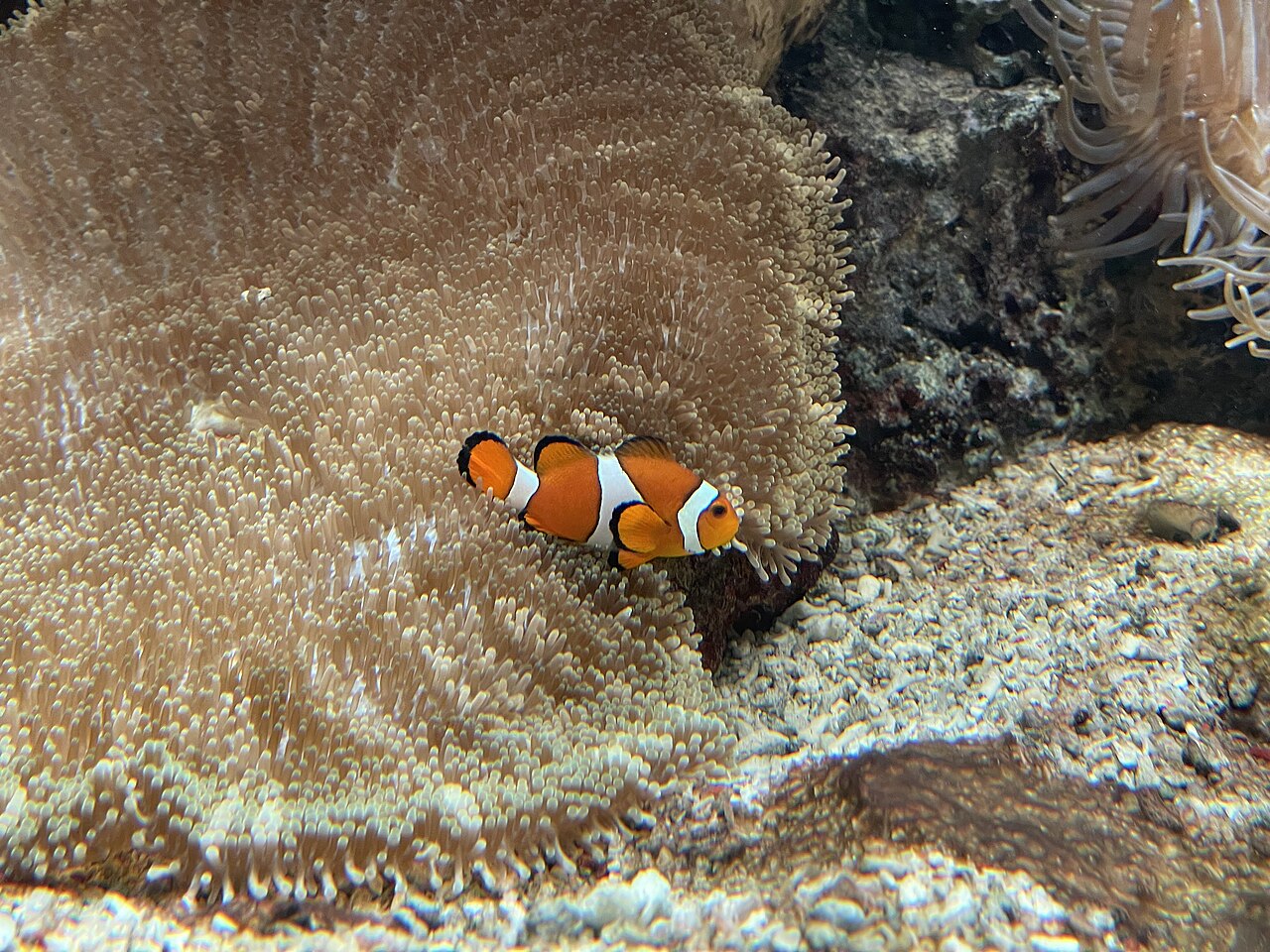
The genus *Amphiprion* includes the saltwater fish commonly called clownfish or anemonefishes. They live in the warm, tropical waters of the Indo-Pacific, primarily on coral reefs. Their bodies are usually red, orange, yellow, brown, or black, marked with distinctive white vertical bars. Clownfish have a mutually beneficial partnership with sea anemones, using them for shelter and protection from predators. In exchange, they guard the anemone from fish that eat it, clean and fan it, and their waste attracts helpful microorganisms. These fish are omnivores, feeding mostly on plankton. They belong to the damselfish family (Pomacentridae). The genus name *Amphiprion*—from the Greek for "on both sides" and "saw"—was created in 1801 by Marcus Elieser Bloch and Johann Gottlob Theaenus Schneider, with the red saddleback anemonefish as the type species.
- Genus coined
- 1801
- Coined by
- Marcus Elieser Bloch and Johann Gottlob Theaenus Schneider
- Type species
- red saddleback anemonefish
- Number of living species prior to 2025
- 28
- New species in 2025
- Polynesian anemonefish (A. maohiensis)
- Maximum size
- 160 mm (maroon clownfish)
- Minimum size
- 80 mm (orange clownfish)
Lore & Background
The genus Amphiprion was coined by Marcus Elieser Bloch and Johann Gottlob Theaenus Schneider in 1801. Georges Cuvier considered the maroon clownfish morphologically different enough to be placed in its own genus Premnas in 1816. The status of Premnas has been disputed over the years, switching between a synonym or subgenus of Amphiprion and being its own genus. In 2021, two expansive phylogenetic analyses of damselfishes found the species to be within Amphiprion, making Premnas a junior synonym. In 1975, ichthyologist Gerald R. Allen placed clownfish in their own subfamily Amphiprioninae. A 2009 genetic study suggested creating the tribe Amphiprionini for clownfish and moving them to the subfamily Pomacentrinae. Eschmeyer's Catalog of Fishes considers the genus to be part of Pomacentrinae though scientific papers still use Amphiprioninae. The clownfish lineage diverged from that of other living damselfishes around 35 million years ago during the late Eocene, and the most recent common ancestor of extant species is dated around 10.5 mya during the Early Miocene. A 2014 study placed their origin in the waters of the Malay Archipelago. Clownfish experienced an increase in species diversification starting around 5 mya, with two major adaptive radiations; one centred on the Malay Archipelago and a later one in the waters of the western Indian Ocean. There is genetic evidence for high amounts of interbreeding between species through their evolutionary history. Clownfish speciation has been linked to their sea anemone hosts species of which can be found in different habitats, thus driving ecological separation. Prior to 2025, 28 living species of clownfish were recognised along with two hybrids, the white-bonnet clownfish and Thielle's clownfish. In 2025, a new species, the Polynesian anemonefish (A. maohiensis), was classified. This fish was previously seen as a colour morph of the orange-fin anemonefish.
Reader's Guide
Clownfish are notable for their recognisable colour patterns and social nature, which have contributed to their popularity. They are featured in the Disney/Pixar film Finding Nemo (2003) and are sought after in the aquarium trade. The ocellaris clownfish ranks among the most commonly traded marine fish. Many captive clownfish were taken from the wild and this has led to their decline. Clownfish are more numerous in marine protected areas, where collecting is forbidden. Other threats to populations include global warming, which causes ocean warming and acidification. Clownfish live in groups consisting of a breeding female and male, along with some non-breeding individuals. They have a size-based dominance hierarchy with the breeding female ranking at the top, followed by the breeding male and then the largest non-breeder and so on. When the female disappears, the breeding male changes sex and takes her place while the others move up the hierarchy. During reproduction, the female deposits eggs on a rock near their anemone, and the male fertilises them. After hatching, clownfish disperse into the open ocean as larvae, eventually settling on the bottom and searching for an anemone host as juveniles. Clownfish are omnivorous and mostly feed on plankton.
Did You Know?
- Clownfish have saw-shaped edges along the operculum and under the eyes, which is the source of their genus name Amphiprion (Greek for 'on both sides' and 'saw').
- The maroon clownfish can reach 160 mm in length, while the orange clownfish reaches only 80 mm.
- Clownfish can see both in colour and ultraviolet light.
- A 2018 study found that clownfish species with only one or no vertical bars tend to be more specialised for anemone species with greater toxicity and shorter tentacles.
Symbiotic Partnership with Sea Anemones
The orange clownfish forms one of marine biology's most celebrated mutualistic bonds, specifically partnering with Heteractis magnifica and Stichodactyla gigantea anemones. The relationship is remarkably precise: as larvae, these fish rely on chemical signals emitted by their target anemone species to navigate toward the correct host, a process that drives preferential selection. Once established, the exchange of benefits flows in both directions. The anemone's venomous tentacles deter predators such as brittle stars, wrasses, and rival damselfish, while the clownfish actively feeds its host, boosts local oxygen levels, and clears accumulated waste. Interestingly, the fish also draws in other fish species that become victims of the anemone's stings, effectively serving as a lure. The mechanism protecting the clownfish from its own host's nematocysts was partially elucidated in a 1958 study at Marineland of the Pacific by Dr. Demorest Davenport and Dr. Kenneth Noris, who demonstrated that the fish's mucus coating inhibits the discharge of lethal stinging cells. A complementary hypothesis proposes that A. percula has developed a degree of innate immunity to the anemone's toxins, and evidence now supports that both mechanisms operate together.
Social Hierarchy and Reproductive Strategy
Each clownfish family occupies a single anemone and operates under a strict size-based caste system. The breeding female is always the largest individual, followed by the breeding male, with zero to four nonbreeding males arranged in descending order of size. All members are born male, and the species exhibits protandry: if the breeding female dies, the largest male transitions into the new female, and the next male in line assumes the breeding male role. Spawning is synchronized with the lunar cycle, with nighttime moonlight heightening alertness and triggering courtship displays that include fin extension, chasing, biting, and rapid vertical swimming. A single female deposits between 400 and 1,500 eggs per spawning event, and breeding females can remain productive for approximately twelve years—a notably long tenure for a fish of this size. The nonbreeders, whose gonads are non-functional, do not assist at the nest nor gain occasional mating chances. Instead, emerging research indicates they are essentially queuing for the anemone territory itself, gaining a better prospect of eventually securing a host than any unaffiliated individual.
Morphology and Distinguishing Features
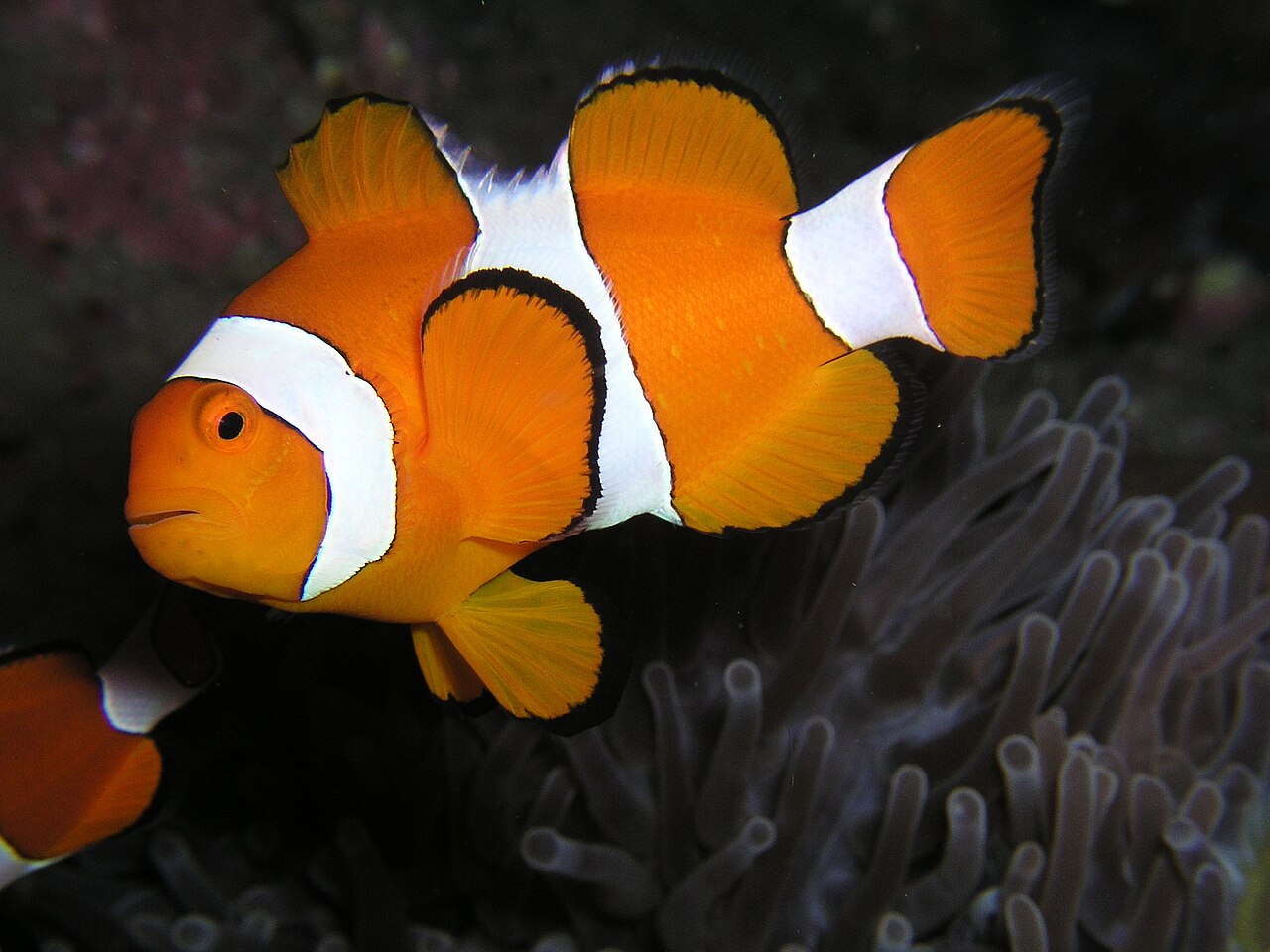
Adult A. percula typically measures around 8 centimeters in length, though individuals can reach 11 centimeters. The body is a vivid orange with no visible sexual dimorphism in coloration. Three bold white bars cross the body: one positioned just behind the eye, a second running vertically down the midsection (with a small anterior projecting bulge), and a third near the caudal fin. Each fin is outlined in black edging of variable thickness. Confusing this species with its close relative A. ocellaris—the so-called "false percula" or "common clownfish"—is common, as both share similar orange-and-white patterning. The most dependable distinguishing feature is the count of spines in the first dorsal fin: A. percula possesses ten (occasionally nine), whereas A. ocellaris has eleven (rarely ten). Additionally, A. ocellaris lacks the thick black bordering around its fins that characterizes the percula. These morphological details matter not only for taxonomic accuracy but also for aquarists and conservation biologists who must correctly identify individuals in the wild or in trade.
Captivity Challenges and Climate Resilience
Despite its status as one of the most recognizable aquarium fish, keeping A. percula in captivity is far from straightforward. In the wild, collection is tightly controlled: the Great Barrier Reef Marine Park Authority issues a limited number of permits to dealers who wish to harvest this and other tropical species from reef waters, reflecting the ecological sensitivity of the source population. Beyond husbandry difficulties, the species faces emerging threats from marine heatwaves, which are documented to disrupt growth patterns across vertebrate species. Remarkably, orange clownfish respond to thermal stress by actively reducing their body size. The degree of shrinkage is not uniform; it is modulated by an individual's social rank and relative size within the group. Individuals that shrink more than their breeding partner appear to enjoy a higher probability of surviving a heatwave event, suggesting that the very social hierarchy governing reproduction and territory also confers a fitness advantage under acute environmental stress.
Gallery
More in Clownfish and Damselfish 1-24
Spotted an error? Know more?
Reader corrections go straight into our review queue. Suggest an edit · How this site is sourced