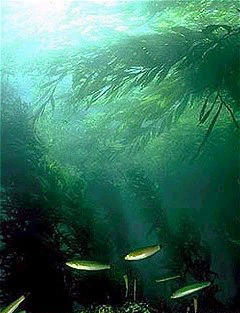
Laminaria nigripes
A kelp species with disputed taxonomy and climate vulnerability.

Laminaria nigripes is a species of kelp that lives in the North Atlantic and North Pacific, in Arctic, subarctic, and cold temperate waters. It has been recorded around Vancouver Island, Haida Gwaii, Greenland, Iceland, Norway, Downeast Maine, and the Bay of Fundy. Whether its true range is exclusively Arctic or also subarctic is debated, partly because samples are frequently misidentified. It is often confused with *L. digitata* and *L. hyperborea*, and it is considered at risk from climate change.
This species belongs to the genus *Laminaria* in the family Laminariaceae, one of eight families in the order Laminariales (the brown algae commonly called kelp). It was first described in 1868 by Jacob Georg Agardh, who named it *Saccharina nigripes* based on a specimen from Spitsbergen, Norway.
Recent molecular work has led some researchers to argue that *L. nigripes* should be placed in the genus *Saccharina*. Under this proposal, the revived genus *Saccharina* Stackhouse (from 1809) would include the genera *Hedophyllum* and *Kjellmaniella*, the species *Cymathaere japonica*, and certain *Laminaria* species. If accepted, *L. nigripes* would become *Saccharina nigripes*.
Other phylogenetic studies suggest that *Saccharina* is actually a clade containing the genera *Anthrothamnus*, *Hedophyllum*, *Kjellmaniella*, and *Saccharina*. Under this model, *L. nigripes* would fall under the reinstated genus *Hedophyllum* (Setchell, 1901) as *Hedophyllum nigripes*. One reason for this change is to group *L. nigripes* with its closest known relative, *Saccharina subsessilis* (which would become *Hedophyllum subsessilis* and serve as the lectotype). The genus *Hedophyllum* would also include *H. bongardiana*, *H. dentigera*, *H. druehlii*, and *H. sessilis*. Members of this genus have flexible stipes and lack tissue cavitation, true branching, and split branching.
Misidentification is common. In the Maritime Provinces of Canada and the Northwest Atlantic, *L. nigripes* is often mistaken for *L. digitata* because both have digitate blades. In Europe, it is frequently confused with *L. hyperborea*. The difficulty of identifying samples by mucilage ducts adds to the confusion—pseudo mucilage ducts can form from infections, and mucilage ducts are less common in individuals from colder northern waters.
Quick Facts
- Genus
- Laminaria
- Species
- nigripes
Facts from the source article.
Lore & Background
Laminaria nigripes was first described in 1868 under the name Saccharina nigripes by Jacob Georg Agardh in Spitsbergen, Norway. Recent molecular genetic insight has led some researchers to suggest that the genetic species known as L. nigripes ought to be a part of the genus Saccharina, which would be revived to include Hedophyllum, Kjellmaniella, Cymathaere japonica, and certain Laminaria species. Additional phylogenetic research has proposed that Saccharina is actually a clade containing Anthrothamnus, Hedophyllum, Kjellmaniella, and Saccharina, under which L. nigripes would fall under the reinstated genus Hedophyllum as Hedophyllum nigripes. This proposed switch would bring L. nigripes and its closest known relative, Saccharina subsessilis, together on the phylogenetic tree.
The species has two main phenotypes: a more common digitate blade and a rarer simple blade. The digitate phenotype can appear morphologically similar to L. digitata, while the simple blade resembles Saccharina latissima. The presence of these phenotypes varies between the Northeast Pacific and Northwest Atlantic, with a higher prevalence of the simple bladed phenotype in the Pacific. L. nigripes is commonly misidentified as L. digitata in the Maritime Provinces of Canada and the Northwest Atlantic, and as L. hyperborea in Europe. Misidentification is compounded by the difficulty of using mucilage ducts for identification, as pseudo mucilage ducts can form from infections. The species has been referred to by multiple names including Saccharina nigripes, Hedophyllum nigripes, Saccharina groelandica, and L. bongardiana.
Reader's Guide
Laminaria nigripes is significant as a species whose taxonomy remains unresolved, with competing proposals to place it in Laminaria, Saccharina, or Hedophyllum. This uncertainty reflects broader phylogenetic debates within the Laminariales and highlights the challenges of classifying kelp based on morphology alone. The species is also notable for its phenotypic plasticity, with two distinct blade forms that can lead to confusion with other commercially and ecologically important kelps such as L. digitata and L. hyperborea. Its distribution in Arctic and subarctic waters, and its apparent sensitivity to rising sea surface temperatures, make it a potential indicator species for climate change impacts in cold-water ecosystems. At a study site, the presence of L. nigripes decreased during a period of increased sea surface temperatures and did not recover when temperatures returned to typical levels, suggesting that warming may disrupt its reproduction and development. The species' ecological role in the Bay of Fundy has been noted, though researchers caution that more study is needed. Its legacy is tied to ongoing debates about kelp biogeography, the evolutionary history of the Saccharina clade, and the vulnerability of Arctic and subarctic marine flora to environmental change.
More in Brown Macroalgae and Kelp, Part 2 1-24
Spotted an error? Know more?
Reader corrections go straight into our review queue. Suggest an edit · How this site is sourced