Arame
A brown kelp used in Japanese cuisine, known for mild flavor.

Arame (荒布; Eisenia bicyclis, syn. Ecklonia bicyclis), also known as sea oak, is a species of kelp belonging to the brown algae. It is best known for its use in Japanese cuisine.
Quick Facts
- Genus
- Eisenia (alga)
- Species
- bicyclis
Facts from the source article.
Lore & Background
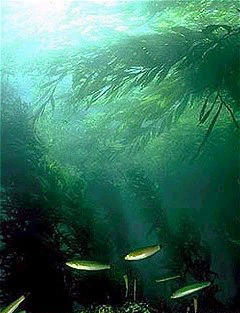
Eisenia bicyclis is indigenous to temperate Pacific Ocean waters centered near Japan, although it is deliberately cultured elsewhere, including South Korea. It grows and reproduces seasonally. Two flattened oval fronds rise from a stiff woody stipe which can be up to about 1 metre (3.3 ft) tall. The fronds are shed and new ones formed annually. The plant appears both branched and feathered. It may be harvested by divers manually or mechanically, and the dried form is available year-round.
In cuisine, arame is one of many species of seaweed used in Asian cuisine. Usually purchased in a dried state, it is reconstituted quickly, taking about five minutes. Arame comes in dark brown strands, has a mild, semi-sweet flavor, and a firm texture. It is added to appetizers, casseroles, muffins, pilafs, soups, toasted dishes, and many other types of food. Its mild flavor makes it adaptable to many uses.
Chemically, arame is high in calcium, iodine, iron, magnesium, and vitamin A as well as being a dietary source of many other minerals. It also is harvested for alginate, fertilizer and iodide. It contains the storage polysaccharide laminarin and the tripeptide eisenin, a peptide with immunological activity. Lignan content in arame is noted by several sources. It also contains the phlorotannins phlorofucofuroeckol A, dioxinodehydroeckol, fucofuroeckol A, eckol, dieckol, triphloroethol A and 7-phloroethol. Extracts of this algae have been tested to combat MRSA staph infections.
Reader's Guide
Arame is notable primarily for its role in Japanese cuisine, where it is used in a wide variety of dishes due to its mild, semi-sweet flavor and firm texture. It is typically sold dried and reconstitutes quickly, making it convenient for home and commercial use. Beyond culinary applications, arame is harvested for alginate, fertilizer, and iodide, and is recognized as a dietary source of calcium, iodine, iron, magnesium, vitamin A, and other minerals. Its chemical composition includes the storage polysaccharide laminarin and the tripeptide eisenin, which has immunological activity. The presence of various phlorotannins, such as eckol and dieckol, has led to research on its potential to combat MRSA staph infections. Arame is also noted for its lignan content. The species is indigenous to temperate Pacific waters near Japan and is also cultured in South Korea. It grows seasonally, with fronds shed and replaced annually, and is harvested by divers either manually or mechanically. Its dried form is available year-round, contributing to its widespread use.
More in Brown Macroalgae and Kelp, Part 2 1-24
Spotted an error? Know more?
Reader corrections go straight into our review queue. Suggest an edit · How this site is sourced