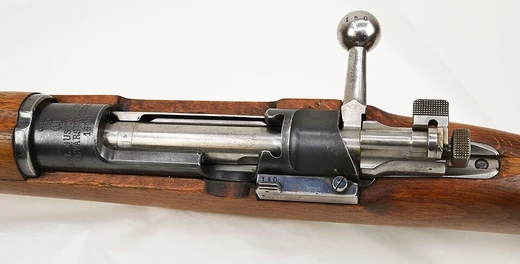
Valmet Sniper M86
Finnish sniper rifle that led to the Sako TRG series.

The Valmet Sniper M86 is a Finnish bolt-action sniper rifle designed by the state-owned firearms company Valmet. It was Valmet's first and only proper sniper rifle, and its development work later formed the basis for the Sako TRG sniper rifles after the merger of Valmet and Sako in 1986. The rifle was produced only in small numbers in 1987 due to the merger.
Quick Facts
- Origin
- Finland
- Is Ranged
- Yes
- Designer
- Valmet
- Design Date
- 1984-1986
- Production Date
- 1987
- Number
- ~200
- Variants
- Sniper rifle / Target rifle / Hunting rifle
- Weight
- 5.7 kg (without scope)
- Length
- 1210 mm
- Part Length
- 720 mm
- Height
- 170 mm
- Cartridge
- .308 Winchester / 7.62×53mmR (prototype only)
Facts from the source article.
Lore & Background
The Valmet Sniper M86 originated from Valmet's independent effort to design a proper sniper rifle from scratch, following the failure of the earlier semi-automatic Valmet TAK project and the Finnish Defence Forces' need for a 7.62×53mmR sniper rifle. The initial development centered on the 7.62×53R cartridge, and a prototype version designated Valmet 7,62 Kiv 85 was produced. The trial rifle proved very accurate, and a small batch was manufactured for the civilian market before the merger with Sako. The production rifles did not incorporate all developed features, such as the multi-calibre rifle patent (Finnish patent No. 72807) featuring an aluminium bedding block for quick barrel changes.
The rifle features a forged receiver with a 60° rotating three-lug bolt, a cold hammer forged steel barrel threaded to the receiver, and a two-stage trigger derived from Valmet Suomen Leijona target rifles, adjustable between 0.7 and 2.0 kg force. Both wooden and fibreglass stocks were available, attaching to an internal aluminium bedding block that eliminates the need for bedding mass. The stock includes aluminium UIT rails, an adjustable cheek piece, and spacers for length of pull and stock height. A bipod with adjustable cant, traverse, and tilt attaches to the front of the stock. The sniper variant includes a single-chamber muzzle brake, while the hunting variant has a bare muzzle.
Four variants were produced: the 7.62×53mmR prototype (Valmet 7,62 Kiv 85), the production Valmet Sniper M86 (sniper variant, only 25 made), a target rifle variant without a magazine (only 5 made), and a hunting rifle variant with a lightened stock and no muzzle brake (around 200 made). The magazine for the .308 production rifles is a 5- or 9-round double-stack staggered-feed box magazine; the competition variant lacks a magazine well.
Reader's Guide
The Valmet Sniper M86 holds significance as Valmet's only dedicated sniper rifle and as the direct predecessor of the Sako TRG series, which became a widely used military and police sniper platform. Its development was spurred by the Finnish Defence Forces' search for a modern sniper rifle to replace Mosin-Nagant-based models, and although the FDF ultimately adopted the TKIV 85 (assembled with major input from Valmet), the Valmet Sniper M86 demonstrated the potential of a purpose-built bolt-action design. The rifle's aluminium bedding block system, patented as Finnish patent No. 72807, was later adopted by other Finnish firearms companies: Pirkan Ase used the concept for their Lynx TD12 and TD15 rifles, and Sako incorporated a similar design in the Sako M85 Exige. The multi-calibre capability envisioned for the Valmet Sniper M86 was not fully realized in the production rifles but influenced later designs. Despite its small production run, the rifle's accuracy and innovative features established a foundation for Finnish sniper rifle development.
Did You Know?
- Its development work formed the basis for the Sako TRG sniper rifles after the Valmet-Sako merger in 1986.
- Only 25 sniper variants, 5 target rifle variants, and about 200 hunting variants were produced.
- The rifle's aluminium bedding block system was covered by Finnish patent No. 72807.
More in Bolt-Action Rifles, Part 2 1-24
Spotted an error? Know more?
Reader corrections go straight into our review queue. Suggest an edit · How this site is sourced