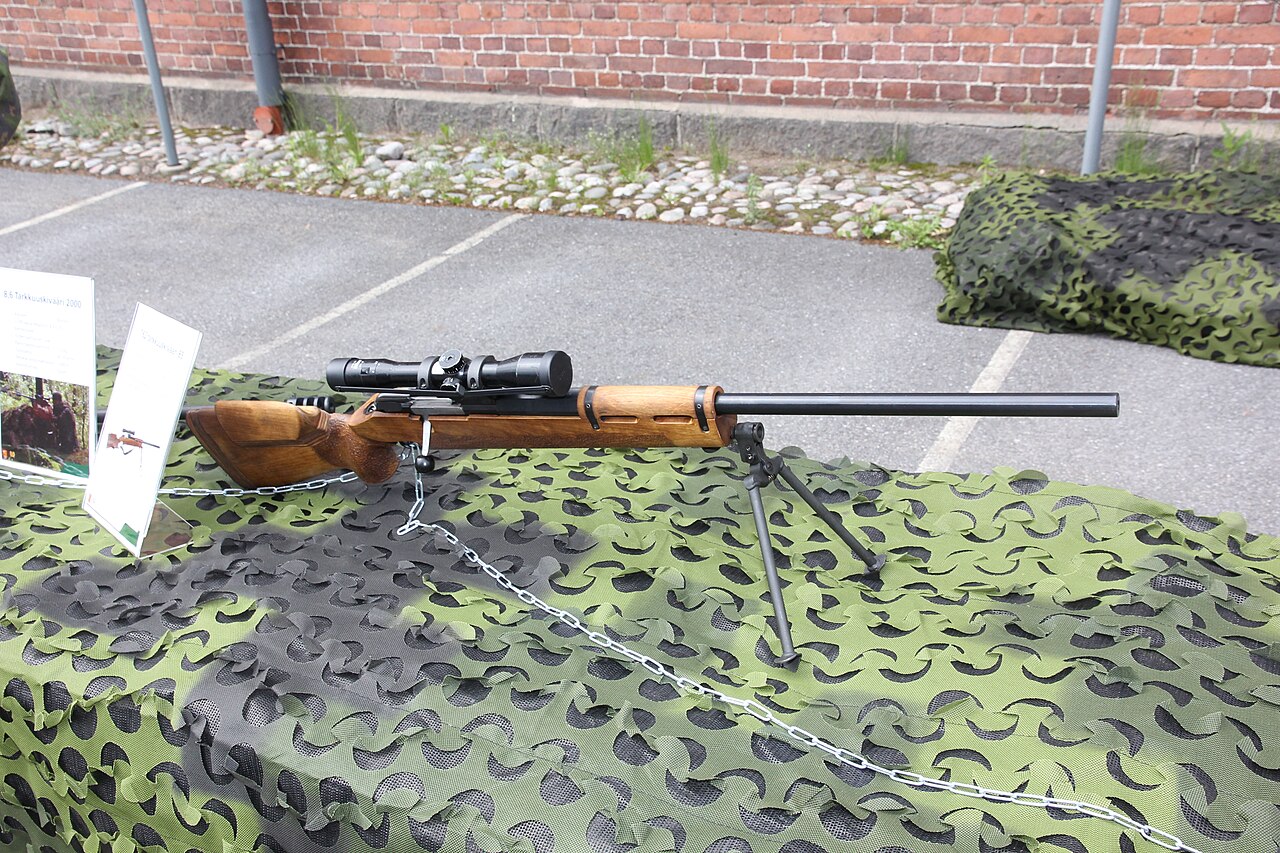
7.62 Tkiv 85
Finnish sniper rifle chambered in the unique 7.62×53mmR cartridge.

MKFI · Public domain
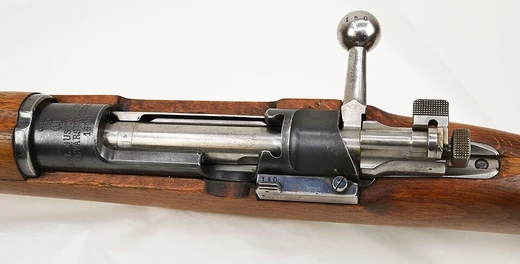
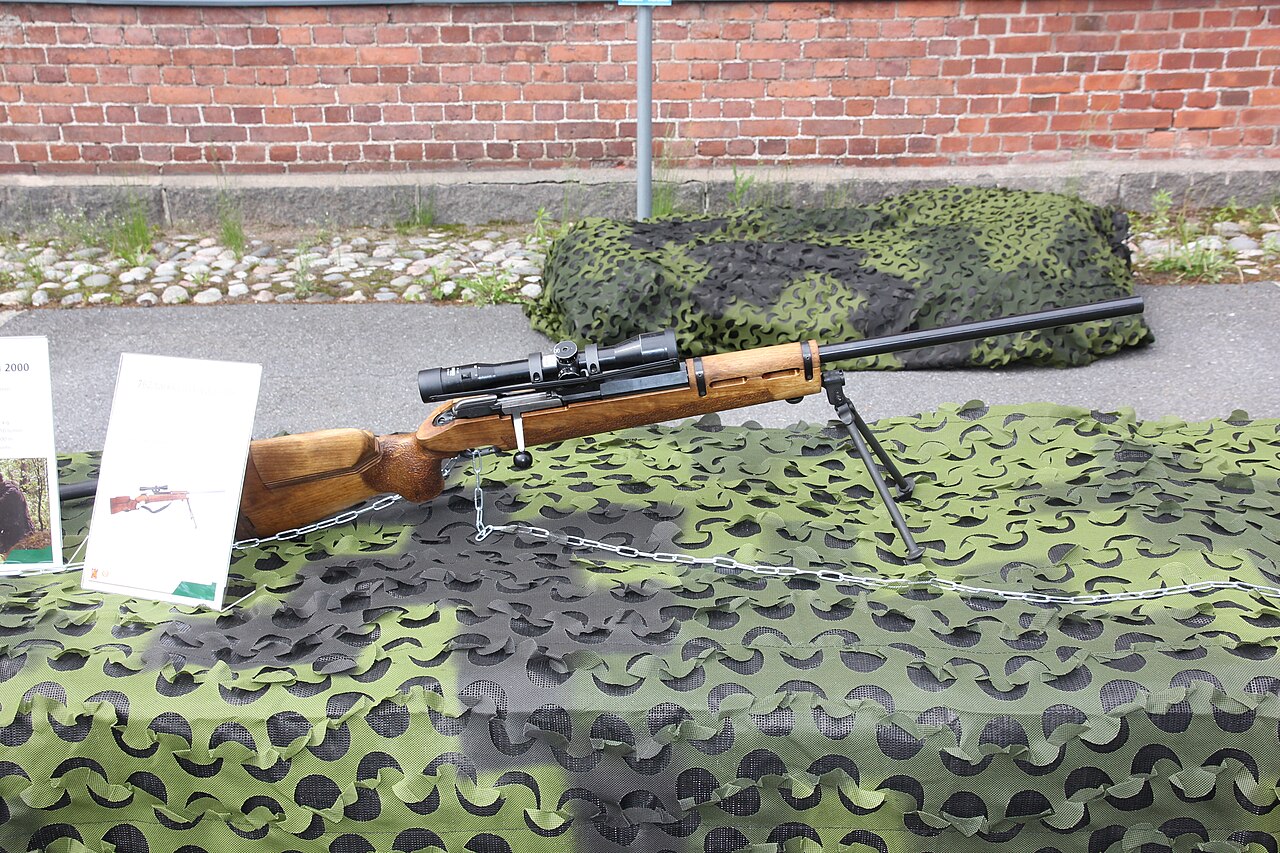
The 7.62 TKIV 85 (7.62 Tarkkuuskivääri 85) is a sniper rifle in service with the Finnish Defence Forces. It is based on the Mosin–Nagant design, and Finland has produced several variants of that platform. Valmet created the design in 1984 and manufactured new barrels for the rifle. Assembly took place between 1984 and 1985 at Asevarikko 1 ("Arsenal 1") in Kuopio, Finland, carried out by the Finnish Defence Forces. While the rifle retains the Mosin–Nagant bolt-action system, it has undergone extensive modifications.
A distinctive feature of the 7.62 TKIV 85 is its chambering for the 7.62×53mmR cartridge. No other military firearm currently in use fires this unique Finnish round. Russian-made weapons used by the Finnish Defence Forces, such as the Dragunov sniper rifle and the PKM machine gun, are chambered for the 7.62×54mmR cartridge. Standard operating procedure allows the use of 7.62×54mmR ammunition in the 7.62 TKIV 85 only in emergencies when 7.62×53mmR rounds are unavailable. This is due to a difference in bullet diameter: the 7.62×53mmR uses a 7.85 mm (0.309 in) bullet, while the 7.62×54mmR uses a 7.92 mm (0.312 in) bullet. Some 7.62×53mmR rounds were also loaded with an intermediate 7.88 mm (0.310 in) diameter bullet.
On 25 May 2020, SAKO and the Finnish Defence Forces signed a letter of intent to research and develop a new family of rifles to replace the TKIV 85 and the Dragunov. The sniper rifle version of the resulting Sako M23 is designated the 7.62 TKIV 23.
Quick Facts
- Origin
- Finland
- Is Ranged
- yes
- Service
- 1984–present
- Used By
- Finnish Defence Forces (FDF)
- Design Date
- 1984
- Manufacturer
- Valmet, FDF Asevarikko 1
- Production Date
- 1984–1985
- Weight
- 7 kg
- Length
- 1300 mm
- Action
- Bolt action
- Rate
- 8–10 rounds/min
- Range
- 800 m
Facts from the source article.
Lore & Background
The 7.62 TKIV 85 is derived from the Mosin–Nagant, a platform from which Finland has produced various derivatives. The design was created in 1984 by Valmet, which also manufactured new barrels for these rifles. Assembly took place in 1984–1985 at the Finnish Defence Forces Asevarikko 1 (Arsenal 1) in Kuopio, Finland. The rifle has been extensively modified while retaining the Mosin–Nagant style bolt-action.
A distinctive feature of the 7.62 TKIV 85 is its 7.62×53mmR chambering. No other currently used military firearm is chambered for this cartridge. Russian-made firearms used by the Finnish Defence Forces, such as the Dragunov sniper rifle and PKM machine gun, are chambered for the 7.62×54mmR cartridge. The standard operating procedure calls for the use of 7.62×54mmR cartridges in the 7.62 TKIV 85 only in emergency situations when 7.62×53mmR ammunition is not available, due to a bullet diameter difference: 7.85 mm (0.309 in) for the 7.62×53mmR versus 7.92 mm (0.312 in) for the 7.62×54mmR. Some 7.62×53mmR rounds were also loaded with an intermediate 7.88 mm (0.310 in) diameter bullet.
On 25 May 2020, SAKO and the Finnish Defence Forces signed a letter of intent regarding research and development of a family of rifles to replace the TKIV 85 and Dragunov sniper rifles. The sniper rifle version of the Sako M23 is designated the 7.62 TKIV 23.
Reader's Guide
The 7.62 TKIV 85 holds significance as a specialized sniper rifle developed from the Mosin–Nagant lineage, reflecting Finland's long history of adapting that platform. Its most notable legacy is its exclusive chambering in the 7.62×53mmR cartridge, a Finnish round that distinguishes it from all other current military firearms. This cartridge's unique bullet diameter (7.85 mm) differs from the 7.62×54mmR used in Russian weapons like the Dragunov and PKM, and the standard operating procedure permits emergency use of the Russian round only when the Finnish ammunition is unavailable. The rifle was designed by Valmet in 1984 and assembled by the Finnish Defence Forces at Arsenal 1 in Kuopio. Its replacement is being pursued through a 2020 letter of intent between SAKO and the Finnish Defence Forces, leading to the Sako M23 sniper rifle version, the 7.62 TKIV 23.
Did You Know?
- The 7.62 TKIV 85 is chambered in the 7.62×53mmR cartridge, which is not used by any other current military firearm.
- Standard operating procedure allows emergency use of 7.62×54mmR cartridges only when 7.62×53mmR ammunition is unavailable.
- A 2020 letter of intent between SAKO and the Finnish Defence Forces initiated development of a replacement, the Sako M23 (7.62 TKIV 23).
Post-War Necessity and Finnish Self-Sufficiency
After Finland broke free from Russian imperial rule in 1917 and survived its brutal civil war the following year, the newly independent nation found itself saddled with enormous quantities of Mosin-Nagant rifles chambered for the Russian 7.62×54mmR round. Over time, the original barrels wore out and demanded replacement. Finnish engineers fitted new barrels of 7.83 mm diameter, but a critical problem emerged: the 7.62×54mmR cartridges that had been imported from Russia were running short. Rather than depend on a foreign supply chain for a basic military need, Finnish authorities developed a domestic cartridge. The result was the 7.62×53mmR, a slightly shortened and reworked version of the Russian round, designed to keep Finland's infantry armed and self-sufficient. By the late 1930s, the Finnish Army further adapted the system, loading cartridges with domestically produced 7.87 mm D166 bullets to accommodate captured Soviet ammunition and machine-gun rounds that often measured a fraction of a millimeter wider than their Finnish counterparts. The rifling twist was also adjusted from 300 mm to 254 mm to better stabilize the new projectiles.
Narrow Military Role and the TKIV 85
Today, the 7.62×53mmR occupies a narrow but vital niche within the Finnish Defence Forces. It is the exclusive ammunition for the 7.62 TKIV 85 sniper rifle, while other Russian-designed weapons in Finnish service—such as PKM machine guns—continue to use the 7.62×54mmR without exception. The Finnish military has issued clear guidance to its personnel: soldiers equipped with a rifle chambered for the 53R should load only 53R ammunition whenever it is available. The 54R round is permitted solely as a fallback when 53R stock is exhausted. This protocol underscores how the two cartridges, though visually similar, are treated as distinct service rounds. The cartridge's case exterior was specifically shaped to ensure reliable feeding and extraction in both bolt-action rifles and machine guns under extreme field conditions. Its maximum C.I.P. pressure rating stands at 390 MPa, and in regulated markets every rifle-and-cartridge combination must be proofed at 125 percent of that figure before it can be sold to consumers.
The 53R versus 54R Identity Question
One of the most persistent sources of confusion in the small-arms world is the relationship between the 7.62×53mmR and the 7.62×54mmR. Official C.I.P. technical data sheets list measurable differences: the 53R bullet diameter is 7.85 mm versus 7.92 mm for the 54R, the overall round length is 77.00 mm versus 77.16 mm, the case length is 53.50 mm versus 53.72 mm, and the rim diameter is 14.40 mm versus 14.48 mm. These C.I.P. rulings carry legally binding force for civilian use across member states, though governmental and military agencies are exempt. Finnish commercial loader Lapua simply produces a single cartridge line that functions in either chamber, making no distinction between the two. Russian manufacturer Barnaul goes further, stating outright that cartridges marked 7.62×53 are identical to 7.62×54, attributing the naming variance to different countries rounding the 53.72 mm case length differently. After Russia joined the European Permanent Coordinated Commission, the definitive designation settled on 7.62×54R.
Hunting Heritage and the Derivative Cartridge Family
Beyond the battlefield, the 7.62×53mmR left a lasting mark on Finnish hunting culture. Following independence and especially after World War II, vast numbers of surplus Finnish military rifles and captured Russian Mosin-Nagants flooded into the hands of sportsmen and subsistence hunters. However, authorities grew concerned that the surplus military ammunition was producing too many wounded or escaped large-game animals—moose and bear in particular—that were not being taken quickly and humanely. In response, Finnish regulators banned the use of both the 53R and 54R for certain species in designated areas. Local gunsmiths and cartridge makers responded ingeniously by necking up or necking down the original 7.62 cases and trimming them to correct lengths, producing a family of derivative hunting cartridges: 6.3×53mmR, 7×53mmR, 8.2×53mmR, and 9.3×53mmR. These calibers matched common European hunting bullet diameters, making reloading components readily available. The 6.3×53mmR, a non-C.I.P. hunting round developed in the 1940s, has been considered obsolete since 1971.
Gallery
More in Bolt-Action Rifles, Part 2 1-24
Spotted an error? Know more?
Reader corrections go straight into our review queue. Suggest an edit · How this site is sourced