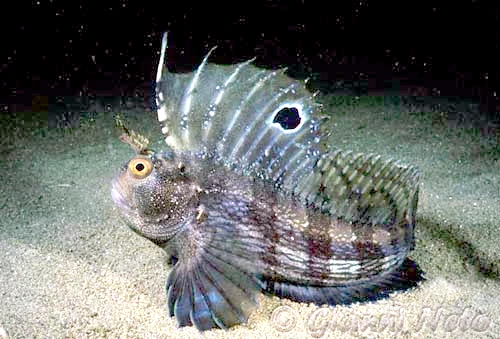
Sphinx blenny
A subtropical combtooth blenny from the eastern Atlantic and Mediterranean.

The sphinx blenny (Aidablennius sphynx) is a combtooth blenny and the sole member of its genus. First described by Achille Valenciennes in 1836 as a species of *Blennius*, it was moved to *Aidablennius* by Gilbert Percy Whitley in 1947. This subtropical fish is found from Morocco in the eastern Atlantic, as well as in the Mediterranean and Black Seas. It lives in shallow, sunlit, rocky areas along the shore. Its diet consists mainly of benthic algae, weeds, and invertebrates. Adults can reach up to 8 cm (3.1 in) in total length.
During mating, sphinx blennies form distinct pairs. Females lay up to 7,000 eggs at a time, which males then guard in burrows. Males sometimes eat dead eggs to stop infection from spreading to healthy ones, though in smaller broods they have also been known to consume living eggs. This behavior is thought to result from limited feeding opportunities while the males are confined to the nest. According to FishBase, the species has low vulnerability, with a population doubling time of less than 15 months.
Quick Facts
- Taxon
- Aidablennius sphynx
Facts from the source article.
Lore & Background
The sphinx blenny was first described by Achille Valenciennes in 1836 under the genus Blennius, and later reassigned to the genus Aidablennius by Gilbert Percy Whitley in 1947. It is the only species in its genus. This blenny is found in subtropical waters off Morocco in the eastern Atlantic Ocean, as well as in the Mediterranean and Black Seas. It inhabits shallow, rocky waters in the littoral zone with sunlight exposure. Its diet consists primarily of benthic algae, weeds, and invertebrates.
Reader's Guide
The sphinx blenny is notable as the sole member of the genus Aidablennius, a distinction that underscores its unique taxonomic position among combtooth blennies. Its reproductive behavior is particularly interesting: during mating, the blennies form distinct pairs, and females lay up to 7000 eggs in a sitting. Males guard the eggs in burrows and are known to cannibalize dead eggs to prevent infection spread among healthy eggs. However, in smaller broods, males have also been reported consuming living eggs, likely due to limited feeding opportunities while restricted to the nest. FishBase considers the species to be of Low Vulnerability, with a reproductive doubling time of less than 15 months. This combination of parental care and egg cannibalism highlights the adaptive strategies of the species in its shallow, sunlit littoral habitat.
Did You Know?
- The sphinx blenny is the only species in the genus Aidablennius.
- Females can lay up to 7000 eggs in a single sitting.
- Males guard the eggs and may cannibalize dead or living eggs, especially in smaller broods.
More in Blennies 1-24
Spotted an error? Know more?
Reader corrections go straight into our review queue. Suggest an edit · How this site is sourced