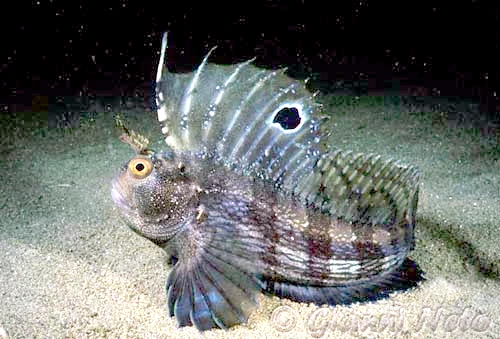
Clinidae
Temperate blennies with cirri, found in weed and kelp habitats.

The Clinidae family, commonly called temperate blennies, are marine fish belonging to the order Blenniiformes. They are found across the Atlantic, Pacific, and Indian Oceans in both hemispheres. The family includes roughly 86 species spread across 20 genera. The largest member is the giant kelpfish (Heterostichus rostratus), which reaches 60 cm in length, though most species are much smaller.
These fish have small, cycloid scales and can be either deep-bodied or slender—some are even called "snake blenny" or "eel blenny" due to their shape. Their dorsal fin has more spines than soft rays, and the anal fin contains two spines. Like many blennies, they have whisker-like structures on their heads called cirri.
Most clinids display rich, highly variable coloration in shades from reddish-brown to olive, often with cryptic patterns. This suits their habitat, which is typically dense weed or kelp. They usually stay in intertidal zones down to about 40 meters deep, and some are found in tide pools. Females deposit eggs on kelp, and males guard them. Their diet consists mainly of small crustaceans and mollusks.
The name Clinidae comes from the Greek *klinein*, meaning "sloping," referring to the shape of the sphenoid bone. Many common names for these fish include the word "klipfish."
The family contains 26 genera, with 81 to 84 species: Blennioclinus (2 species), Blennophis (2), Cancelloxus (3), Cirrhibarbis (monotypic), Climacoporus (monotypic), Clinitrachus (monotypic), Clinoporus (monotypic), Clinus (19–22), Cologrammus (monotypic), Cristiceps (3), Ericentrus (monotypic), Fucomimus (monotypic), Gibbonsia (3), Heteroclinus (16), Heterostichus (monotypic), Muraenoclinus (monotypic), Myxodes (3), Ophiclinops (3), Ophiclinus (6), Pavoclinus (9), Peronedys (monotypic), Ribeiroclinus (monotypic), Smithichthys (monotypic), Springeratus (3), Sticharium (2), and Xenopoclinus (2). The only known fossil member is †Clinitrachoides from the Late Miocene of Moldova, which appears closely related to Clinitrachus.
Quick Facts
- Taxon
- Clinidae
Facts from the source article.
Lore & Background
Clinidae derives from the Greek klinein meaning 'sloping', a reference to the shape of the sphenoid bone. Many common names of Clinidae contain the head noun klipfish. With small cycloid scales, clinoid blennies may have a deep or slender build; some members bear the name 'snake blenny' and 'eel blenny' for this reason. Dorsal spines outnumber soft rays; two spines are in the anal fin. Like many other blennies, clinids possess whisker-like structures on their heads called cirri.
The majority of species possesses rich, highly variable colouration in shades of reddish-brown to olive, often with cryptic patterns; this suits the lifestyle of clinid blennies, which frequent areas of dense weed or kelp. Generally staying within intertidal zones to depths around 40 m, some species are also found in tide pools. Eggs are deposited on kelp for the male to guard. Clinids feed primarily on small crustaceans and mollusks.
The family contains about 86 species in 20 genera, though a list of 26 genera is given, including 81–84 species. The only known fossil member is †Clinitrachoides from the Late Miocene of Moldova, which appears to be closely related to Clinitrachus.
Reader's Guide
Clinidae represents a family of temperate blennies distributed across the Atlantic, Pacific, and Indian Oceans in both hemispheres. Their significance lies in their adaptation to dense weed and kelp habitats, where their rich, variable colouration provides cryptic camouflage. The family includes the notable giant kelpfish (Heterostichus rostratus), reaching 60 cm, though most species are far smaller. Clinids exhibit distinctive morphological features: dorsal spines outnumber soft rays, two spines are in the anal fin, and they possess cirri on the head. Their reproductive strategy involves depositing eggs on kelp, with the male guarding them. The family's fossil record is limited to a single Late Miocene genus from Moldova, suggesting a long evolutionary history. The name Clinidae, from Greek 'klinein' meaning 'sloping', refers to the sphenoid bone shape. Many common names incorporate 'klipfish'. The family's ecological role as predators of small crustaceans and mollusks, combined with their presence in intertidal zones and tide pools, underscores their importance in nearshore marine ecosystems.
Did You Know?
- The largest clinid is the giant kelpfish (Heterostichus rostratus), reaching 60 cm.
- Clinidae derives from Greek klinein meaning 'sloping', referring to the sphenoid bone shape.
- The only known fossil clinid is †Clinitrachoides from the Late Miocene of Moldova.
- Clinids deposit eggs on kelp, and the male guards them.
Taxonomy & Geographic Distribution
Clinidae occupies a defined position within the broader classification of marine fishes, sitting in the order Blenniiformes under the series Ovalentaria, which itself falls within the superorder Percomorpha. As temperate blennies, these fish have established themselves across the Atlantic, Pacific, and Indian Oceans, with representatives found in both the Southern and Northern Hemispheres. The family encompasses roughly 86 species distributed across 20 to 26 recognized genera, depending on the taxonomic treatment. Size varies enormously within the group: the giant kelpfish, Heterostichus rostratus, stretches to about 60 centimetres and stands as the largest clinid, while the vast majority of its relatives are considerably smaller. The genus Clinus, first described by Cuvier in 1816, is by far the most species-rich, housing anywhere from 19 to 22 species, whereas numerous other genera such as Heterostichus, Cologrammus, and Peronedys are monotypic, containing only a single known species. This wide spread of both geographic range and body size makes Clinidae a notably diverse family among the blennioid fishes.
Morphology & Physical Design
Clinid blennies display a range of body shapes that set them apart from many other marine fish families. Their bodies can be either deep-bodied or notably slender, and it is this elongated form that has earned certain members the informal labels "snake blenny" and "eel blenny." Across the family, small cycloid scales cover the skin, giving a relatively smooth texture. The fin architecture is distinctive: the dorsal fin carries more spines than soft rays, while the anal fin bears exactly two spines. Perhaps the most recognizable feature shared with other blennies is the presence of cirri, whisker-like appendages projecting from the head region. The family's very name also points to a skeletal trait: the Greek word klinein, meaning "sloping," was chosen to describe the particular shape of the sphenoid bone in these fishes. Together, these morphological details, including slender or deep profiles, cirri, the specific spine-to-ray ratios, and the sloping sphenoid, create a coherent physical identity that unites all clinids despite their considerable size variation.
Habitat, Colouration & Feeding
Most clinid species are masters of concealment, sporting rich and highly variable colouration that shifts across shades of reddish-brown and olive, frequently broken up by cryptic patterns. This palette is no accident; it aligns perfectly with their preferred habitat among dense weed beds and kelp forests, where blending in is essential for survival. Their vertical range is modest by open-ocean standards: clinids generally inhabit intertidal zones and descend to depths of roughly 40 metres, with some species even tolerating the temporary conditions of tide pools. Diet-wise, they are primarily consumers of small crustaceans and mollusks, picking these invertebrates from the surrounding vegetation. Reproduction follows a pattern familiar among blennies: females deposit their eggs directly onto kelp fronds, and the male takes on the role of guarding the clutch until the young emerge. This combination of kelp-dependent habitat, cryptic coloration, invertebrate-based feeding, and male parental care paints a picture of a family intimately woven into the temperate coastal ecosystems of three oceans.
Nomenclature & Fossil Heritage
The name Clinidae carries a specific anatomical reference rooted in ancient Greek: klinein, meaning "sloping," was selected to describe the characteristic shape of the sphenoid bone found in these fishes. This etymological detail is echoed in the common names used across the family, many of which incorporate the head noun "klipfish," a nod to that same sloping cranial structure. In terms of the fossil record, Clinidae is remarkably sparse. The only known fossil representative is Clinitrachoides, described by Bannikov in 1998 from Late Miocene deposits in Moldova. This single specimen appears to be closely related to the living genus Clinitrachus, offering a tantalizing but limited glimpse into the family's deeper evolutionary past. The modern genera themselves were described over a span of nearly two centuries, from Cuvier's 1816 description of Clinus through to the late twentieth-century work of Smith, Shen, and Pinto, reflecting a long and still-evolving understanding of this family's diversity.
Frequently Asked Questions
What is Clinidae?
Clinidae is the taxonomic family that groups together the so-called temperate blennies, a collection of small marine fish placed within the order Blenniiformes. They are the blenny relatives you'll typically find clinging to kelp fronds and weed beds rather than tropical reef crevices.
How many species make up the Clinidae family?
The family spans roughly 86 distinct species distributed across 20 genera, making it one of the more diverse blenny lineages. Most members are modest in size, though the group does include one standout giant.
What is the largest species in Clinidae?
The giant kelpfish (Heterostichus rostratus) tops the family at around 60 cm, which is enormous compared to its relatives. Every other member of the family is noticeably smaller than that.
Where can you find Clinidae in the wild?
These blennies range across the Atlantic, Pacific, and Indian Oceans in both hemispheres. Their vertical range stretches from the splashy intertidal zone down to roughly 40 metres, and they favour weedy and kelp-rich habitats.
How do Clinidae differ in body shape?
Body form varies widely within the family: some species are deep-bodied while others are so elongated they've earned nicknames like "snake blenny" or "eel blenny." All of them share small cycloid scales, a dorsal fin weighted toward spines, and the characteristic cirri (those little fleshy tendrils above the eye) that mark them as blennies.
More in Blennies 1-24
Spotted an error? Know more?
Reader corrections go straight into our review queue. Suggest an edit · How this site is sourced