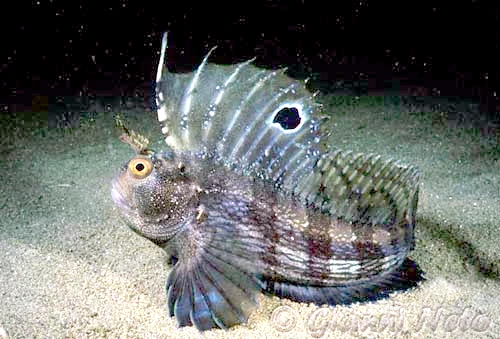
Combtooth blenny
Largest blenny family with comb-like teeth and venomous fangblennies.

Combtooth blennies are marine fish belonging to the family Blenniidae, within the order Blenniiformes. They make up the largest family of blennies, with roughly 401 species spread across 58 genera. These fish live in tropical and subtropical waters of the Atlantic, Pacific, and Indian Oceans, and a few species can also be found in brackish or freshwater.
Their bodies are typical of blennioids: blunt heads, large eyes, and long, continuous dorsal fins that can have three to 17 spines. The body is compressed, elongated, and lacks scales. Pelvic fins are small and slender, with one spine and three to four soft rays, positioned ahead of the enlarged pectoral fins; only two species lack these fins entirely. The tail fin is rounded. As their name suggests, they have comb-like teeth lining the jaws. Many are active and brightly colored, which makes them popular in aquariums. Larvae look similar to adults but have a noticeable preopercular spine that disappears as they mature. The largest species is the eel-like hairtail blenny, reaching 53 cm (21 in); most others are much smaller.
These fish are generally benthic, spending most of their time near the bottom. They live in rocky crevices on reefs, burrows in sand or mud, or even empty shells. Most stay in shallow water, but some can leave the water briefly during low tide, using their large pectoral fins like feet. Their diet mainly consists of small benthic crustaceans, mollusks, and other sessile invertebrates; some species eat algae or plankton. A group called fangblennies (genera *Aspidontus*, *Meiacanthus*, *Petroscirtes*, *Plagiotremus*, and *Xiphasia*) form a monophyletic clade with swim bladders and fang-like teeth connected to venom glands. *Aspidontus* and *Plagiotremus* mimic cleaner wrasses in color, shape, and behavior, tricking other fish—or even divers—into letting them close enough to bite off skin or scales.
Some combtooth blennies live in small groups; others are solitary and territorial. They can be active during the day or night, depending on the species. Females lay eggs in shells or under rock ledges, and males guard the nest until the eggs hatch. In some species, eggs may stay in the female’s oviduct until hatching. The fry of certain species go through an "ophioblennius" stage, where they are pelagic, with greatly enlarged pectoral fins and hooked teeth.
Quick Facts
- Taxon
- Blenniidae
Facts from the source article.
Lore & Background
Combtooth blennies have a body plan archetypal to all other blennioids: blunt heads, large eyes, large continuous dorsal fins with three to 17 spines, compressed elongated scaleless bodies, small slender pelvic fins with one spine and three to four soft rays situated in front of enlarged pectoral fins, and rounded tail fins. Their name comes from the comb-like teeth lining their jaws. Larvae resemble adults but have a prominent preopercular spine that disappears during metamorphosis. The largest species is the eel-like hairtail blenny at 53 cm; most others are much smaller.
Generally benthic fish, they spend much time on or near the bottom, inhabiting rocky crevices, burrows, or empty shells. Some can leave water during low tide using large pectoral fins as feet. Most eat small benthic crustaceans, mollusks, and sessile invertebrates; others eat algae or plankton. The genera Aspidontus, Meiacanthus, Petroscirtes, Plagiotremus, and Xiphasia form a monophyletic clade called fangblennies, with swim bladders and fang-like teeth with venom glands. Aspidontus and Plagiotremus mimic cleaner wrasses to trick fish and divers into letting down their guard, then nip skin or scales.
Reader's Guide
Combtooth blennies are notable as the largest family of blennies, with around 401 species across 58 genera, making them a significant group within percomorph marine fish. Their comb-like teeth are a defining characteristic, and the family includes the venomous fangblennies, a monophyletic clade with fang-like teeth and venom glands. Some species engage in aggressive mimicry of cleaner wrasses, a behavior that allows them to bite skin or scales from unsuspecting fish or divers. Their active, often highly colorful appearance makes them popular in the aquarium hobby. Ecologically, they are benthic fish found in shallow tropical and subtropical waters worldwide, with some species adapting to brackish or freshwater. Their reproductive strategies vary: females lay eggs in shells or under rock ledges, with males guarding the nest; in some species, eggs remain in the oviduct until hatching, and fry of some species undergo a pelagic 'ophioblennius' stage with enlarged pectoral fins and hooked teeth. The family includes fossil genera from the Early Miocene to Middle Miocene, with an otolith-based fossil from the Early Eocene possibly representing the oldest record.
Did You Know?
- Combtooth blennies are the largest family of blennies, with around 401 known species.
- The hairtail blenny is the largest species at 53 cm (21 in) in length.
- Fangblennies have venom glands at the base of their fang-like teeth.
- Some combtooth blennies mimic cleaner wrasses to bite skin or scales from other fish.
Physical Form and Remarkable Diversity
Combtooth blennies represent the most species-rich family within the blenny group, encompassing roughly four hundred and one known species distributed across fifty-eight genera. As percomorph marine fish belonging to the order Blenniiformes, they inhabit tropical and subtropical waters spanning the Atlantic, Pacific, and Indian Oceans, with certain species extending into brackish or even fully freshwater habitats. Their body plan is considered the archetypal model for all blennioid fish: a blunt head bearing large eyes, a long continuous dorsal fin armed with anywhere from three to seventeen spines, and a compressed, elongated body entirely lacking scales. The pelvic fins are small and slender—comprising a single spine and three to four soft rays—and sit ahead of notably enlarged pectoral fins, while the caudal fin is rounded. True to their common name, their jaws are lined with distinctly comb-like teeth. These active, often vividly coloured fish are favourites among aquarium enthusiasts. The family's size range is striking: the eel-like hairtail blenny reaches fifty-three centimetres, while most other members are considerably smaller.
Life on the Seafloor
As predominantly benthic creatures, combtooth blennies anchor their daily existence to the substrate, spending most of their time on or immediately above the ocean floor. Their preferred microhabitats include the rocky crevices of coral reefs, self-dug burrows in sandy or muddy bottoms, and even the hollow interiors of discarded shells. Most species favour shallow waters, yet several possess the remarkable ability to leave the water entirely during low tide, using their large pectoral fins as makeshift feet to navigate exposed rock surfaces. Diet varies across the family: the majority feed on small benthic crustaceans, mollusks, and other sessile invertebrates, while some species shift toward algae or plankton. Social structure is equally variable—certain blennies gather in small groups, whereas others maintain strict solitary and territorial behaviour. Activity patterns also differ, with some species foraging by day and others emerging at night. This combination of substrate-level living, diverse feeding strategies, and flexible social organisation makes the family exceptionally well adapted to the complex and shifting environments of the intertidal and shallow reef zone.
Fangblennies: Venom and Deception
Within the broader family, five genera—Aspidontus, Meiacanthus, Petroscirtes, Plagiotremus, and Xiphasia—form a monophyletic clade commonly known as the fangblennies. What sets this group apart from all other combtooth blenny lineages is the presence of a swim bladder, a structure absent in the remaining clades. Equally distinctive are their fang-like teeth, each bearing venom glands at its base, giving these small fish a potent chemical weapon. The most dramatic adaptation, however, belongs to Aspidontus and Plagiotremus, which have evolved to mimic cleaner wrasses in colour, body shape, and behaviour. By convincingly imitating the harmless, service-providing cleaner fish, these blennies lure other species—and even human divers—into lowering their guard. Once the target relaxes, the blenny delivers a swift nip, stealing a mouthful of skin or scale before retreating. This elaborate form of aggressive mimicry, combined with the venomous dentition, makes the fangblenny clade one of the most ecologically and medically interesting groups within the family.
Reproduction and the Ophioblennius Stage
Reproductive strategies among combtooth blennies display notable diversity. In most species, females deposit their eggs in sheltered locations such as empty shells or beneath rock ledges, after which males assume the duty of guarding the nest until the young hatch. In a few lineages, however, the eggs remain retained within the female's oviduct until they are ready to hatch, a form of internal incubation unusual among marine fish. The earliest life stages present their own peculiarities. Larvae closely resemble miniature adults but carry a prominent preopercular spine that is shed during metamorphosis. In certain species, the fry pass through a distinctive ophioblennius stage, during which they become pelagic, drifting in the open midwater column. During this phase they develop greatly enlarged pectoral fins and hooked teeth—features that set them apart from both the larval and adult forms. This temporary open-ocean phase, followed by a return to benthic life as juveniles, represents a fascinating transitional chapter in the developmental history of these otherwise bottom-dwelling fish.
Frequently Asked Questions
What is a Combtooth blenny?
It is the common name for the entire Blenniidae family, the largest group within the blenny order Blenniiformes. These are small marine fish found in tropical and subtropical seas around the world.
How many species of Combtooth blenny exist?
Scientists have identified roughly 401 species spread across 58 different genera. This makes Blenniidae by far the most diverse family among all blennies.
Where can you find Combtooth blennies?
They inhabit tropical and subtropical waters in the Atlantic, Pacific, and Indian Oceans. A handful of species have even adapted to brackish or fully freshwater environments.
What does a Combtooth blenny look like?
They have a stocky, scaleless body with a broad head, big eyes, and a single long dorsal fin running along the back that carries anywhere from three to seventeen spines. Their pelvic fins are notably small and thin, each bearing just one spine.
What is the biggest Combtooth blenny species?
The hairtail blenny holds the record at about 53 centimeters (roughly 21 inches) in length. Despite the family's generally small stature, this species towers over its relatives.
More in Blennies 1-24
Spotted an error? Know more?
Reader corrections go straight into our review queue. Suggest an edit · How this site is sourced