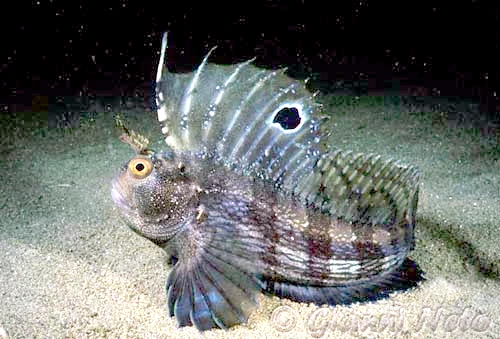
Blennioidei
True blennies are benthic fish with six families and nearly 900 species.

Blennioidei is a suborder of ray-finned fish within the order Blenniiformes, commonly known as the 'true blennies.' These fish are notable for their diverse morphology, benthic lifestyle, and widespread distribution in marine, brackish, and occasionally freshwater habitats. The suborder includes six families, such as the combtooth blennies (Blenniidae) and threefin blennies (Tripterygiidae), and comprises about 151 genera and nearly 900 described species.
Quick Facts
- Taxon
- Blennioidei
- Type Species
- Blennius ocellaris
- Type Species Authority
- Linnaeus, 1758
Facts from the source article.
Lore & Background
The suborder Blennioidei was formerly classified as part of the Perciformes, but the 5th Edition of Fishes of the World reorganized the Perciformes into new orders, placing the Blenniiformes within the percomorph clade Ovalentaria. Eschmeyer's Catalog of Fishes later added many more taxa, including damselfishes and clingfishes, into the Blenniiformes, leading to the redefinition of 'true blennies' as the suborder Blennioidei. The six families recognized are Blenniidae, Chaenopsidae, Clinidae, Dactyloscopidae, Labrisomidae, and Tripterygiidae.
The earliest known blennioid fossil is an otolith-based species, Exallias vectensis, from the Early Eocene of France. Skeletal remains of blennies appear only later, in the Miocene. Blennioids are generally small fish, with elongated bodies, large eyes and mouths, continuous dorsal fins, and pelvic fins with a single embedded spine. Their blunt heads often bear whisker-like cirri. Many blennies are reclusive and benthic, hiding in crevices, burrowing in sand, or inhabiting empty mollusc shells. Some, known as 'rock-hoppers,' leap from water onto rocks to reach other pools.
Reader's Guide
Blennioids are significant for their ecological and biogeographic importance. They are widely distributed in coastal waters, often abundant and easily observed, making them ideal subjects for studies of ecology and behavior. Two families, Blenniidae and Tripterygiidae, have global distributions; Clinidae is mainly temperate; and the remaining three families are largely Neotropical. This distribution pattern has made blennies valuable for biogeographic research, with the splitting of the Tethys Sea by the formation of the Isthmus of Panama and Pliocene warming likely influencing their evolution. Blennioids also exhibit notable mimicry: two genera, Ecsenius and Plagiotremus, demonstrate Batesian mimicry, and Aspidontus taeniatus mimics the bluestreak cleaner wrasse to approach and bite unsuspecting fish. Only one genus, Meiacanthus, is truly venomous, injecting venom containing enkephalin, phospholipase, and neuropeptide Y through hollow fangs. Their secretive lifestyle and cryptic coloration aid in predation avoidance.
Did You Know?
- The name 'blenny' comes from the Greek words for mucus or slime.
- Only one genus of blennies, Meiacanthus, is truly venomous, with hollow fangs that inject venom containing enkephalin.
- Two genera of blennies, Ecsenius and Plagiotremus, exhibit Batesian mimicry.
Taxonomic History and the Six Families
The name Blennioidei traces back to ancient Greek terms for mucus and slime, a nod to the slippery nature of these ray-finned fish. For much of ichthyological history, blennies were tucked inside the sprawling order Perciformes as a mere suborder. That arrangement shifted dramatically when the fifth edition of Fishes of the World broke Perciformes apart into several new orders, slotting Blenniiformes into the percomorph group Ovalentaria, sharing company with cichlids, mullets, and clingfishes. A further complication arose when Eschmeyer's Catalog of Fishes folded damselfishes and clingfishes into Blenniiformes, forcing taxonomists to carve out the true blennies as the distinct suborder Blennioidei. Today this suborder encompasses six families: Blenniidae (home to combtooth and sabre-toothed blennies), Chaenopsidae (pikeblennies, tubeblennies, and flagblennies), Clinidae (including the giant kelpfish), Dactyloscopidae (sand stargazers), Labrisomidae, and Tripterygiidae (threefin blennies). Altogether, roughly 151 genera and close to 900 species have been described. The oldest known blennoid fossil, Exallias vectensis, is identified from an otolith in Early Eocene deposits of France, while full skeletal remains do not surface until the Miocene.
Body Plan and Physical Adaptations
Blennioids are, for the most part, modestly sized fish that rarely exceed 55 centimetres in length, though a few species push toward that upper limit. Their bodies tend to be elongated, and in some lineages the shape becomes almost eel-like, a profile well suited to threading through tight spaces. The head is characteristically blunt and often adorned with elaborate whisker-like appendages known as cirri, which give many species a distinctive, almost ornamental appearance. Eyes and mouths are proportionally large relative to the body. The dorsal fin is frequently a single, long, continuous structure running much of the back. Pelvic fins are short and slender, each bearing a single embedded spine, and they sit ahead of the pectoral fins. The caudal fin is rounded rather than forked or lunate. These shared morphological traits, combined with a generally similar behavioural repertoire, tie the six families of true blennies together as a coherent clade despite their considerable diversity in colour, size, and habitat preference across marine, brackish, and occasionally freshwater environments.
Benthic Lifestyle, Mimicry, and Venom
As predominantly benthic animals, blennioids anchor their lives to the sea floor, spending most of their time in shallow coastal waters. Many are intensely reclusive, burrowing into sandy substrates, squeezing into reef crevices, hiding in the lower reaches of rivers, or even taking up residence inside empty mollusc shells. A remarkable subset, colloquially called rock-hoppers, will actually leap out of the water and onto exposed rocks to hop from one pool to another. When it comes to predation, their strategy is one of stealth: cryptic coloration lets them vanish against the substrate while they lurk in wait. Blennioids are also notable for their mimicry. The species Aspidontus taeniatus impersonates the bluestreak cleaner wrasse, swimming up to larger fish under the guise of a cleaner and then delivering nips or larger bites to the unsuspecting host. Two additional genera, Ecsenius and Plagiotremus, practise Batesian mimicry. On the defensive side, only one genus, Meiacanthus, is genuinely venomous, injecting a cocktail of opioid-like enkephalin, phospholipase, and neuropeptide Y through hollow mandibular fangs.
Global Distribution and Biogeographic Legacy
True blennies enjoy a remarkably broad geographic footprint, thriving in marine, brackish, and even occasionally freshwater coastal habitats around the world. Their abundance and ease of observation have made them a favourite subject for ecological and behavioural research. The two largest families, Blenniidae and Tripterygiidae, possess genuinely global distributions, while Clinidae are concentrated in temperate waters. The remaining three families—Chaenopsidae, Dactyloscopidae, and Labrisomidae—are largely restricted to the Neotropical realm. This patchwork of ranges makes blennioids exceptionally well suited to biogeographic inquiry. Researchers have proposed that the fragmentation of the ancient Tethys Sea, driven by the tectonic formation of the Isthmus of Panama, combined with the climatic warming of the Pliocene epoch, played a pivotal role in shaping the evolutionary trajectories and present-day distributions of the Blenniiformes. In other words, the map of where blennies live today is, in part, a record of continental drift and climate change written in living tissue.
Frequently Asked Questions
What is Blennioidei?
Blennioidei is the suborder that groups together all the 'true blennies,' a collection of ray-finned fish within the order Blenniiformes. These benthic (bottom-dwelling) fish are recognized for their striking morphological variety and their presence across marine, brackish, and even some freshwater environments.
How many species belong to Blennioidei?
The suborder spans six families—including the well-known combtooth blennies (Blenniidae) and threefin blennies (Tripterygiidae)—and encompasses roughly 151 genera with nearly 900 described species. That makes it one of the more species-rich suborders among the blenny-like fishes.
What is the oldest known fossil of a true blenny?
The earliest fossil attributed to Blennioidei is Exallias vectensis, identified from an otolith (ear bone) recovered in Early Eocene deposits in France. This pushes the confirmed fossil record of the group back to roughly 50 million years ago.
Are any true blennies venomous?
Yes. The genus Meiacanthus, commonly called venomcomb blennies, is the only venomous lineage within Blennioidei. Their spines deliver a painful toxin, making them a notable exception among an otherwise non-venomous suborder.
How large can a Blennioidei species get?
While most true blennies are small, the suborder's maximum recorded length reaches about 55 cm. This puts the largest members well beyond the few-centimeter size many casual observers associate with blennies.
More in Blennies 1-24
Spotted an error? Know more?
Reader corrections go straight into our review queue. Suggest an edit · How this site is sourced