Blenniidae
Largest blenny family with comb-like teeth and diverse habitats.

Combtooth blennies are marine fish belonging to the family Blenniidae, within the order Blenniiformes. This family is the largest group of blennies, containing roughly 401 species spread across 58 genera. They live in tropical and subtropical waters of the Atlantic, Pacific, and Indian Oceans, and a few species can also be found in brackish or freshwater habitats.
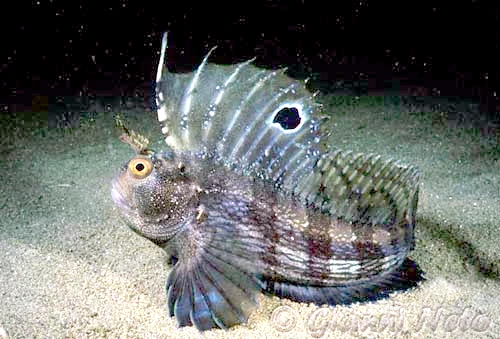
These fish have a body shape typical of all blennioids: a blunt head, large eyes, and a long continuous dorsal fin that can have anywhere from three to 17 spines. Their bodies are compressed, elongated, and lack scales. The small, slender pelvic fins—missing in only two species—have one spine and three to four soft rays, and sit in front of the enlarged pectoral fins. The tail fin is rounded. As their name suggests, combtooth blennies have comb-like teeth lining their jaws. They are active and often brightly colored, which makes them popular in home aquariums. The larvae look similar to adults but have a noticeable preopercular spine that vanishes during metamorphosis. The largest species is the eel-like hairtail blenny, reaching 53 cm (21 in) in length; most other members are much smaller.
Combtooth blennies are generally bottom-dwelling fish, spending most of their time on or near the seafloor. They live in rocky crevices on reefs, burrows in sand or mud, or even empty shells. Usually found in shallow water, some can leave the water briefly during low tide, using their large pectoral fins like feet. Most species eat small bottom-dwelling crustaceans, mollusks, and other sessile invertebrates; others feed on algae or plankton. The genera *Aspidontus*, *Meiacanthus*, *Petroscirtes*, *Plagiotremus*, and *Xiphasia* form a group called fangblennies. Unlike other blennies, they have swim bladders and fang-like teeth with venom glands at their bases. *Aspidontus* and *Plagiotremus* mimic cleaner wrasses by copying their color, shape, and behavior, tricking other fish—or even divers—into letting their guard down so the blennies can bite off a piece of skin or scale.
Some combtooth blennies form small groups, while others are solitary and territorial. They can be active during the day or night, depending on the species. Females lay eggs in shells or under rock ledges, and males guard the nest until the eggs hatch. In some species, the eggs stay inside the female’s oviduct until they hatch.
Quick Facts
- Taxon
- Blenniidae
Facts from the source article.
Lore & Background
Combtooth blennies have a body plan archetypal to all other blennioids: blunt heads, large eyes, large continuous dorsal fins with three to 17 spines, compressed and elongated scaleless bodies, small slender pelvic fins with one spine and three to four soft rays situated in front of enlarged pectoral fins, and rounded tail fins. Their name comes from the comb-like teeth lining their jaws. They are active and often highly colourful, making them popular in the aquarium hobby. Larvae resemble adults but have a prominent preopercular spine that disappears during metamorphosis. The largest species is the eel-like hairtail blenny at 53 cm (21 in); most others are much smaller.
Generally benthic, combtooth blennies spend much time on or near the bottom, inhabiting rocky crevices of reefs, burrows in sandy or muddy substrates, or empty shells. Some can leave water for short periods during low tide using their large pectoral fins as 'feet'. Their primary food includes small benthic crustaceans, mollusks, and other sessile invertebrates; others eat algae or plankton. The genera Aspidontus, Meiacanthus, Petroscirtes, Plagiotremus, and Xiphasia form a monophyletic clade called fangblennies, which have swim bladders and fang-like teeth with venom glands. Aspidontus and Plagiotremus mimic cleaner wrasses to trick other fish or divers into letting down their guard, allowing the blennies to nip skin or scales.
Some combtooth blennies form small groups; others are solitary and territorial. They may be diurnal or nocturnal. Females lay eggs in shells or under rock ledges; males guard the nest until hatching. In some species, eggs may remain in the female's oviduct until hatched. The fry of some species undergo an 'ophioblennius' stage, being pelagic with greatly enlarged pectoral fins and hooked teeth.
Reader's Guide
Combtooth blennies are notable as the largest family of blennies, with around 401 known species in 58 genera, distributed across tropical and subtropical waters worldwide. Their comb-like teeth and diverse habitats—from rocky reefs to burrows and empty shells—highlight their ecological adaptability. The family includes the fangblennies, a monophyletic clade with venomous fangs and swim bladders, and mimics like Aspidontus and Plagiotremus that deceive other fish by imitating cleaner wrasses. Their active, colourful nature makes them popular in the aquarium hobby. The largest species, the hairtail blenny, reaches 53 cm, while most are much smaller. Fossil genera such as Bestiolablennius, Mioblennius, and Tottoriblennius provide a paleontological record, with the otolith-based Exallias vectensis from the Early Eocene of England possibly representing the oldest known member. Their reproductive strategies vary, including egg guarding, oviduct retention, and a pelagic 'ophioblennius' larval stage. Overall, combtooth blennies exemplify a diverse and widespread group of benthic fish with unique morphological and behavioural traits.
Anatomy and the Spectrum of Size
Combtooth blennies carry the archetypal body plan that defines the broader blennioid group. Their heads are blunt and dominated by large eyes, while a single continuous dorsal fin runs along the back, armed anywhere from three to seventeen spines. The body itself is laterally compressed, elongated, and entirely scaleless, giving these fish a smooth, streamlined silhouette. Small, slender pelvic fins—present in all but two species—sit ahead of notably enlarged pectoral fins, and the caudal fin is rounded. True to their common name, the jaws are lined with comb-like teeth. These fish are active swimmers and often display vivid coloration, which has made them a favorite among aquarium enthusiasts. Size varies enormously within the family: the eel-like hairtail blenny stretches to 53 centimeters, yet the overwhelming majority of the roughly 400 known species across 58 genera are far smaller. Even at the larval stage, young blennies resemble their parents, though they bear a prominent preopercular spine that vanishes once metamorphosis is complete.
Life on the Seafloor
As a rule, combtooth blennies are benthic creatures, spending the bulk of their existence on or immediately above the ocean floor. They tuck themselves into rocky crevices on coral reefs, dig burrows through sandy or muddy substrates, or squeeze into abandoned shells. Most species favor shallow tropical and subtropical waters across the Atlantic, Pacific, and Indian Oceans, though a handful venture into brackish estuaries or even fully freshwater habitats. One of their most remarkable traits is the ability of certain species to haul themselves out of the water during low tide, using their large pectoral fins like a pair of stubby feet to walk across exposed rock. Their menus reflect their bottom-dwelling lifestyle: small crustaceans, mollusks, and other sessile invertebrates form the staple diet for most, while a few species shift to grazing algae or filtering plankton. Socially, the family is diverse—some blennies cluster in small groups, others fiercely defend solitary territories, and their activity patterns range from strictly diurnal to nocturnal depending on the species.
Fangs, Venom, and the Art of Deception
Within Blenniidae, five genera—Aspidontus, Meiacanthus, Petroscirtes, Plagiotremus, and Xiphasia—form a monophyletic group known as the fangblennies, and they stand apart from their relatives in several striking ways. Unlike other blenny clades, fangblennies possess swim bladders, and their jaws carry fang-like teeth backed by venom glands at the base. The most notorious members of this group are Aspidontus and Plagiotremus, which have evolved a breathtaking mimicry of cleaner wrasses. By copying the wrasse's coloration, body shape, and even its characteristic cleaning behavior, these blennies lull prey fish and occasionally human divers into a false sense of security. Once the target relaxes and approaches, the blenny darts in and nips a quick mouthful of skin or scale before withdrawing. This deceptive strategy allows a small, bottom-dwelling fish to exploit the trust that other reef inhabitants place in their familiar cleaner neighbors, turning a social interaction into a predatory ambush.
Nesting, Odd Larvae, and a Fossil Legacy
Reproduction in combtooth blennies is shaped by a clear division of labor: females deposit their eggs in protective microhabitats such as empty shells or the shaded undersides of rock ledges, while males take on the duty of guarding the clutch until the young emerge. In a few species the strategy is even more intimate, with eggs retained inside the female's oviduct until they are ready to hatch. The early life of some blenny fry is particularly strange. A subset of species passes through an ophioblennius stage in which the young become pelagic, drifting in the open midwater column with greatly enlarged pectoral fins and hooked teeth—a form that looks almost alien compared to the compressed, scaleless adults. Looking further back in time, the fossil record preserves at least three blenny genera from the Miocene: Bestiolablennius and Mioblennius from Azerbaijan, and Tottoriblennius from Japan. An otolith from the Early Eocene of England, attributed to Exallias vectensis, may represent the oldest known record of the group, pushing its lineage back tens of millions of years.
Frequently Asked Questions
Who is Blenniidae?
Blenniidae is the largest family in the blenny order Blenniiformes, grouping roughly 401 known species into 58 genera. Commonly called combtooth blennies, they are the most species-rich branch of the entire blenny lineage.
What are Blenniidae's signature traits?
Every member shares a blunt head, big eyes, a scaleless and laterally compressed body, and one long dorsal fin bearing three to 17 spines. Their tooth arrangement resembles a fine comb, which is the source of the family's common name.
Where can Blenniidae be found?
The family inhabits tropical and subtropical marine waters across the Atlantic, Pacific, and Indian Oceans. A small number of species tolerate brackish or even fully freshwater settings, pushing the family's range beyond strictly open-ocean habitats.
Why is Blenniidae considered important in the blenny canon?
It accounts for the bulk of blenny diversity and is split into two subfamilies, making it the reference point when biologists discuss blenny evolution. Its size range is striking: from tiny reef dwellers up to the hairtail blenny, which reaches about 53 cm (21 in).
Who are Blenniidae's closest kin?
Blenniidae is one family within the order Blenniiformes, so its nearest relatives are the other blenny families that share the same general body plan. They differ mainly in scale coverage, fin-ray counts, and the specific arrangement of their comb-like teeth.
More in Blennies 1-24
Spotted an error? Know more?
Reader corrections go straight into our review queue. Suggest an edit · How this site is sourced