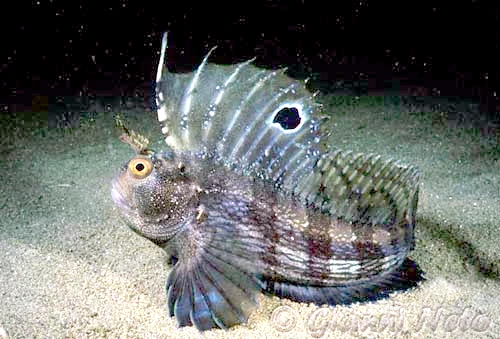
Istiblennius
A genus of combtooth blennies with a sail-like dorsal fin.

The genus *Istiblennius* groups together combtooth blennies native to the Pacific and Indian Oceans. Its name combines the Greek word *istio* (“sail”), a reference to the tall dorsal fin seen in the type species *Istiblennius muelleri*, with *blennius*, a term linked to “mucus” that describes the Blenniidae family’s characteristic lack of scales.
Quick Facts
- Taxon
- Istiblennius
- Type Species
- Salarias muelleri
- Type Species Authority
- Klunzinger, 1879
Facts from the source article.
Lore & Background
The genus Istiblennius belongs to the family Blenniidae, whose members are characterized by scaleless bodies, a feature referenced in the name 'blennius' from a Greek word for 'mucus'. The generic name combines 'istio' (Greek for 'sail') with 'blennius', highlighting the high dorsal fin of the type species, Istiblennius muelleri. The genus comprises 14 recognized species, including the rippled rockskipper (Istiblennius edentulus), the lined rockskipper (Istiblennius lineatus), and the peacock rockskipper (Istiblennius meleagris). These blennies are found in the Pacific and Indian Oceans, with common names such as 'imspringer' for Istiblennius bellus and 'zebra blenny' for Istiblennius zebra.
Reader's Guide
The significance of Istiblennius lies in its representation of combtooth blennies adapted to tropical waters of the Pacific and Indian Oceans. The genus name itself reflects two key traits: the high dorsal fin (like a sail) seen in the type species Istiblennius muelleri, and the scaleless, mucus-covered body typical of the Blenniidae. The 14 species listed include several with descriptive common names—such as the streaky rockskipper, rippled rockskipper, and scarface rockskipper—that hint at their appearance or behavior. The genus was described with contributions from ichthyologists including Günther, Herre, Valenciennes, Rüppell, Forster, Schneider, Klunzinger, Springer, Williams, Pfeffer, Vaillant, and Sauvage. Its legacy is as a well-documented group within the blenny family, with species distributed across a broad geographic range.
Did You Know?
- The generic name 'Istiblennius' combines Greek 'istio' (sail) and 'blennius' (mucus).
- The type species is Istiblennius muelleri, noted for its high dorsal fin.
- There are 14 recognized species in the genus.
- The genus is found in the Pacific and Indian Oceans.
Frequently Asked Questions
What is Istiblennius?
Istiblennius is a genus of combtooth blennies in the family Blenniidae, instantly recognizable by its members' tall, sail-shaped dorsal fin. These small, scaleless, mucus-coated fish are native to the Pacific and Indian Oceans.
Where do Istiblennius blennies live?
All fourteen species in the genus are found across tropical and subtropical waters of the Pacific and Indian Oceans. They typically hang around reef structures, where their slimy, scale-free skin helps them slip into tight crevices.
What does the name Istiblennius actually mean?
The name fuses the Greek word istio, meaning 'sail,' a nod to the prominent dorsal fin of the type species, with blennius, a root tied to 'mucus' that reflects the Blenniidae family's hallmark of being largely scaleless and mucus-rich.
How many species are recognized in Istiblennius?
Fourteen species are currently placed within the genus. Each one shares the combtooth jaw structure and the family-wide trait of lacking true scales in favor of a thick mucus layer.
What is the type species of Istiblennius?
The type species is Istiblennius muelleri, the fish whose notably tall, sail-like dorsal fin inspired the 'istio' portion of the genus name. It serves as the reference point against which the other thirteen species are compared.
More in Blennies 1-24
Spotted an error? Know more?
Reader corrections go straight into our review queue. Suggest an edit · How this site is sourced