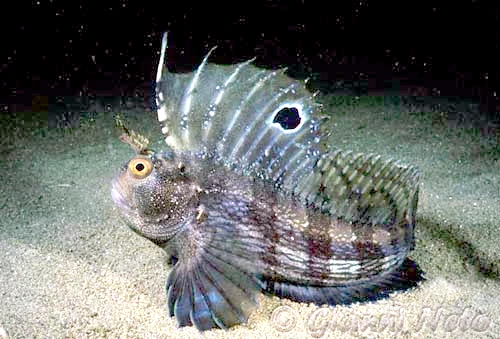
Acanthemblemaria
A genus of chaenopsid blennies with thorn-like spines and cirri.

Acanthemblemaria is a genus of chaenopsid blennies found in both the Atlantic and Pacific Oceans. These fish have elongated bodies with short, blunt heads. Their heads are armed with pointed or blunt spines on the snout and below the eye, and sometimes on top of the head. They also have two rows of well-developed teeth on the roof of the mouth, a single pair of branched or unbranched cirri over each eye, and cirri over the nostrils. A notch usually separates the spiny and soft portions of the dorsal fin. The genus includes 22 recognized species. These blennies are mostly filter feeders, living among coral reefs, rocky reefs, and in abandoned worm and mollusc tubes. Their diet consists mainly of passing benthic crustaceans, zooplankton, and benthic worms.
Quick Facts
- Taxon
- Acanthemblemaria
- Type Species
- Acanthemblemaria spinosa
- Type Species Authority
- Metzelaar, 1919
Facts from the source article.
Lore & Background
The name Acanthemblemaria derives from Greek: 'akantha' meaning thorn, and 'emblema' meaning anything that is nailed or knocked in, also anything with bass or high relief. This etymology reflects the prominent spines found on the snout, below the eye, and sometimes on the top of the head.
Species in this genus have an elongated body and a short, blunt head. They possess pointed or blunt spines on the snout and below the eye, and sometimes on top of the head. There are two rows of very well developed teeth on the roof of the mouth, and one pair of branched or unbranched cirri over the eyes, with additional cirri over the nostrils. The dorsal fin usually has a notch between its spiny and soft parts.
The 22 recognized species include names such as Acanthemblemaria aceroi (blue-spotted barnacle blenny), Acanthemblemaria aspera (roughhead blenny), and Acanthemblemaria spinosa (spinyhead blenny), among others. These species inhabit coral reefs, rocky reefs, and abandoned worm and mollusc tubes.
Reader's Guide
Acanthemblemaria species are mostly filter feeding fishes that inhabit coral reefs, rocky reefs, and abandoned worm and mollusc tubes. Their diet consists primarily of passing benthic crustaceans, zooplankton, and benthic worms. The genus is significant for its morphological adaptations, such as the spines and cirri on the head, which likely aid in camouflage or defense within their reef habitats. The 22 recognized species are distributed across the Atlantic and Pacific Oceans, with many bearing common names that reference barnacles, reflecting their association with barnacle-encrusted environments. The genus was described with contributions from multiple ichthyologists, including Hastings, Eytan, Summers, Longley, Böhlke, and others, as listed in the species inventory. The presence of two rows of teeth on the roof of the mouth is a distinctive dental feature among blennies. The notch in the dorsal fin between spiny and soft rays is another characteristic that helps define the genus. Overall, Acanthemblemaria represents a diverse group of small, reef-associated fishes with specialized feeding and habitat preferences.
Did You Know?
- The genus name combines Greek words for 'thorn' and 'anything that is nailed, knocked in'.
- There are 22 recognized species in the genus Acanthemblemaria.
More in Blennies 1-24
Spotted an error? Know more?
Reader corrections go straight into our review queue. Suggest an edit · How this site is sourced