Dunkel
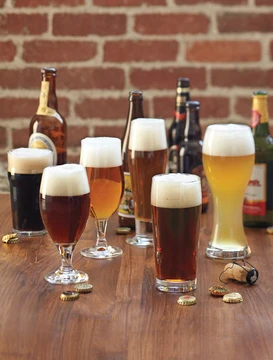
A smooth, malty dark German lager with amber to reddish-brown color.

Dunkel (pronounced [ˌdʊŋkl̩]) and its variant Dunkles ([ˈdʊŋkləs]) refer to several styles of dark German lager. The German word *dunkel* simply means "dark," and these beers typically appear in shades from amber to a deep reddish brown. Their hallmark is a smooth, malty taste. In casual settings—like ordering at a bar—"dunkel" often just means whatever dark beer is on tap or most popular; in northern and western Germany, particularly around Düsseldorf, that could be Altbier. In Bavaria, dunkel (alongside helles) is a traditional style brewed in Munich and enjoyed across the region. Its alcohol content ranges from 4.5% to 6.0% by volume, making it weaker than doppelbocks, another classic dark Bavarian beer. Munich malts provide the color, though other malts or flavorings may be added. Many dunkels get their distinctive malty character from a brewing technique called decoction mashing. Most commonly, dunkel beers are dark lagers, but the term is also used to refer to dark wheat beers such as Franziskaner Hefe-Weisse Dunkel. Another name for these dark wheat beers is dunkel weizen, which are fruity and sweet, with more dark, roasted malts than a standard hefeweizen. **Munich dunkel** Dunkels were the original beer style of Bavarian villages and countryside, and they were the most common type when the Reinheitsgebot was introduced in 1516. That makes dunkel the first "fully codified and regulated" beer. Its ABV rarely exceeds 5.5%, and it has low bitterness, a distinct dark color, and a malty flavor. It is brewed with lager yeasts. Lighter lagers only became common later in the 19th century, after technological advances made them easier to produce. **Franconian dunkel** Dunkel is also widespread in parts of Franconia, such as Franconian Switzerland, where it was originally the most common beer type. The region has many microbreweries, and plenty still produce dunkel. One example is Weissenohe Abbey Brewery (Weissenoher Klosterbrauerei).
- Alcohol by volume
- 4.5% to 6.0%
- Color range
- amber to dark reddish brown
- Typical abv munich dunkel
- rarely higher than 5.5%
- Bitterness
- low
- Yeast type
- lager yeasts
Lore & Background
Dunkels were the original style of the Bavarian villages and countryside, and it was the most common style at the time of the introduction of the Reinheitsgebot (1516). As such, it is the first 'fully codified and regulated' beer. Lighter-colored lagers were not common until the later part of the 19th century when technological advances made them easier to produce. In Bavaria, dunkel, along with helles, is a traditional style brewed in Munich and popular throughout Bavaria. Dunkels are produced using Munich malts, which give the dunkel its color. Other malts or flavors may also be added. Many dunkels have a distinctive malty flavor that comes from a special brewing technique called decoction mashing. Dunkel is also widespread in parts of Franconia, for example the Franconian Switzerland, where it has been originally the most common beer type. The region has a lot of microbreweries, of which many still produce Dunkel. One example is Weissenohe Abbey Brewery (Weissenoher Klosterbrauerei).
Reader's Guide
Dunkel holds significance as the original style of Bavarian villages and countryside, being the most common style at the time of the Reinheitsgebot (1516) and thus the first fully codified and regulated beer. Its legacy is tied to traditional Bavarian brewing, particularly in Munich, where it remains a popular style alongside helles. The use of Munich malts and decoction mashing gives dunkel its characteristic color and malty flavor. While dunkels are weaker than doppelbocks, another traditional dark Bavarian beer, they are a foundational lager style. The term 'dunkel' also extends to dark wheat beers, such as Franziskaner Hefe-Weisse Dunkel, and dunkel weizen, which are fruity and sweet with more dark, roasted malts than hefeweizen. In informal contexts, 'dunkel' may refer to whatever dark beer is on tap, which in parts of north and western Germany could be Altbier. The style's presence in Franconia, with many microbreweries still producing it, underscores its enduring regional importance.
Did You Know?
- Dunkel is the German word meaning 'dark'.
- Dunkels were the most common beer style at the time of the Reinheitsgebot (1516).
- Many dunkels get their distinctive malty flavor from decoction mashing.
- In north and western Germany, especially near Düsseldorf, 'dunkel' may refer to Altbier.
Frequently Asked Questions
What is Dunkel beer?
Dunkel is a family of dark German lagers whose name simply means "dark" in German. These beers span from amber to a deep reddish-brown hue and are defined by a smooth, malty character with low bitterness.
What does Dunkel taste like?
The signature of a Dunkel is a smooth, malty flavor with very little hop bitterness. You'll notice rich, grainy sweetness rather than the roasted or bitter edges you'd find in a porter or stout.
What is the ABV range for Dunkel?
Most Dunkel styles land between 4.5% and 6.0% alcohol by volume. The traditional Munich-brewed variant rarely climbs above 5.5%, keeping it firmly in the easy-drinking range.
Is Dunkel the same thing as Altbier or Schwarzbier?
Not quite. In Bavaria, Dunkel refers to a specific Munich-brewed dark lager, whereas in northern and western Germany—especially around Düsseldorf—the casual term can point to Altbier or other local dark pours. All three use lager yeasts, but their regional recipes and flavor profiles are distinct.
What yeast is used to brew Dunkel?
Dunkel is fermented with bottom-fermenting lager yeasts at cooler temperatures, which gives it a clean, smooth base. This sets it apart from dark ales like porters or stouts that rely on top-fermenting ale yeasts.
More in Beer Styles, Part 2 1-24
Spotted an error? Know more?
Reader corrections go straight into our review queue. Suggest an edit · How this site is sourced