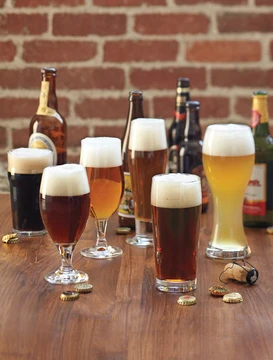
Bourbon barrel aged beer
Beer aged in used bourbon barrels for distinctive oak and spirit flavors.

Mitsjol · CC BY 4.0
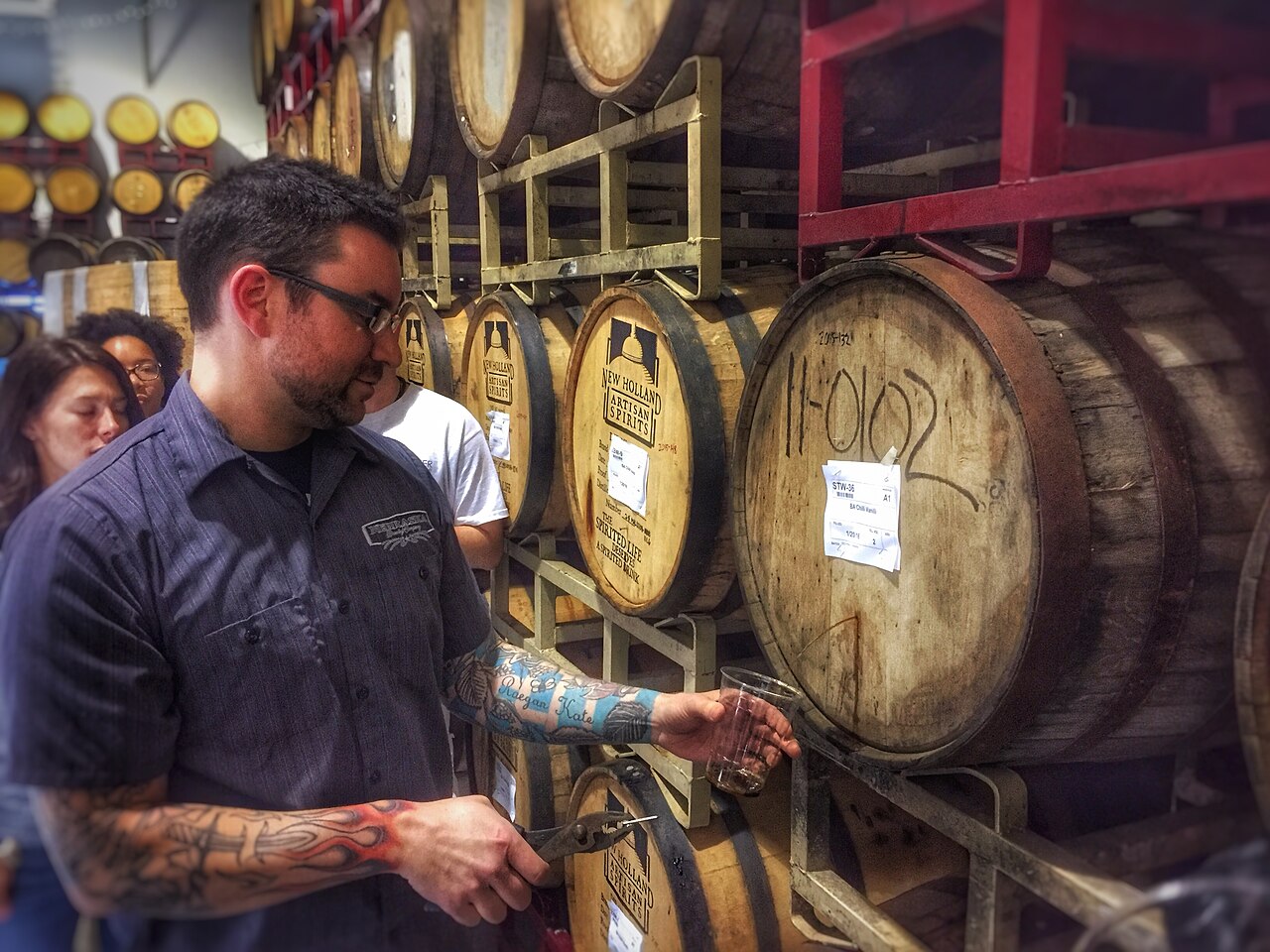
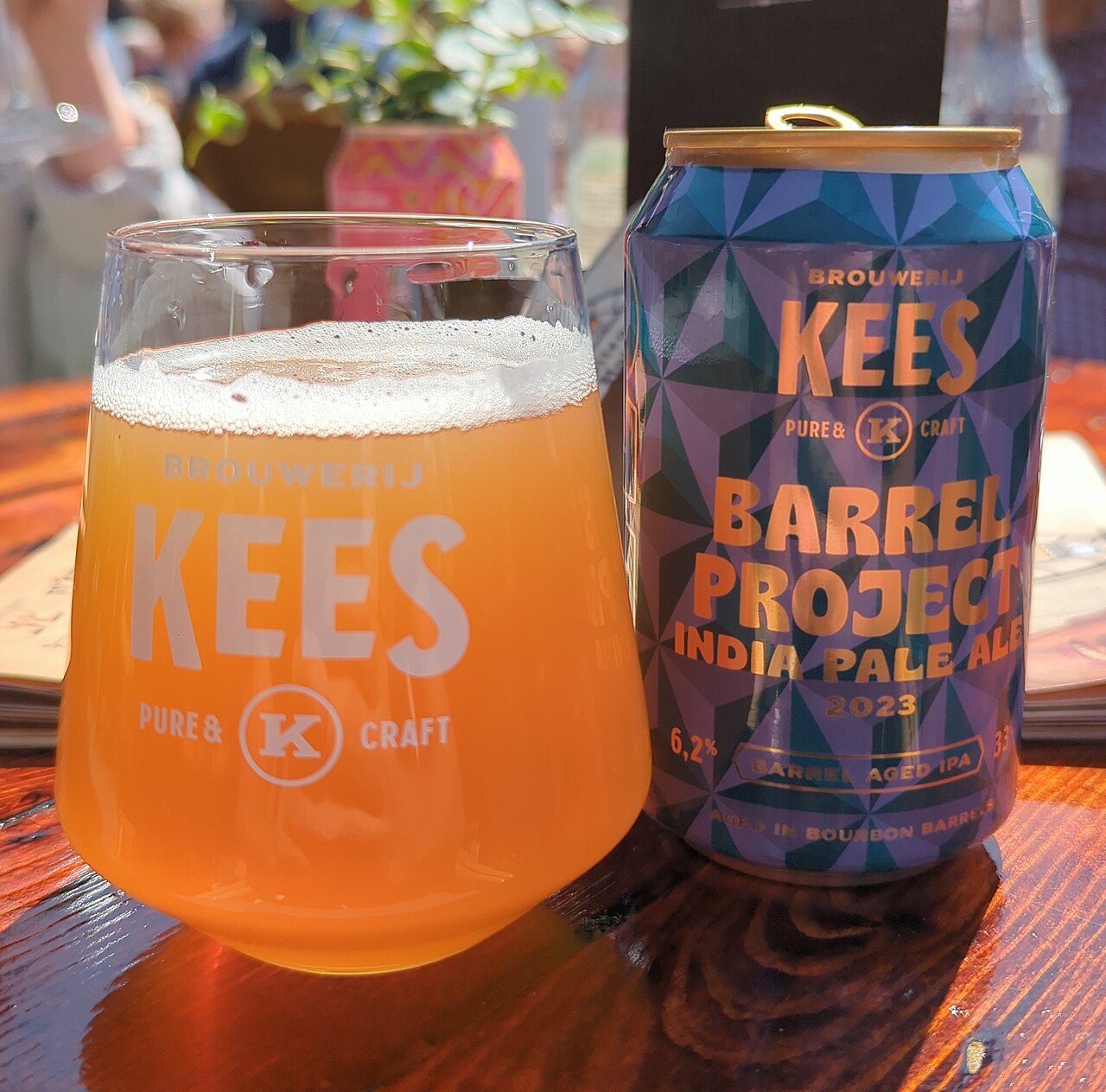
Bourbon barrel aged beer is a style of beer that has been aged in barrels previously used to mature bourbon whiskey. By US law, straight bourbon must be aged in new American white oak barrels, so used bourbon barrels become surplus items that brewers can acquire. These barrels impart flavors of American oak, such as coconut, dill, and sweet spices, accentuated by the charring of the barrel interior. Bourbon barrels are by far the most common oak barrels used by brewers in the United States.
- First produced
- 1992
- First brewery
- Goose Island
- First beer
- Bourbon County Stout
- Location
- Chicago
- Barrel source
- Jim Beam
- Typical beer style
- Imperial stout
Lore & Background
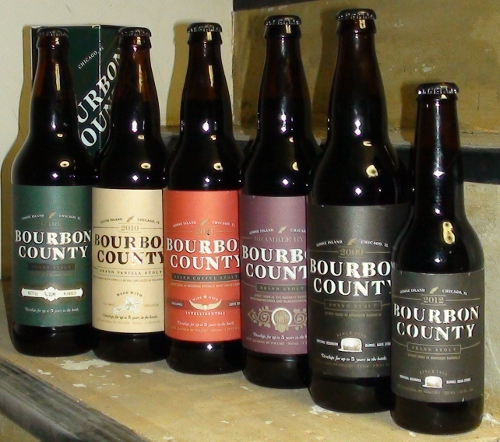
Goose Island's Bourbon County Stout was one of the first bourbon barrel-aged beers, first produced by Greg Hall in Chicago in 1992, when Jim Beam gave the brewer a couple of used barrels. Goose Island's Brett Porter said: 'We let the warehouse run to Chicago temperatures—cold winters, followed by hot humid summers—that causes the staves in our bourbon barrels to bring in and then force out liquid, and that's where the flavour comes from.' Chicago also hosts an annual Festival of Wood- and Barrel-Aged Beer (FoBAB), the world's largest beer festival and competition of its kind.
Other breweries began following Goose Island's lead, typically ageing rich Imperial stouts. Some early successes were Founders KBS (Kentucky Breakfast Stout), The Bruery's Black Tuesday and The Lost Abbey's Angel's Share (barley wine). America's enthusiasm for Bourbon barrel-ageing inspired Harviestoun in Scotland to join forces with the Highland Park Scotch whisky distillery, resulting in the Ola Dubh range of barrel-aged black ales, aged in whisky casks of varying ages up to 40 years. Chris Pilkington of Põhjala said 'We've learned the best barrels give noticeably better results.'
Since bourbon barrels are only used once, they are often sold on to producers of other spirits who eventually sell them on again to breweries for barrel-ageing beer. The Bruery, which specializes in experimental barrel-aged and sour beers, has used bourbon, rye, brandy, rum, tequila, Scotch whisky and many other spirit barrels to age beer for anywhere from six to eighteen months.
Reader's Guide
Bourbon barrel aged beer emerged in the early 1990s in the United States, with Goose Island's Bourbon County Stout as a pioneering example. The practice relies on the unique US law requiring straight bourbon to be aged in new American white oak barrels, creating a steady supply of used barrels for brewers. Each distillery uses its own blend of oak and level of charring, leading to distinct differences in the flavors brewers can derive. The barrel ageing process is influenced by warehouse temperatures, as the expansion and contraction of the staves from Chicago's cold winters and hot humid summers drives flavor extraction. Other breweries quickly adopted the technique, typically ageing rich Imperial stouts, and the style inspired international collaborations such as Harviestoun's partnership with Highland Park Scotch whisky distillery in Scotland. The Bruery has expanded the concept by using a wide variety of spirit barrels, including bourbon, rye, brandy, rum, tequila, and Scotch whisky, for ageing periods of six to eighteen months. The annual Festival of Wood- and Barrel-Aged Beer in Chicago remains the world's largest competition of its kind, reflecting the style's significance in the craft beer movement.
Origins: The 1992 Chicago Spark
The modern tradition of aging beer in bourbon barrels traces back to the early 1990s in the United States. The landmark moment came in 1992 in Chicago, when brewer Greg Hall at Goose Island produced what is widely regarded as one of the first bourbon barrel-aged beers, Bourbon County Stout. The catalyst was remarkably simple: Jim Beam handed Hall a couple of used barrels, and he put them to work. This single act set off a cascade that would reshape how American brewers thought about wood, flavor, and fermentation. The legal framework of bourbon production actually made this possible. Under US law, straight bourbon must be aged in new American white oak barrels, meaning each barrel gets exactly one shot at maturing whiskey. For distilleries, those used barrels become surplus inventory. For brewers, they became an almost limitless source of flavor potential. Each distillery employs its own blend of oak and its own degree of interior charring, so no two barrels deliver quite the same profile. The result is that bourbon barrels remain, by a wide margin, the most common type of oak barrel in American brewing today.
The Craft of Wood and Flavor
Choosing the right barrel is where barrel-ageing becomes less a recipe and more an art. Oak dominates the practice, but brewers have experimented with chestnut, ash, poplar, cedar, acacia, cypress, redwood, pine, and even eucalyptus, each yielding different results. Within oak itself, the species, the region where the tree grew, and how the wood was treated all shift the flavor profile dramatically. A fresh, untreated barrel can push notes of wood, vanilla, dill, spice, and toastiness into the beer, but new oak is expensive and therefore rare in brewing. Most barrel-aged beers rely instead on the ghost of what came before. Tannins and lactones leach from the wood, while residual bourbon, whisky, wine, brandy, sherry, or port left in the staves adds layers of sweetness, spice, and fruit. Belgian lambic brewers, by contrast, often source used barrels from wine regions in Spain, Portugal, Greece, and France, and some of their casks are up to 150 years old. Willem Van Herreweghen of Timmermans notes that chestnut barrels are essentially neutral, contributing no discernible taste, while oak lends a vanilla-like quality he describes simply as oaky.
The Belgian Lambic Heritage
Long before American brewers ever thought about bourbon staves, the Zenne Valley and Pajottenland in Belgium had been fermenting and aging lambic beers in wooden barrels since the 13th century. By 1900 the region supported at least three hundred lambic makers across Brussels and the surrounding countryside. The process is fundamentally microbial: microflora living in the wood drive a spontaneous fermentation, and traditional brewers concentrated their work in the colder months to minimize spoilage. Aging typically runs one to three years. The barrels themselves are a living archive, coming in three principal sizes: Brussels tuns around 250 litres, pipes near 600 litres, and foeders stretching to 10,000 litres or more. New barrels are almost never used; instead, brewers collect second-hand casks from wine regions across Europe or from fellow breweries that have shut down, sometimes identifiable by old markings. Timmermans, one of the oldest surviving breweries dating to 1702, still works with both oak and chestnut. The tradition is so deeply rooted that when American craft brewers attempted to replicate the style, the High Council for Artisanal Lambic Beers intervened, insisting they adopt the term Méthode Traditionnelle rather than Méthode Gueuze.
From Niche to Ubiquity and Back
The trajectory of barrel-aged beer in the modern era reads like a case study in trend cycles. In 2016, Craft Beer and Brewing observed that the style had become so trendy that nearly every taphouse and beer store carried a dedicated section. Two years later, Food and Wine declared that a process once considered niche had turned not just mainstream but ubiquitous. Craft breweries began building entire identities around the practice: Cantillon in Belgium focused exclusively on lambic barrel-ageing, The Rare Barrel specialized in sour beers, Põhjala concentrated on Baltic porters, and Jester King developed its Méthode Traditionnelle program. Mikkeller even operated a custom barrel-ageing facility at a former shipyard in Copenhagen. Yet by 2023, the Boston Globe reported that demand had cooled noticeably and the beers were becoming much harder to find. The pendulum had swung. What was once a scarce, almost cult-like offering in a few American taprooms had saturated the market, and the very ubiquity that defined its peak may have contributed to the pullback. The story of bourbon barrel-aged beer, in other words, is as much about cultural appetite as it is about oak and yeast.
Gallery
Frequently Asked Questions
Who is Bourbon barrel aged beer?
This style traces its origin to 1992, when Goose Island in Chicago brewed Bourbon County Stout using barrels sourced from Jim Beam. That single release is widely credited as the first dedicated example of the category.
What are Bourbon barrel aged beer's powers/role?
The charred interior of a used bourbon cask releases American white-oak compounds—coconut, dill, sweet spice, and a toasty vanilla note—into whatever beer sits inside it. Those woody, spirit-adjacent flavors layer on top of the base beer, most often an imperial stout, creating a complex, barrel-driven profile.
Why is Bourbon barrel aged beer important?
Bourbon barrels are by far the most common oak casks American brewers use, making this style the backbone of U.S. wood-aging tradition. It also turned a whiskey-industry byproduct into a celebrated flavor vehicle, giving craft brewers a legal and economical way to add depth without adding actual spirits.
What's Bourbon barrel aged beer's typical base style?
Imperial stout is the go-to foundation because its high alcohol, dark malt richness, and low carbonation can absorb and complement the intense oak and charred-spirit character of the barrels. Other robust styles appear occasionally, but imperial stout remains the canonical pairing.
More in Beer Styles, Part 2 1-24
Spotted an error? Know more?
Reader corrections go straight into our review queue. Suggest an edit · How this site is sourced