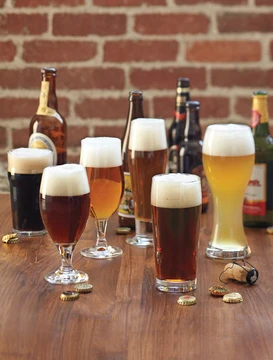
Altbier
A top-fermented German ale with lager-like character.

© 1971markus · CC BY-SA 4.0
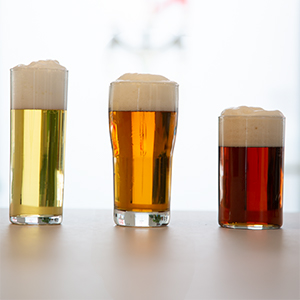
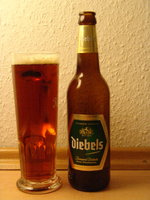
Altbier, whose name means "old beer" in German, is a style from the Rhineland, particularly around Düsseldorf. Its copper colour comes from the use of top-fermenting yeast, an older technique than the bottom fermentation used for lagers. What sets it apart is that after a moderate-temperature fermentation that adds some fruitiness, it is aged at cooler temperatures, resulting in a flavour closer to lager than to typical top-fermented ales like British pale ale. Its alcohol content usually falls between 4.3% and 5.5%.
The first brewery to use the name "Altbier" to distinguish its top-fermented product from bottom-fermented ones was Schumacher in Düsseldorf, which opened in 1838. Large-scale producers include Diebels and the Radeberger Gruppe, which markets Schlösser Alt and Hansa Alt. Smaller breweries are found in Düsseldorf and nearby cities. Some of these breweries make a stronger version called sticke alt, from a local dialect word meaning "secret"—originally a special reserve for the brewers themselves, now often a seasonal or special-occasion beer. There is a regional rivalry between Altbier drinkers in the Düsseldorf area and those who drink Kölsch in Cologne.
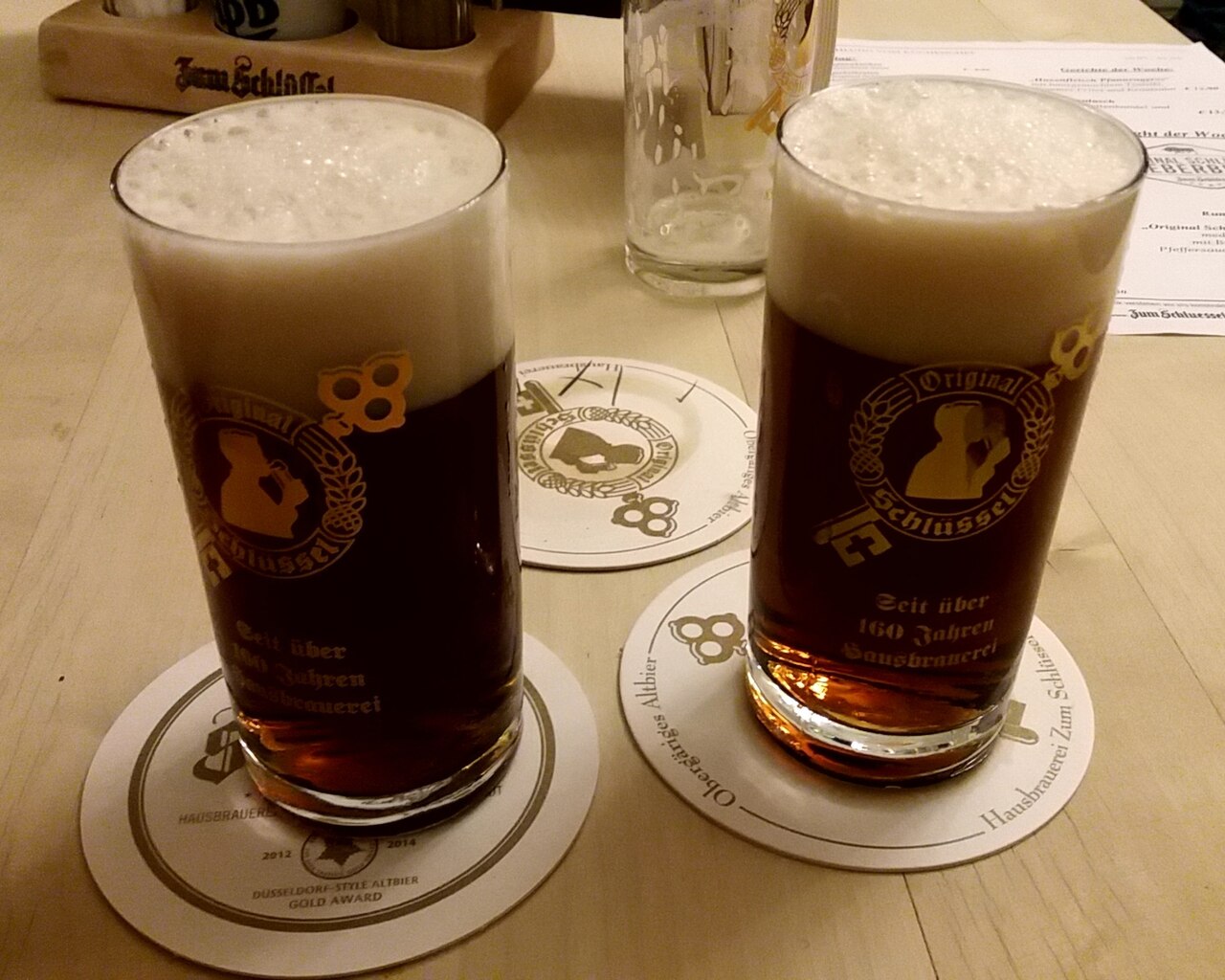
Altbier is associated with the Lower Rhine region, especially Düsseldorf, Krefeld, and Mönchengladbach. In Düsseldorf, seven bars brew Altbier on site: Füchschen, Kürzer, Schumacher, Schlüssel, Uerige, Alter Bahnhof (Gulasch Alt), and Brauhaus Joh Albrecht (Johann Albrecht Alt). Füchschen, Uerige, Schlüssel, and Kürzer are all in the Altstadt (Old Town); Schumacher is between the Altstadt and the main train station, though it also has a pub in the Altstadt called Im Goldenen Kessel, across from Schlüssel. Each brewpub produces a seasonal "Sticke" variant in small quantities, though names vary—Schlüssel spells it "Stike", while Schumacher calls its special beer "Latzenbier" (meaning "slat beer", possibly because the kegs were stored on raised shelves). Füchschen's seasonal is its Weihnachtsbier (Christmas beer), available in bottles from mid-November and served at the brewpub on Christmas Eve.
Outside Düsseldorf, Altbier is made by Diebels in Issum, Gleumes in Krefeld, Bolten in Korschenbroich, Warsteiner in Warstein (which owns the brand Frankenheim Alt, originally from Düsseldorf), and Fiege in Bochum.
- Colour
- dark, copper
- Abv range
- 4.3% to 5.5%
- First brewery to use name altbier
- Schumacher brewery of Düsseldorf (opened 1838)
- Number of brewpubs in düsseldorf brewing
- 7
- Stronger version name
- sticke alt (local dialect word meaning 'secret')
Lore & Background
Altbier is a style associated with the Lower Rhine region, especially Düsseldorf, Krefeld, and Mönchengladbach. The first producer to use the name Altbier—to contrast its top-fermenting beer with the bottom-fermenting kinds—was the Schumacher brewery of Düsseldorf, which opened in 1838. The beer is fermented at a moderate temperature using a top-fermenting yeast, which gives its flavour some fruitiness, but because it is then matured at a cooler temperature, its flavour is more akin to lager beer styles than is the norm for top-fermented beers such as British pale ale.
Some Altbier breweries have a tradition of producing a stronger version called sticke alt, from a local dialect word meaning 'secret'. Originally made as a special reserve beer intended for the brewers' own consumption, today it is generally a seasonal or special occasion brew. There exists a regional rivalry between drinkers of Altbier in the Düsseldorf area and drinkers of Kölsch beer in the Cologne (Köln) area.
In Düsseldorf, seven bars brew Altbier on the premises: Füchschen, Kürzer, Schumacher, Schlüssel, Uerige, Alter Bahnhof (Gulasch Alt), and Brauhaus Joh Albrecht (Johann Albrecht Alt). Each brewpub produces a seasonal 'Sticke' variant in small quantities, though the names vary: Schlüssel spells it 'Stike', while Schumacher calls its special beer 'Latzenbier'. Füchschen's seasonal is its Weihnachtsbier (Christmas beer), available in bottles starting mid-November and served in the brewpub on Christmas Eve.
Reader's Guide
Altbier's significance lies in its role as a traditional top-fermented beer from the Rhineland that bridges the gap between ales and lagers. Its name itself reflects a historical distinction: 'old beer' versus the newer bottom-fermented lagers. The style is deeply rooted in Düsseldorf, where seven brewpubs produce it on premises, each with its own seasonal 'Sticke' variant. Mass-market brewers such as Diebels and the Radeberger Gruppe (under brands Schlösser Alt and Hansa Alt) have spread the style beyond its regional heartland, while small breweries in Düsseldorf and nearby cities maintain its artisanal character. The style has also been produced outside Germany, notably in Venlo, Netherlands, since at least 1753, with a revival in 1983. In the United States, Widmer Brothers is often considered the first American brewer to produce the style, though not always to traditional recipes. Altbier's legacy includes a regional rivalry with Kölsch from Cologne, and its production in small quantities in countries including Austria, Switzerland, Hungary, the UK, Canada, Australia, and Japan.
Did You Know?
- The name Altbier means 'old beer' and refers to its top-fermentation method, which is older than bottom fermentation of lagers.
- A stronger version called 'sticke alt' comes from a local dialect word meaning 'secret'.
Gallery
Frequently Asked Questions
Who is Altbier?
Altbier is a top-fermented ale rooted in the Rhineland, especially the Düsseldorf region. Its German name simply means 'old beer,' a nod to the older top-fermentation technique it still relies on.
What are Altbier's powers/role?
It ferments at moderate temperatures with top-fermenting yeast for a touch of fruitiness, then conditions at cooler temperatures to deliver a clean, lager-like finish. It pours a dark copper colour and typically lands between 4.3% and 5.5% ABV.
Why is Altbier important?
It preserves a pre-lager brewing tradition in a region now dominated by bottom-fermented styles, acting as a living bridge between ale and lager methods. Its cold-conditioning step gives it a crispness that sets it apart from fruitier British pale ales.
What's Altbier's secret?
The stronger variant is called 'Sticke Alt,' with 'sticke' being a local dialect word meaning 'secret.' This bolder iteration pushes past the usual 4.3–5.5% range for a more assertive, higher-alcohol experience.
More in Beer Styles, Part 2 1-24
Spotted an error? Know more?
Reader corrections go straight into our review queue. Suggest an edit · How this site is sourced