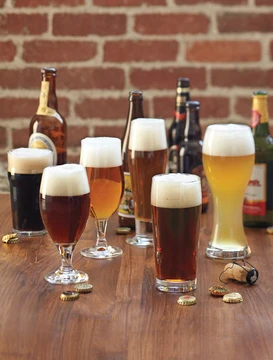
Berliner Weisse
A cloudy, sour wheat beer from Northern Germany.

Bernt Rostad from Oslo, Norway · CC BY 2.0
Berliner Weisse (German: Berliner Weiße, pronounced [bɛʁˌliːnɐ ˈvaɪsə]; "Berlin White") is a cloudy, sour wheat beer with an alcohol content of roughly 3.5% by volume. This style, which originated in Northern Germany, has been documented as far back as the 16th century. Its production requires malted barley and wheat, with the malts kilned at very low temperatures or air-dried to keep colour minimal. Fermentation involves a blend of yeast—Saccharomyces cerevisiae and Brettanomyces—alongside lactic acid bacteria, which gives the beer its characteristic sour taste. At the height of Berliner Weisse production in the 19th century, it was the most popular alcoholic drink in Berlin, and 700 breweries produced it. By the late 1900s, only two breweries in Berlin remained. Regarding its history, most beer experts trace Berliner Weisse to an unknown beer from Hamburg that was copied and refined by the 16th-century brewer Cord Broihan. His creation, Halberstädter Broihan, gained wide popularity, and a version was being brewed in Berlin by the 1640s, thanks to the physician J. S. Elsholz. Another theory, put forward by Protz among others, suggests that migrating Huguenots developed the beer from local red and brown ales as they moved through Flanders into Northern Germany. Some sources, such as Dornbusch, cite 1572 as the earliest record of the beer being brewed in Berlin. Frederick Wilhelm promoted its spread across Prussia, declaring it "best for our climate," and had his son, Frederick the Great, trained to brew it. A well-known anecdote claims Napoleon’s troops called it "The Champagne of the North" in 1809. Modern strength typically hovers around 3% ABV, though historical strength may have varied. Traditionally, March-brewed beers (Märzen) were stronger and aged over summer, and there is evidence that Berliner Weisse was sometimes treated the same way, with bottles buried in sand or warm earth. In brewing, modern methods use a low proportion of wheat—usually between 25% and 50%—and create sourness either through a secondary fermentation in the bottle (Jackson suggests bottles were traditionally buried in warm earth for months) or by adding Lactobacillus. Early 19th-century records indicate the beer was made from five parts wheat to one part barley, drunk young, with little sign of sourness from secondary fermentation or added bacteria.
- Abv
- around 3.5% (modern typical strength around 3%)
- Hop bitterness
- 3-6 IBUs
- Wheat proportion
- modern methods use 25% to 50% wheat; early 19th century records indicate five parts wheat to one part barley
- Fermentation agents
- mixture of yeast (Saccharomyces cerevisiae and Brettanomyces) and lactic acid bacteria
- Peak production breweries
- 700 breweries produced it at the height of production
- Late 20th century breweries
- only two breweries left in Berlin
Lore & Background
Most beer authorities trace the origins of Berliner Weisse to an unknown beer being produced in Hamburg which was copied and developed by the 16th century brewer Cord Broihan. Broihan's beer, Halberstädter Broihan, became very popular, and a version was being brewed in Berlin by the Berlin doctor J. S. Elsholz in the 1640s. An alternative possibility is that migrating Huguenots developed the beer from local red and brown ales as they moved through Flanders into Northern Germany. Some sources give the date 1572 as being the earliest record of the beer being brewed in Berlin. Frederick Wilhelm encouraged the spread of the beer through Prussia, declaring it as 'best for our climate', and having his son, Frederick the Great, trained to brew it. A popular story is that Napoleon's troops dubbed it 'The Champagne of the North' in 1809. By the late 19th century, Berliner Weisse was the most popular alcoholic drink in Berlin, with up to fifty breweries producing it. By the late 20th century, there were only two breweries left in Berlin producing the beer. The two Berlin breweries, Berliner Kindl and Schultheiss, are both now owned by the Oetker Group and one of the few brands still produced in Berlin is Berliner Kindl Weisse. Berliner Weisse is highly carbonated and has very low hop bitterness (3-6 IBUs). Modern brewing methods use a low proportion of wheat, generally ranging from 25% to 50%, and deliberately create a sourness either by a secondary fermentation in the bottle or by adding Lactobacillus. Records from the early 19th century indicate that the beer was brewed from five parts wheat to one part barley, and drunk young, with little indication of creating sourness with either a secondary fermentation or by adding Lactobacillus.
Reader's Guide
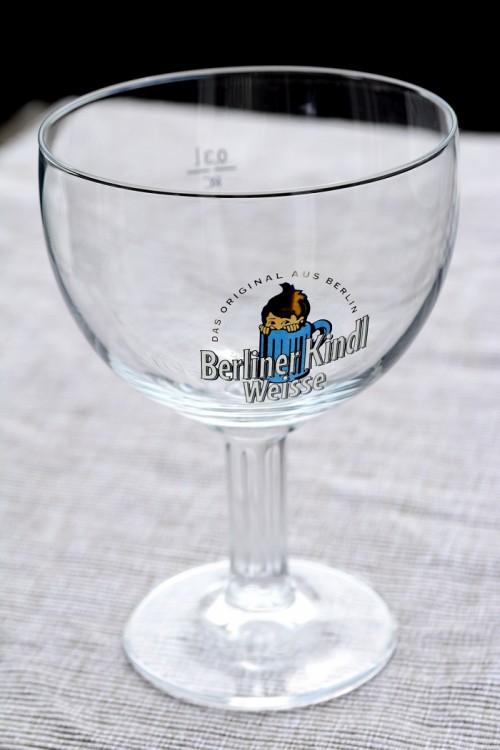
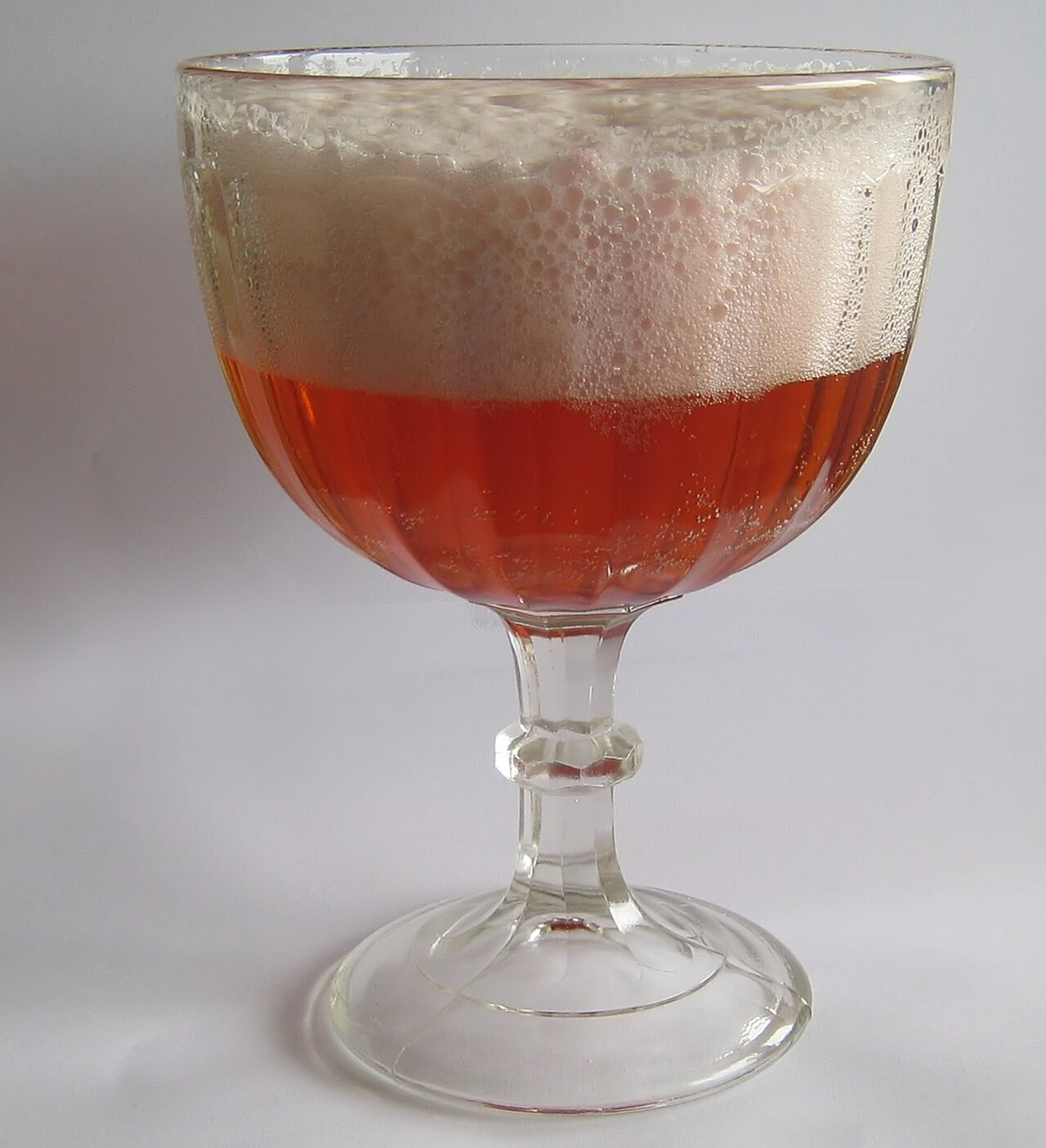
Berliner Weisse holds a significant place in beer history as the most popular alcoholic drink in Berlin during the late 19th century, when up to fifty breweries produced it. Its origins are traced to at least the 16th century in Northern Germany, with competing theories involving a Hamburg beer copied by Cord Broihan, or Huguenot migrants developing it from local ales. The style was championed by Frederick Wilhelm, who declared it 'best for our climate' and had his son Frederick the Great trained to brew it. Napoleon's troops reportedly called it 'The Champagne of the North' in 1809. By the late 20th century, production had dwindled to only two breweries in Berlin, both now owned by the Oetker Group, with Berliner Kindl Weisse as one of the few remaining brands. The beer is defined by its cloudy appearance, sourness from lactic acid bacteria, low alcohol content, and very low hop bitterness. It is traditionally served in a bowl-shaped glass with flavored syrups such as raspberry or artificial woodruff flavoring, and may also be mixed with pale lager to balance sourness. Its legacy is one of a once-dominant regional style that nearly disappeared but persists through a handful of producers.
Did You Know?
- Berliner Weisse is fermented with a mixture of yeast (Saccharomyces cerevisiae and Brettanomyces) and lactic acid bacteria, which creates its distinctive lactic acid taste.
- At the height of its production in the 19th century, 700 breweries produced Berliner Weisse.
- Napoleon's troops reportedly dubbed Berliner Weisse 'The Champagne of the North' in 1809.
- Berliner Weisse is often served with flavored syrups such as raspberry (Himbeersirup) or artificial woodruff flavoring (Waldmeistersirup).
Definition & Classification
Berliner Weisse is a top-fermented beer brewed with a large proportion of wheat relative to the amount of malted barley, placing it firmly within the wheat beer family. It is recognized as a minor variety among wheat beers, standing alongside other distinctive styles such as Gose, a sour and salty beer, and Lambic, which is made with wild yeast. Unlike the two main wheat beer varieties—German Weizenbier and Belgian witbier—Berliner Weisse is defined by its cloudy appearance and sour character. The style's identity rests on two pillars: its significant wheat content and its tart, acidic profile. Together, these qualities distinguish it from the sweeter, more malty expressions of wheat brewing found in Bavaria and Belgium, and position it as a unique voice within the broader wheat beer tradition.
Sensory Profile & Character
The defining sensory traits of Berliner Weisse are its low alcohol content and its deliberate tartness. At just 2.5 to 3 percent alcohol by volume, it is notably lighter than most other wheat beer styles, which typically range from about 4.9 to 5.6 percent ABV in the case of Hefeweizen, or even higher in bock variants. The beer is intentionally tart, a quality that sets it apart from the banana-and-clove phenolic notes of Bavarian wheat beers or the spice-forward profile of Belgian witbier. Its cloudy appearance is another hallmark, a visual cue that aligns it with unfiltered, traditional brewing. The combination of low strength, pronounced acidity, and hazy clarity makes Berliner Weisse one of the most refreshing and distinctive expressions in the wheat beer spectrum.
Serving Traditions & Accompaniments
One of the most distinctive aspects of Berliner Weisse is the tradition of adding sweetened syrups before drinking. Commonly used flavors include lemon, raspberry, and woodruff herb, each of which softens the beer's natural tartness and introduces a contrasting sweetness. This practice transforms the drinking experience, turning a sharply sour, low-alcohol beer into a more balanced and approachable beverage. The addition of these syrups is not merely a garnish but an integral part of how the style is meant to be enjoyed. It reflects a broader brewing culture in which the beer itself is designed to be a canvas for flavor, inviting the drinker to personalize the final taste. This interactive element of service sets Berliner Weisse apart from most other wheat beer styles, where the flavor is typically fixed at the brewery.
Place in the Wheat Beer Family
Within the taxonomy of wheat beers, Berliner Weisse occupies a unique and somewhat peripheral position. The wheat beer family is broadly divided into two main varieties—German Weizenbier and Belgian witbier—followed by a group of other styles that include Berliner Weiße, Gose, and Lambic. What unites all of these is the use of a significant proportion of wheat in the mash, though the resulting beers differ dramatically in flavor, fermentation method, and character. Berliner Weisse shares the top-fermented, wheat-rich foundation with its Bavarian and Belgian cousins, yet diverges sharply in its sour, cloudy, low-alcohol profile. Its classification as a minor variety underscores that it represents a smaller, more regional expression of the wheat beer tradition, one that prioritizes acidity and refreshment over the malty sweetness or spiced complexity found in other styles.
Gallery
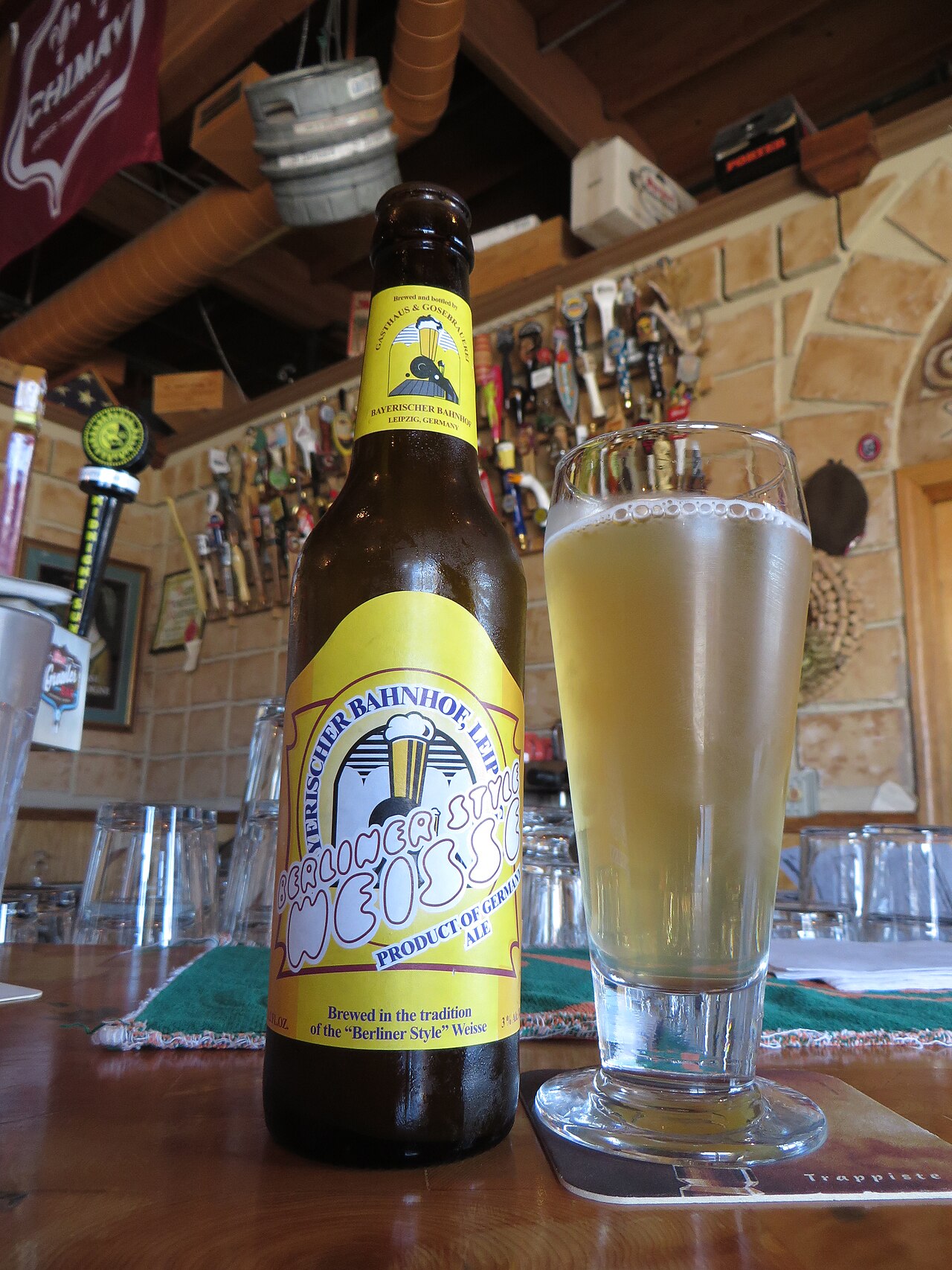
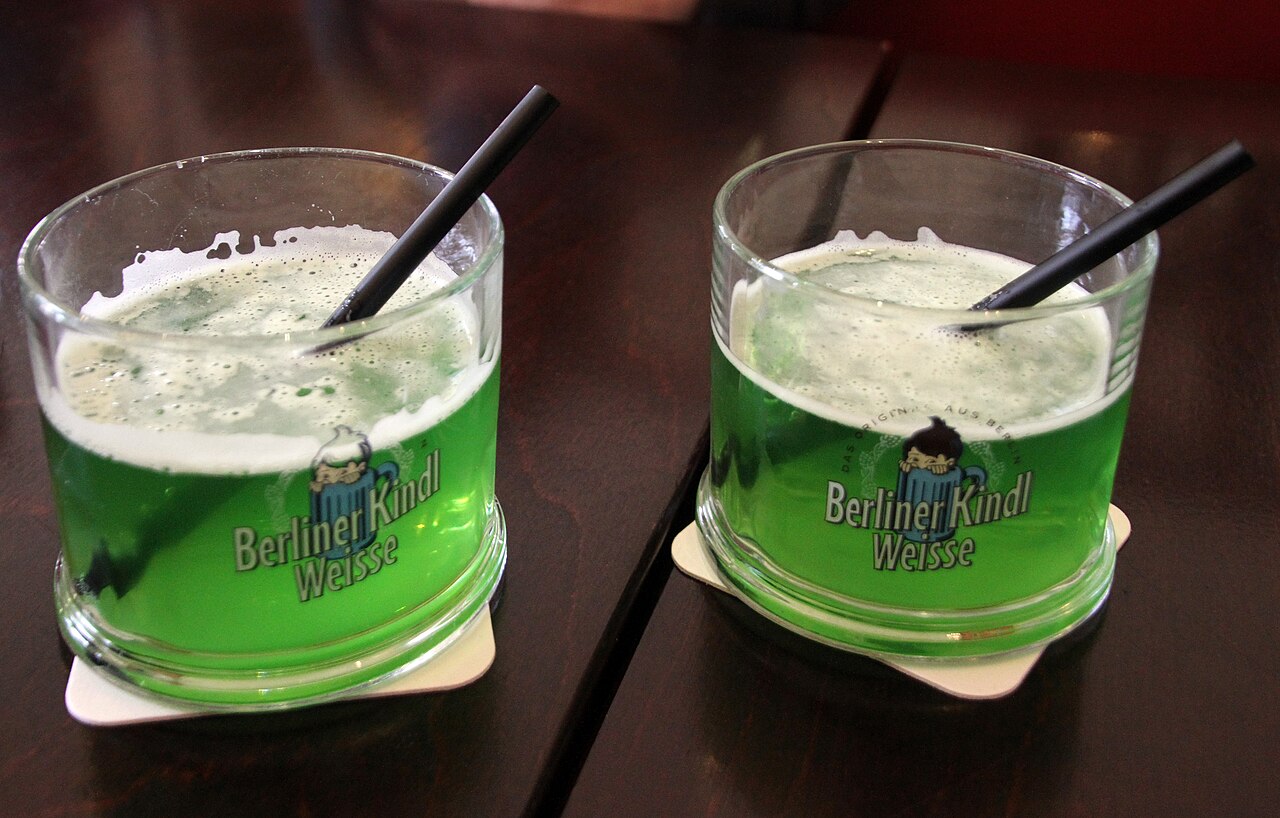
Frequently Asked Questions
What is Berliner Weisse?
It is a cloudy, tart wheat beer that originated in Northern Germany, with documented brewing as early as the 16th century. The style is made from malted barley and wheat kilned at very low temperatures to keep the colour pale, and it typically sits around 3% to 3.5% ABV.
What gives Berliner Weisse its sour taste?
The sharp acidity comes from a mixed fermentation that blends Saccharomyces cerevisiae and Brettanomyces yeasts with lactic acid bacteria. This combination produces the bright, tangy profile that defines the style and sets it apart from other wheat beers.
How strong and bitter is Berliner Weisse?
Modern examples usually land between 3% and 3.5% ABV, making it a light, easy-drinking beer. Hop bitterness is deliberately kept very low at roughly 3 to 6 IBUs, so the sourness and wheat character dominate the palate.
What happened to Berliner Weisse's production over time?
At the height of its popularity, around 700 breweries in Berlin were turning out the style, but by the late 20th century only two remained in the city. A small revival in the 1990s brought the beer back from the brink of local extinction.
What is the wheat-to-barley ratio in Berliner Weisse?
Modern brewing methods call for 25% to 50% wheat in the grain bill. Early 19th-century records indicate a far heavier wheat emphasis, with roughly five parts wheat to one part barley.
More in Beer Styles, Part 2 1-24
Spotted an error? Know more?
Reader corrections go straight into our review queue. Suggest an edit · How this site is sourced