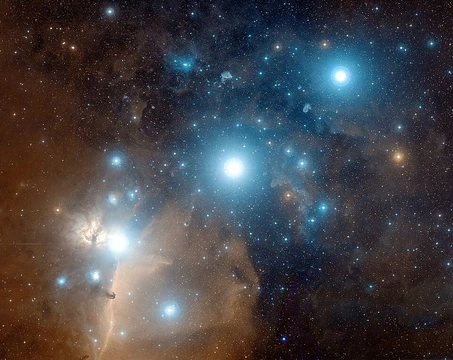
Visible-light astronomy
The oldest and most accessible form of astronomy, using visible light.

Visible-light astronomy, also known as optical astronomy, encompasses astronomical observation using telescopes sensitive to visible light, which ranges from 380 to 750 nanometers in wavelength. It is the oldest and most commonly practiced form of astronomy, as it requires no equipment for basic stargazing and has existed as long as humans have looked at the night sky.
- Wavelength range
- 380 to 750 nanometers
- First recorded telescope patent applican
- Hans Lippershey
- Early telescope magnification by galileo
- 3×, later up to 30×
- Galileo first telescopic astronomical pu
- Sidereus Nuncius (Starry Messenger), March 1610
- Hubble space telescope launch year
- 1990
- Hubble spectral range
- near ultraviolet, visible, and near infrared
Lore & Background
Before telescopes, astronomy relied solely on unaided eyesight, with humans observing stars and constellations for thousands of years. Hans Lippershey, a German-Dutch spectacle-maker, is commonly credited as the first to invent the optical telescope and to apply for a patent, though it is unclear if he built the first one. Based on descriptions of Lippershey's telescope, Galileo Galilei made a telescope with about 3× magnification the following year, later improving it to up to 30×. Galileo demonstrated an early telescope to Venetian lawmakers on 25 August 1609 and published his initial telescopic observations in March 1610 in Sidereus Nuncius. The human eye, aided by optics, remained the only image sensor until astrophotography emerged in the 19th century.
In the modern day, visible-light astronomy is widely practiced by amateurs, as telescopes are more accessible than when first invented. Government agencies like NASA are involved in research and observation. The highest quality data now come from space telescopes outside Earth's atmosphere, avoiding atmospheric disruption and allowing observations at any time. The Hubble Space Telescope, launched in 1990 and still operating, observes in near ultraviolet, visible, and near infrared spectra, producing highly detailed images that have led to breakthroughs such as accurately determining the universe's expansion rate.
Three main types of optical telescopes exist: refracting telescopes (using lenses), reflecting telescopes (using mirrors), and catadioptric telescopes (combining lenses and mirrors). Each has different aberrations: refracting telescopes suffer chromatic aberration, reflecting telescopes have off-axis aberrations, and catadioptric designs vary. Light pollution from artificial sources and the Moon hinders observation; special filters and remote viewing sites help, but space telescopes avoid both light pollution and atmospheric distortion.
Reader's Guide
Visible-light astronomy's significance lies in its accessibility and historical depth. It is the oldest form of astronomy, requiring no equipment for basic stargazing, making it the most commonly participated in type. The invention of the telescope, credited to Hans Lippershey and advanced by Galileo, transformed human understanding of the sky. Galileo's improvements allowed magnified views of celestial objects, leading to his published observations in Sidereus Nuncius. The field remained limited to the human eye until astrophotography emerged in the 19th century. In the modern era, telescopes are widely available to the public, and agencies like NASA conduct research. Space telescopes, such as the Hubble Space Telescope launched in 1990, provide the clearest observations by avoiding atmospheric interference, enabling detailed study of distant objects and contributing to major astrophysical discoveries. The three main telescope types—refracting, reflecting, and catadioptric—each have distinct optical characteristics and aberrations. Light pollution from artificial sources and the Moon remains a challenge, prompting astronomers to seek dark sites or use space-based observatories. Commonly observed objects include the Moon, meteors, planets, constellations, and stars, many of which are visible without instruments.
Did You Know?
- Hans Lippershey is the first recorded person to apply for a patent for a telescope.
- Galileo Galilei made a telescope with about 3× magnification based on descriptions of Lippershey's design.
More in Astrophotography, Part 2 1-24
Spotted an error? Know more?
Reader corrections go straight into our review queue. Suggest an edit · How this site is sourced