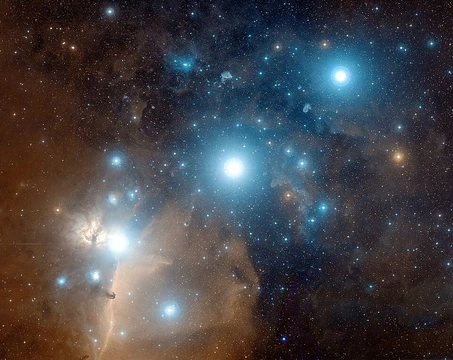
Radio astronomy
Passive observation of celestial objects using radio waves.

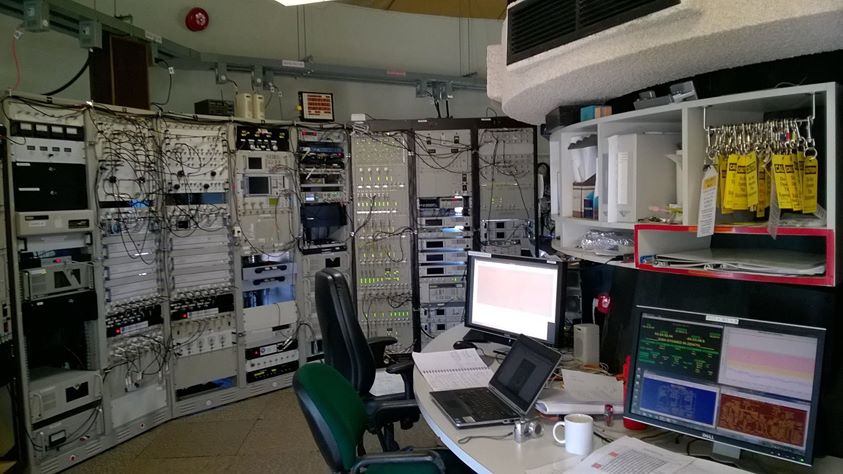
Maksym Kozlenko · CC BY-SA 4.0
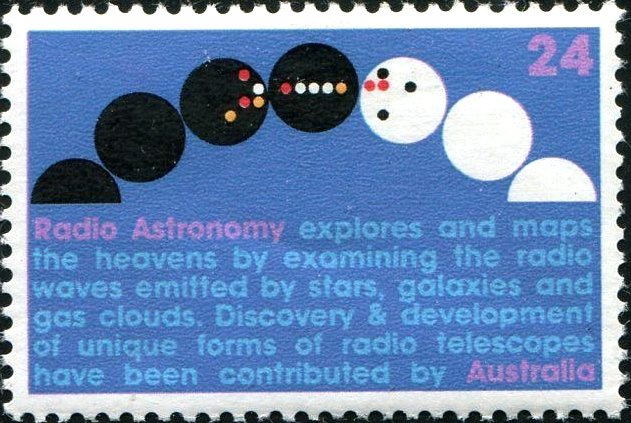
Radio astronomy is a branch of astronomy that examines celestial objects by detecting radio waves. The field began in 1933, when Karl Jansky, an engineer at Bell Telephone Laboratories, accidentally discovered radiation coming from the Milky Way. Since then, astronomers have identified many radio-emitting sources, including stars, galaxies, and entirely new types of objects like radio galaxies, quasars, pulsars, and masers. Radio astronomy also led to the detection of the cosmic microwave background radiation, which is considered strong evidence for the Big Bang theory.
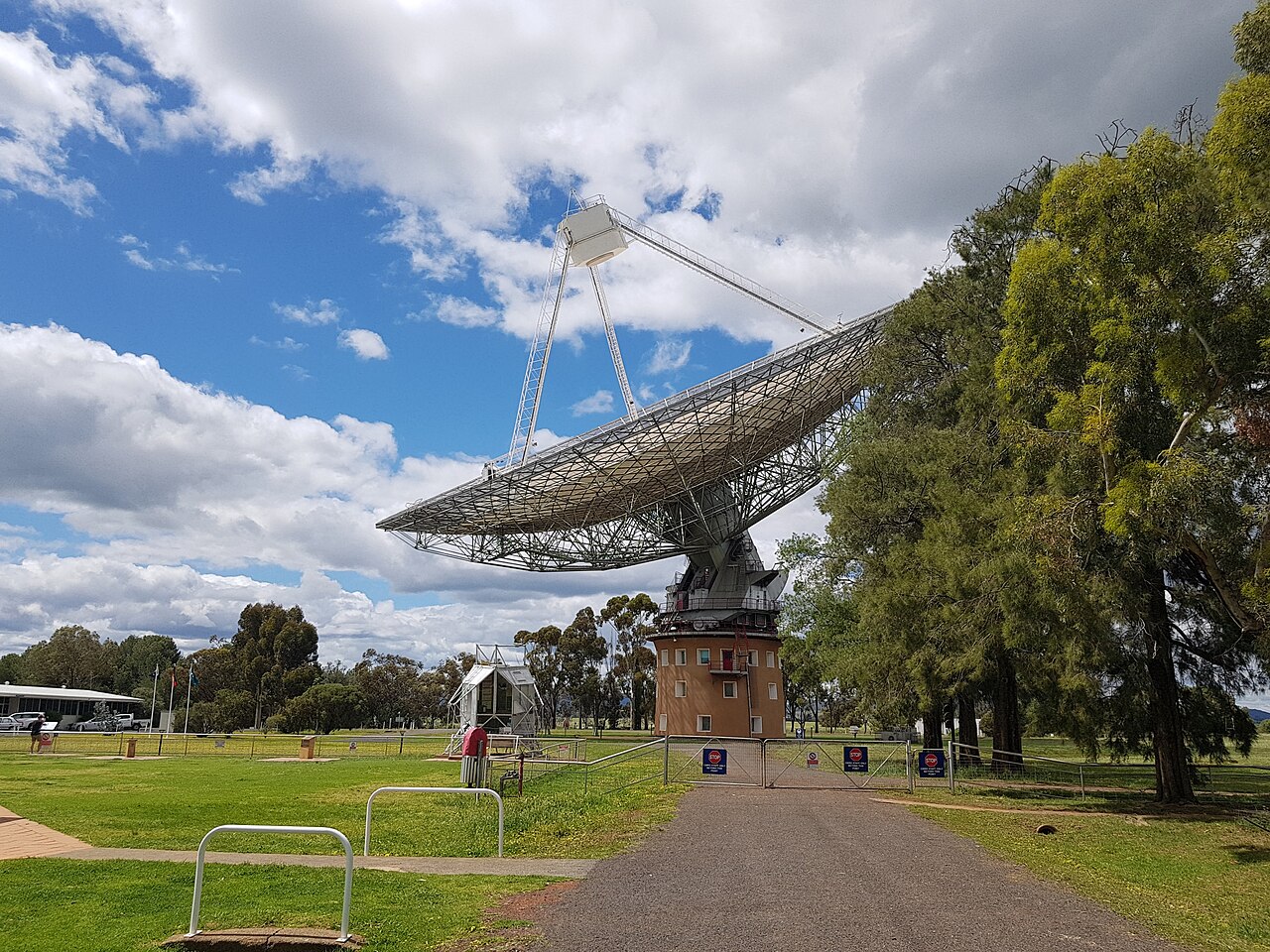
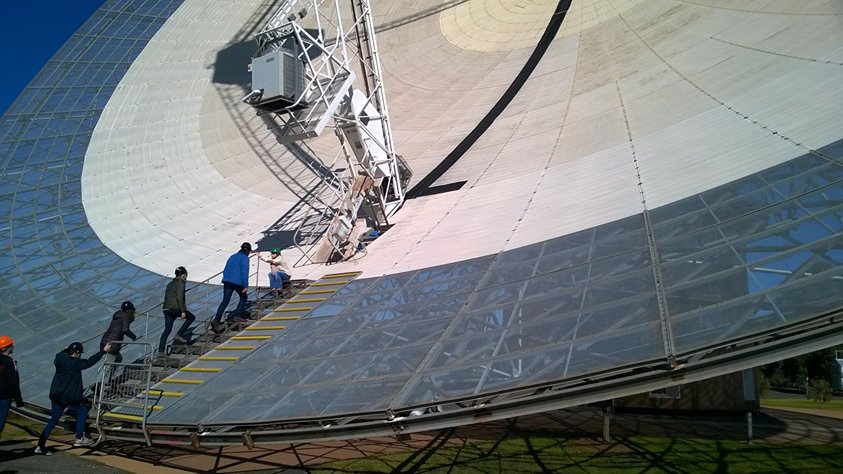
To observe these signals, scientists use large radio antennas called radio telescopes. These can be used alone or linked together using techniques like radio interferometry and aperture synthesis. Interferometry gives radio astronomy very high angular resolution because the resolving power depends on the distance between the telescopes, not their individual sizes. Unlike radar astronomy, which actively sends out signals and listens for echoes, radio astronomy is purely passive—it only receives natural radio waves from space.
The history of radio astronomy began with early speculation. In the 1860s, James Clerk Maxwell’s equations showed that electromagnetic radiation could exist at any wavelength, leading several researchers to try detecting radio waves from the Sun. German astrophysicists Johannes Wilsing and Julius Scheiner attempted this in 1896, and Oliver Lodge built a centimeter-wave apparatus between 1897 and 1900, but all failed due to technical limits. In 1902, the discovery of the ionosphere—a layer that reflects radio waves—led physicists to believe that any solar or astronomical radio signals would be bounced back into space and thus undetectable.
In the early 1930s, Karl Jansky made the first accidental discovery of an astronomical radio source. Hired by Bell Labs to investigate static interfering with transatlantic voice transmissions, he used a large directional antenna and noticed a persistent hiss on his recording system. The signal peaked roughly every 24 hours, so Jansky initially thought it came from the Sun. But the cycle was actually 23 hours and 56 minutes—a sidereal day. His friend, astrophysicist Albert Melvin Skellett, explained that this matched the time it took for fixed stars to cross the antenna as Earth rotated.
- First detection year
- 1933
- First detector
- Karl Jansky
- First detection location
- Bell Telephone Laboratories
- First radio telescope builder
- Grote Reber
- First radio telescope diameter
- 9 meters (30 ft)
- First solar radio detection year
- 1942
- First solar detector
- James Stanley Hey
Lore & Background
Before Karl Jansky's observations in the 1930s, physicists speculated that radio waves could be observed from astronomical sources. In the 1860s, James Clerk Maxwell's equations showed that electromagnetic radiation could exist at any wavelength. Over the next few decades, several attempts to detect radio emissions from the Sun failed due to technical limitations. In 1896, German astrophysicists Johannes Wilsing and Julius Scheiner attempted detection; between 1897 and 1900, Oliver Lodge set up a centimeter wave apparatus; and in 1902, the discovery of the radio-reflecting ionosphere led physicists to conclude that solar radio transmissions would be bounced back into space. In the early 1930s, Jansky, a radio engineer at Bell Telephone Laboratories, was investigating static that might interfere with short wave transatlantic voice transmissions. Using a large directional antenna, he recorded a persistent repeating signal that peaked every 23 hours and 56 minutes—a sidereal day. With help from astrophysicist Albert Melvin Skellett, Jansky concluded the source was the densest part of the Milky Way in Sagittarius. He announced his discovery in April 1933, and the field was born. In 1937, radio amateur Grote Reber built a 9-meter parabolic radio telescope in his backyard in Wheaton, Illinois, and conducted the first sky survey in radio frequencies. On 27 February 1942, James Stanley Hey made the first detection of radio waves from the Sun; later that year, George Clark Southworth also detected solar radio waves. Both were bound by wartime security, so Reber published his 1944 findings first. In the 1950s, Jansky's peak radio source was designated Sagittarius A, now thought to be ions in orbit around a massive black hole at Sagittarius A*.
Reader's Guide
Radio astronomy is conducted using large radio antennas called radio telescopes, used alone or linked via radio interferometry and aperture synthesis. Interferometry allows high angular resolution because the resolving power is set by the distance between components, not their size. Observations from Earth are limited to wavelengths that pass through the atmosphere; the ionosphere reflects waves below its plasma frequency, and water vapor interferes at higher frequencies, leading to observatories at very high and dry sites. Radio telescopes must be extremely large to receive weak signals, and their angular resolution is much poorer than optical telescopes of similar size. The field's legacy includes the discovery of entirely new classes of objects—radio galaxies, quasars, pulsars, and masers—and the cosmic microwave background radiation, which supports the Big Bang theory. The fundamental unit of flux density, the jansky (Jy), is named after Karl Jansky. In the 1950s at Cambridge University, Martin Ryle and Antony Hewish developed Earth-rotation aperture synthesis, later used to create the One-Mile and 5 km effective apertures and the Second and Third Cambridge Catalogues of Radio Sources.
Did You Know?
- Karl Jansky discovered the first astronomical radio source in 1933 while investigating static for Bell Telephone Laboratories.
- Grote Reber built the first parabolic radio telescope, 9 meters in diameter, in his backyard in Wheaton, Illinois in 1937.
- The cosmic microwave background radiation, evidence for the Big Bang theory, was discovered through radio astronomy.
Citizen Science Contributions
Amateur astronomers, while not primarily motivated by research, have made meaningful and sometimes remarkable contributions to the scientific record. They monitor variable stars, track double star systems, count sunspots, and observe occultations where the Moon or asteroids pass in front of stars. Perhaps most strikingly, amateurs have discovered transient events such as comets, galactic novae, and supernovae in distant galaxies. These contributions place hobbyists alongside professional researchers in the broader enterprise of understanding the cosmos. Many experienced amateurs even work directly alongside professional astronomers, assisting in observations and data collection. This collaborative dimension blurs the traditional boundary between casual stargazing and formal scientific inquiry, demonstrating that meaningful astronomical discovery is not exclusively the province of credentialed researchers or those holding advanced academic degrees in astrophysics.
Historical Evolution and the Amateur-Professional Divide
The practice of watching the sky for patterns stretches back to early civilizations. Babylonians, Chaldeans, and ancient Egyptian observers used nothing more than their eyes and simple tools to track celestial bodies, predict eclipses, and construct calendars that guided agricultural decisions. For millennia, this was simply how people understood the heavens. The formal separation between amateur and professional astronomy emerged only in the twentieth century, when the discipline became a clearly distinguished academic and institutional pursuit. Before that, many figures who would later be recognized as professional astronomers had first studied the sky in an amateur capacity. In the mid-nineteenth century, the hobby began popularizing among broader audiences, initially among wealthy Grand Amateurs, and then expanded dramatically after World War II when equipment became more accessible, drawing millions of participants into the practice.
Equipment and Methodology
The toolkit of the amateur astronomer spans an extraordinary range. At one end, a person needs nothing more than unaided eyes or a pair of binoculars, which offer a wider field of view and greater portability than most telescopes. At the other end, dedicated observers operate portable telescopes, private or club observatories, and even home-built radio telescopes. Grote Reber, working as an amateur in the late 1930s, constructed the first purpose-built radio telescope to follow up Karl Jansky's discovery of radio emissions from space. Today, digital cameras, DSLRs, and specialized CCD and CMOS sensors have made astrophotography far more accessible. For locating targets, enthusiasts use setting circles with celestial coordinates or fully automated GOTO mounts. Some build or commission custom telescopes, while others travel to rural areas to escape the sky glow that light pollution creates.
Community, Education, and Public Engagement
Amateur astronomy is deeply social. Enthusiasts commonly join astronomical societies that advise newcomers, educate members, and guide individuals toward finding and observing celestial objects. These organizations also work to promote the science of astronomy to the general public. One particularly visible form of outreach is sidewalk astronomy, where observers set up telescopes in public spaces for casual viewing. This practice serves a dual purpose: it sparks interest in astronomy and science more broadly, and it raises awareness of the growing problem of light pollution, which washes out natural darkness and makes celestial observation increasingly difficult. The hobby thus functions not only as a personal pursuit of passion and education but as a bridge connecting communities to the night sky, fostering curiosity and civic engagement around the challenges of preserving dark skies.
Gallery
Frequently Asked Questions
Who is credited with discovering radio astronomy and when did it happen?
In 1933, Karl Jansky, an engineer working at Bell Telephone Laboratories, stumbled upon faint radiation emanating from the Milky Way while troubleshooting static in communication equipment. That accidental observation is widely regarded as the birth of the entire field.
What exactly does radio astronomy do?
It is a branch of astronomy that studies celestial objects by detecting the radio-frequency waves they emit, rather than relying on visible light. This passive listening approach lets astronomers probe phenomena that are invisible or obscured in the optical spectrum.
What major objects or phenomena did radio astronomy reveal?
The field uncovered entirely new classes of sources, including radio galaxies, quasars, pulsars, and masers. It also produced the detection of the cosmic microwave background radiation, which stands as one of the strongest pieces of evidence supporting the Big Bang model.
Who built the first purpose-built radio telescope and what did it look like?
Grote Reber constructed the first dedicated radio telescope, a parabolic dish roughly 9 meters (30 feet) in diameter. It was a pioneering instrument that moved radio observation beyond incidental engineering measurements into a deliberate scientific practice.
Why is radio astronomy considered important to the broader field of astrophotography and astronomy?
It opened a completely new observational window into the universe, revealing objects and radiation that optical telescopes simply cannot see. Discoveries like the cosmic microwave background and pulsars reshaped cosmology and stellar physics, showing that the sky is far richer than what our eyes or cameras can capture in visible light.
More in Astrophotography, Part 2 1-24
Spotted an error? Know more?
Reader corrections go straight into our review queue. Suggest an edit · How this site is sourced