
Radio telescope
A specialized antenna and receiver for detecting cosmic radio waves.

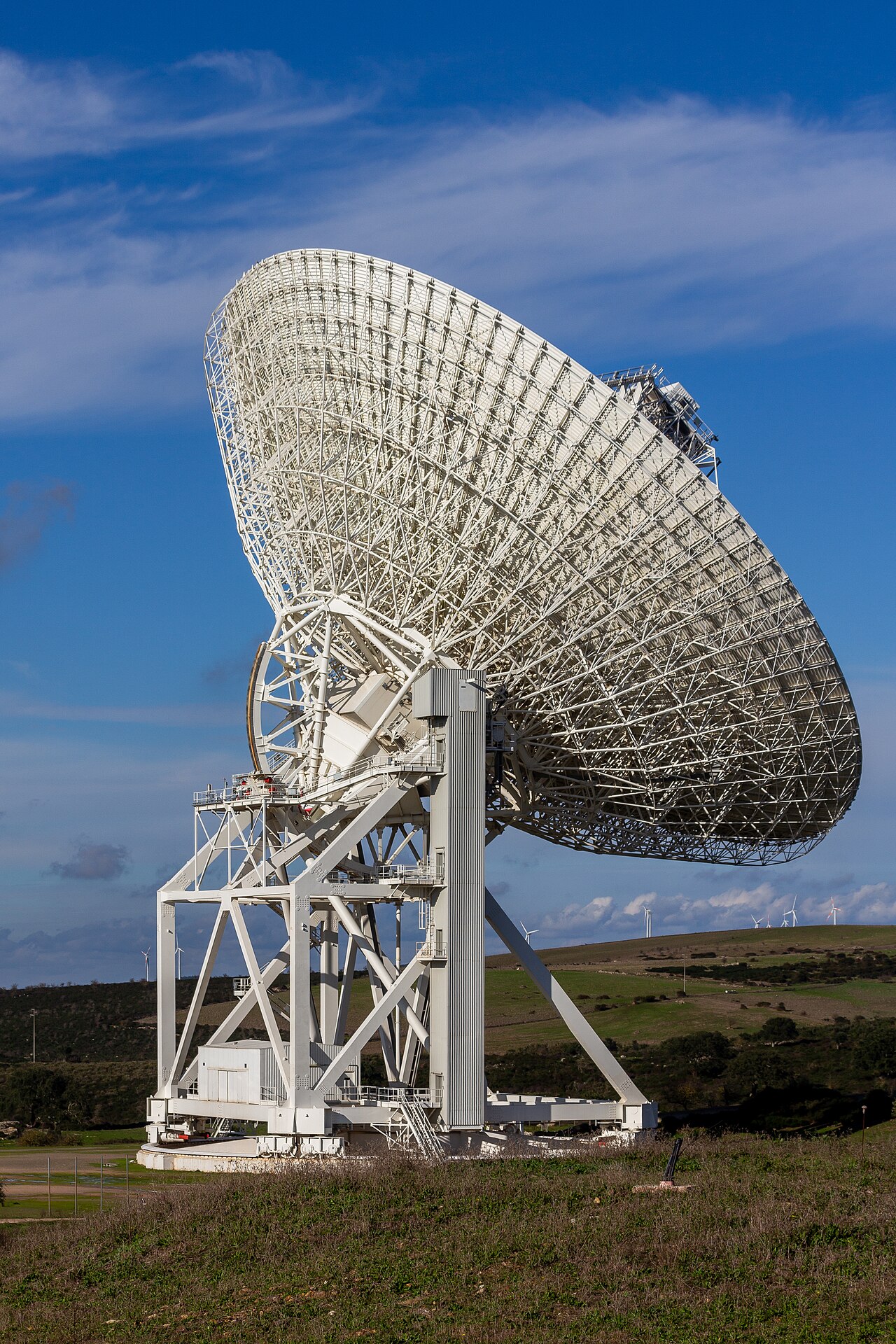
Photograph by Mike Peel ( www.mikepeel.net ). · CC BY-SA 4.0
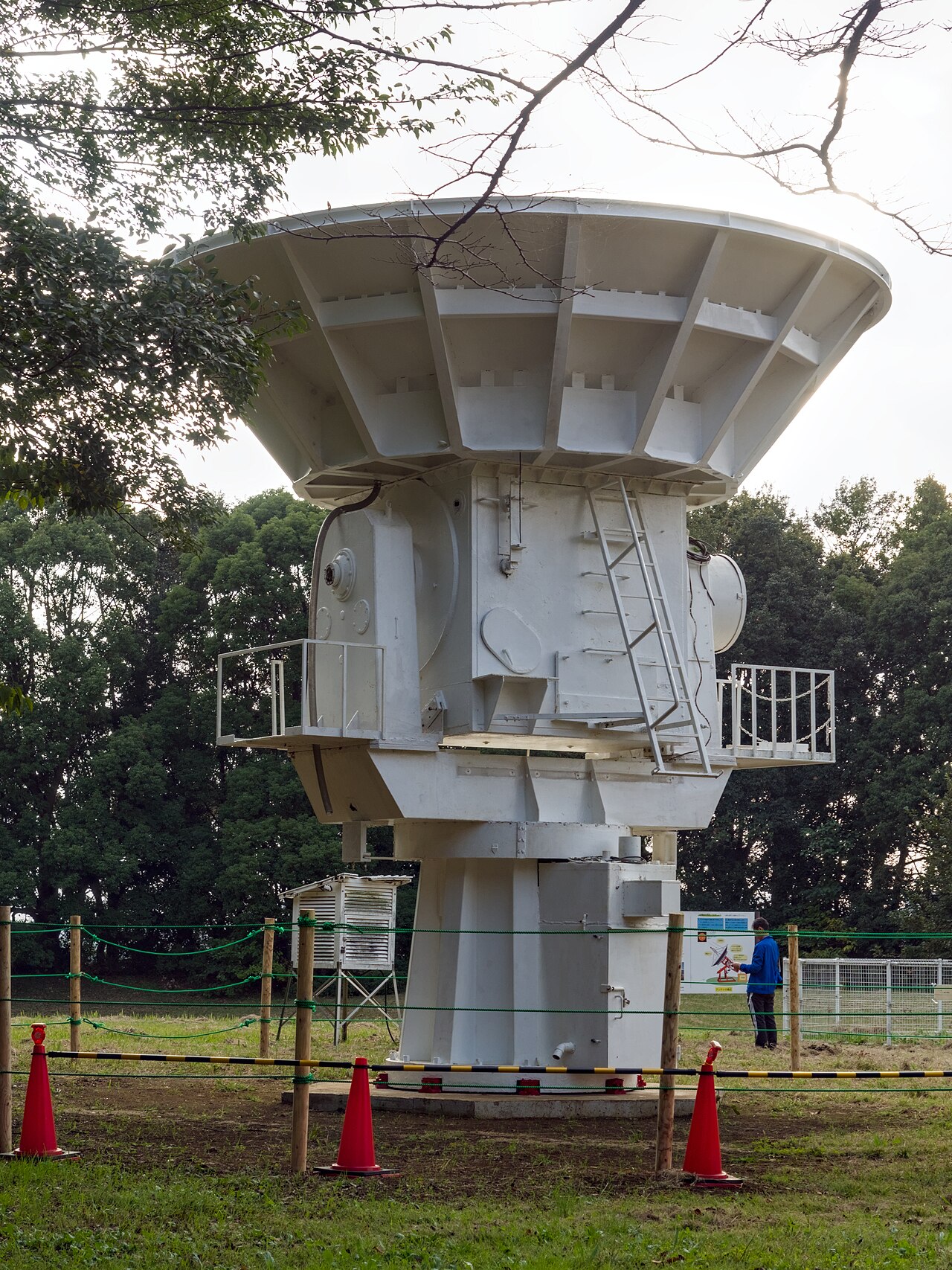
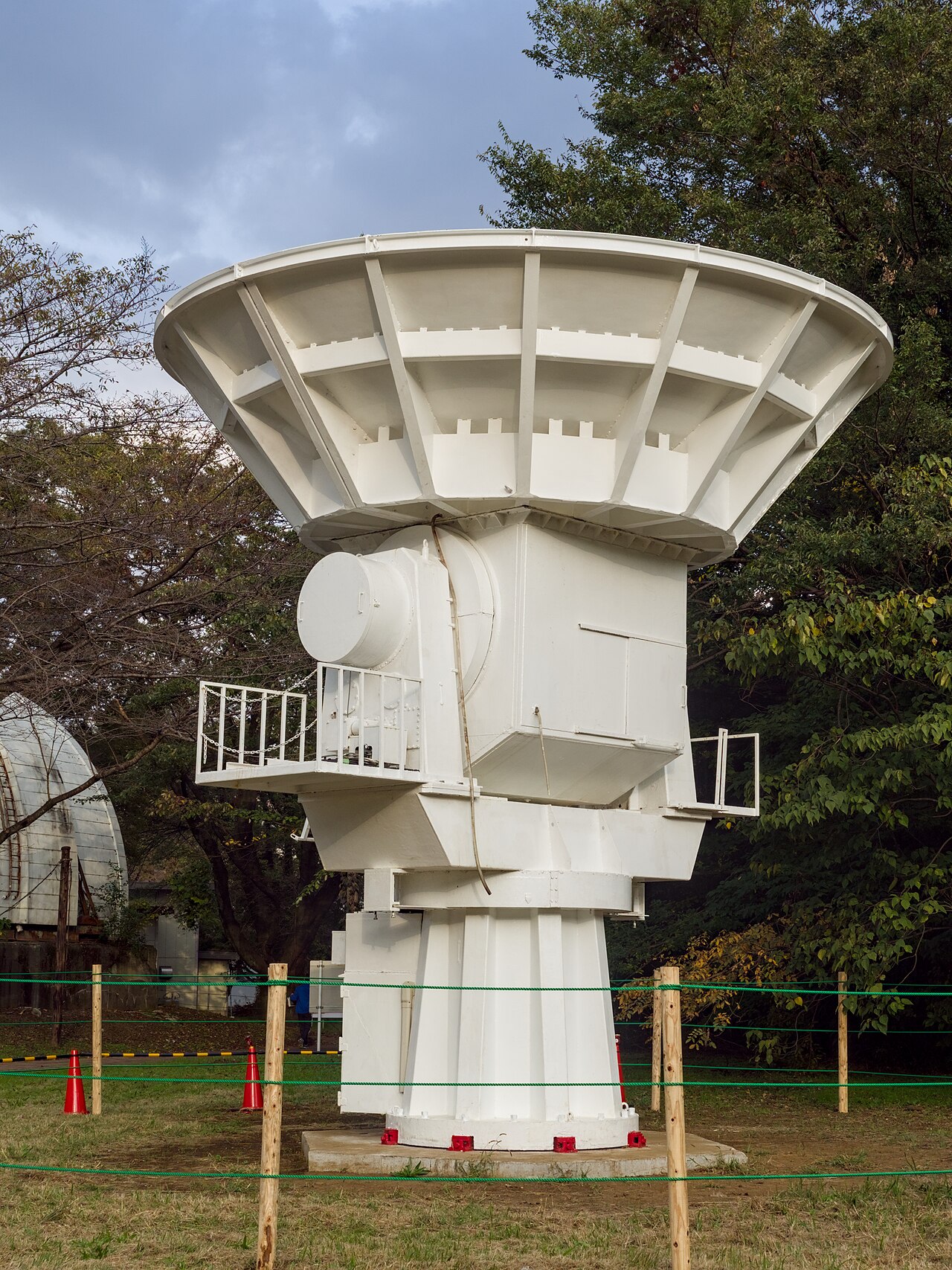
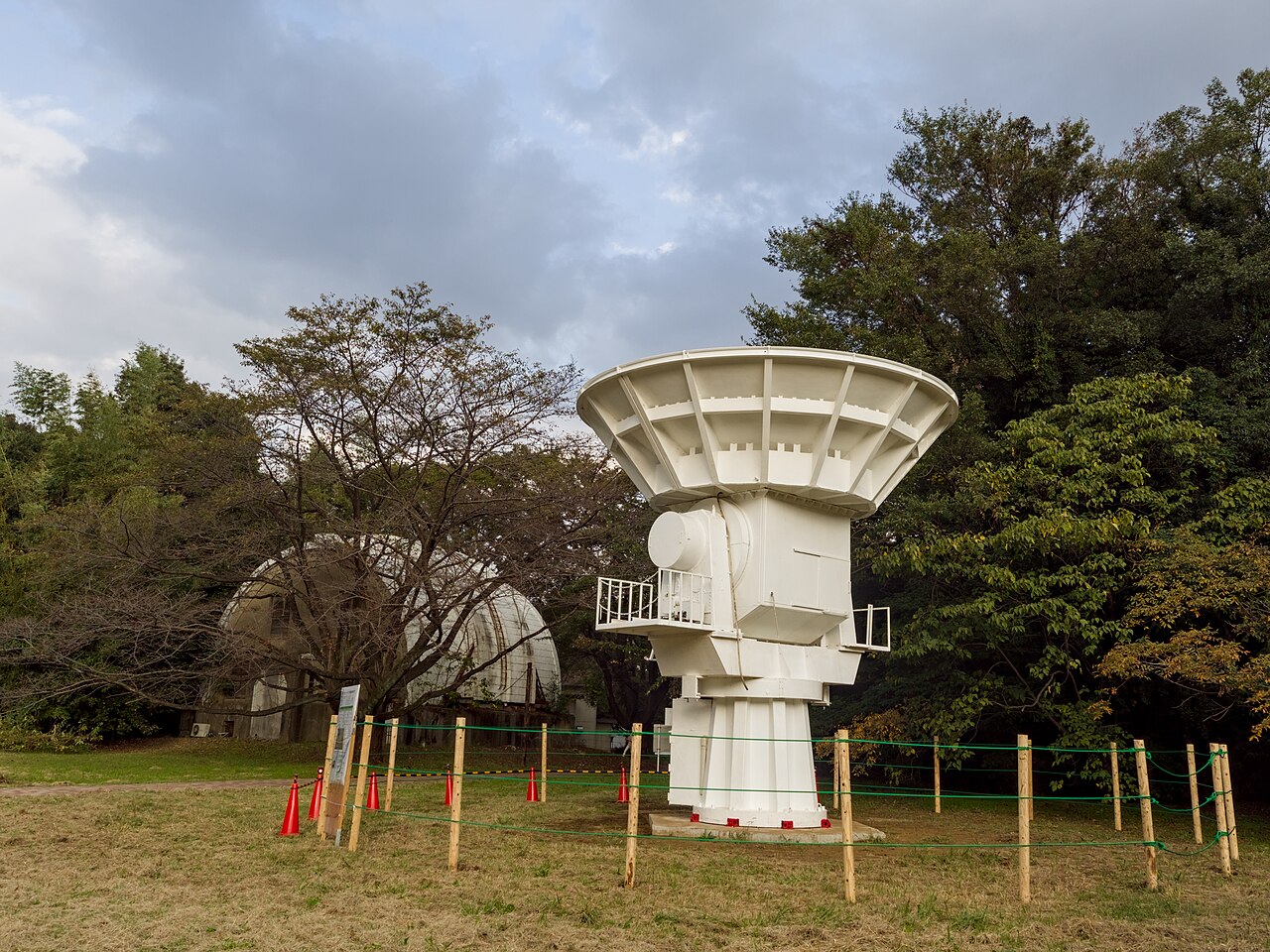
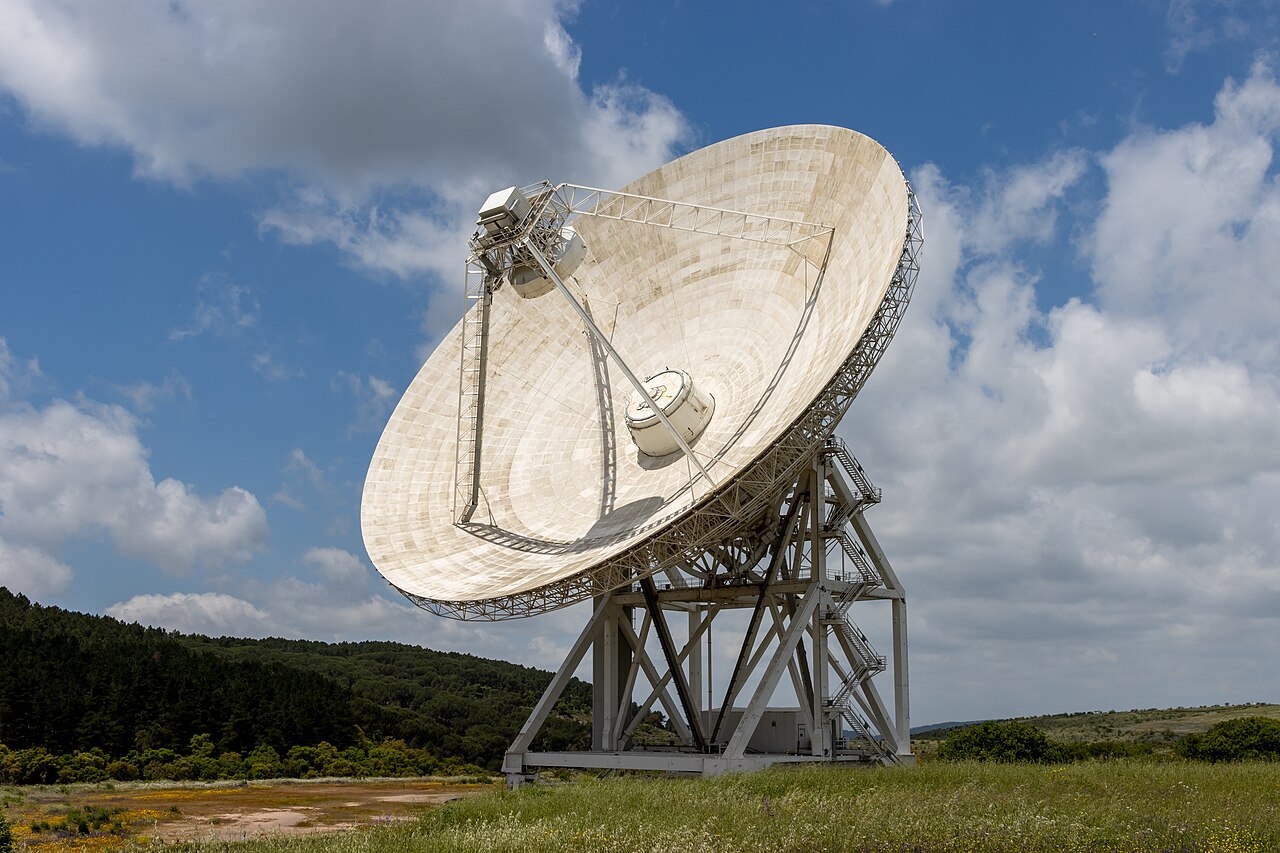
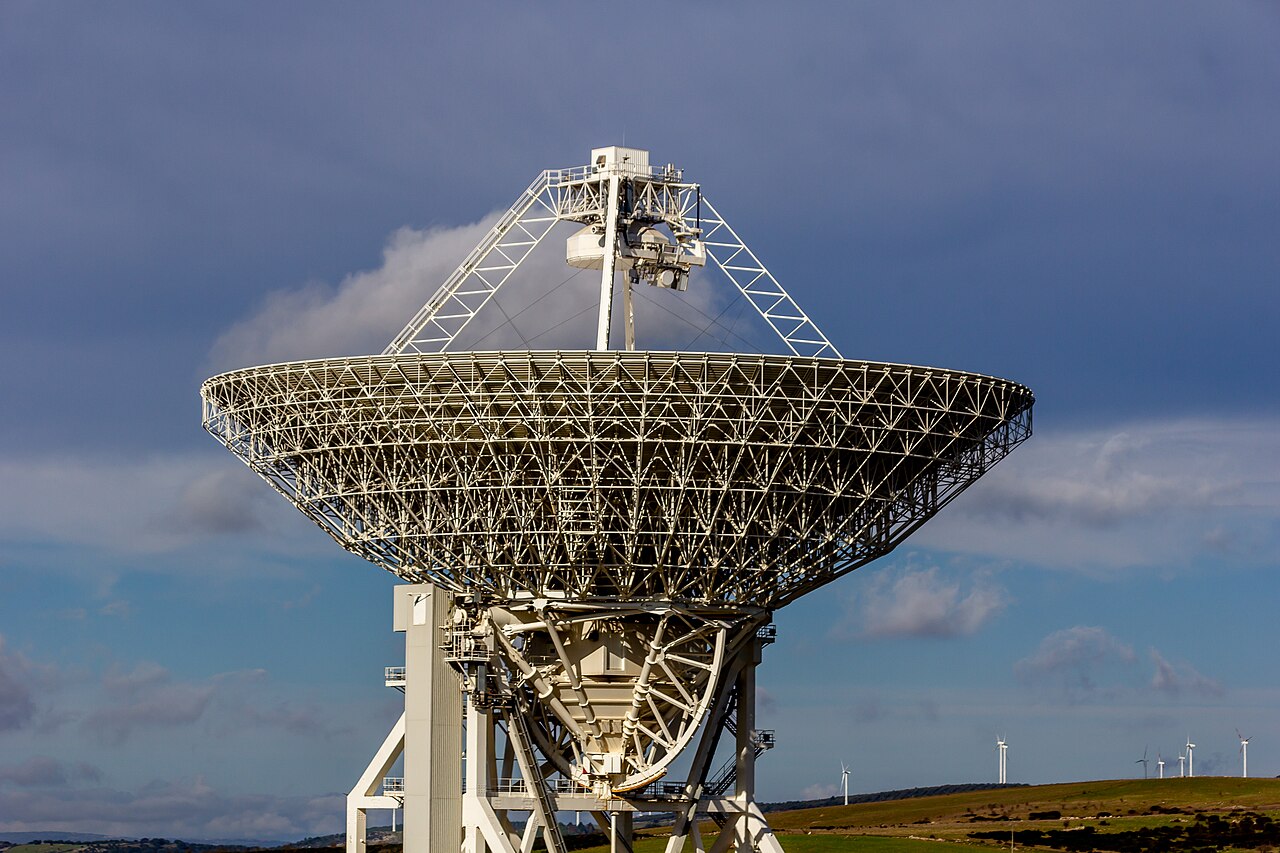
A radio telescope is a specialized antenna and radio receiver used to detect radio waves from astronomical radio sources in the sky. It is the main observing instrument used in radio astronomy, which studies the radio frequency portion of the electromagnetic spectrum, analogous to how optical telescopes observe visible light. Unlike optical telescopes, radio telescopes can be used both day and night. Because astronomical radio sources are extremely distant and their signals weak, radio telescopes require very large antennas and highly sensitive receiving equipment. They are typically large parabolic dish antennas, similar to those used for satellite tracking, and may be used individually or linked in arrays. Radio observatories are preferentially located far from major population centers to avoid electromagnetic interference from human-made devices.
- First detection of radio waves from spac
- 1932 by Karl Guthe Jansky at Bell Telephone Laboratories in Holmdel, New Jersey
- First purpose built radio telescope
- 9-meter parabolic dish built by Grote Reber in Wheaton, Illinois in 1937
- Largest filled aperture radio telescope
- Five-hundred-meter Aperture Spherical Telescope (FAST) in China, completed 2016, effective aperture 300 meters
- Second largest filled aperture telescope
- Arecibo radio telescope in Puerto Rico, 305-meter dish, collapsed 1 December 2020
- Largest fully steerable dish radio teles
- 100-meter Green Bank Telescope in West Virginia, United States, constructed 2000
- Largest fully steerable telescope in eur
- Effelsberg 100-m Radio Telescope near Bonn, Germany
Lore & Background
The first radio antenna used to identify an astronomical radio source was built by Karl Guthe Jansky in 1932 at Bell Telephone Laboratories. Jansky was investigating sources of static that might interfere with radiotelephone service. His antenna was an array of dipoles and reflectors designed for 20.5 MHz, mounted on a turntable, earning it the name 'Jansky's merry-go-round.' After months of recording, he categorized static into three types, including a faint steady hiss that repeated every 23 hours and 56 minutes—a sidereal day—leading him to conclude it originated from the Milky Way, strongest toward the constellation Sagittarius. In 1937, amateur radio operator Grote Reber built the first parabolic dish radio telescope, 9 meters in diameter, in his backyard in Wheaton, Illinois. He repeated Jansky's work and conducted the first sky survey at very high radio frequencies, discovering other radio sources. The rapid development of radar during World War II later provided technology applied to radio astronomy, leading to the construction of large radio telescopes by universities and research institutes.
Reader's Guide
Radio telescopes are significant because they opened a new window on the universe by detecting radio waves from astronomical sources, complementing optical observations. The field began with Jansky's accidental discovery in 1932 and Reber's pioneering sky survey in 1937, which is often considered the start of radio astronomy. The technology advanced rapidly after World War II, enabling the construction of ever-larger dishes and arrays. The largest filled-aperture telescope, FAST in China, completed in 2016, uses a 500-meter dish built into a natural depression, with a 300-meter effective aperture. The Arecibo telescope, which collapsed in 2020, was also a stationary dish built into a depression and was one of the few capable of active radar imaging. Fully steerable dishes like the 100-meter Green Bank Telescope and the Effelsberg 100-m telescope allow observation of sources across much of the sky. Radio telescopes face increasing challenges from human-made radio frequency interference, leading to negotiations for frequency allocation protection. Notable frequency bands include the hydrogen line at 1,420.40575177 MHz, used in the discovery of the Wow! signal, and bands used by the Wilkinson Microwave Anisotropy Probe to map the cosmic microwave background.
Did You Know?
- The first radio antenna to detect an astronomical radio source was built by Karl Guthe Jansky in 1932 and was called 'Jansky's merry-go-round' because it rotated on a turntable.
- The first purpose-built radio telescope was a 9-meter parabolic dish constructed by amateur radio operator Grote Reber in his backyard in Wheaton, Illinois in 1937.
- The world's largest filled-aperture radio telescope is FAST in China, with a 500-meter dish built into a natural karst depression, completed in 2016.
- The Arecibo radio telescope, which collapsed in December 2020, was one of the few radio telescopes capable of active radar imaging of near-Earth objects.
Origins & the Pioneering Spirit
The story of radio telescopes is deeply intertwined with the world of amateur astronomy. In the late 1930s, Grote Reber—an amateur astronomer rather than a professional—constructed what is recognized as the first purpose-built radio telescope. His motivation was to follow up on the earlier discovery by Karl Jansky of radio wavelength emissions arriving from space. This pioneering effort demonstrated that significant contributions to understanding the electromagnetic spectrum beyond visible light could emerge from individuals working outside formal academic institutions. Reber's achievement established a foundation for non-visual astronomy, a field where practitioners look beyond what the human eye can perceive using instruments sensitive to wavelengths outside the visible range. His work stands as a powerful reminder that the boundary between amateur curiosity and groundbreaking scientific discovery has always been far more permeable than institutional structures might suggest.
Amateur Access & the One-Mile Telescope
Radio telescopes are not confined to professional observatories. Within the amateur astronomy community, some enthusiasts build their own home-made radio telescopes, while others gain access to instruments originally constructed for formal astronomical research that have since been opened up for hobbyist use. The One-Mile Telescope serves as a notable example of such a shared resource. This accessibility reflects a broader pattern in non-visual amateur astronomy, where practitioners extend their observations beyond the visible spectrum using tools like infrared filters mounted on conventional optical telescopes as well as dedicated radio equipment. The availability of these instruments to hobbyists underscores a long-standing tradition in astronomy where knowledge and tools flow between professional and amateur communities, enabling a wider range of people to explore the universe at wavelengths invisible to the naked eye.
The Citizen Science Dimension
Amateur astronomers occupy a unique position in the scientific landscape. They do not rely on astronomy as their primary source of income, and most lack a professional degree in astrophysics or advanced academic training in the field. Yet their contributions to science are far from negligible. Many participate in citizen science efforts, monitoring variable stars, double stars, sunspots, and occultations of stars by the Moon or asteroids. Others have discovered transient events such as comets, galactic novae, or supernovae in distant galaxies. While the majority of amateur astronomers are hobbyists pursuing the sky for personal passion, a subset possesses a high degree of experience and regularly assists or works alongside professional astronomers. This collaborative dynamic has existed throughout history, though since the early twentieth century, professional astronomy has become a clearly delineated activity separate from its amateur counterpart.
Tools, Techniques & Public Engagement
The toolkit available to those who study the sky spans an enormous range of complexity. At the simplest end, observers use nothing more than their unaided eyes or a pair of binoculars, which offer a wider field of view and greater portability than most telescopes. More dedicated practitioners employ portable telescopes or instruments housed in private and club observatories. For non-visual work, the range extends to infrared filters and radio telescopes. Automated GOTO mounts and setting circles with celestial coordinates further refine the ability to locate targets on demand. However, growing light pollution poses an increasing challenge, as artificial sky glow washes out natural darkness and diminishes visibility of celestial objects. In response, many amateur astronomers travel to rural areas for clearer skies. Organizations also promote public engagement through sidewalk astronomy—setting up telescopes for community viewing—which simultaneously educates the public and raises awareness about light pollution.
Gallery
Frequently Asked Questions
What is a radio telescope and what does it do?
A radio telescope is a purpose-built antenna paired with a sensitive receiver that picks up faint radio-frequency emissions coming from objects in the sky. It serves as the primary tool of radio astronomy, functioning the same way an optical telescope does for visible light, except it works equally well in daylight and at night.
Who first detected radio waves coming from space, and when?
In 1932, Karl Guthe Jansky at Bell Telephone Laboratories in Holmdel, New Jersey, identified extraterrestrial radio signals while troubleshooting static in telephone equipment. His discovery laid the groundwork for the entire field of radio astronomy.
What was the first purpose-built radio telescope ever constructed?
Grote Reber built a 9-meter parabolic dish in his backyard in Wheaton, Illinois, in 1937. It is widely regarded as the first instrument designed from the ground up specifically for astronomical radio observations rather than repurposed from engineering work.
What is the largest filled-aperture radio telescope in the world?
The Five-hundred-meter Aperture Spherical Telescope (FAST) in China, completed in 2016, holds that title with an effective collecting area of roughly 300 meters. Its enormous single-dish design makes it the most sensitive filled-aperture instrument currently in operation.
What happened to the Arecibo radio telescope in Puerto Rico?
The 305-meter dish, long the second-largest filled-aperture telescope on Earth, suffered structural failures in its cable system and ultimately collapsed. Its loss removed a landmark instrument that had been a cornerstone of planetary radar and deep-space radio research for decades.
More in Astrophotography, Part 2 1-24
Spotted an error? Know more?
Reader corrections go straight into our review queue. Suggest an edit · How this site is sourced