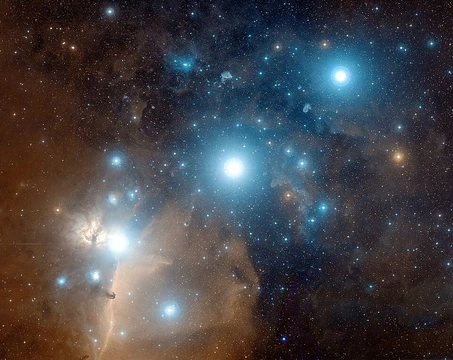
Star trail
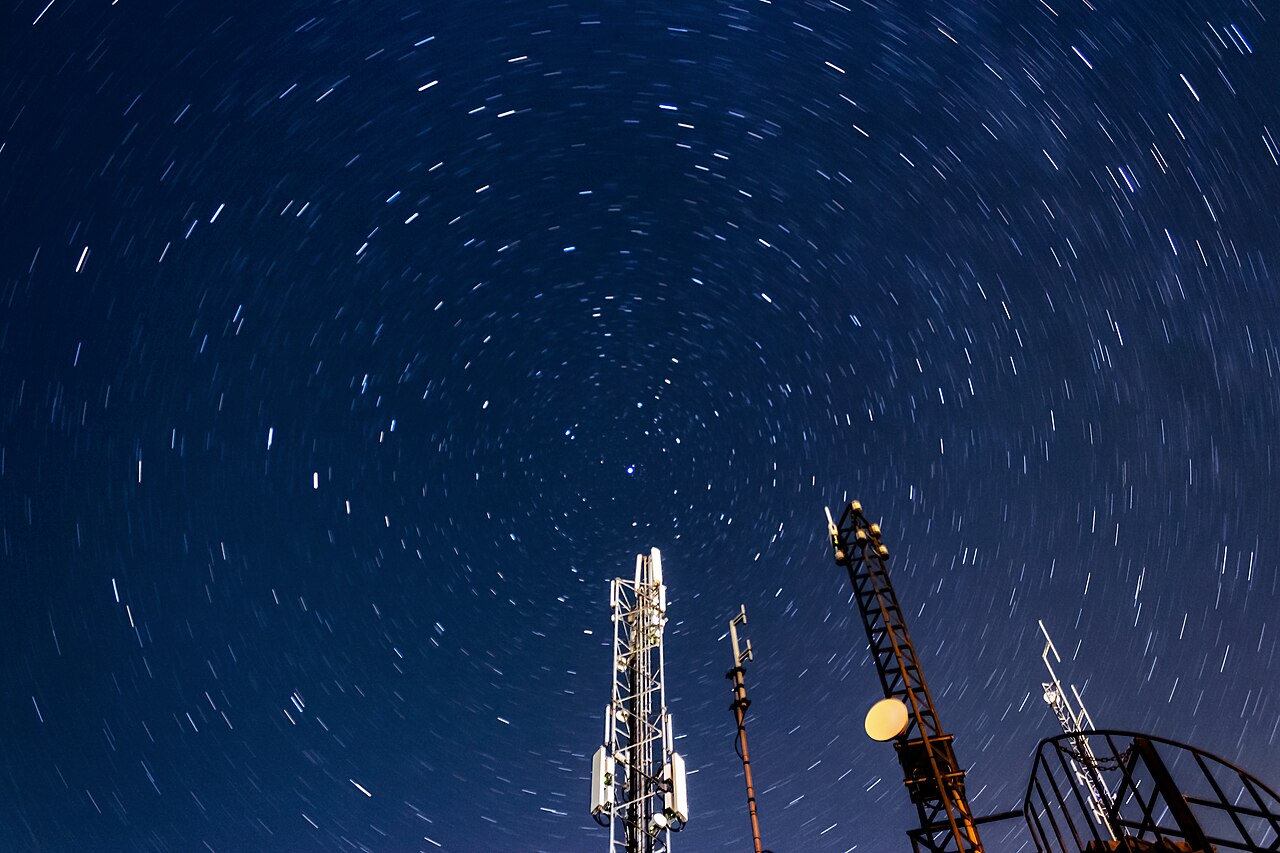
Long-exposure photos capturing stars as streaks due to Earth's rotation.

Zexsen Xie · CC BY 2.0
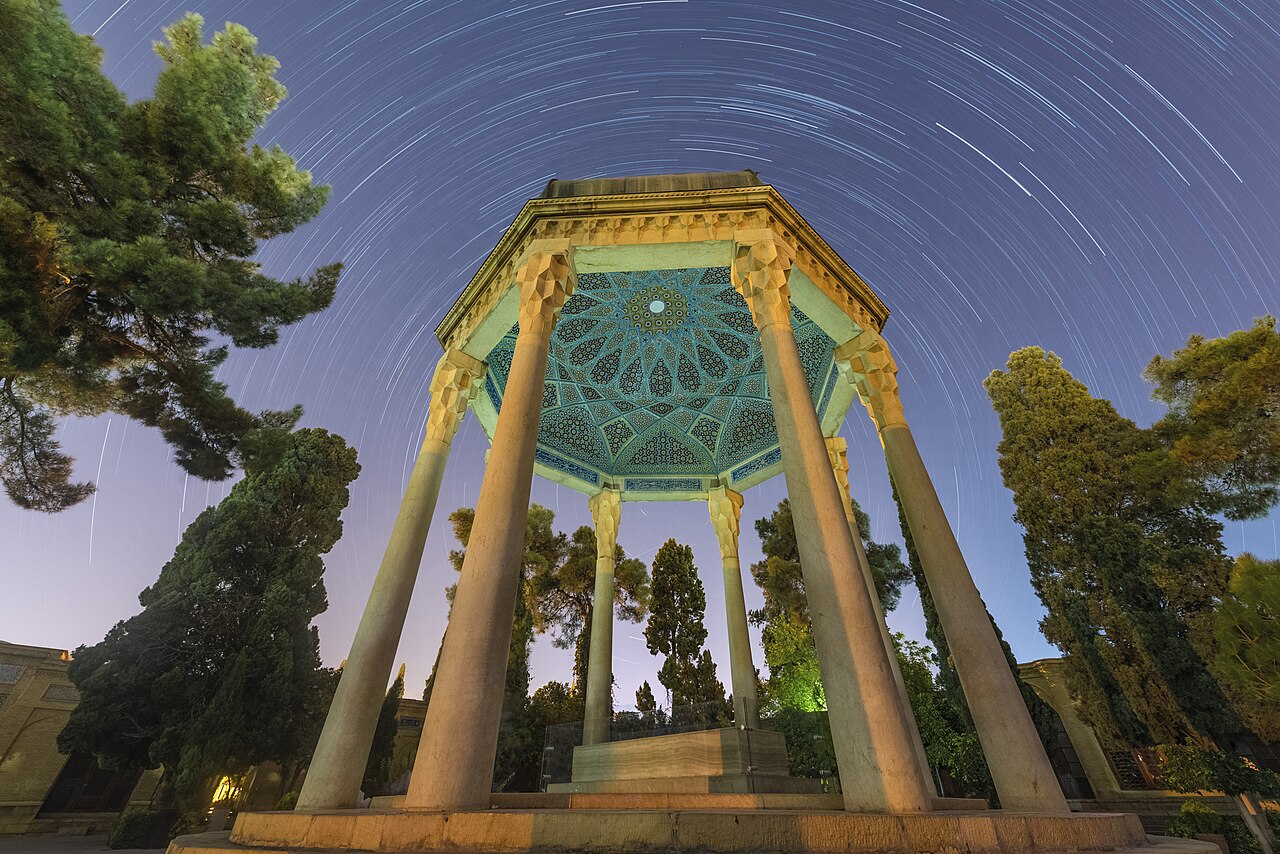
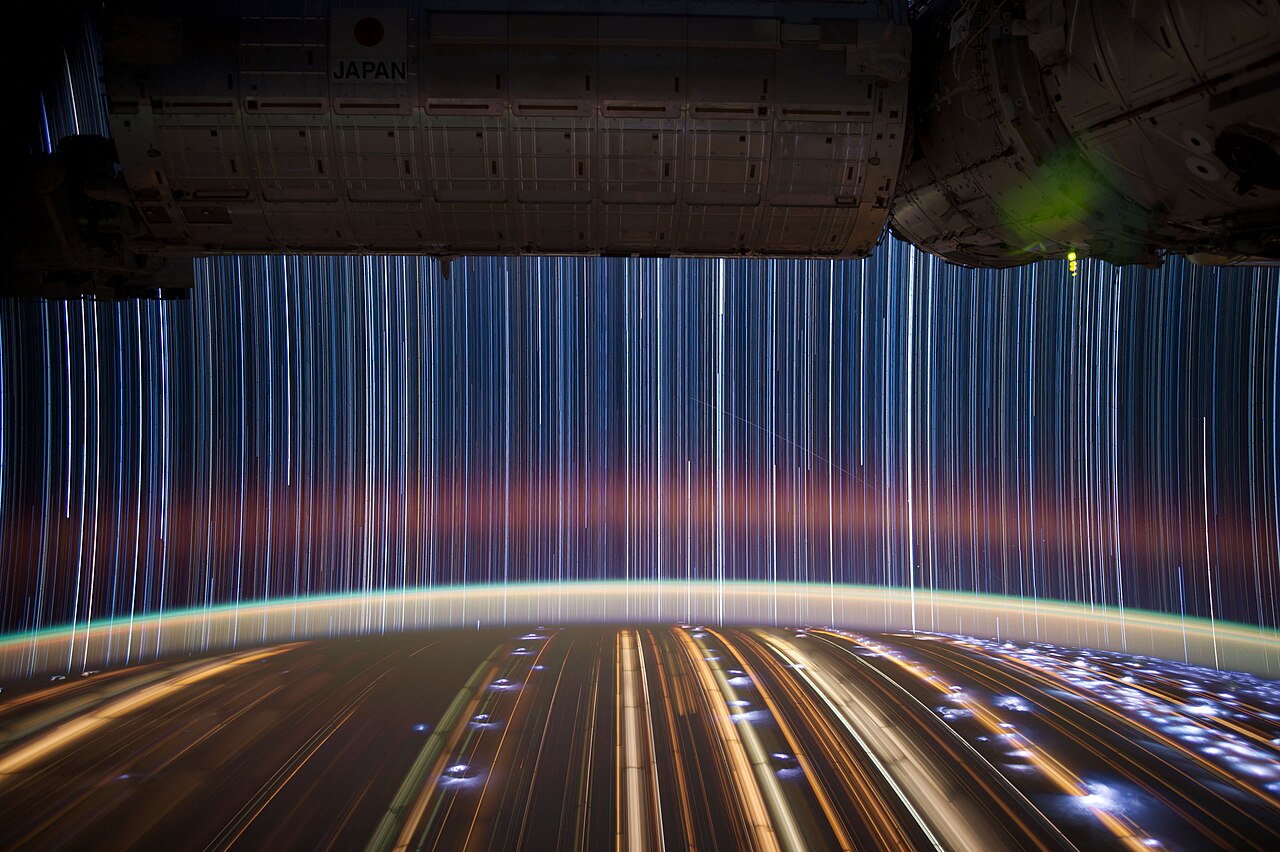
A star trail is a photograph created with a long exposure that records the apparent movement of stars across the sky, a phenomenon caused by Earth’s rotation. In the resulting image, stars appear as streaks; the longer the exposure, the longer the arcs. The same term applies to similar photos taken from the International Space Station or on Mars.
To capture a star trail, a camera is mounted on a tripod and pointed at the night sky, with the shutter left open for an extended period. This technique is considered relatively simple for amateur astrophotographers. Typical shutter speeds range from 15 minutes to several hours, often requiring the camera’s “Bulb” setting. A more common modern method involves blending multiple shorter frames together in software to create the final image. For a single long exposure, a cable release or intervalometer is used to keep the shutter open. Lenses are set to infinity focus, and wide apertures like f/5.6 or f/4 are recommended, along with fast films such as ISO 200 or ISO 400. Battery life can be a problem for long exposures, so mechanical cameras that don’t need power for the shutter have an advantage over digital models. Digital cameras also suffer from increased electronic noise with longer exposures, but this can be avoided by taking many short exposures—typically 30 seconds each—and stacking them in post-processing. Astronaut Don Pettit used this stacking technique on the International Space Station in 2012, taking multiple 30-second exposures and combining them to produce longer star trails. On Mars, the Spirit rover captured star trail images while searching for meteors, but its 60-second exposure limit resulted in dashed lines.
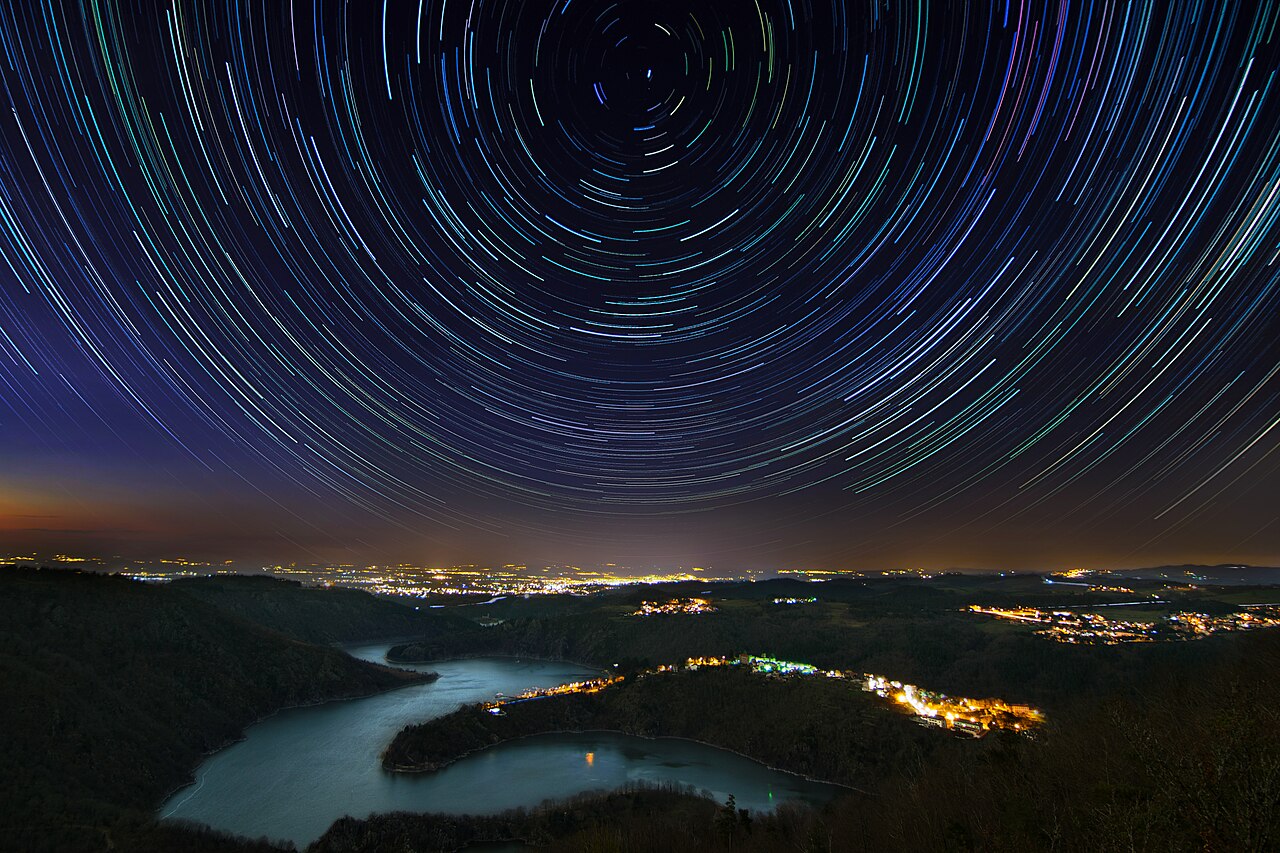
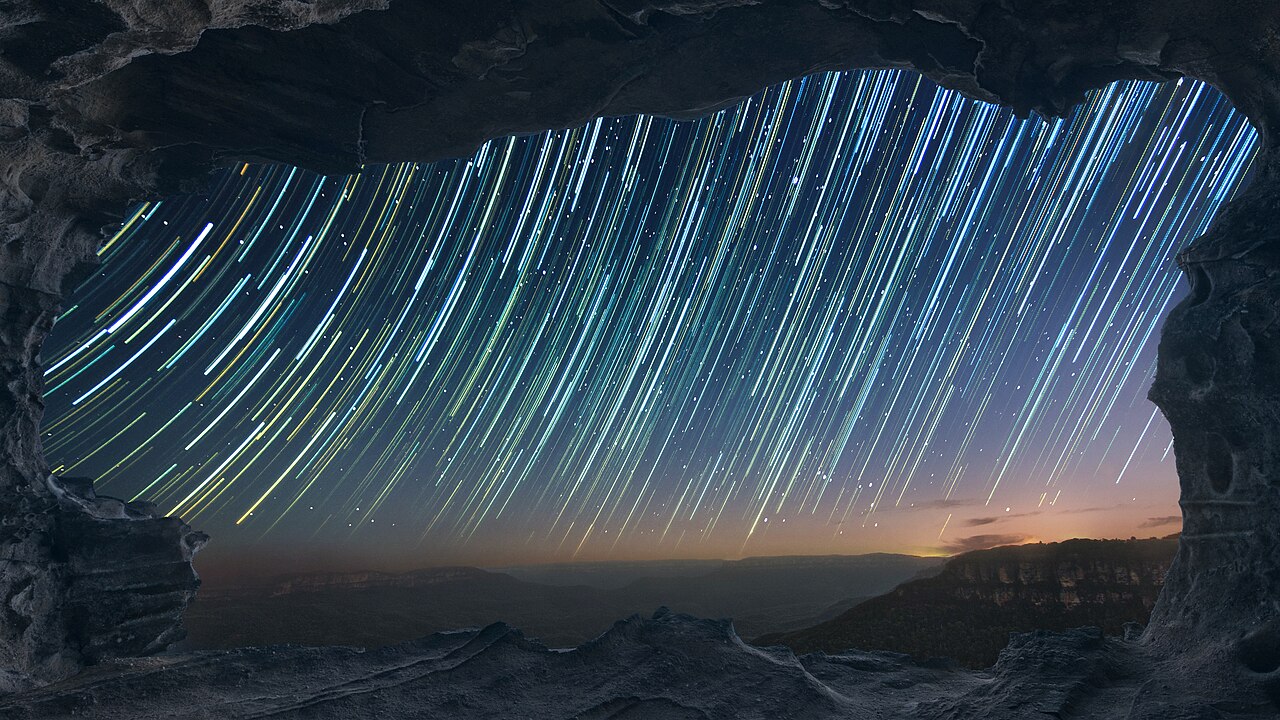
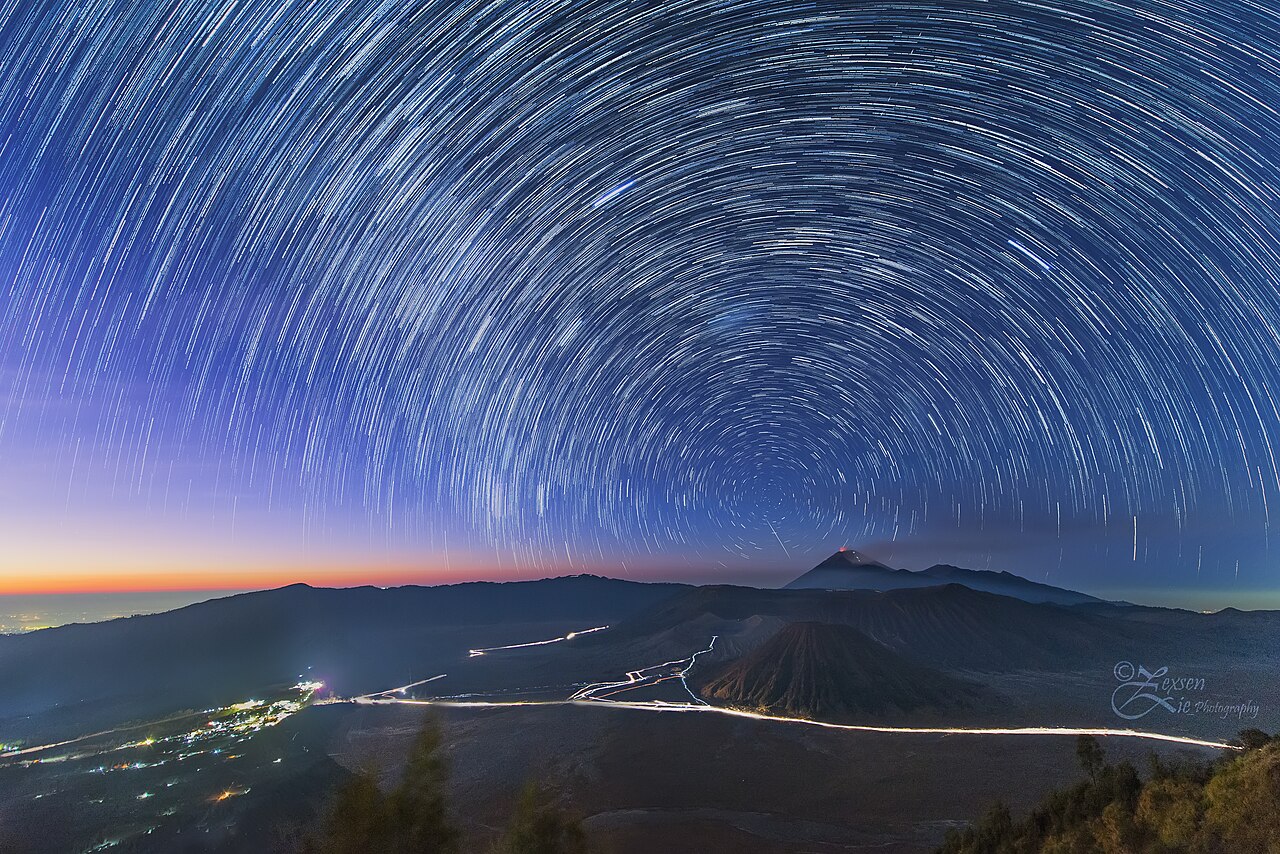
The streaks in star trail photos are curved because of Earth’s rotation. In the Northern Hemisphere, pointing the camera north produces concentric circular arcs centered near Polaris, the north celestial pole. In the Southern Hemisphere, aiming south gives the same effect, with arcs centered near Sigma Octantis. Aiming east or west yields straight streaks along the celestial equator, which is tilted relative to the horizon by an angle equal to 90° minus the photographer’s latitude.
Star trail photographs have also been used by professional astronomers to evaluate observing sites for major telescopes.
- Shutter speed range
- 15 minutes to several hours
- Recommended apertures
- f/5.6 and f/4
- Recommended iso
- ISO 200 and ISO 400
- Exposure time on iss
- 10 to 15 minutes (via stacking 30-second exposures)
- Exposure limit on mars rover
- 60 seconds
- Latitude formula for streak tilt
- 90° − L
Lore & Background
Star trail photographs are captured by placing a camera on a tripod, pointing the lens toward the night sky, and allowing the shutter to stay open for a long period of time. Star trails are considered relatively easy for amateur astrophotographers to create. Photographers generally make these images by using a DSLR or Mirrorless camera with its lens focus set to infinity. A cable release or intervalometer allows the photographer to hold the shutter open for the desired amount of time. Typical exposure times range from 15 minutes to many hours long, depending on the desired length of the star trail arcs for the image. Even though star trail pictures are created under low-light conditions, long exposure times allow fast films, such as ISO 200 and ISO 400. Wide-apertures, such as f/5.6 and f/4, are recommended for star trails.
Because exposure times for star trail photographs can be several hours long, camera batteries can be easily depleted. Mechanical cameras that do not require a battery to open and close the shutter have an advantage over more modern film and digital cameras that rely on battery power. On these cameras, the Bulb, or B, exposure setting keeps the shutter open. Another problem that digital cameras encounter is an increase in electronic noise with increasing exposure time. However, this can be avoided through the use of shorter exposure times that are then stacked in post production software. This avoids possible heat build up or digital noise caused from a single long exposure.
American astronaut Don Pettit recorded star trails with a digital camera from the International Space Station in Earth orbit between April and June, 2012. Pettit described his technique as follows: 'My star trail images are made by taking a time exposure of about 10 to 15 minutes. However, with modern digital cameras, 30 seconds is about the longest exposure possible, due to electronic detector noise effectively snowing out the image. To achieve the longer exposures I do what many amateur astronomers do. I take multiple 30-second exposures, then 'stack' them using imaging software, thus producing the longer exposure.' Star trail images have also been taken on Mars. The Spirit rover produced them while looking for meteors. Since the camera was limited to 60 second exposures the trails appear as dashed lines.
Reader's Guide
Star trail photographs are possible because of the rotation of Earth about its axis. The apparent motion of the stars is recorded as mostly curved streaks on the film or detector. For observers in the Northern Hemisphere, aiming the camera northward creates an image with concentric circular arcs centered on the north celestial pole (very near Polaris). For those in the Southern Hemisphere, this same effect is achieved by aiming the camera southward. In this case, the arc streaks are centered on the south celestial pole (near Sigma Octantis). Aiming the camera eastward or westward shows straight streaks on the celestial equator, which is tilted at angle with respect to the horizon. The angular measure of this tilt depends on the photographer's latitude (L), and is equal to 90° − L.
Star trail photographs can be used by astronomers to determine the quality of a location for telescope observations. Star trail observations of Polaris have been used to measure the quality of seeing in the atmosphere, and the vibrations in telescope mounting systems. The first recorded suggestion of this technique is from E.S. Skinner's 1931 book A Manual of Celestial Photography.
Did You Know?
- Star trails have been used by professional astronomers to measure the quality of observing locations for major telescopes.
- American astronaut Don Pettit recorded star trails from the International Space Station between April and June, 2012.
- The Spirit rover on Mars produced star trail images while looking for meteors, appearing as dashed lines due to 60-second exposure limits.
- The first recorded suggestion of using star trails for site testing is from E.S. Skinner's 1931 book A Manual of Celestial Photography.
Pioneers of the First Light
The story of capturing the heavens on a permanent medium begins in the 1830s and 1840s, a period when the task fell largely to independent experimenters and so-called "gentleman scientists" — a group that, as in other fields, was not exclusively male. Louis Jacques Mandé Daguerre, inventor of the photographic process bearing his name, made the earliest known attempt in 1839, aiming his apparatus at the Moon. The result was a vague, indistinct smear caused by the telescope drifting during the lengthy exposure. The breakthrough arrived on March 23, 1840, when John William Draper, a New York University chemistry professor and practicing physician, produced a recognizable daguerreotype of the lunar surface using a five-inch reflecting telescope over a twenty-minute exposure. French physicists Léon Foucault and Hippolyte Fizeau likely captured the first solar image around 1845, while Italian physicist Gian Alessandro Majocchi documented a failed eclipse attempt in Milan in 1842. Every one of these early efforts wrestled with fundamental constraints: the daguerreotype's slowness, the wet-plate collodion's limited working window, and the sheer difficulty of keeping an instrument rigid, steady, and accurately aimed for minutes at a time.
The Engineering of Long Exposures
Because astronomical objects are faint, nearly every technique in the field relies on accumulating photons over extended periods, a process that demands a cascade of engineering solutions. Increasing the diameter of the primary optical element gathers more light, while situating equipment in remote, dark locations prevents stray urban illumination from swamping the detector. Perhaps the most persistent challenge is Earth's own rotation: as the sky appears to sweep overhead, the telescope must counter-rotate to hold a target centered. This is accomplished through equatorial mounts or computer-controlled altazimuth systems, both of which inevitably introduce small tracking errors from imperfect motor drives, mechanical sag, and atmospheric refraction. Correcting those errors requires a guiding system — a second co-mounted guide scope or an off-axis guider employing a prism or beam splitter that lets the operator view the same image being recorded. For moving targets like comets, the telescope must track continuously. In the earliest days, a human observer stood at or even rode inside the instrument, manually nudging a crosshair back onto a guide star throughout the entire exposure. Today, automated computer systems handle this correction in both professional and amateur setups.
A Revolution in Scientific Discovery
The ability to record light over long exposures did not merely produce pretty pictures; it fundamentally transformed professional astronomy. By summing photons that the human eye could never perceive, photographic plates revealed hundreds of thousands of stars and nebulae previously invisible, and specialized telescopes were built essentially as enormous cameras to capture these images. The technique played an early and central role in systematic sky surveys and the classification of stellar types. From that foundation, the field diversified into a constellation of subdisciplines — star cartography, astrometry, photometry, spectroscopy, polarimetry — each with its own goals and instrumentation. It also became the primary tool for discovering new objects: asteroids, meteors, comets, variable stars, novae, and even previously unknown planets. Modern practice extends far beyond the visible spectrum. Cooled CCD sensors reduce thermal noise and enable infrared work, while specialized optical filters isolate particular wavelengths. Wide-field instruments such as Schmidt cameras and telescopes designed for precise imaging at specific bands continue to push the boundaries of what can be recorded.
The Amateur Aesthetic
Although nearly all observational astronomy today depends on some form of imaging, the term "astrophotography" has gradually shifted in common usage to describe the amateur practice of the art. Where professional work prioritizes scientific data, the amateur photographer often pursues images that are visually striking and aesthetically compelling. This distinction does not imply a lack of sophistication; amateur practitioners employ a remarkably wide range of specialized equipment and techniques, from cooled digital sensors and narrowband filters to computer-guided telescope mounts. The same guiding systems, tracking corrections, and long-exposure methodologies that underpin professional research are available to and actively used by dedicated hobbyists. What sets the amateur pursuit apart is intent: the goal is to translate the silent, vast architecture of the night sky into a single, shareable image that conveys wonder. In this way, the tradition that began with Daguerre's fuzzy lunar smear and Draper's careful daguerreotype has evolved into a global community of image-makers who treat the cosmos not merely as a subject of measurement, but as a canvas.
Gallery
Frequently Asked Questions
What exactly is a star trail in astrophotography?
A star trail is a long-exposure photograph in which stars appear as curved streaks rather than pinpoints, a result of Earth rotating while the shutter stays open. The longer the exposure, the longer and more sweeping those arcs become.
What settings should I use to capture a star trail?
Shoot at f/5.6 or f/4 with ISO 200 or 400, and keep the shutter open anywhere from 15 minutes up to several hours. The camera must be firmly locked to a tripod so it doesn't shift during the extended exposure.
How do astronauts create star trails from the ISS?
Because a single very long exposure isn't practical in orbit, ISS crew members stack multiple 30-second frames to build a total exposure of 10 to 15 minutes. The stacked result shows the same kind of star streaks you'd see in a ground-based trail shot.
Can you photograph star trails from Mars?
Yes, but the Mars rover is capped at a 60-second maximum single exposure, so the resulting streaks are far shorter than the sweeping arcs produced by multi-hour exposures on Earth.
Why do star-trail streaks tilt at a particular angle relative to the horizon?
The tilt is governed by your latitude: the angle equals 90° minus your latitude (L). This happens because the sky's apparent rotation axis is fixed relative to where you stand on Earth's surface.
More in Astrophotography, Part 2 1-24
Spotted an error? Know more?
Reader corrections go straight into our review queue. Suggest an edit · How this site is sourced