First Man: The Life of Neil A. Armstrong
Authorized biography of the first man on the Moon.

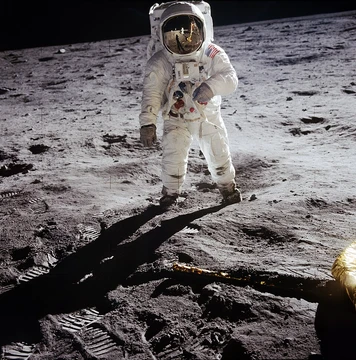
**First Man: The Life of Neil A. Armstrong** is the official biography of the astronaut who made history as the first person to set foot on the Moon on July 20, 1969. Written by James R. Hansen and released by Simon & Schuster in 2005, the book covers Armstrong’s role in the U.S. space program—especially the Apollo 11 mission—alongside his private life and childhood.
**Development**
Hansen, a history professor at Auburn University in Alabama and director of its Honors College, first reached out to Armstrong in October 1999 to propose the biography. Armstrong initially declined, citing a busy schedule and noting he had already turned down offers from prominent writers like Stephen Ambrose and James A. Michener. Hansen persisted, sending a “goody box” of his work, including his well-received biography of aviation pioneer Fred Weick, *From the Ground Up*. Impressed by Hansen’s style, Armstrong signed a formal agreement in June 2002. Two months later, he provided a letter giving Hansen full support and urging others to assist. Although various publications had covered parts of Armstrong’s career and personal life, *First Man* became the first comprehensive authorized account, including details from before and after the Apollo program. When asked why he finally agreed, Armstrong simply said, “It was time.”
**Contents and details**
The book portrays Armstrong’s early years as pleasant and fairly typical. As a young man, he grew fascinated with aircraft and flying, earning his pilot’s license before learning to drive. His father remarked that his son “never had a girl” and “didn’t need a car,” but “had… to get out to that airport.” Armstrong served as a naval aviator. NASA noticed his calm demeanor, skill, and above-average intellect. Though he differed from many colleagues, the Apollo 11 crew were “amiable strangers,” and he earned widespread respect. His selection to be the first on the lunar surface surprised many, as Buzz Aldrin had been expected to get priority. The mission went exceptionally well, and Armstrong delivered his iconic line: “That’s one small step for a man, one giant leap for mankind.” The event’s historic nature forced Armstrong to adjust to immense fame, a situation he found difficult. Determined not to let his status be exploited, he avoided celebrity, instead teaching engineering at the University of Cincinnati.
Quick Facts
- Author
- James R. Hansen
- Country
- United States
- Language
- English
- Subject
- Neil A. Armstrong
- Publisher
- Simon & Schuster
- Release Date
- 2005
- Media Type
- Pages
- 768 pp
- Isbn
- 0-7432-5631-X
- Dewey
- 629.45/0092 B 22
- Congress
- TL789.85.A75 H36 2005
- Oclc
- 60743246
Facts from the source article.
Lore & Background
The writing process began in October 1999, when Hansen first wrote to Armstrong asking to author the book. Armstrong initially declined, citing being too busy and having turned down previous offers from authors such as Stephen Ambrose and James A. Michener. Hansen persisted, sending a 'goody box' of his work, including his biography of aviation pioneer Fred Weick. Impressed with Hansen's style, Armstrong signed a formal agreement in June 2002, and two months later provided a letter of full support. First Man became the first official book to detail Armstrong's life, including information both before and after the Apollo program. When asked why he finally consented, Armstrong replied simply: 'It was time.'
Reader's Guide
The book describes Armstrong's early life as pleasant and conventional, with a growing fascination for aircraft. He earned his pilot's license before learning to drive. As a naval aviator, his calmness, skill, and intellect attracted NASA's interest. Although the Apollo 11 crew were 'amiable strangers,' Armstrong earned widespread respect. His selection to be first on the lunar surface was a surprise, as Buzz Aldrin had been expected to get priority. The mission proceeded spectacularly well, and Armstrong delivered his famous line. Afterward, he found his fame challenging and was determined that his status not be exploited. He eschewed celebrity by serving as a lecturer in engineering at the University of Cincinnati and spent decades advising NASA. The book received praise from Walter Cronkite and Sir Patrick Moore, who called it 'immaculately researched' and 'an important book.' The book was adapted into the 2018 film First Man.
Did You Know?
- The book was adapted into the 2018 film First Man, directed by Damien Chazelle and starring Ryan Gosling.
- The book's writing process began in October 1999, and Armstrong signed a formal agreement in June 2002.
- An abridged audio recording read by Boyd Gaines runs just over nine hours; an extended version read by Jeremy Bobb runs sixteen-and-a-half hours.
More in Apollo 11 1-24
Spotted an error? Know more?
Reader corrections go straight into our review queue. Suggest an edit · How this site is sourced