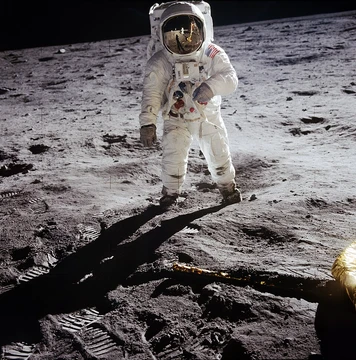
American Astronauts Memorial
Early monument to Apollo 11 crew, with disputed removal and no confirmed destruction date.

NASA · Public domain
The American Astronauts Memorial (Polish: Pomnik Astronautów Amerykańskich) was a modernist sculpture in Kraków, Poland, erected at the Bronowianka sports club complex. Unveiled on the afternoon of 20 July 1969—hours before the Apollo 11 Moon landing (which occurred at 20:17 UTC)—it is often cited as an early monument dedicated to the mission's crew: Neil Armstrong, Buzz Aldrin, and Michael Collins. Its brief existence sparked political controversy and, according to some accounts, led to its removal by authorities.
Quick Facts
- Location
- 124A Zarzecze Street, Kraków, Poland
- Designer
- Danuta Nabel-Bochenek (designer and sculptor) / Kazimierz Łaskawski (sculptor)
- Material
- Concrete
- Height
- 8 m (26,25 ft.)
- Open
- 20 July 1969
- Dismantled
- October 1969
- Dedicated To
- Apollo 11
Facts from the source article.
Lore & Background
The monument was proposed in February 1969 by the Bronowianka sports club management, originally as the Athletes Memorial for the 25th anniversary of the Polish People's Republic. Its concept was soon changed to honor the Apollo 11 astronauts. Designed by Danuta Nabel-Bochenek and crafted with Kazimierz Łaskawski, it was built in a club building using materials from Krakowskie Przedsiębiorstwo Budownictwa Przemysłowego. Placed next to the football pitch, it was unveiled on the afternoon of 20 July 1969, attended by club members and local district officials. A photograph by the Central Photographic Agency appeared in Gazeta Krakowska; claims that it was later quoted by The New York Times and Der Spiegel remain unsubstantiated. No widely accepted historical record confirms the monument's removal date or circumstances.
Reader's Guide
The American Astronauts Memorial is significant as the world's first monument to the Apollo 11 crew, erected on the very day of the Moon landing. Its rapid removal and destruction illustrate the tensions of the Cold War, where celebrating an American achievement conflicted with Soviet-aligned political orthodoxy. The monument's creation and suppression reflect how local initiatives could clash with state ideology, leading to persecution of its creators and censorship of news. Its legacy endures as a symbol of both human achievement and political repression, though its physical remains are lost, possibly buried during sewer construction in Kraków's Krowodrza Górka neighbourhood.
Did You Know?
- It was made from reinforced concrete painted white and stood 8 metres tall.
- No widely accepted historical record confirms the monument's removal date or circumstances, despite some claims of its destruction in late 1969.
- According to unofficial accounts, it was buried during construction of sewer networks in Krowodrza Górka.
The Crew and the Machine
Commander Neil Armstrong, Command Module Pilot Michael Collins, and Lunar Module Pilot Edwin "Buzz" Aldrin each boarded Apollo 11 for what would be their second and final voyage beyond Earth. Their vehicle, a Saturn V, lifted off from Kennedy Space Center in Florida on July 16, 1969, at 13:32 UTC. The spacecraft was an elegant three-part assembly: the command module, the sole section designed to survive re-entry and bring the crew home; the service module, which supplied propulsion, electrical power, oxygen, and water; and the Lunar Module, split into a heavy descent stage carrying the landing engine and fuel tanks, and a lighter ascent stage with a cabin for two and a small engine for the trip back to orbit. After three days of transit, Armstrong and Aldrin separated from Collins in the command module Columbia and descended in the Lunar Module Eagle, touching down in the Sea of Tranquility on July 20 at 20:17 UTC. Collins orbited above, keeping watch. More than twenty-one hours later the two astronauts climbed back into the ascent stage, rejoined their commander in lunar orbit, and the trio splashed down safely in the Pacific Ocean on July 24.
The Geopolitical Crucible
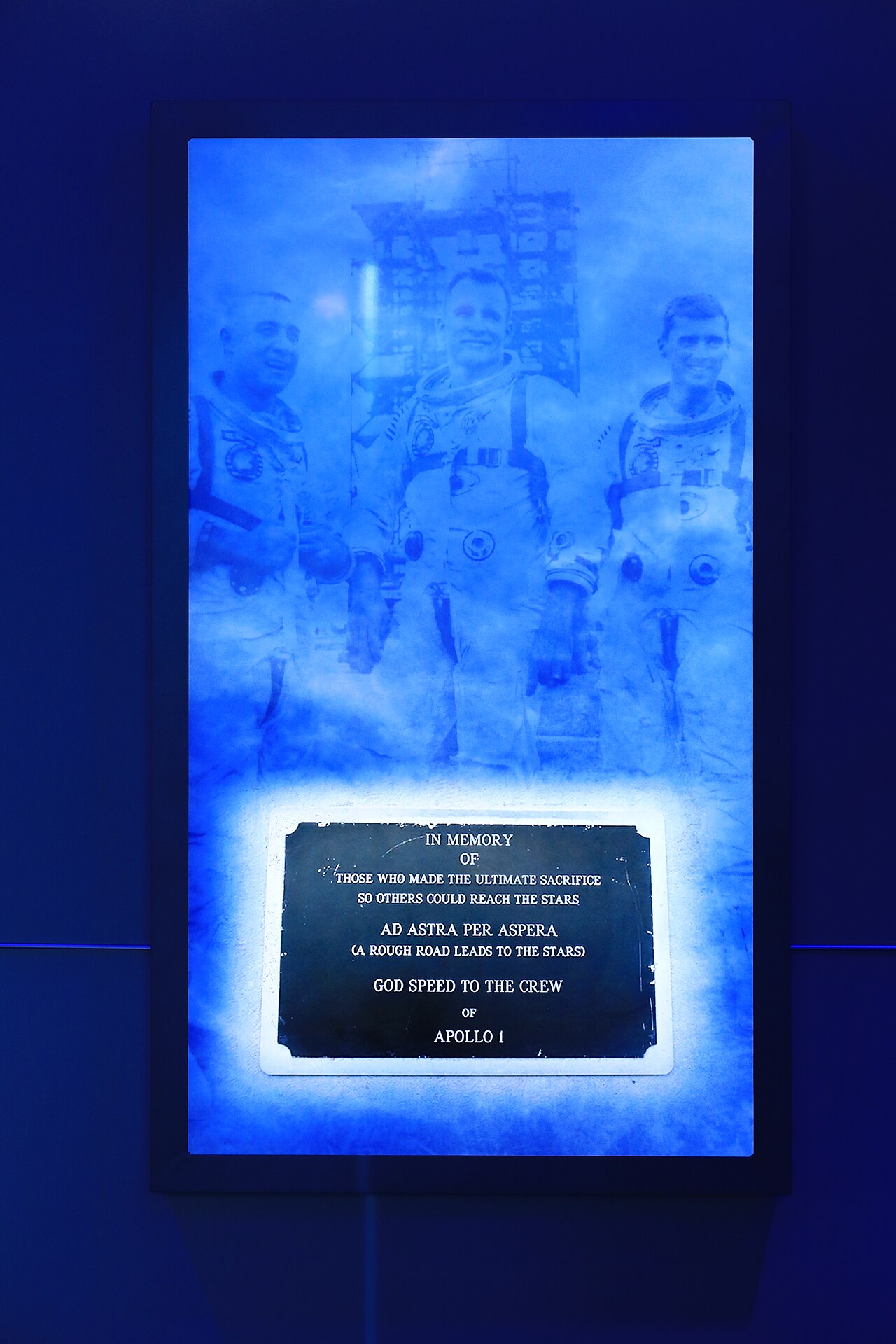
By the late 1950s, Sputnik 1's October 1957 launch had shaken American confidence and exposed the Soviet Union's capacity to project nuclear power across intercontinental distances. President Eisenhower answered by founding NASA and launching Project Mercury, yet the Soviets still held the edge: Yuri Gagarin orbited Earth in April 1961, and Alan Shepard's suborbital hop followed a month later. Recognizing that Soviet launch vehicles already possessed greater lift capacity, Kennedy chose a target beyond the reach of existing rockets, ensuring both superpowers started from equal footing. On May 25, 1961, he told Congress the nation should commit to landing a man on the Moon and returning him safely before the decade ended. He returned to the theme in September 1962 before forty thousand at Rice University in Houston, asking why the Moon and comparing the ambition to climbing the highest mountain. The program that followed absorbed lessons from Mercury and Gemini, survived the catastrophic Apollo 1 launchpad fire of January 1967, and produced the Saturn V. The Soviet Union, despite early leads, could not match that rocket; its uncrewed probe Luna 15 crashed on the lunar surface on July 21, 1969, while Armstrong and Aldrin were still walking nearby.
Six Hours on the Sea of Tranquility
Roughly six hours after Eagle settled into the Sea of Tranquility, Armstrong stepped onto the lunar surface and delivered the words that would echo through history: "That's one small step for [a] man, one giant leap for mankind." Aldrin followed nineteen minutes later, and together the two spent about two and a half hours on the ground. Their surface work included planting an American flag, a live conversation with President Richard Nixon at the White House, deploying scientific instruments, and gathering 21.5 kilograms of lunar rock and soil. The broadcast reached an estimated 600 million viewers, roughly one-fifth of the world's population at the time, placing the event among the most-watched television moments in history. The scientific payoff extended well beyond the mission itself: the returned samples yielded three minerals previously unknown to science, and the instruments left on the surface continued streaming data for years after the crew had departed. After more than twenty-one hours on the Moon, Armstrong and Aldrin fired the ascent engine, climbed back to orbit, and reconnected with Collins in Columbia, beginning the journey home.
Triumph, Honor, and What Remains
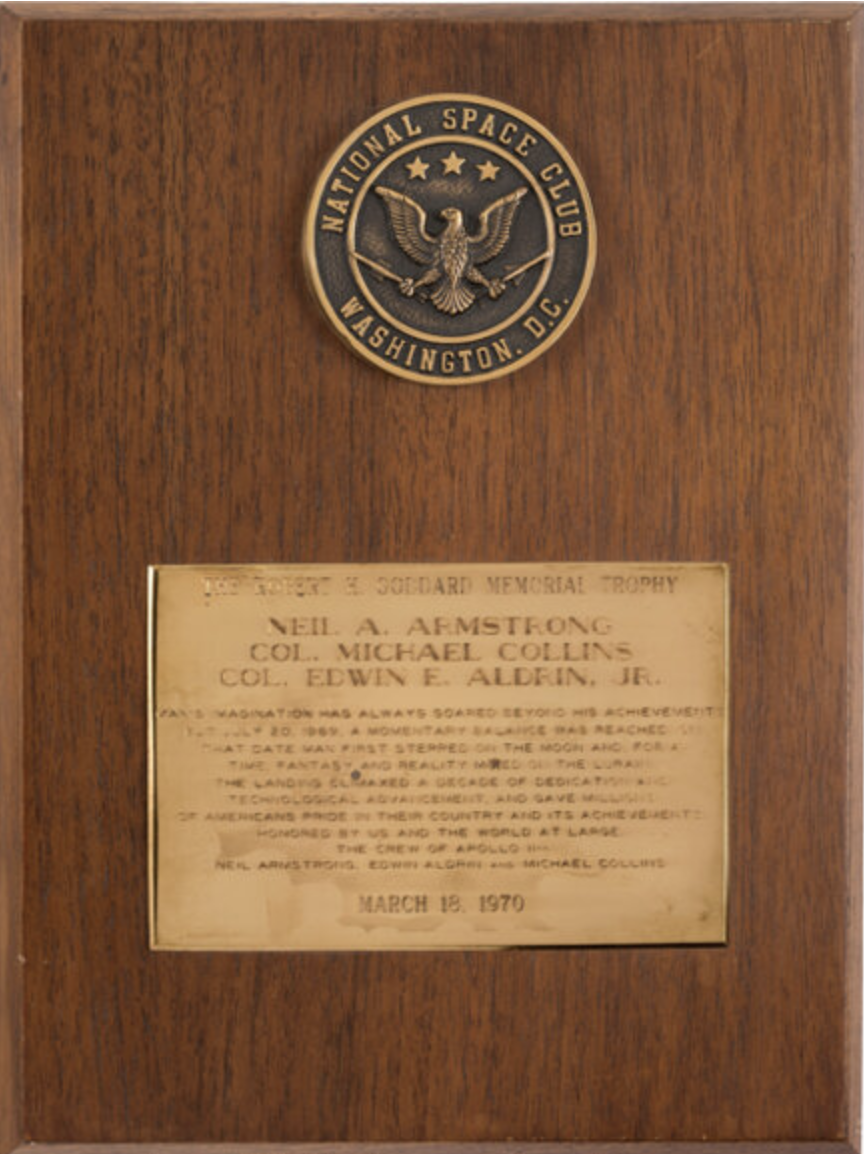
Upon their safe return to Earth, the three astronauts were greeted with ticker-tape parades and a world goodwill tour. The highest civilian honor in the United States, the Presidential Medal of Freedom, was bestowed on the crew in recognition of their achievement. Apollo 11 stood as the culmination of the Space Race, fulfilling the specific national goal Kennedy had set in May 1961: land a man on the Moon and bring him home before the 1960s ended. The mission's physical artifacts tell their own story of permanence. The command module Columbia, the sole section of the spacecraft designed to bring the crew back to Earth, is preserved today at the National Air and Space Museum in Washington, D.C. In stark contrast, the descent stage of the Lunar Module Eagle, the heavy lower section that carried the landing engine and fuel tanks, was left behind and remains on the lunar surface to this day, a silent monument in the Sea of Tranquility. One piece of the spacecraft sits in a museum; the other is still out there, under the sky of another world.
Gallery

Frequently Asked Questions
What is the American Astronauts Memorial?
It was a modernist sculpture in Kraków, Poland, created to honor the Apollo 11 crew of Neil Armstrong, Buzz Aldrin, and Michael Collins. Unveiled on 20 July 1969, it is considered one of the earliest public monuments ever dedicated to the Moon landing.
Where was the American Astronauts Memorial located?
The sculpture stood at the Bronowianka sports club complex on 124A Zarzecze Street in Kraków. It rose about 8 metres (roughly 26 feet) and was built from white-painted reinforced concrete.
Who designed the American Astronauts Memorial?
Polish artist Danuta Nabel-Bochenek was the sculptor behind the work. She unveiled it on the very day the Apollo 11 crew touched down on the Moon, 20 July 1969.
What happened to the American Astronauts Memorial?
Polish authorities removed and destroyed the sculpture in late October 1969, only a few months after its unveiling. Its brief existence had sparked political controversy within the communist government.
Why is the American Astronauts Memorial significant to Apollo 11 history?
It is recognized as one of the first monuments in the world erected specifically to commemorate the Apollo 11 crew. Its rapid destruction by the state makes it a striking symbol of Cold War-era tensions surrounding the mission.
More in Apollo 11 1-24
Spotted an error? Know more?
Reader corrections go straight into our review queue. Suggest an edit · How this site is sourced