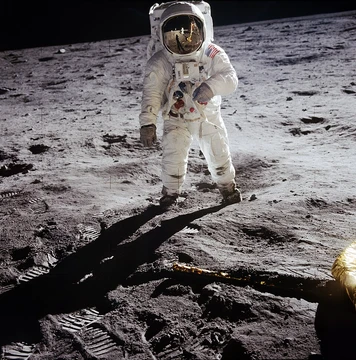
Don Eyles
Engineer who helped resolve Apollo 11 computer alarms during lunar landing.

Don Eyles, a retired computer engineer, contributed to the computer systems aboard the Apollo Lunar Module. He earned a bachelor’s degree in mathematics from Boston University and, at age 23 in 1966, began working at Draper Laboratory. There, he helped program the Apollo Guidance Computer in collaboration with MIT and other researchers. For the Apollo missions, Eyles programmed guidance software and advised flight controllers—via Jack Garman—on spacecraft computer operations. Before Apollo 11, he helped develop the procedures for how controllers should respond to computer error codes.
During the Apollo 11 landing, a series of computer alarms threatened the mission. The issue was traced to the rendezvous radar being left on, per the checklist, which forced the computer to handle data from both the rendezvous and landing radars simultaneously. In a 2005 paper, Eyles explained that a hardware design bug—first seen during testing of the uncrewed Apollo 5 mission—caused the problem. An electrical phasing mismatch between two parts of the radar system made the stationary antenna appear to the computer as if it were dithering between two positions, depending on how the hardware powered up. This triggered extra, spurious cycle stealing as the radar updated an involuntary counter, generating the alarms.
For Apollo 14, Eyles helped when a faulty switch risked sending a false command to the onboard computer. As described in a 1971 Rolling Stone article, the switch was meant to tell the computer to reverse the engines, blasting the module away from the moon. On that flight, the switch jammed and would have ordered a course reversal during descent. “We had to write a new program that would make the computer not see the switch,” Eyles said.
Quick Facts
- Education
- Boston University, Bachelor of Science, Mathematics - 1966
- Known For
- Saving Apollo 14 mission from abort
Facts from the source article.
Lore & Background
During the Apollo 11 landing on 20 July 1969, a series of computer alarms occurred caused by CPU time being drained by the rendezvous radar interface. Eyles concluded in a 2005 Guidance and Control Conference paper that the problem was due to a hardware design bug previously seen during testing of the first uncrewed LM in Apollo 5. An electrical phasing mismatch between two parts of the rendezvous radar system could cause the stationary antenna to appear to the computer as dithering, causing extra spurious cycle stealing and the alarms. During the Apollo 14 mission, Eyles assisted when a faulty switch could have sent a spurious command to the onboard computer; a new program was written to make the computer not see the switch.
Reader's Guide
Don Eyles's work on the Apollo Guidance Computer was critical during the Apollo 11 lunar landing, where his assistance with computer alarms helped avert a potential mission abort. His analysis, published in a 2005 paper, identified a hardware design bug involving the rendezvous radar that had been seen earlier during Apollo 5 testing. His contributions also extended to Apollo 14, where he helped write a program to bypass a faulty switch that could have sent a spurious command. Eyles's role exemplifies the importance of ground-based software expertise in real-time problem-solving during historic space missions. His legacy is tied to the successful landing of Apollo 11 and the safe operation of later lunar missions.
Did You Know?
- Eyles was 23 years old when hired by Draper Laboratory in 1966.
- He earned a bachelor of science in mathematics from Boston University.
- The Apollo 11 computer alarms were caused by a hardware design bug involving the rendezvous radar.
- During Apollo 14, Eyles helped write a program to make the computer ignore a faulty switch.
More in Apollo 11 1-24
Spotted an error? Know more?
Reader corrections go straight into our review queue. Suggest an edit · How this site is sourced