Iphigénie en Aulide
Gluck's first Paris opera, revised by Wagner.

Christoph Willibald Gluck’s *Iphigénie en Aulide* is a three-act opera and the first piece he composed for the Paris stage. Its libretto, by François-Louis Gand Le Bland Du Roullet, draws on Jean Racine’s tragedy *Iphigénie*, which itself adapts Euripides’ *Iphigenia in Aulis*. The work premiered on 19 April 1774 at the Paris Opéra in the second Salle du Palais-Royal, and a lightly revised version was staged the following year. In 1847, Richard Wagner created a German adaptation with major changes.
Initial reception was lukewarm, though the overture earned strong applause. After its premiere, the opera was scheduled for three performances in April 1774, but the run was cut short by a six-week theatre closure following the death of Louis XV. It returned on 10 January 1775 and was revived nearly every year from 1776 to 1824. Over that half-century, it was performed more than 400 times in Paris, eventually becoming Gluck’s most frequently staged opera there. For the 1775 revival, Gluck revised the work by adding the goddess Diana as a *dea ex machina* and expanding the divertissements. Broadly, two versions exist, but the differences are less significant than those between Gluck’s Italian and French *Alceste* or his *Orfeo ed Euridice* and *Orphée et Euridice*.
Wagner’s 1847 German version, *Iphigenia in Aulis*, presented at the Dresden court, involved heavy editing, rescoring, and new passages, including a different ending. This version was recorded on Eichhorn’s 1972 LP with Anna Moffo and Dietrich Fischer-Dieskau, and revived at the 1984 Waterloo Festival with Alessandra Marc. Wagner’s finale, translated back into French, was also used in La Scala’s 2002/2003 production conducted by Riccardo Muti. The first U.S. performance of Gluck’s original French opera took place on 22 February 1935 at Philadelphia’s Academy of Music, staged by the Philadelphia Orchestra under Alexander Smallens, directed by Herbert Graf with sets by Norman Bel Geddes, and featuring Georges Baklanoff, Cyrena van Gordon, Rosa Tentoni, Joseph Bentonelli, and Leonard Treash.
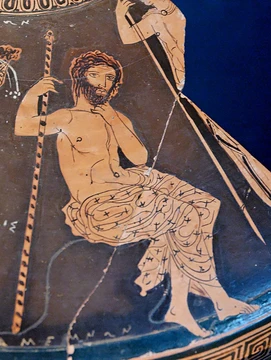
The story centers on King Agamemnon, who must decide whether to sacrifice his daughter Iphigenia to satisfy the goddess Diana and secure fair winds for the Greek fleet sailing to Troy.
- Composer
- Christoph Willibald Gluck
- Premiere
- 19 April 1774
- Venue
- Paris Opéra, second Salle du Palais-Royal
- Librettist
- François-Louis Gand Le Bland Du Roullet
- Source
- Jean Racine's tragedy Iphigénie, based on Euripides' Iphigenia in Aulis
- Notable revision
- Richard Wagner's German version (1847)
Lore & Background
At first, Iphigénie was not popular, except for its overture which was applauded generously. After the premiere, it was billed for three days in April 1774, but its first run was interrupted by the theatre's six-week closure due to the death of Louis XV on 10 May 1774. Iphigénie en Aulide returned to the theatre on 10 January 1775, and was revived annually from 1776 to 1824 with a few exceptions. During that 50-year span from 1774 to 1824, it was performed in Paris more than 400 times, and eventually turned out to be Gluck's most frequently performed opera in Paris.
For the 1775 revival, Gluck revised the opera, introducing the goddess Diana (soprano) at the end of the opera as a dea ex machina, and altering and expanding the divertis
Reader's Guide
Iphigénie en Aulide holds significance as Gluck's first work for the Paris stage, marking his entry into French opera. Its initial reception was lukewarm, but the opera eventually became Gluck's most frequently performed work in Paris, with over 400 performances between 1774 and 1824. The opera exists in two main versions: the 1774 original and a 1775 revision by Gluck that added the goddess Diana as a dea ex machina and expanded the divertissements. The work's legacy also includes a heavily revised German version by Richard Wagner in 1847, which has been recorded and revived in the 20th and 21st centuries. The opera's plot, drawn from Euripides via Racine, centers on King Agamemnon's dilemma of whether to sacrifice his daughter Iphigenia to secure winds for the Trojan War. The opera's overture was particularly praised at its premiere, and the work has been recorded multiple times in both French and German, reflecting its enduring place in the repertory.
Did You Know?
- The opera's first run was interrupted by a six-week theatre closure due to the dying of Louis XV.
- Richard Wagner's 1847 German version included a different ending and passages of his own composition.
- The opera was first performed in the United States on 22 February 1935 at the Academy of Music, Philadelphia.
- Gluck's 1775 revision introduced the goddess Diana as a dea ex machina at the end of the opera.
More in Agamemnon 1-24
Spotted an error? Know more?
Reader corrections go straight into our review queue. Suggest an edit · How this site is sourced