Agamemnon (Seneca)
Seneca's Roman tragedy on Agamemnon's return and murder.

Bain News Service, publisher · Public domain
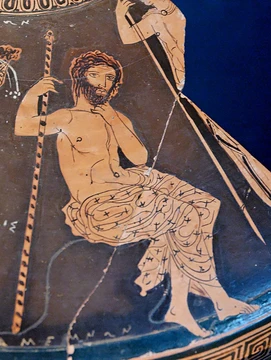
Agamemnon is a fabula crepidata (Roman tragedy with Greek subject) of approximately 1012 lines of verse written by Lucius Annaeus Seneca in the first century AD. The play tells the story of Agamemnon, who was killed by his wife Clytemnestra in his palace after his return from Troy. It is one of several surviving tragedies by Seneca, a Roman Stoic philosopher and playwright.
Quick Facts
- Author
- Lucius Annaeus Seneca
- Country
- Rome
- Language
- Latin
- Genre
- Tragedy
- Set In
- Agamemnon's palace
- Pub Date
- 1st century
- Wikisource
- Agamemnon (Seneca)
Facts from the source article.
Lore & Background
The play's plot centers on the blood-feud between Atreus and Thyestes, fated to continue through Thyestes' son Aegisthus, who would slay Agamemnon and bring ruin upon his house. The action begins on the day of Agamemnon's return from Troy, with his wife Clytemnestra plotting his murder out of rage over the sacrifice of their daughter Iphigenia, jealousy over Cassandra, and her own guilty affair with Aegisthus.
Reader's Guide
Seneca's Agamemnon is significant as a Roman adaptation of a Greek myth, differing markedly from Aeschylus's earlier play of the same name in characterization, structure, and themes. Agamemnon himself has a relatively minor role, while Clytemnestra and Cassandra dominate the action. The play's influence is uncertain, as no earlier known play serves as an obvious model, though lost works by Ion of Chios, Livius Andronicus, and Accius may have contributed. Its legacy lies in its representation of Senecan tragedy's focus on psychological conflict, revenge, and the supernatural, as seen in the opening appearance of Thyestes' ghost.
Did You Know?
- The play is a fabula crepidata, a Roman tragedy with a Greek subject.
- Agamemnon has only a relatively minor role in Seneca's play, compared with Clytemnestra and Cassandra.
- There is no earlier known play which serves as an obvious model for Seneca's Agamemnon.
- The ghost of Thyestes appears in Act I, calling upon his son Aegisthus to carry out revenge.
The Cursed Bloodline of Atreus
Agamemnon's story is inseparable from the long shadow of familial violence stretching back to his ancestor Tantalus. A curse placed upon Pelops by Myrtilus, a servant Pelops had killed, poisoned every generation of the House of Atreus. The most infamous act came from Agamemnon's own father, Atreus, who discovered his wife Aerope's affair with his twin brother Thyestes. In retaliation, Atreus murdered Thyestes' sons and fed them to their father. Thyestes, in turn, fathered Aegisthus with his own daughter Pelopia, and that son swore a vow of terrible vengeance. Aegisthus eventually killed Atreus, restored Thyestes to the throne of Mycenae, and ruled jointly with his father. Agamemnon and his brother Menelaus fled to Sparta, where they married Tyndareus's daughters. With Menelaus's help, Agamemnon drove out both Aegisthus and Thyestes, reclaiming his father's kingdom and extending his power through conquest until he became the most powerful prince in Greece. In Aeschylus's Oresteia, this cycle of misfortune finally found resolution only when Orestes stood before a court of justice shared by mortals and gods.
The Gathering at Aulis and the Price of War
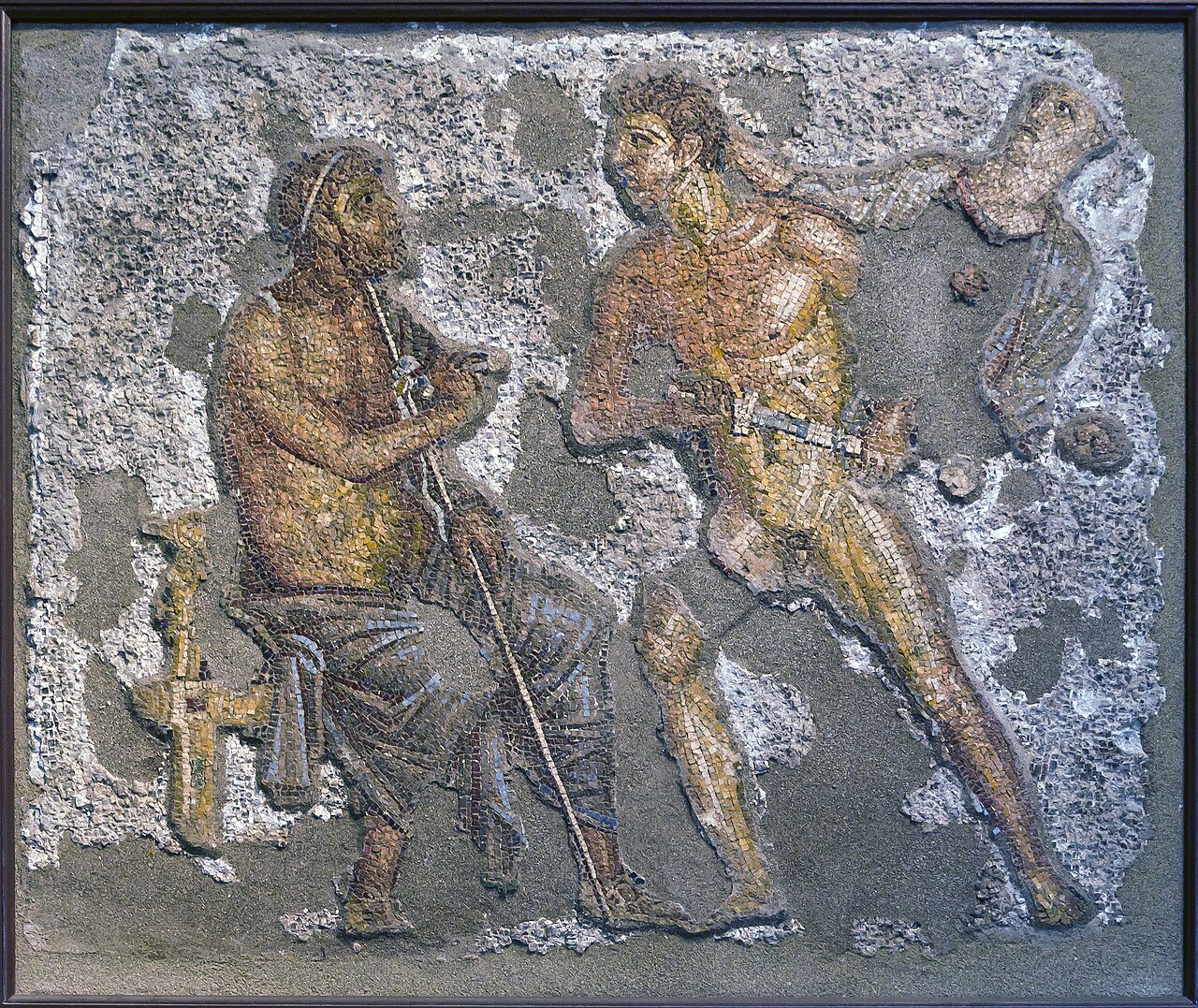
Before the Trojan War could begin, Agamemnon faced the formidable task of assembling a reluctant Greek fleet. One notable difficulty was recruiting Odysseus, who was feigning insanity to avoid service. Agamemnon dispatched Palamedes, who threatened to kill Odysseus's infant son Telemachus, forcing the cunning king to abandon his pretense and join the army. Once the forces assembled at the port of Aulis in Boeotia, the goddess Artemis struck the camp with misfortune: plague and a complete absence of wind prevented any departure. The prophet Calchas delivered the devastating verdict that only the sacrifice of Agamemnon's daughter Iphigenia could appease the goddess. The myths offer varying explanations for Artemis's anger; in Aeschylus's drama she foresaw the mass death of young men at Troy, while in Sophocles's Electra Agamemnon had slain an animal sacred to her and boasted of matching her in the hunt. Some dramatizations include the ruse of telling Iphigenia she was to marry Achilles. In Euripides's Iphigenia at Aulis, Artemis accepts a deer in her place and carries her to Tauris in the Crimean Peninsula, though scholars widely regard that version as the work of a later interpolator rather than Euripides himself.
The Quarrel That Defined the Iliad
The central conflict of Homer's Iliad revolves around Agamemnon's seizure of Chryseis, daughter of the priest Chryses, as a war prize during one of the Achaean army's raids. When Chryses pleaded for his daughter's release, Agamemnon refused. The priest then turned to his god, Apollo, who answered by sending a devastating plague upon the Greek camp. The prophet Calchas identified the cause, setting the stage for the legendary quarrel between Agamemnon and Achilles. This confrontation in the war's final year became the defining dramatic engine of the epic. Beyond the Iliad, Agamemnon's wartime authority extended to judicial matters: when Odysseus sought revenge against Palamedes for the earlier threat to his son's life, he forged a letter supposedly from Priam and hid gold in Palamedes's tent. Palamedes was accused of treason, and Agamemnon ordered him stoned to death. These episodes paint a picture of a commander whose decisions, whether in matters of honor, divine appeasement, or military justice, carried enormous weight over the fate of thousands.
A Name, a Kingdom, and a Tragic End
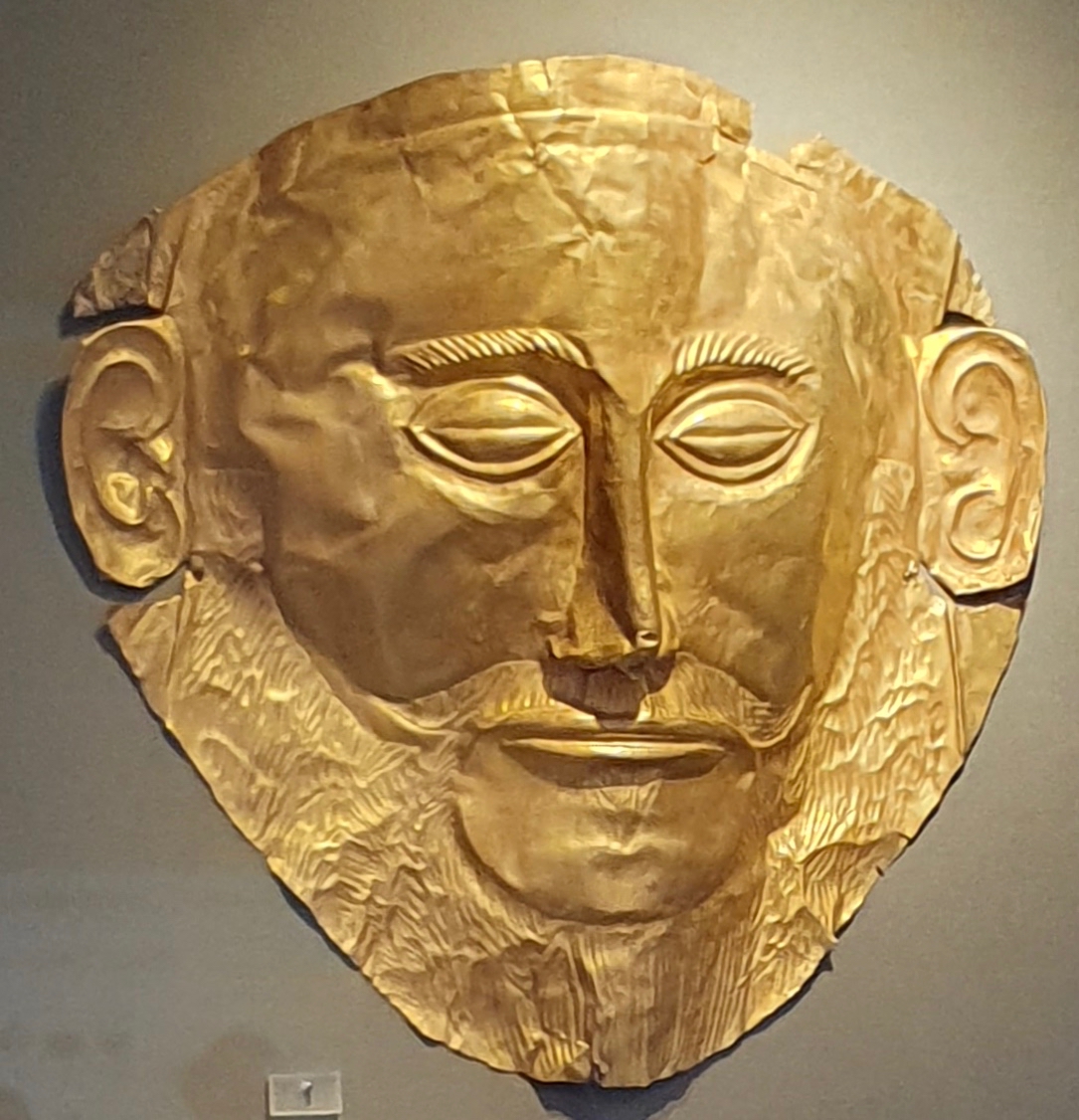
The very name Agamemnon carries layers of meaning that scholars have debated. One reading interprets it as a compound of 'very much' and 'to stand fast,' yielding 'very steadfast' or 'unbowed.' Another traces it to an unattested form meaning 'very mindful,' combining 'very much' with 'to think on or provide for.' A third proposal derives the second element from a root meaning 'to wish eagerly or strive,' producing 'very eagerly wishing.' The linguist Václav Blažek has even proposed a connection to the Vedic Sanskrit deity Agni on both etymological and functional grounds. As king of Mycenae, or Argos, which many traditions treat as another name for the same territory, Agamemnon commanded the Achaean forces at Troy and fathered a large family whose size varies by source: the Iliad lists three daughters, while Aeschylus gives him a son Orestes and two daughters, Iphigenia and Electra. His story ends in betrayal: upon returning from Troy, he was murdered by his wife Clytemnestra, or in an older tradition, by her lover Aegisthus, the very man whose vengeance had once driven the brothers into exile.
Gallery
Frequently Asked Questions
What is Agamemnon (Seneca)?
It is a Roman tragic play composed by Lucius Annaeus Seneca in the first century AD, dramatizing the homecoming and murder of the Greek king Agamemnon at the hands of his wife Clytemnestra. The work belongs to the fabula crepidata tradition, in which Roman playwrights stage stories drawn from Greek mythology.
Who wrote Agamemnon (Seneca) and when?
The play was authored by Lucius Annaeus Seneca, a Roman Stoic philosopher known for both his philosophical treatises and his dramatic works. It was composed during the first century AD and is one of the tragedies attributed to him that has survived to the present day.
What happens in Agamemnon (Seneca)?
The drama is set in Agamemnon's palace at Argos or Mycenae and centers on his return from the Trojan War, where he is slain by Clytemnestra. The entire action unfolds within the confines of the royal household rather than on a battlefield.
How long is Agamemnon (Seneca)?
The text spans approximately 1,012 lines of verse. It is structured as a single continuous dramatic work in the Roman tragic tradition.
Why is Agamemnon (Seneca) significant for fans and scholars?
As one of the few surviving tragedies from Seneca's dramatic output, it offers a direct window into how first-century Roman Stoic thought intersected with theatrical storytelling. The play also serves as a prime example of the fabula crepidata form, adapting a Greek mythological narrative for a Roman stage.
More in Agamemnon 1-24
Spotted an error? Know more?
Reader corrections go straight into our review queue. Suggest an edit · How this site is sourced