Ajax (play)
Sophocles' tragedy of a hero's madness, shame, and suicide.

Sophocles · Public domain
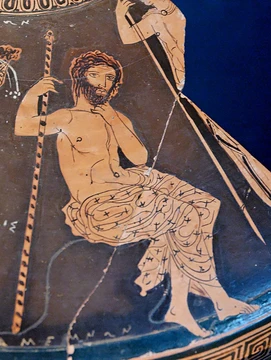
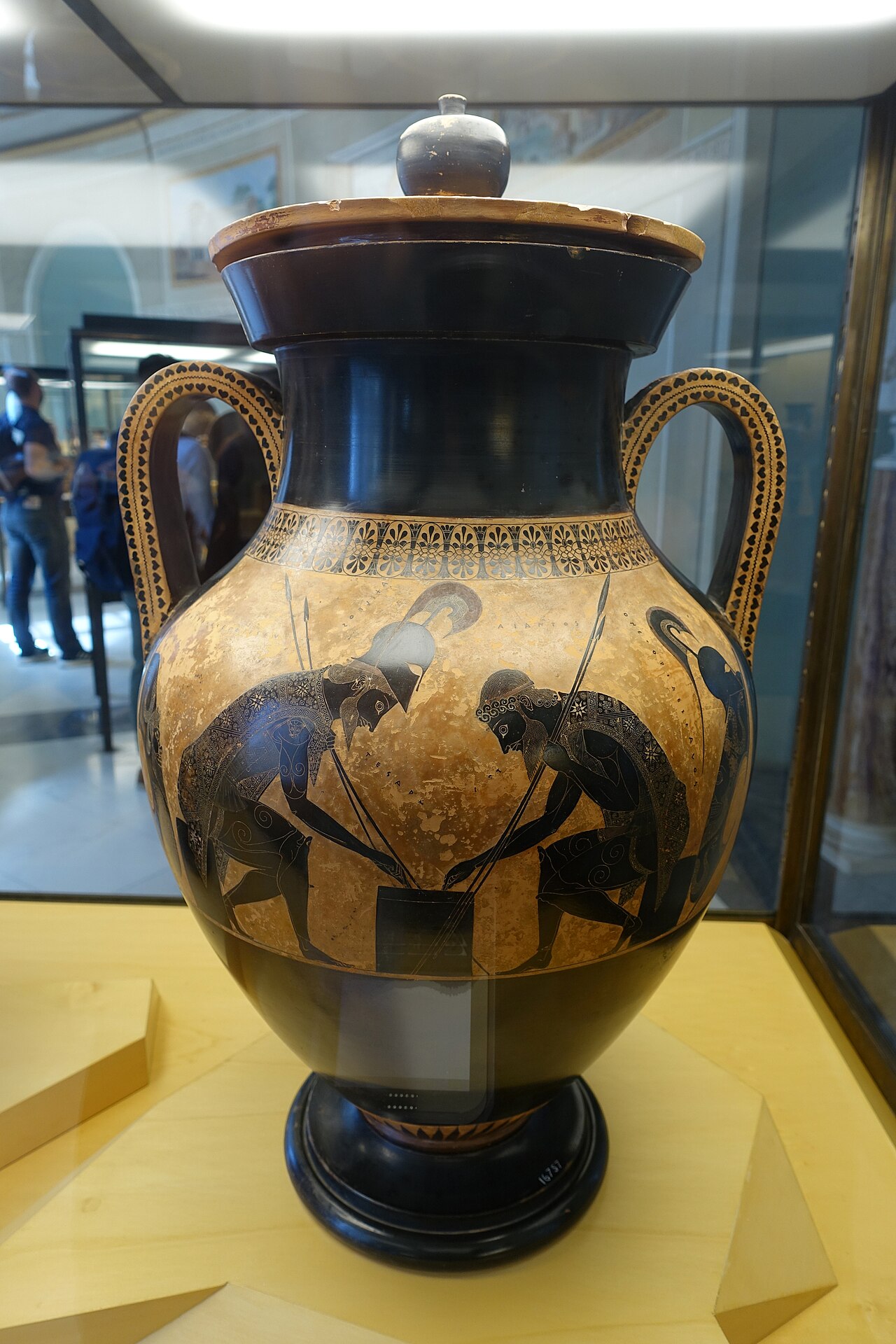
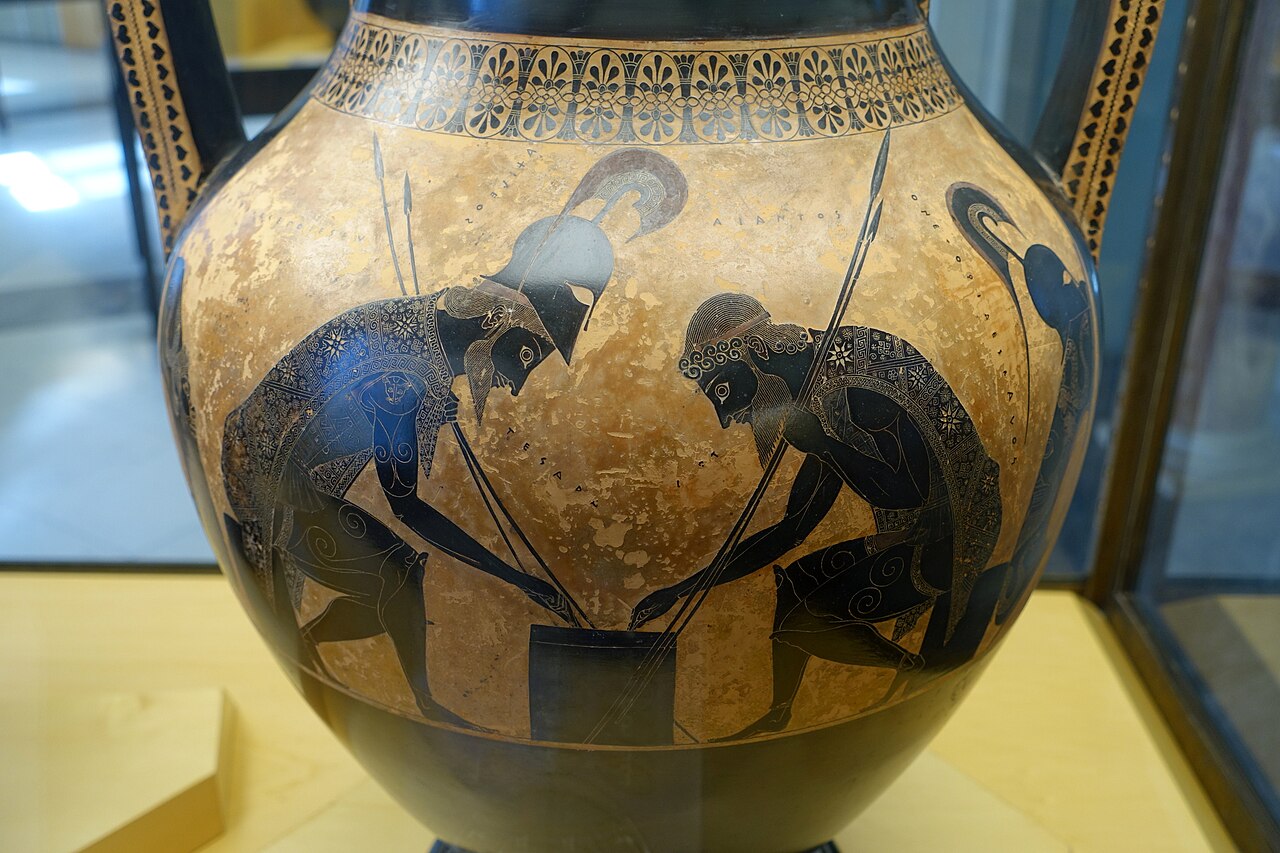
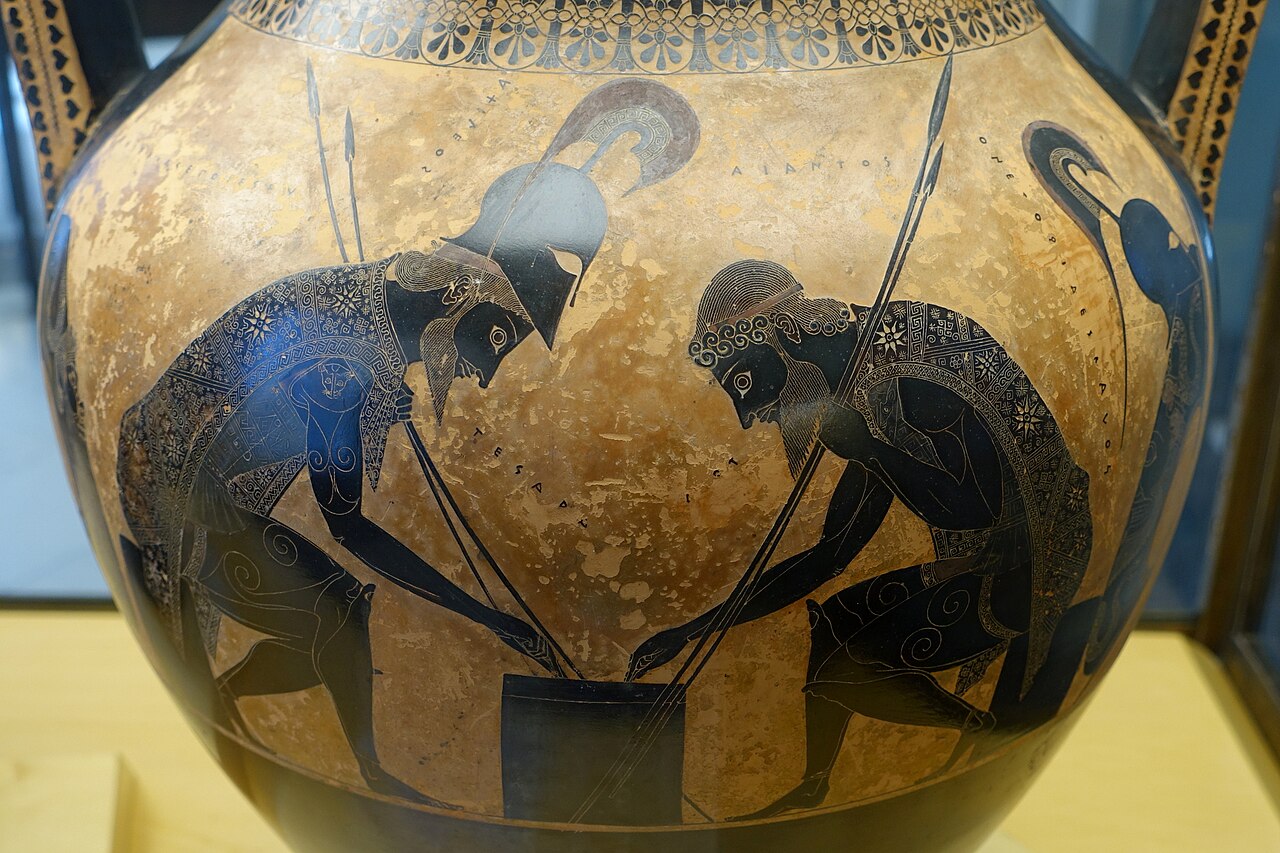
Ajax (also known as Aias) is a Greek tragedy written by Sophocles in the 5th century BCE. It may be the earliest of Sophocles' seven surviving tragedies, though he had likely been composing plays for a quarter of a century before its first staging. The play depicts the fate of the warrior Ajax the Great, the second greatest hero at Troy after Achilles, after the events of the Iliad but before the end of the Trojan War.
Quick Facts
- Writer
- Sophocles
- Chorus
- Sailors from Salamis
- Characters
- Athena / Odysseus / Ajax / Tecmessa / Messenger / Teucer / Menelaus / Agamemnon
- Mute
- Attendants / Servants / Soldiers / Eurysaces
- Premiere Place
- Athens
- Original Language
- Ancient Greek
- Genre
- Tragedy
Facts from the source article.
Lore & Background
The play opens with Athena deluding Ajax into slaughtering cattle instead of the Greek kings Agamemnon and Menelaus, whom he intended to kill after they awarded Achilles' armor to Odysseus. Ajax, upon realizing his madness, is overwhelmed by shame and decides to commit suicide. Despite the pleas of his concubine Tecmessa, he impales himself on a sword given by Hector. His half-brother Teucer arrives too late to prevent the death, having learned from the prophet Calchas that Ajax must not leave his tent until day's end.
Reader's Guide
Ajax is significant as one of Sophocles' earliest surviving works, likely from the same period as Antigone (probably 442 or 441 BCE). It explores themes of honor, madness, shame, and the transition from the old heroic world to a more democratic order. The play raises complex questions about how 5th-century Greece advanced from the old world of kings and heroes to a new democratic order, while still revering the past. Ajax's suicide, though not a strategic act, has been compared to modern suicide bomber tactics in its call for vengeance. The work has been adapted in modern settings, including a 1986 production set in a near-future United States after a war in Latin America, and a 2011 production set in a Middle Eastern war zone. The play's original title in Greek is Αἴας, and the name Ajax itself has an onomatopoeic resemblance to a wailing cry of lament, as noted in the text.
Did You Know?
- The play may be the earliest of Sophocles' seven surviving tragedies, though he had been composing plays for about 25 years before it was staged.
- Ajax's name in Greek (Αἴας) is onomatopoeic, resembling the wailing cry 'aiai!' as noted in lines 430–432 of the play.
- The play was adapted by director Peter Sellars in 1986, setting it in a near-future United States after a war in Latin America.
- In 2011, the American Repertory Theater produced Ajax in modern dress with a setting resembling a Middle Eastern war zone.
Historical Context and Place in Sophocles' Career
Sophocles' Ajax is widely regarded as the earliest of his seven surviving tragedies, yet scholars emphasize that he had likely been composing for roughly twenty-five years before it first reached the stage. The work is generally dated to the same period as Antigone, with a probable performance in 442 or 441 BCE, when Sophocles was around fifty-five. This situates the play squarely in the middle of his career rather than at its opening, a nuance that complicates any simple reading of it as a youthful experiment. The narrative it tells is set in a narrow mythological window: after the death of Achilles but before the final resolution of the Trojan War, positioning Ajax the Great—the second-highest Greek hero at Troy—as the central figure. Audiences in fifth-century Athens would have known this character intimately through Homer and other oral traditions. Its survival among the very few complete Greek tragedies we possess makes it a cornerstone of the dramatic canon and a key reference point for understanding how the playwright developed his art over decades.
Plot and Dramatic Architecture
The drama opens with Athena and Odysseus recounting how, after Achilles fell in battle, the kings Agamemnon and Menelaus awarded his armor to Odysseus rather than to Ajax, who felt the prize was rightfully his. Enraged, Ajax resolved to kill all three men, but Athena intervened, flooding his mind with false visions so that he slaughtered the army's cattle and herdsman instead, mistaking them for his intended victims. When Ajax emerges believing he has carried out his vengeance, his concubine Tecmessa and the chorus describe his madness. Then, in a sudden and devastating reversal, Ajax regains his senses, recognizes the true horror of what he has done, and is consumed by shame. He decides to end his life. After entrusting his shield to his young son Eurysaces and bidding farewell to Tecmessa, he goes out and impales himself on the sword given to him by Hector. His half-brother Teucer arrives too late, and the play's final act becomes a bitter dispute over whether Ajax's body deserves burial or should be left to scavengers—a conflict Odysseus ultimately resolves by urging that even enemies merit dignity in death.
Critical Interpretations and Thematic Tensions
Scholars have read Ajax through multiple competing lenses. Hugh Lloyd-Jones argues that, once bracketed interpolations are set aside, the text reads as a mature masterpiece comparable to Oedipus Tyrannus rather than an early work. He highlights a tension in how Sophocles portrays the gods: some critics see them as just, making Ajax's suffering a form of moral instruction for character and audience alike, while others view the deities as capricious and Ajax as a heroic figure defying their injustice. Lloyd-Jones stresses that Sophocles never softens Ajax's murderous intent, yet the playwright conveys deep sympathy for the warrior's greatness and even admiration for the terrible courage it takes to choose death in order to preserve his sense of honor. Robert Bagg and James Scully offer a structural reading, dividing the play into two halves: the first rooted in the heroic, kingly world of myth, the second echoing the democratic, debate-driven culture of Sophocles' own Athens. In their view, Ajax's brute strength represents an old order yielding to the intelligence embodied by Odysseus, yet the play's closing insistence on a proper burial affirms that the old hero still commands respect and human decency.
The Name, Its Sound, and Translational Choices
The play's original Greek title is Αἴας, pronounced roughly as a long, open vowel sequence. In English the name appears in two forms: Ajax, the long-established romanization that entered the language centuries ago, and Aias, a direct transliteration from the Greek that has grown in favor among translators since the late twentieth century. The text itself draws attention to the name's sound. In lines 430 through 432, Ajax remarks that his name carries an onomatopoeic echo of the Greek cry of lament, aiai—a wailing exclamation of grief. This self-referential moment links the hero's very identity to the act of mourning that dominates the play's second half. Translators have handled this passage in varied ways, some preserving the sound-alike and others prioritizing meaning over phonetics. The choice between Ajax and Aias is therefore not merely cosmetic; it signals a translator's orientation toward either the familiar English literary tradition or a closer fidelity to the original Greek phonetics, and it subtly shapes how modern readers encounter the character and the tragedy he embodies.
Gallery



Frequently Asked Questions
What is Ajax (play)?
Ajax is a Greek tragedy by Sophocles, most likely first staged around 442 or 441 BCE. It dramatizes the psychological collapse of the warrior Ajax the Great during the Trojan War, set after the events of the Iliad but before the war's final resolution.
Who is the protagonist of Ajax?
The play centers on Ajax the Great, the second-greatest Greek hero at Troy after Achilles. His immense pride and sense of honor make him unable to accept being passed over for Achilles' armor, which ultimately drives the tragedy.
How does the story of Ajax end?
Overcome by shame and rage after being publicly humiliated by the Greek commanders, Ajax takes his own life. His companion Teucer retrieves his body, and the play closes on the grief and dispute surrounding his death rather than on a triumphant resolution.
When did Sophocles write Ajax?
Sophocles composed the play in the 5th century BCE, probably around 442 or 441 BCE. It is often considered the earliest of his seven surviving tragedies, though he had already been writing for roughly a quarter of a century by the time of its first performance.
Why is Ajax important to the study of Greek tragedy?
The work is a foundational study of a hero's mental breakdown, exploring madness, public shame, and the destructive weight of honor. It remains a cornerstone of classical drama and one of the earliest surviving examples of Sophocles' mature craft.
More in Agamemnon 1-24
Spotted an error? Know more?
Reader corrections go straight into our review queue. Suggest an edit · How this site is sourced