Age of Mythology
King of Mycenae, slayer of myth, architect of victory.

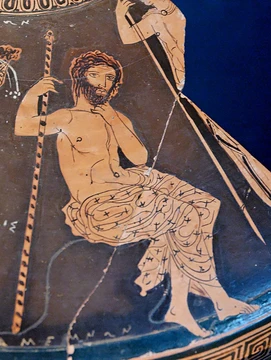
Ignác Goldziher · Public domain
The Agamemnon is a playable hero unit in the 2002 real-time strategy game Age of Mythology, featured prominently in the 'Fall of the Trident' campaign. He represents the Mycenaean king who led the Greek coalition against Troy, reimagined here as a central figure in a mythological conflict against the cyclops Gargarensis and his master, the titan Kronos.
Quick Facts
- Title
- Age of Mythology
- Developer
- Ensemble StudiosExtended Edition developed by SkyBox Labs and Forgotten Empires. · Westlake Interactive / (OS X)
- Publisher
- Microsoft Game Studios · MacSoft / (OS X)
- Director
- Tony Goodman
- Producer
- David Rippy
- Designer
- Ian M. Fischer / Bruce Shelley
- Composer
- Stephen Rippy / Kevin McMullan
- Programmer
- Robert Fermier
- Artist
- Lance Hoke / David Cherry
- Released
- NA · October 31, 2002 · EU · November 14, 2002
- Genre
- Real-time strategy
- Engine
- BANG!
Facts from the source article.
Lore & Background
Agamemnon, son of Atreus, was the high king of Mycenae and commander of the Greek forces during the Trojan War. In Age of Mythology, his role is expanded beyond Homeric epic: he leads the Greek armies not only against Troy but also against the machinations of the cyclops Gargarensis, who seeks to free the imprisoned titan Kronos. Agamemnon is portrayed as a pragmatic and sometimes ruthless leader, willing to sacrifice allies and even his own daughter Iphigenia (referenced in the campaign) to achieve victory.
Reader's Guide
Age of Mythology expanded the real-time strategy genre by incorporating mythological creatures and god powers, moving beyond historical realism. Its rock-paper-scissors combat model governs infantry, archers, cavalry, naval units, and myth units, with heroes effective against myth units. The game includes a scenario editor more advanced than its predecessor, with triggers, cinematics, and terrain tools. Multiplayer was supported via ESO, offering seven game types including Supremacy, Conquest, and Deathmatch. The game's commercial success led to an expansion pack in 2003, a board game adaptation, and later an Extended Edition in 2014 and a remaster in 2024. Its legacy lies in blending mythological themes with established RTS mechanics, influencing subsequent titles in the Age of Empires franchise.
Did You Know?
- The 'Fall of the Trident' campaign contains 33 scenarios, making it one of the longest single-player campaigns in the Age of Empires series.
- Agamemnon's model in Age of Mythology is based on his depiction in the game's predecessor, Age of Empires: The Rise of Rome.
- In the campaign, Agamemnon is voiced by actor Peter Renaday, who also voiced the narrator for the original Age of Empires.
- The character's name is spelled with an 'n' at the end (Agamemnon), not to be confused with the mythological figure Agamemnon, though they are the same person.
Mythological Identity and Divine Progression
Age of Mythology distinguishes itself from its Age of Empires parent series by anchoring every strategic decision in the pantheons of three ancient civilizations. Rather than charting real historical conquests, the game asks players to align with the gods of Greece, Egypt, or Scandinavia, each culture offering three major deities—Zeus, Ra, and Odin among them—from whom the player selects a patron before a single match begins. As the player pushes forward through four successive Ages, from Archaic to Classical, Heroic, and finally Mythic, a minor god is chosen at each threshold, adding layers of divine influence. Every deity, major or minor, bestows a unique set of technologies, access to specific myth units, and a signature god power: a one-time, game-altering ability that can either devastate an opponent or bolster the player's own position. Advancing Ages is not free; it demands a substantial resource investment and the prior construction of a prerequisite building, making the path to Mythic Age a deliberate, resource-heavy commitment. This divine framework transforms what would be a standard resource-and-conquest loop into a narrative of escalating supernatural power.
Economy, Combat Cycles, and the Mythic Layer
The economic backbone of Age of Mythology rests on four resources—food, wood, gold, and favor—deliberately excluding the stone that defined earlier Ensemble Studios titles. Food arrives through hunting, berry gathering, livestock, farming, and fishing; wood comes exclusively from felling trees; gold is mined or earned through trade. Favor, the most culturally specific resource, is earned in entirely different ways depending on the player's pantheon: Greeks pray at temples, Egyptians erect monuments, and Norse players gain it through combat, hunting, or simply fielding heroes. At the market, any of the first three can be swapped, but favor remains locked to its owner. On the battlefield, seven unit categories interact through a rock-paper-scissors logic: infantry outdamages cavalry, cavalry outdamages archers, archers outdamages infantry, and the same triad repeats among arrow, siege, and hammer ships. Siege units bypass this cycle to crack buildings but crumble before cavalry. Heroes shine against myth units, while those mythic creatures in turn devastate ordinary soldiers, and heroes can also harvest relics that, when deposited in a temple, grant lasting economic or military bonuses.
Commercial Momentum and a Two-Decade Afterlife
Released in 2002 by Ensemble Studios under the Microsoft Game Studios banner for both Windows and Mac OS X, Age of Mythology struck quickly and hard in the marketplace. It crossed the one-million-unit threshold and earned platinum status within just four months of hitting shelves, a remarkable pace for a strategy title. The momentum carried into 2003, when The Titans expansion pack deepened the experience and Eagle Games brought the concept to tabletop with a dedicated board game adaptation. After a long quiet period, the franchise re-emerged on digital storefronts: the Extended Edition arrived on Steam on May 8, 2014, followed by the Tale of the Dragon expansion on January 28, 2016, which introduced an entirely new cultural setting. The most recent chapter came on September 4, 2024, with the release of Age of Mythology: Retold, a full remaster that returned the 2002 original to modern audiences. Spanning over two decades, the title's continued presence—through expansions, a physical board game, digital re-releases, and a ground-up remaster—testifies to a design that players kept returning to long after its initial commercial peak.
A Campaign Rooted in Mythic Conflict
While the multiplayer and skirmish modes let players build empires in the lands of Greece, Egypt, or the Norse realms, the single-player campaign tells a more personal story. The narrative centers on Arkantos, an Atlantean admiral who is compelled to journey across the territories of all three playable cultures. His mission is a hunt: a cyclops has allied itself with Poseidon in a scheme against Atlantis, and Arkantos must track this creature through the mythic landscapes of each civilization. This framing gives the campaign a unifying antagonist and a sense of purpose beyond generic conquest, tying the three otherwise distinct cultural settings into a single narrative thread. The game's broader design philosophy reinforces this mythic tone. Rather than drawing on documented historical events the way its Age of Empires predecessors do, Age of Mythology pulls its inspiration from the legends and folklore of Greek, Egyptian, and Norse tradition. Mythological creatures roam the battlefield alongside human soldiers, and supernatural powers reshape the tactical landscape, pushing the experience well beyond the realm of historical realism and into the territory of epic fantasy.
Gallery



Frequently Asked Questions
What is Age of Mythology?
It is a real-time strategy game released in 2002 by Ensemble Studios under the Microsoft Game Studios label. As a spin-off of the Age of Empires franchise, it replaces historical civilizations with ones rooted in Greek, Egyptian, and Norse mythology.
What sets Age of Mythology apart from other Age of Empires titles?
Beyond the familiar base-building and unit management, it introduces divine god powers and summonable mythological creatures that fundamentally reshape how battles are fought. Each culture's patron deity grants unique supernatural abilities with no parallel in the historical entries.
What is the single-player story about?
The campaign casts you as Arkantos, an Atlantean admiral, on a quest to track down a cyclops acting on Poseidon's behalf. His journey takes him through the lands of all three mythological cultures.
What expansions exist for Age of Mythology?
The Titans shipped in 2003 as the first expansion, adding new content and gameplay elements. A second expansion, Tale of the Dragon, was released much later in 2016.
Who made Age of Mythology and on which platforms can it be played?
Ensemble Studios developed the title while Microsoft Game Studios handled publishing. It was released for both Microsoft Windows and Mac OS X.
More in Agamemnon 1-24
Spotted an error? Know more?
Reader corrections go straight into our review queue. Suggest an edit · How this site is sourced