The Anger of Achilles
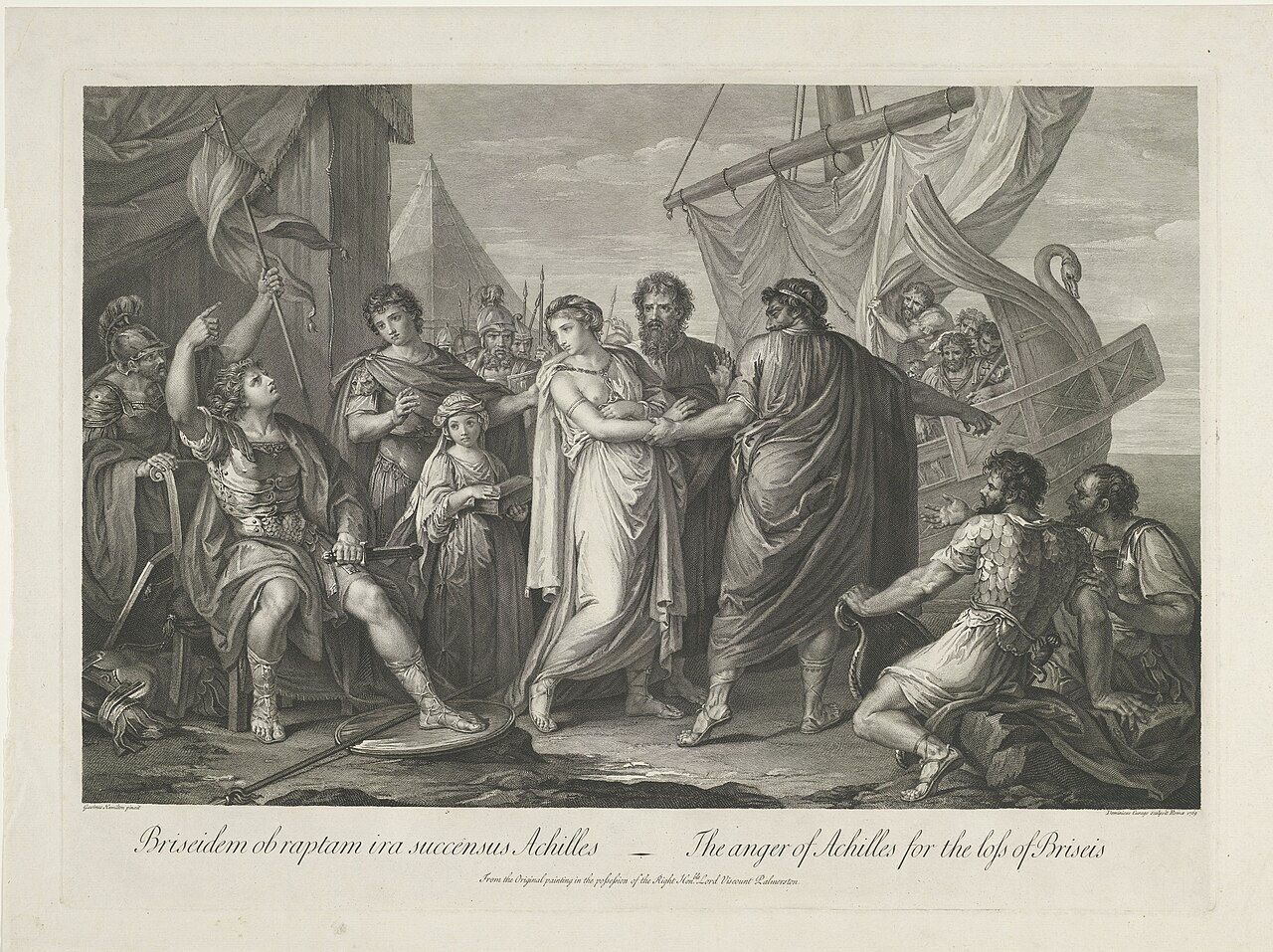
1819 oil painting by Jacques-Louis David depicting a Greek myth scene.

Rijksmuseum · CC0
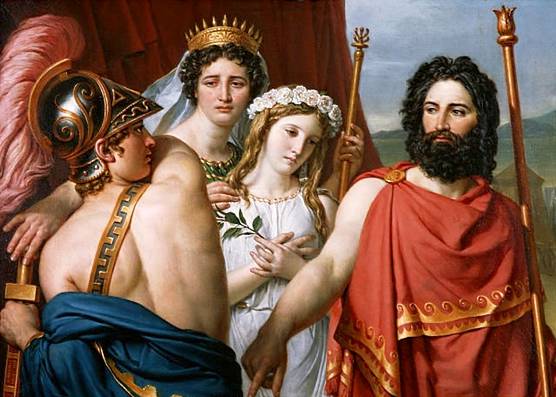
Painted in 1819 by Jacques-Louis David, *The Anger of Achilles* is an oil-on-canvas work held by the Kimbell Art Museum in Fort Worth, Texas. It ranks among the final history paintings David created. The scene captures a key moment in Greek mythology: Agamemnon tells Achilles that he has not brought his daughter Iphigenia to be married, but instead plans to sacrifice her to appease the goddess Artemis. Enraged, Achilles starts to draw his sword, while Agamemnon’s wife, Clytemnestra, places a hand on her daughter’s shoulder, her expression one of grief and sorrow.
David completed the painting while living in exile in Brussels. A copy from 1825, sometimes credited to Michel Ghislain Stapleaux under David’s supervision, is held in a private collection. According to the ICIJ, this copy is owned through a British Virgin Islands–registered company by Russian media manager Konstantin Ernst.
Quick Facts
- Title
- The Anger of Achilles
- Artist
- Jacques-Louis David
- Year
- 1818
- Medium
- Oil on canvas
- Height Metric
- 105
- Museum
- Kimbell Art Museum
- City
- Texas
Facts from the source article.
Lore & Background
The Anger of Achilles was produced by Jacques-Louis David during his exile in Brussels. It shows the moment when Agamemnon reveals to Achilles that he has not brought his daughter Iphigenia as a bride, but intends to sacrifice her to appease Artemis. Achilles begins to draw his sword in anger, while Clytemnestra looks on in grief with her hand on her daughter's shoulder. An 1825 copy of the painting is sometimes attributed to Michel Ghislain Stapleaux under David's direction. This copy is now in a private collection; according to ICIJ, it is owned through a British Virgin Islands-registered company by Russian media manager Konstantin Ernst.
Reader's Guide
The Anger of Achilles is significant as one of the last history paintings by Jacques-Louis David, a leading French Neoclassical artist. Created during his exile in Brussels, it captures a dramatic moment from Greek mythology, emphasizing emotional tension and moral conflict. The painting's composition and subject reflect David's continued engagement with classical themes even in his later career. The existence of an 1825 copy, sometimes attributed to Michel Ghislain Stapleaux under David's direction, and its ownership by a Russian media manager through an offshore company, adds a layer of modern provenance interest. The work remains in the Kimbell Art Museum, contributing to the understanding of David's oeuvre and the persistence of mythological subjects in early 19th-century French painting.
Did You Know?
- The painting is one of the last of David's history paintings.
- It was produced during David's exile in Brussels.
The Dramatic Confrontation
The painting captures a single, electric moment from Greek mythology. Agamemnon has just broken a devastating secret to Achilles: the young woman he was led to believe was his bride, Iphigenia, is in fact destined for sacrifice on the altar of Artemis. The composition freezes the instant Achilles reacts—his hand moving to draw his sword in a surge of fury. Beside them, Clytemnestra, Agamemnon's wife, stands as a silent witness to the tragedy unfolding. Her hand rests on her daughter's shoulder in a gesture of maternal grief and helplessness. David renders this three-way emotional tableau with the restrained intensity characteristic of Neoclassicism, allowing the viewer to read the full weight of betrayal, rage, and sorrow in a single frozen instant. The painting is executed in oil on canvas, a medium that permits the rich tonal contrasts between the figures' expressions and their surroundings, lending each face a sculptural gravity befitting the mythological register.
A Master in Exile
The Anger of Achilles was produced in 1819 during a period of profound displacement in David's life. By this time, the once-dominant figure of French art had been forced into exile in Brussels, far from the Parisian salons and imperial commissions that had defined his career for decades. This work stands as one of the final history paintings he would complete, a late testament to the grand narrative tradition that had made him the preeminent painter of the revolutionary and Napoleonic era. The subject—a scene of mythological drama involving gods, kings, and mortal consequences—reflects the same elevated ambitions that characterized his earlier masterpieces, yet it carries the quiet gravity of an artist working at the margins of his former world. The painting's creation in Brussels, rather than in France, adds a layer of biographical poignancy to its dramatic subject matter, reminding viewers that even the most heroic compositions can be born from personal loss and political displacement.
Provenance and the Question of the Copy
The original canvas now hangs in the Kimbell Art Museum in Fort Worth, Texas, where it is available for public study and appreciation. Yet the painting's story extends well beyond a single object. In 1825, a copy was produced that has sometimes been attributed to the Belgian painter Michel Ghislain Stapleaux, working under David's own direction. This copy entered a private collection, and its ownership has drawn particular attention: according to reporting by the International Consortium of Investigative Journalists, it is held through a company registered in the British Virgin Islands by Konstantin Ernst, a Russian media manager. The existence of the copy raises questions about David's late-period workshop practices and the circulation of his compositions beyond the original. Meanwhile, the original's journey from Brussels to a Texas museum underscores how the dispersal of European art collections has reshaped where the world encounters its masterpieces.
Scholarly Reception and Oeuvre Context
The painting occupies a distinctive position within the broader study of David's career. Scholars have long grappled with how to situate his late, exiled works alongside the celebrated canvases of his Parisian prime. The 1989–1990 retrospective catalogue edited by Antoine Schnapper and Arlette Sérullaz, produced for the Louvre-Versailles exhibition, provided a comprehensive framework for understanding the full arc of his output. Later studies, including Sophie Monneret's examination of David and Neoclassicism, Simon Lee's monograph, and Philippe Bordes's volume covering the period from Empire to exile, have each contributed to refining our understanding of how the Brussels years shaped his final artistic statements. The 2005 Jacquemart-André exhibition catalogue by Nicolas Sainte Fare Garnot further cemented the painting's place in the scholarly record. Together, these works ensure that The Anger of Achilles is not read in isolation but as a vital chapter in the story of one of France's most consequential painters.
Gallery
Frequently Asked Questions
What is The Anger of Achilles?
It is an 1819 oil-on-canvas history painting by Jacques-Louis David that dramatizes the moment Agamemnon reveals to Achilles his plan to sacrifice their daughter Iphigenia to the goddess Artemis. The work is now part of the Kimbell Art Museum's collection in Fort Worth, Texas.
What scene does the painting depict?
Agamemnon confronts Achilles with the news that Iphigenia will be offered as a sacrifice rather than married, and Achilles reacts by beginning to draw his sword. Meanwhile, Clytemnestra rests a hand on her daughter's shoulder with a look of deep grief.
Where can you see The Anger of Achilles today?
The painting is housed at the Kimbell Art Museum in Fort Worth, Texas, where it is displayed as part of the institution's permanent collection.
Why is this painting significant in David's career?
It ranks among the last history paintings Jacques-Louis David ever completed, making it a late-career statement from one of France's most influential Neoclassical masters.
What mythological story does The Anger of Achilles draw from?
The scene is rooted in the Greek myth of Iphigenia, in which Agamemnon, king of Mycenae, decides to sacrifice his daughter to secure favorable winds for the Greek fleet bound for Troy. David chose to capture the explosive family confrontation that follows that decision rather than the sacrifice itself.
More in Agamemnon 1-24
Spotted an error? Know more?
Reader corrections go straight into our review queue. Suggest an edit · How this site is sourced