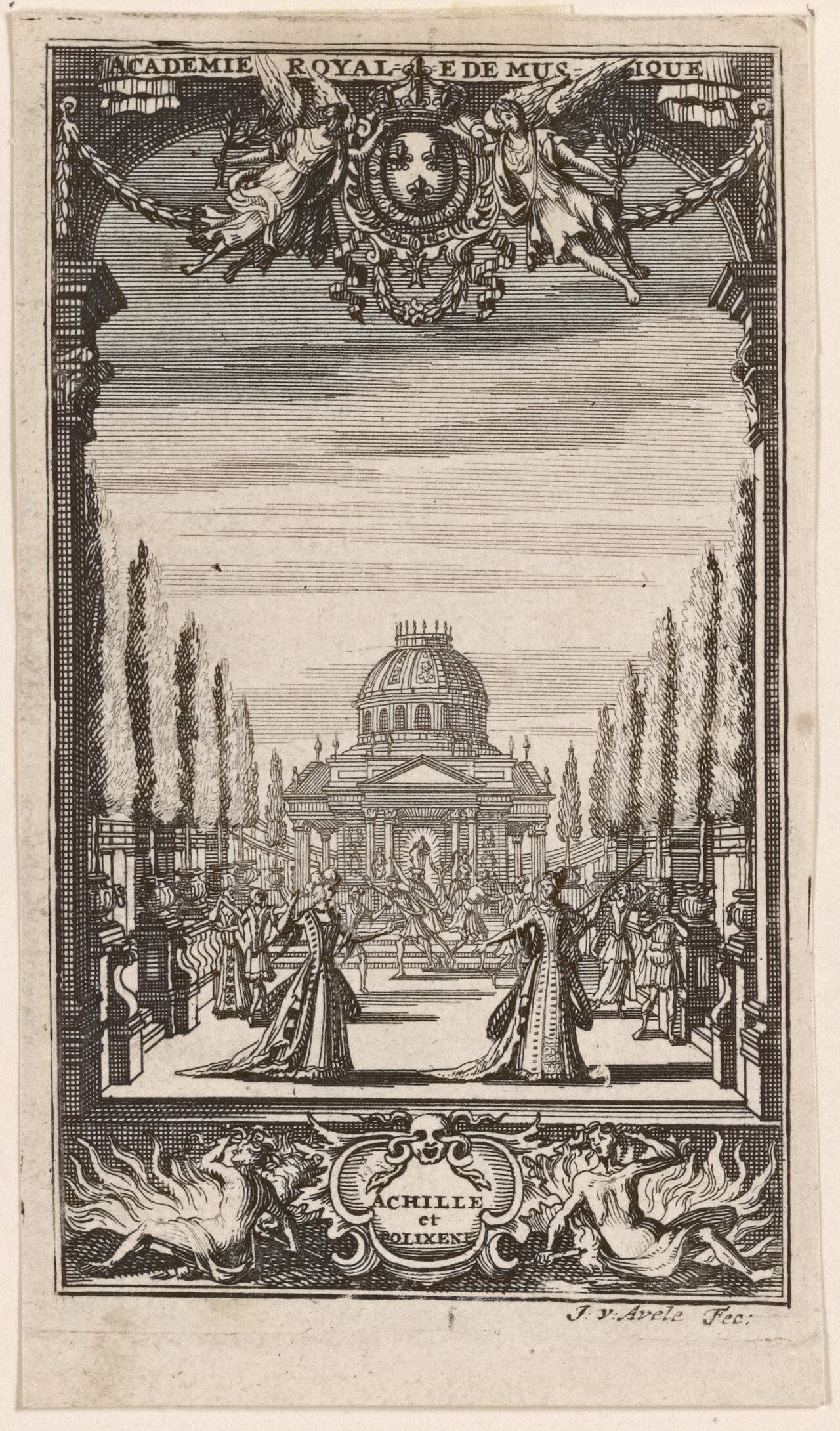
Achille et Polyxène
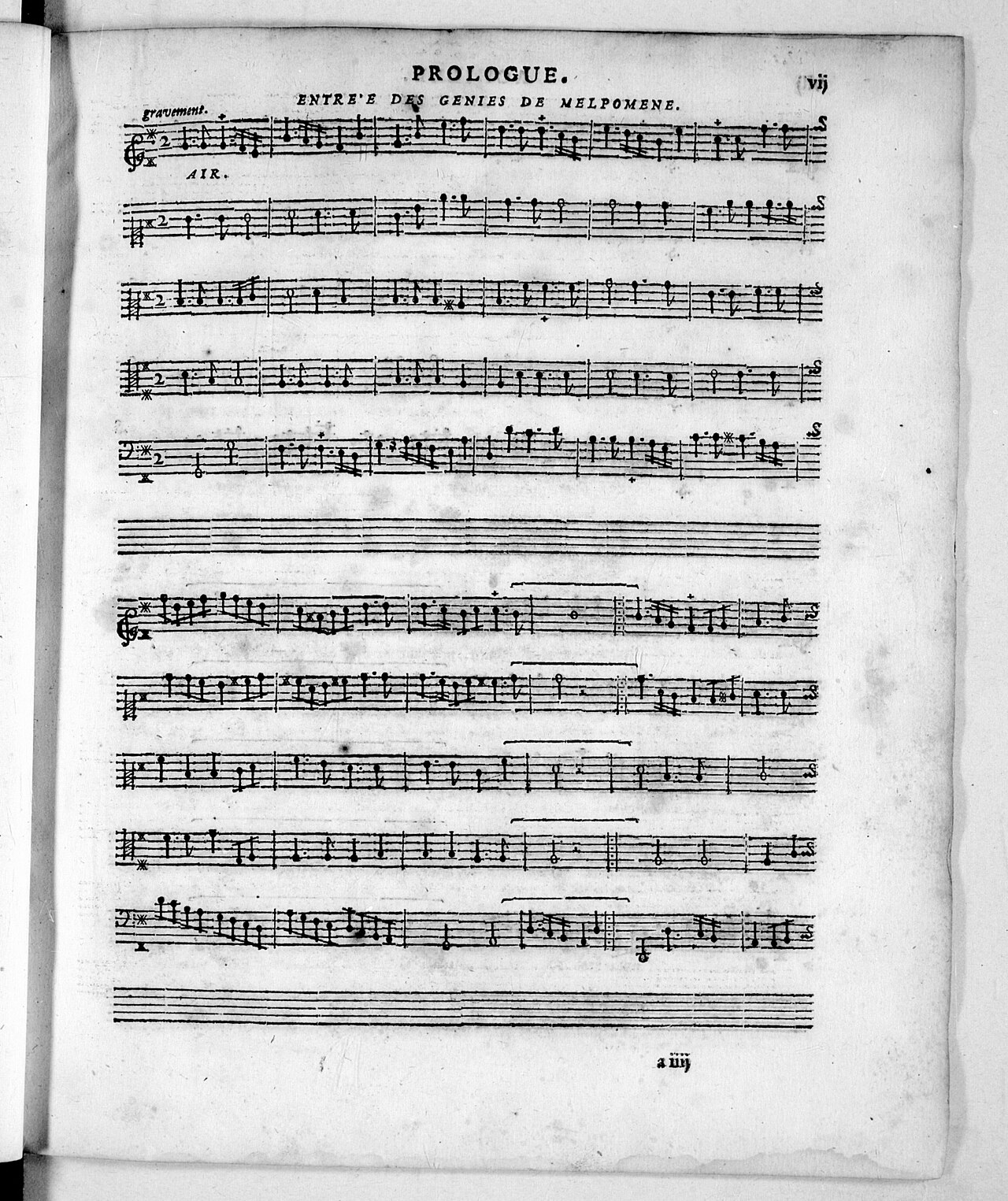
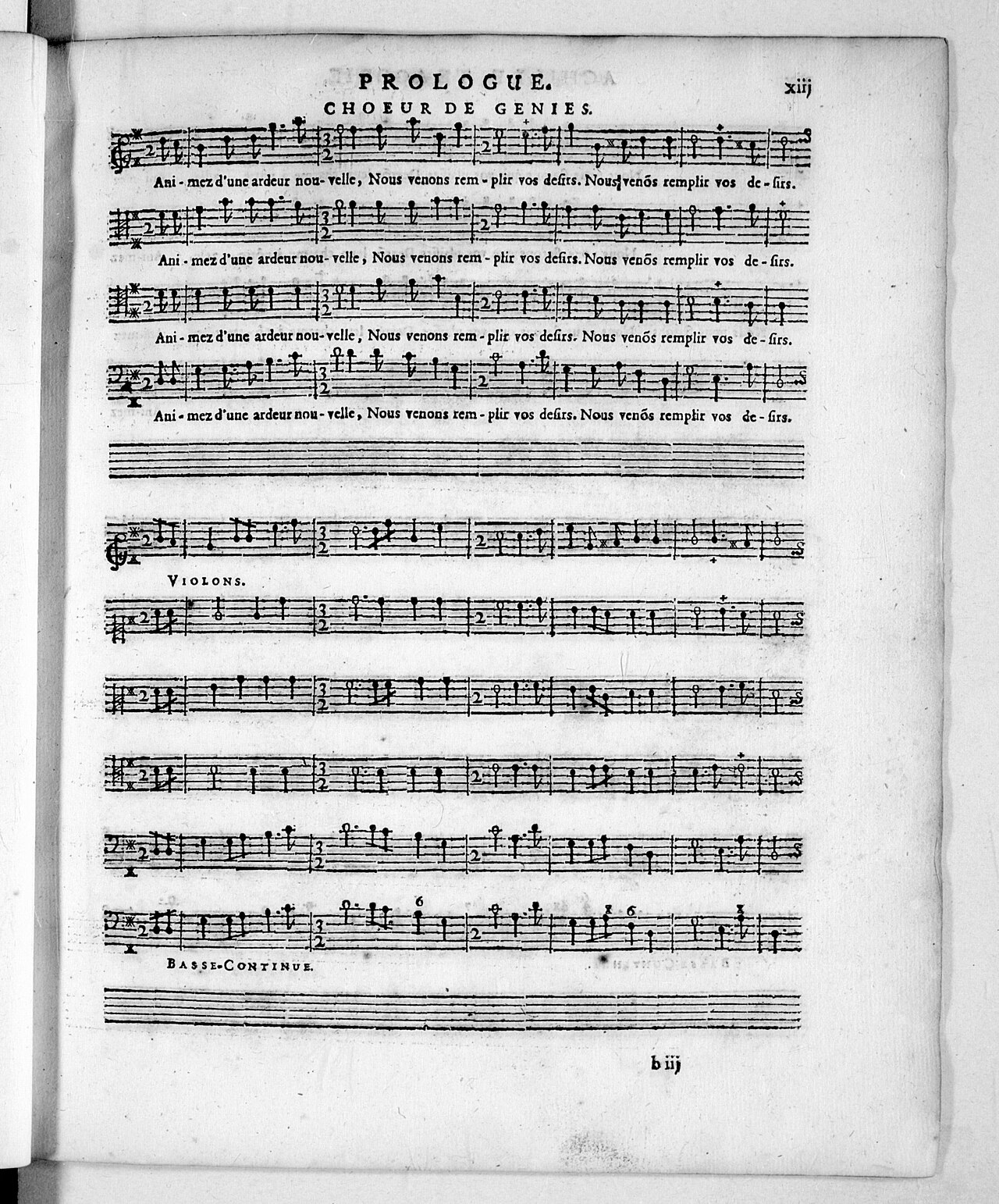
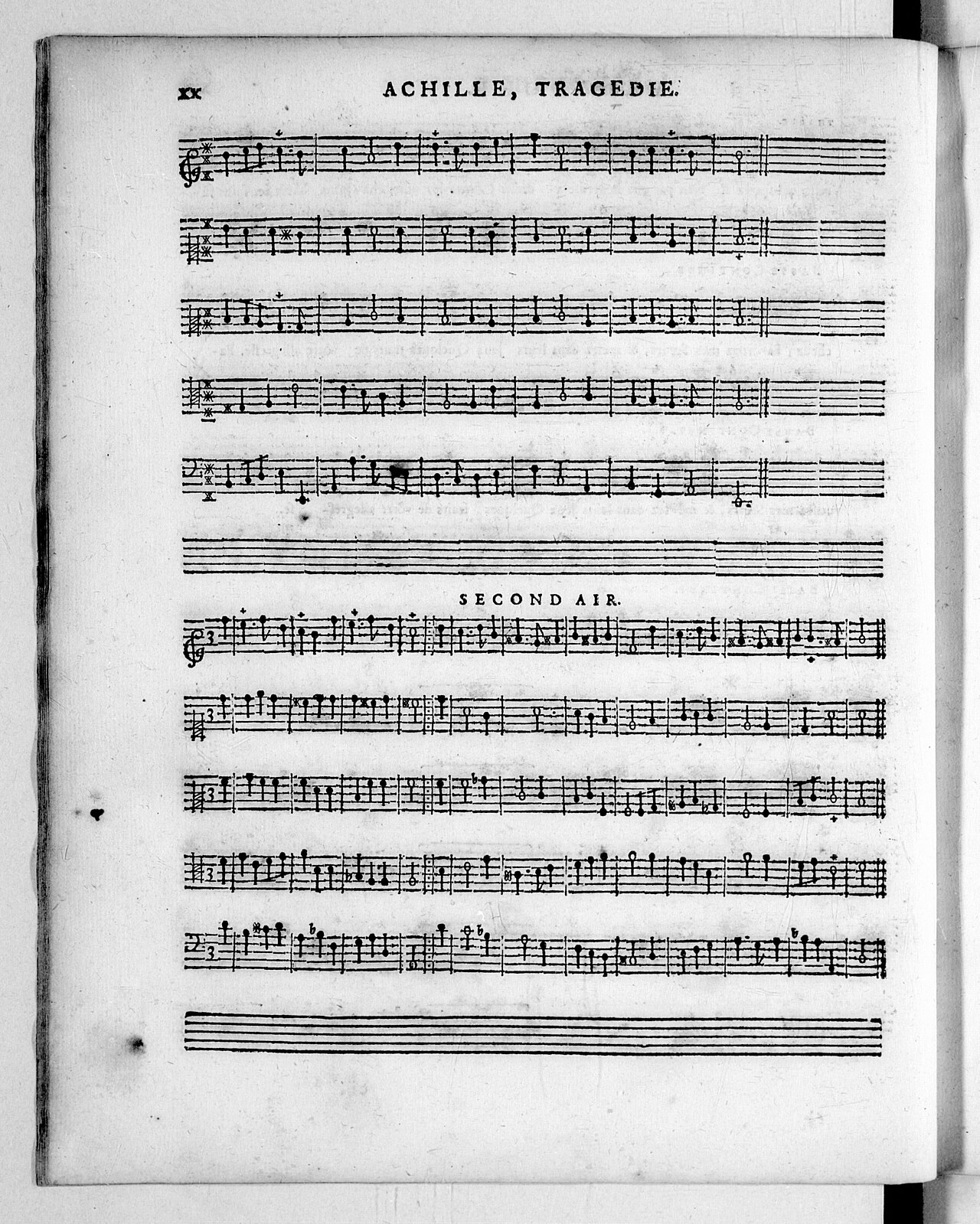
Lully's final opera, completed posthumously by his pupil Pascal Collasse.

Scan by NYPL · Public domain
Here is the rewritten encyclopedia entry:
**Achille et Polyxène** (Achilles and Polyxena) is a tragédie lyrique with a prologue and five acts. The libretto, written in French by Jean Galbert de Campistron, draws on post-Homeric Greek myths and later sources such as Euripides' *Hecuba* and Ovid's *Metamorphoses*. Jean-Baptiste Lully composed the overture and the first act, but died from an injury sustained while conducting before he could finish the score. His pupil, Pascal Collasse, completed the prologue and the remaining acts, finishing the work eight months after Lully’s death on 22 March 1687. The ballet for acts 1 and 4 was created by Louis Lestang, while Louis-Guillaume Pécour choreographed the ballet for the prologue and acts 2 and 3. The Paris Opera first performed the opera on 23 November 1687 at the Théâtre du Palais-Royal in Paris.
The libretto departs from Lully’s earlier collaborations with Philippe Quinault. Instead of Lully’s usual lively prologue, this one is somber, with the Muses lamenting the king’s desire for military expansion. The opera also ends tragically in Act V, with the heroine’s suicide, rather than the rousing ensemble number Lully typically used. A vibrant ensemble number does close Act IV, a wedding scene, which is more in line with a typical Lully finale.
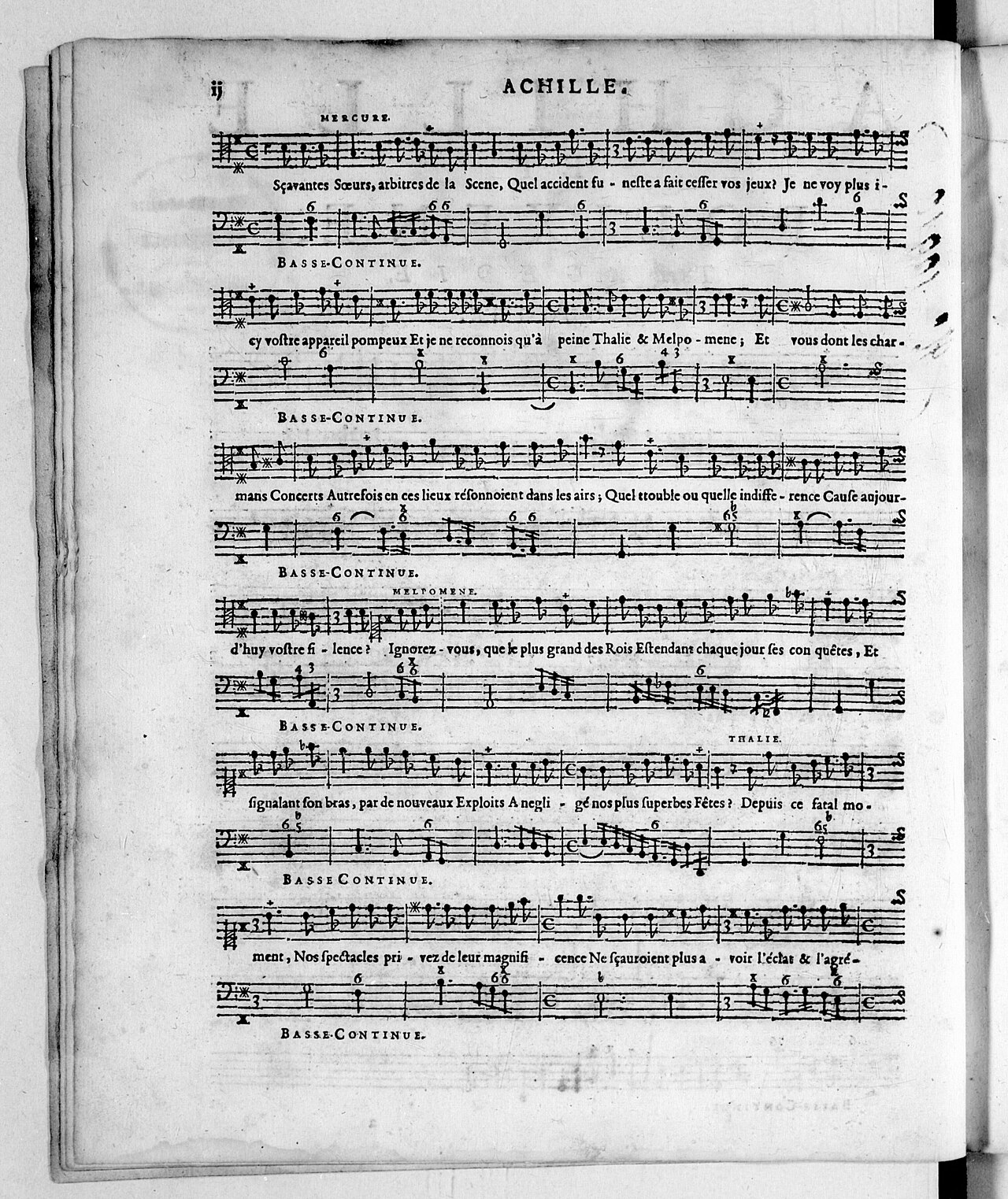
The prologue is set in a dilapidated former spectacle space. The messenger god Mercure asks the Muses why they are downcast. Melpomene replies that King Louis XIV, in his quest for conquest, has ignored the Muses and their feasts. The other Muses agree, saying the king does not approve of their work. Mercure tells them to set aside their worries and focus on the upcoming performance, and the scene is restored to its former glory. The Muses agree to pay close attention and try to enjoy it. Jupiter descends, urging them to contemplate the Greek hero Achille, and they await his story.
Act I takes place on the Isle of Tenedos, where Achille has taken refuge after quarreling with Agamemnon. Patrocle asks if Hector’s bravery has made Achille jealous, but Achille says only Greek losses please him, as his rage is aimed at Agamemnon. Patrocle declares he will defeat Hector in an aria, and Achille, though worried, agrees. Left alone, Achille prays for his friend’s safety. Diomede arrives, saying the Greeks cannot win without Achille, but Achille insists he is happy away from them.
Quick Facts
- Composer
- Jean-Baptiste Lully / completed by Pascal Collasse
- Librettist
- Jean Galbert de Campistron
- Language
- French
- Based On
- Virgil's Aeneid
- Premiere Date
- 1687-11-07
- Premiere Location
- Theatre in the Palais-Royal, Paris
Facts from the source article.
Lore & Background
The plot follows the Greek hero Achille, who after a quarrel with Agamemnon takes refuge on the Isle of Tenedos. He falls in love with the Trojan princess Polixene, leading to a marriage that ends in tragedy: Achille is struck down, and Polixene commits suicide. The opera has not yet been recorded in full, though individual selections have been recorded by various artists.
Reader's Guide
Achille et Polyxène holds significance as the final operatic work of Jean-Baptiste Lully, the dominant figure in French Baroque music, and as a collaboration with his pupil Pascal Collasse. Its libretto, by Jean Galbert de Campistron, marks a departure from Lully's typical collaborations with Philippe Quinault, notably in its somber prologue and tragic ending. The opera reflects the transition in French tragédie lyrique after Lully's death, with Collasse completing the score eight months after Lully's fatal conducting injury. The work's premiere on 7 November 1687 at the Théâtre du Palais-Royal by the Paris Opera demonstrates the continued performance of Lully's style even as new composers emerged. The ballet contributions of Louis Lestang and Louis-Guillaume Pécour further illustrate the collaborative nature of such productions. Although never fully recorded, the opera remains a documented example of late 17th-century French opera, preserving the conventions and innovations of its time.
Did You Know?
- Lully died from a conducting injury before completing the score; Pascal Collasse finished it eight months later.
- The opera ends with the suicide of the heroine, unlike Lully's typical rousing ensemble finales.
- The prologue is somber, with the Muses lamenting the king's desire for military expansion, a departure from Lully's usual lively prologues.
The Lully-Collasse Succession
The opera's very existence is shaped by tragedy. Jean-Baptiste Lully composed the overture and the first act before a fatal conducting injury cut his life short. His pupil Pascal Collasse then took on the enormous task of completing the prologue and the remaining acts, delivering the finished work eight months after Lully's death on 22 March 1687. This means the score is, in a very real sense, a collaboration across life and death—Lully's musical voice in the overture and Act I, Collasse's in everything else. The opera premiered on 7 November 1687 at the Paris Opera's Théâtre du Palais-Royal, a performance that carried the weight of honoring a master's unfinished vision while showcasing his student's ability to carry it forward. The libretto, written by Jean Galbert de Campistron, was drawn from Virgil's Aeneid, giving the work a classical literary foundation that both composers built upon.
A Departure from Lully's Conventions
One of the most striking features of this tragédie lyrique is how it breaks from the patterns audiences had come to expect from Lully's earlier collaborations with Philippe Quinault. Where Lully typically opened with a lively, celebratory prologue, this work presents a somber one in which the Muses lament Louis XIV's appetite for military conquest and his apparent disregard for the arts. The ending is equally unconventional: rather than closing with a rousing ensemble number as was Lully's habit, Act V concludes with the suicide of the heroine. The only exception to this darker trajectory is the wedding scene at the close of Act IV, which does feature a vibrant ensemble number more in keeping with a typical Lully finale. These choices, driven by Campistron's libretto, give the opera a weight and tragic gravity that set it apart from the composer's earlier repertory.
Dramatic Arc and the Tragedy of Love
The plot, adapted from Virgil's Aeneid, traces Achilles from exile on the Isle of Tenedos after a quarrel with Agamemnon, through the devastating news of Patrocle's death, to his eventual love for the Trojan princess Polyxene. The prologue, set in a ruined spectacle hall, features Mercure questioning the downcast Muses, who complain that the king has plunged the country into war and dismissed their art. Jupiter then descends to direct their attention to the tale of the invincible Greek hero. In Act II, Polyxene's moving aria breaks Achilles' heart and prompts his pledge of peace. Act III introduces Briseis, a Greek princess Agamemnon hopes will redirect Achilles' loyalty, but she is rejected and calls upon Juno for vengeance. Act IV's wedding celebration at Priam's Palace gives way to Act V in Apollo's temple, where the lovers' union is shattered, culminating in the heroine's suicide.
Ballet, Staging, and Spectacle
The choreographic dimension of the opera was split between two prominent ballet masters. Louis Lestang created the ballet for Acts 1 and 4, while Louis-Guillaume Pécour was responsible for the prologue and the ballets of Acts 2 and 3. This division mirrors the compositional split between Lully and Collasse, adding another layer of collaborative authorship to the production. The ballets were integral to the work's staging at the Théâtre du Palais-Royal, where the opera received its first performance on 7 November 1687. The prologue's setting—a venue that was once a grand spectacle space but now stands as a hollow remnant of its former grandeur—transforms as the Muses agree to watch the play, described as though its former glory had been restored. This theatrical metamorphosis, combined with the choreography, the descending figures of Venus, the Graces, and Jupiter, and the ensemble numbers, made the production a full spectacle of music, dance, and visual drama in the French operatic tradition.
Gallery
Frequently Asked Questions
What is Achille et Polyxène?
It is a French tragédie lyrique structured as a prologue followed by five acts, with a libretto penned by Jean Galbert de Campistron. The plot is adapted from Virgil's Aeneid.
Who wrote the music for Achille et Polyxène?
Jean-Baptiste Lully composed the overture and first act, but a fatal injury sustained while conducting cut his work short. His student Pascal Collasse then finished the prologue and the remaining acts, completing the score eight months after Lully's death in March 1687.
Why is Achille et Polyxène considered significant?
It is remembered as Lully's last opera, and its posthumous completion by Collasse makes it a landmark in French Baroque stage music. The work received its premiere on 7 November 1687.
What classical text does Achille et Polyxène draw from?
Campistron's libretto takes its narrative from Virgil's Aeneid, centering on the figures of Achilles and Polyxena.
Who choreographed the ballet in Achille et Polyxène?
Louis Lestang created the ballet sequences for acts 1 and 4.
More in Agamemnon 1-24
Spotted an error? Know more?
Reader corrections go straight into our review queue. Suggest an edit · How this site is sourced