Acropora kirstyae
A vulnerable acroporid coral with thin branches and white tips.

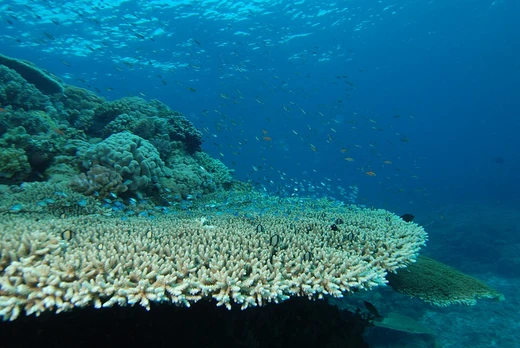
Acropora kirstyae is a species of acroporid coral first described in 1984 by Jen Veron and C. C. Wallace. It forms colonies of thin, branching structures that radiate from a central point, with branches reaching about 120 millimeters in length. The branch tips are typically white, while the rest of the coral is a pale orange to brown. The radial corallites are tube-shaped, tightly packed, and orderly, though they become irregular near the branch ends, where flaring lips may appear. The species is composed of aragonite, or calcium carbonate, and resembles Acropora exquisita.
This coral is found in marine, tropical, shallow reefs in sheltered areas, such as lagoons and sheltered reef slopes, at depths of 10 to 25 meters. It reaches maturity between three and eight years. Its range is broad but not dense, spanning the Indo-Pacific, the East China Sea, Japan, eastern Australia, the western Pacific, and specific regions including Indonesia, Papua New Guinea, the Philippines, the Solomon Islands, Rodrigues, Palau, Raja Ampat, and New Caledonia. It lives in water temperatures between 26.13 and 26.56 °C.
No specific population data exists, but the species is known to be decreasing. Threats include bleaching from rising sea temperatures, fishing, coral disease, climate change, pollution, human development, infrastructure, and possible export. It is listed as vulnerable on the IUCN Red List and appears on CITES Appendix II, and it can occur within Marine Protected Areas.
Quick Facts
- Taxon
- Acropora kirstyae
Facts from the source article.
Lore & Background
Acropora kirstyae forms colonies of branches radiating from a central point, with many thin branches and sub-branches that can reach lengths of about 120 mm. The branch tips are generally white, while the rest of the coral is a pale orange-to-brown color. Its radial corallites are tube-shaped, tightly packed, and orderly, becoming irregular near the branch ends, where flaring lips may appear. The species resembles Acropora exquisita.
This coral occurs in marine, tropical, shallow reefs in sheltered areas, typically at depths of 10 to 25 m, and also in sheltered lagoons and reef slopes. It is not common but is found over a large range across the Indo-Pacific, including the East China Sea, Japan, Eastern Australia, the west Pacific, Indonesia, Papua New Guinea, the Philippines, the Solomon Islands, Rodrigues, Palau, Raja Ampat, and New Caledonia. It exists in temperatures between 26.13 and 26.56 °C.
Acropora kirstyae is listed as vulnerable on the IUCN Red List with a decreasing population trend. It is affected by bleaching from rising sea temperatures, fishing, coral disease, climate change, pollution, human development, and infrastructure, and may be exported. It is listed on CITES Appendix II and can occur within Marine Protected Areas.
Reader's Guide
Acropora kirstyae holds significance as a species first described in 1984 by Jen Veron and C. C. Wallace, contributing to the taxonomic understanding of acroporid corals. Its vulnerable status on the IUCN Red List and inclusion in CITES Appendix II highlight its conservation concern, driven by a decreasing population attributed to bleaching, fishing, coral disease, climate change, pollution, human development, and infrastructure. The species is not common but is distributed over a large area across the Indo-Pacific, including regions such as Japan, Eastern Australia, and the west Pacific. It occurs in sheltered marine environments at depths of 10 to 25 m, and its thin-branched colony structure, with white tips and pale orange-to-brown coloration, distinguishes it from similar species like Acropora exquisita. The coral reaches maturity between three and eight years and is composed of aragonite. Its presence in Marine Protected Areas offers some refuge, but ongoing threats continue to impact its populations. The species' legacy lies in its role as an indicator of reef health in sheltered tropical waters, with its decreasing trend underscoring the broader challenges facing coral ecosystems.
Did You Know?
- Acropora kirstyae was first described by Jen Veron and C. C. Wallace in 1984.
- Its branches can reach lengths of around 120 mm (4.7 in).
More in Acropora Corals 1-24
Spotted an error? Know more?
Reader corrections go straight into our review queue. Suggest an edit · How this site is sourced