Acropora jacquelineae
A vulnerable acroporid coral with moss-like colonies.

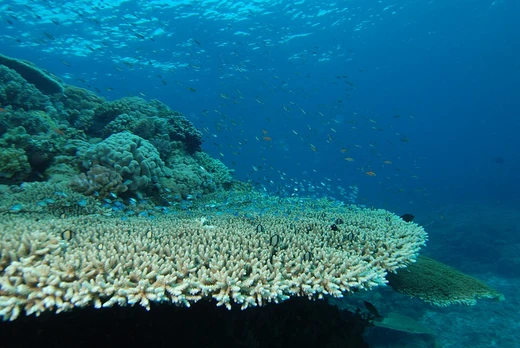
Acropora jacquelineae is a type of acroporid coral that lives in the eastern Indian Ocean and across the central and western Pacific. It is found in tropical, shallow reef environments, specifically on slopes and flats in subtidal zones, at depths ranging from 15 to 35 metres. This coral forms plate-like colonies that can reach up to one metre across. Its axial corallites are thin and curved, giving the colony a mossy look. The species lacks radial corallites and is typically pinkish or grey-brown in colour. It resembles Acropora paniculata. Described by Carden Wallace in 1994, it is considered vulnerable on the IUCN Red List, with a declining population. Threats include coral reef degradation, rising temperatures that cause bleaching, climate change, human activity, the crown-of-thorns starfish, and disease. Its range includes waters off Indonesia, Malaysia, Papua New Guinea, the Samoan Islands, and the Solomon Islands.
Quick Facts
- Taxon
- Acropora jacquelineae
Facts from the source article.
Lore & Background
Acropora jacquelineae was described by Carden Wallace in 1994. The species forms colonies up to 1 metre in diameter with plate structures. Its axial corallites are delicate and curved, giving the colony an appearance similar to moss. Radial corallites are not present. The coral is either pinkish or grey-brown in colour. It has similar features to Acropora paniculata.
The species occurs in the eastern Indian Ocean and the central and western Pacific Ocean, offshore of Indonesia, Malaysia, Papua New Guinea, the Samoan Islands, and the Solomon Islands. It is found on subtidal areas of tropical shallow reefs on slopes and flats, at depths between 15 and 35 metres. It is classed as a vulnerable species on the IUCN Red List, with a decreasing population. Threats include the global reduction of coral reefs, increased temperature causing coral bleaching, climate change, human activity, the crown-of-thorns starfish (Acanthaster planci), and disease.
Reader's Guide
Acropora jacquelineae is significant as a vulnerable species whose population is believed to be decreasing. Its listing on the IUCN Red List and under Appendix II of CITES highlights conservation concern. The species is threatened by global reef degradation, climate change, coral bleaching, human activity, predation by crown-of-thorns starfish, and disease. Its distribution across the eastern Indian Ocean and central and western Pacific Ocean, including waters off Indonesia, Malaysia, Papua New Guinea, the Samoan Islands, and the Solomon Islands, places it in regions experiencing environmental pressures. The species' delicate, moss-like colony form and lack of radial corallites distinguish it from many other acroporids. Its description by Carden Wallace in 1994 contributes to the taxonomic understanding of the genus. The unknown population figures underscore the need for further monitoring. Its legacy lies in representing the vulnerability of reef-building corals to combined anthropogenic and natural stressors.
Did You Know?
- Its axial corallites are delicate and curved, giving colonies a moss-like appearance.
- It occurs at depths between 15 and 35 metres on tropical shallow reef slopes and flats.
More in Acropora Corals 1-24
Spotted an error? Know more?
Reader corrections go straight into our review queue. Suggest an edit · How this site is sourced