
Hangul
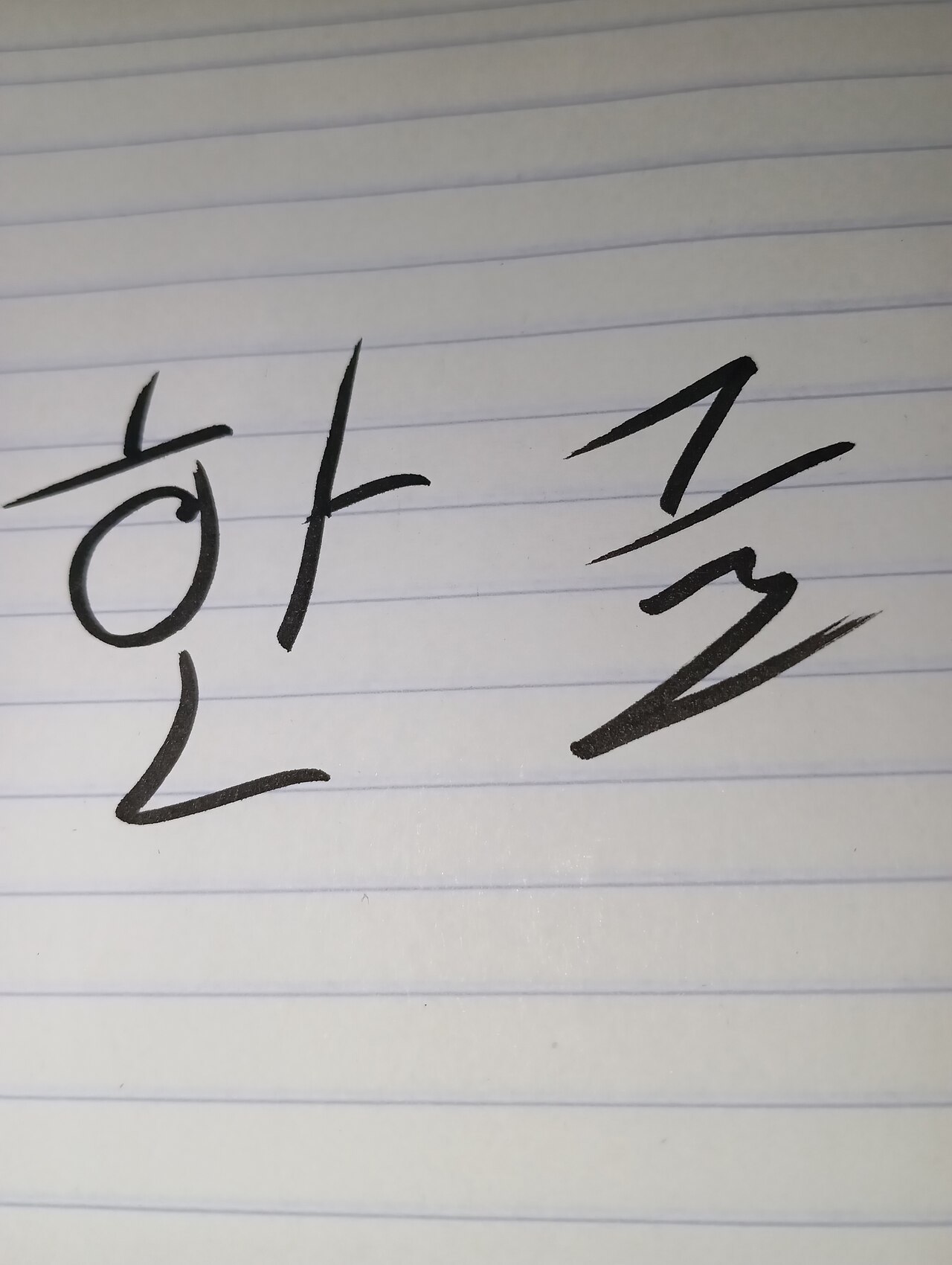
The Korean alphabet, created by King Sejong the Great.

Wikigurvb2 · CC BY-SA 4.0
Hangul is the modern writing system for the Korean language, originally named Hunminjeongeum. It was created under King Sejong the Great of Joseon in the mid-15th century to address high illiteracy and the unsuitability of Chinese characters for representing Korean. Today it is the predominant script in both North and South Korea and among the Korean diaspora.
Quick Facts
- Languages
- Korean · Jeju · Cia-Cia
- Time
- 1443 or 1444 to present
- Unicode
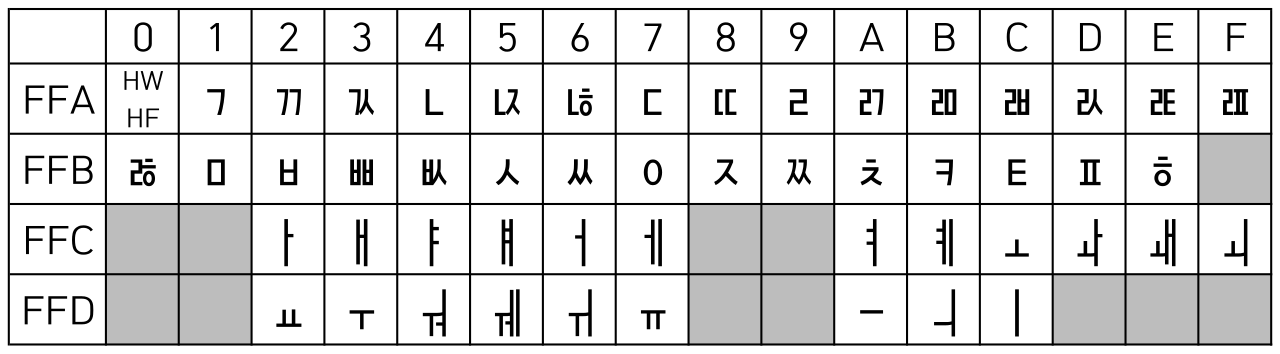
- Hangul Syllables: / U+AC00–U+D7AF / Hangul Jamo: / U+1100–U+11FF / Hangul Compatibility Jamo: / U+3130–U+318F / Hangul Jamo Extended-A: / U+A960–U+A97F / Hangul Jamo Extended-B: / U+D7B0–U+D7FF
- Direction
- Left-to-right / Top-to-bottom, columns right-to-left
Facts from the source article.
Lore & Background
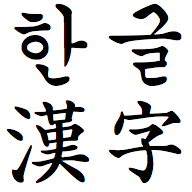
Before Hangul, Korea used Hanja (Chinese characters), which were poorly suited for the Korean language and contributed to high illiteracy. King Sejong the Great (r. 1418–1450) moved to create a new script, which was announced around late 1443 to early 1444 and officially published in 1446 via the texts Hunminjeongeum and Hunminjeongeum Haerye. The script's original name was Hunminjeongeum, meaning 'Correct Sounds for the Instruction of the People.'
Hangul saw gradual adoption among both elite and commoners, but was looked down upon by the elite for centuries. It only began to receive societal acceptance in the late 19th century. The script has gone by various names: Hangul internationally, Hangeul in South Korea, and Chosŏn'gŭl in North Korea (since 1949). It was also historically called ŏnmun ('vernacular script'), panjŏl, and kungmun ('national script').
Hangul letters were designed to be graphically simple, traditionally consisting of straight lines, dots, and circles. The shapes of five basic consonants are based on human speech organs. Most other basic consonants are derived by adding lines to indicate progressively harsher sounds. Other hypothesized inspirations for letter shapes remain debated.
Reader's Guide
Hangul's significance lies in its creation as a deliberate tool for literacy, directly addressing the gap between spoken Korean and the difficult Chinese characters previously used. Its design—grouping letters into syllable blocks—makes it both an alphabet and a syllabary, though linguists debate its classification as a featural script. The script has received significant praise from international linguists and historians and is now a major point of pride for Korean people.
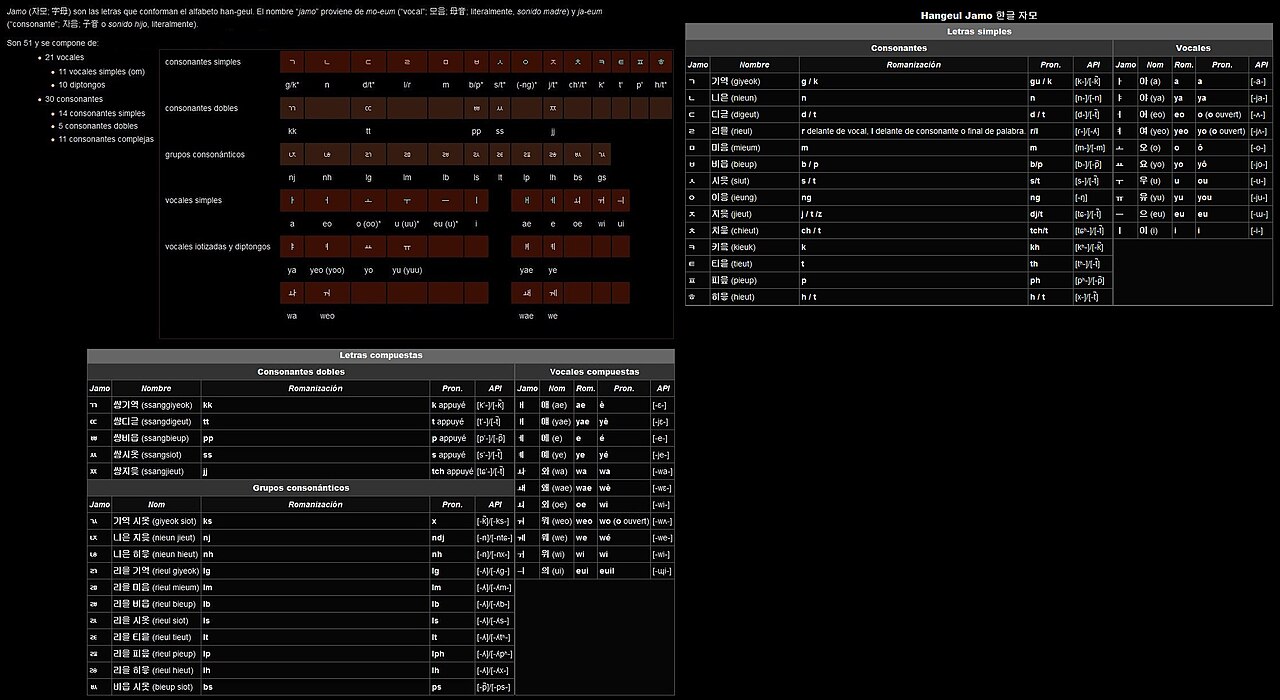
Modern Hangul orthography uses 24 basic letters (jamo): 14 consonants and 10 vowels. These can combine to form 27 additional letters, totaling 51. Syllables are arranged in blocks with an initial consonant, a vowel, and an optional final consonant. Punctuation is now largely similar to Western punctuation, and spaces between words are a modern feature.
Hangul is used to write the Jeju language and, to a limited degree, the Cia-Cia language of Indonesia. Orthography has changed over time and differs between North and South Korea. The script is considered to have a property called ŏnmun ilch'i—tight correspondence between pronunciation and text—though this has weakened over time.
Origins and Royal Patronage
Before Hangul existed, Korea had relied on Hanja—Chinese characters—since antiquity. The mismatch between those logographic symbols and the phonetic structure of Korean left the writing system poorly suited to the language, and the sheer difficulty of mastering Hanja was a major driver of widespread illiteracy. In response, King Sejong the Great, who reigned from 1418 to 1450, undertook the project of devising a new script. The alphabet was announced in the period spanning late 1443 to early 1444, and it was formally published in 1446 through a text called Hunminjeongeum, accompanied by a companion commentary known as Hunminjeongeum Haerye. The original name, Hunminjeongeum, translates to 'Correct Sounds for the Instruction of the People,' a phrase that underscores the script's intended purpose as an accessible tool for the general populace rather than a privilege reserved for the already-literate elite.
From Marginalization to National Pride
Despite its deliberate design for accessibility, Hangul endured centuries of social resistance. The educated elite of Joseon-era Korea looked down upon the new script, preferring to maintain their exclusive command of Hanja. Adoption among both commoners and the upper classes proceeded gradually rather than through a sudden cultural shift. It was not until the late nineteenth century that the script began to achieve genuine societal acceptance across all strata of Korean life. Today, Hangul stands as the predominant writing system for Korean in both North and South Korea, as well as among the Korean diaspora worldwide. It also serves as the writing system for the Jeju language and, to a more limited extent, for the Cia-Cia language spoken in Indonesia. The script has earned significant praise from international linguists and historians, and it has become a major source of national pride for Korean people. The naming conventions themselves reflect this pride: internationally it is known as Hangul, in South Korea as Hangeul, and in North Korea as Chosŏn'gŭl, each name rooted in different conceptions of Korean identity.
The Featural Design Debate
One of the most discussed aspects of Hangul is whether it qualifies as a 'featural script'—a system in which the visual shapes of symbols encode phonological features of the sounds they represent. The term was introduced by Sampson in a 1985 work, and his argument drew heavily on the Haerye's explanations of how letter shapes were derived. The five basic consonants are said to be modeled on the shapes of human speech organs, while most other basic consonants, representing progressively harsher sounds, are built by adding extra lines to those base forms. However, the classification remains contested. DeFrancis, in a 1989 book, praised Hangul but questioned the featural label, arguing that the script encodes too few features and that most literate users do not consciously process the shape-sound relationships. Chin-Woo Kim rebutted this in 1997, contending that DeFrancis relied on an inflated count of Korean's phonological features. Kim-Renaud, writing in the same volume, also pushed back, noting that derivation rules are applied with varying consistency and that a single graphical element, such as the dot, can serve multiple distinct phonological roles.
Structure and Linguistic Classification
Modern Hangul orthography is built from 24 basic letters called jamo—14 consonants and 10 vowels. These can be combined to produce 27 additional composite letters, bringing the total to 51. In written text, the letters are assembled into syllable blocks, each consisting of an initial consonant, a vowel, and an optional final consonant. These blocks can be arranged in vertical or horizontal rows, though horizontal writing has become the dominant convention. The script is classified as phonographic and alphabetic, though its syllable-block structure has led many to call it 'syllabic,' a label that linguist John DeFrancis finds imprecise. Other scholars prefer terms like 'alphabetic syllabary' or 'alpha-syllabary.' A distinctive property of Hangul is ŏnmun ilch'i, or spoken-written agreement, meaning a tight correspondence between pronunciation and text—a feature shared with mixed script but absent in older Korean systems like Idu and Kugyŏl. Over time, however, modern Hangul has shifted from a strictly phonemic spelling to a more morphophonemic one, meaning some pronunciation changes are no longer reflected in the written form.
Gallery


Frequently Asked Questions
Who is Hangul?
Hangul is the phonographic writing system of the Korean language, devised under the direction of King Sejong the Great of the Joseon dynasty. Its original title, Hunminjeongeum, translates roughly to 'the Correct Sounds for the Instruction of the People.'
What are Hangul's powers and role?
Hangul encodes Korean syllables in compact square blocks, with each letter's shape loosely reflecting the mouth position used to produce its sound. It is classified as a phonographic alphabet, though scholars still debate how strongly its design qualifies as a true featural script.
When did Hangul's story begin?
The script was developed around 1443–1444 and formally announced to the public in 1446. It was crafted to give ordinary Koreans an accessible way to write their own language, since the existing Chinese-character system was far too complex for widespread use.
Why is Hangul important?
By replacing the labor-intensive Hanja system for everyday writing, Hangul made literacy achievable for a much broader segment of the Korean population. It continues to serve as the primary script in both North and South Korea and throughout the global Korean diaspora.
What is Hangul's current name?
The alphabet is referred to as Hangul in international contexts, Hangeul in South Korea, and Chosŏn'gŭl in North Korea. All three labels point to the same mid-fifteenth-century creation.
More in Writing Systems 1-24
Spotted an error? Know more?
Reader corrections go straight into our review queue. Suggest an edit · How this site is sourced