
Cuneiform
Earliest known writing system, used for over three millennia.

Mason, William Albert, 1855-1923 · Public domain
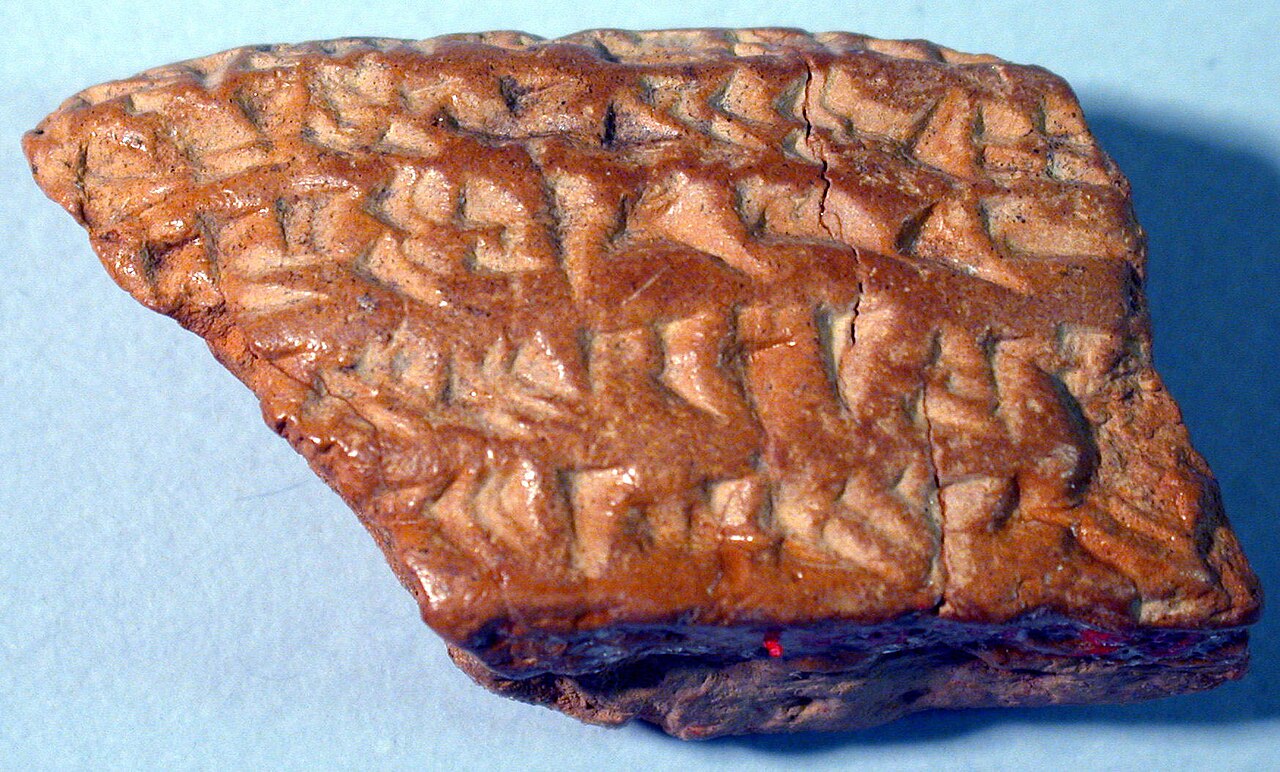
Cuneiform is a writing system that combines signs for whole words and syllables, used for multiple languages across the ancient Near East. It holds the distinction of being the oldest known writing system, created to record the Sumerian language in what is now southern Iraq. Its name comes from the wedge-shaped marks (from the Latin *cuneus*) that make up its signs, and it was actively written from the early Bronze Age through the 1st century AD.
Originally developed for Sumerian, cuneiform was later adapted for other languages. Akkadian texts appear from the 24th century BC onward and form the largest portion of surviving cuneiform records. Akkadian cuneiform was itself modified to write Hittite in the early 2nd millennium BC. Other languages with substantial cuneiform collections include Eblaite, Elamite, Hurrian, Luwian, and Urartian. While the Old Persian script also uses wedge-shaped signs derived from cuneiform, it is not typically classified as a variant of the same writing system family. More recently, connections have been identified between Safaitic abecedaries, the Amorite language, the Ugaritic alphabet, and Akkadian syllabic cuneiform. The latest known cuneiform tablet—an astronomical almanac from Uruk—dates to AD 79/80, a period that also saw extended use of the Safaitic script.
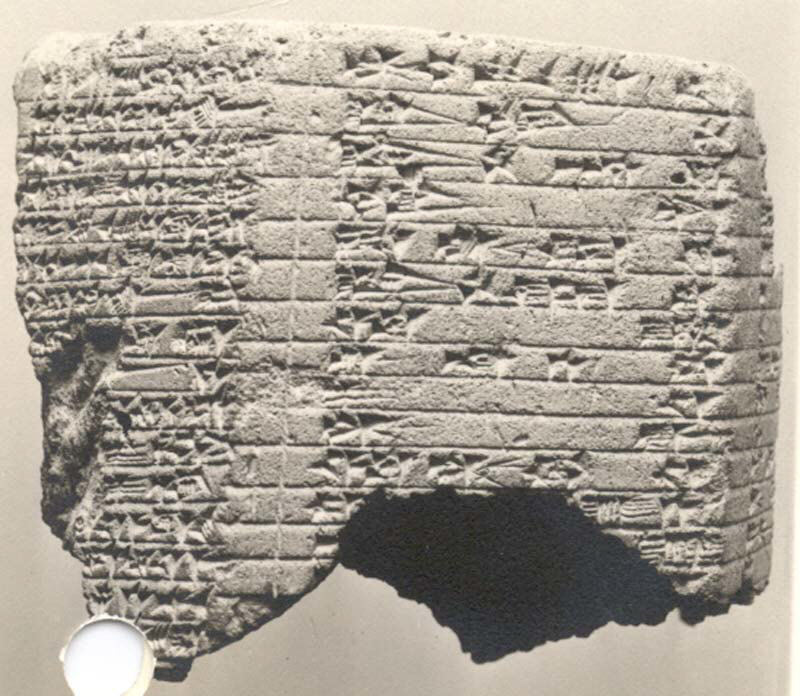
Cuneiform was rediscovered in the early 17th century when trilingual Achaemenid royal inscriptions from Persepolis were published; these were first deciphered in the early 19th century. The modern study of cuneiform falls under Assyriology, a name that reflects the fact that the earliest excavations of cuneiform libraries, in the mid-19th century, took place in ancient Assyria. Museums worldwide hold an estimated half a million tablets, though relatively few have been published. The largest collections are at the British Museum (about 130,000 tablets), the Vorderasiatisches Museum Berlin, the Louvre, the Istanbul Archaeology Museums, the National Museum of Iraq, the Yale Babylonian Collection (roughly 40,000 tablets), and the Penn Museum.
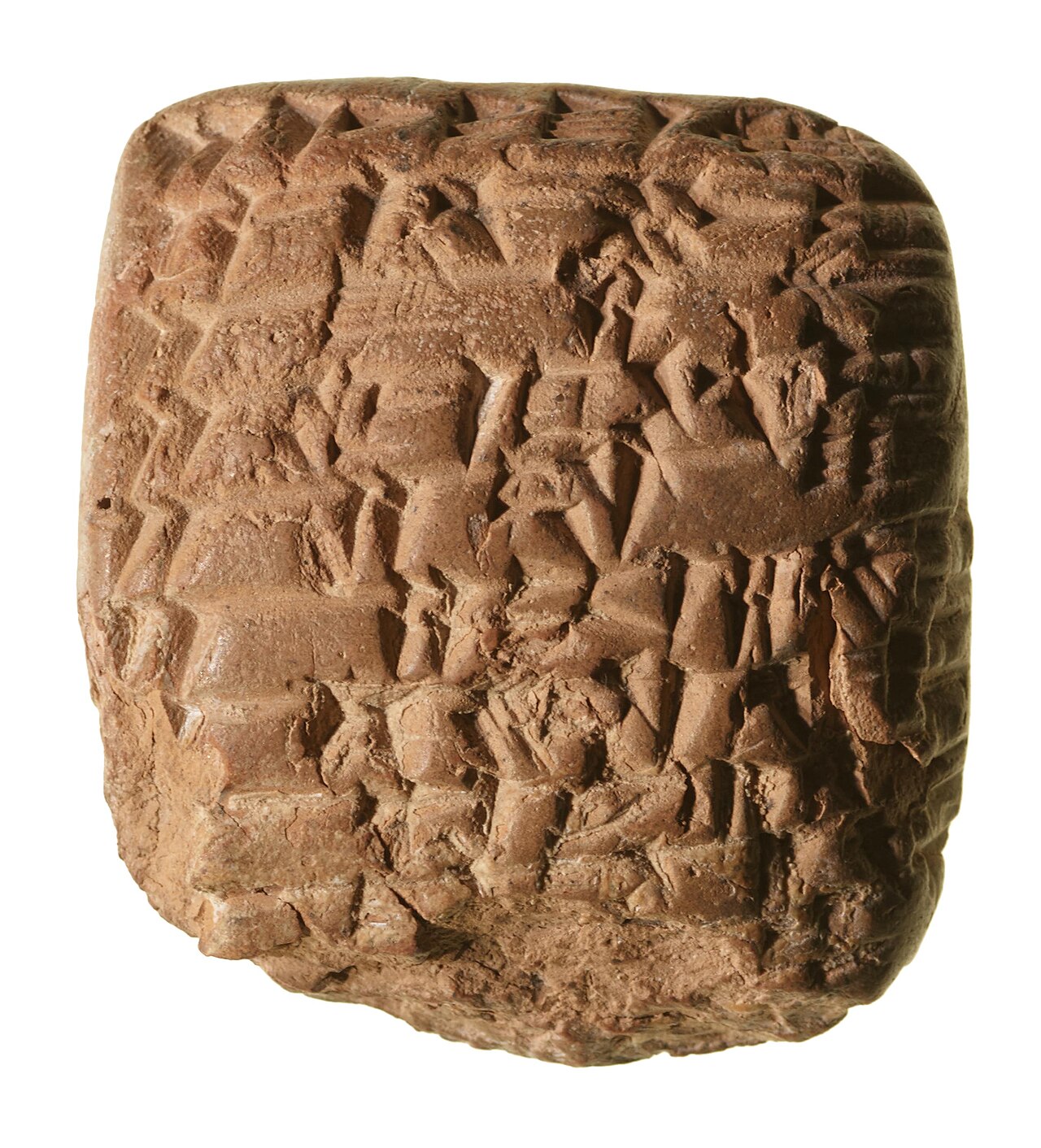
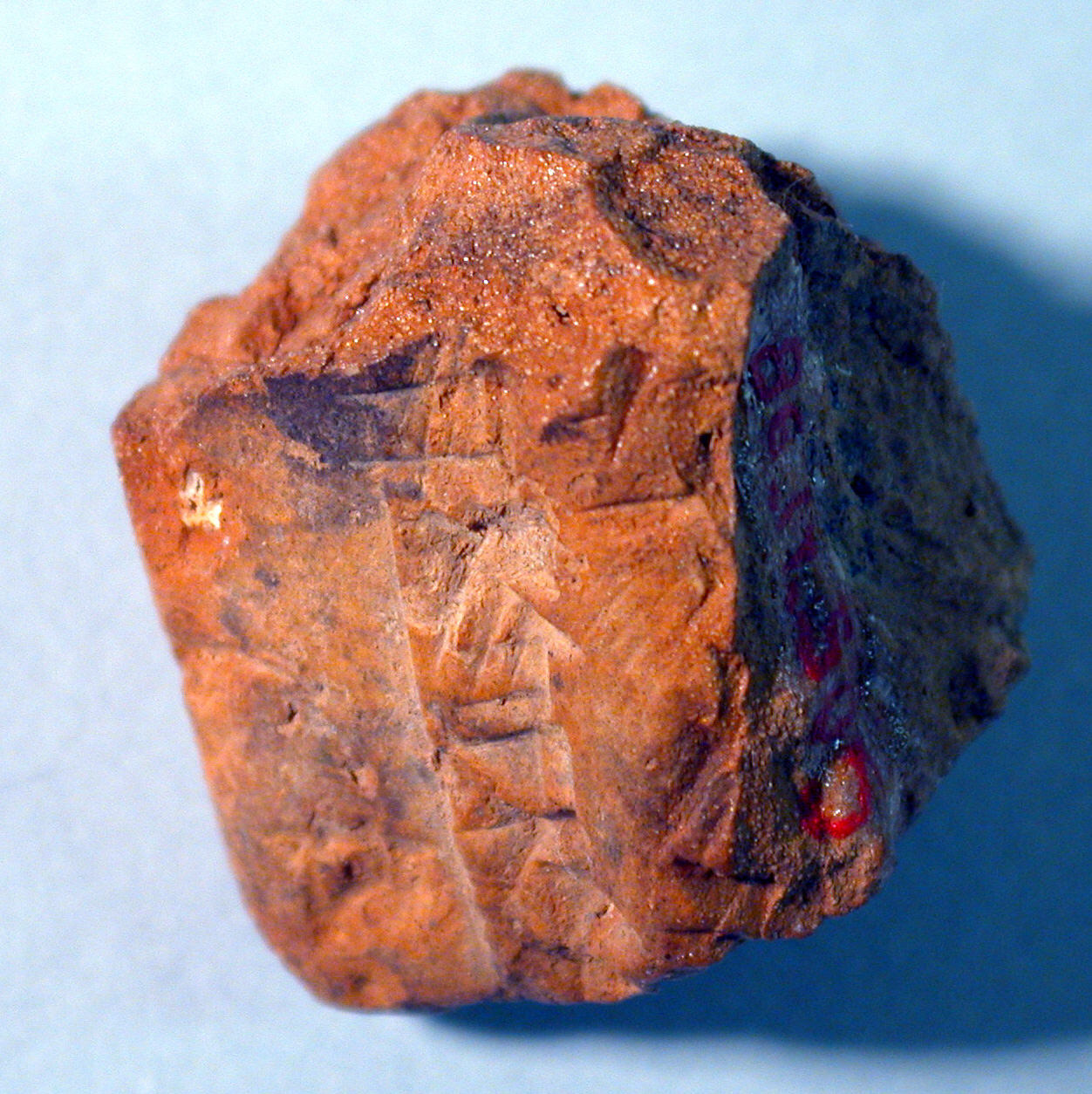
Writing emerged after pottery, during the Neolithic, when clay tokens were used to track livestock or goods. These tokens were first pressed into the surface of round clay envelopes (bullae) and stored inside them. Over time, tokens were replaced by flat tablets, where signs were made with a stylus.
Quick Facts
- Typedesc
- and syllabary
- Languages
- Sumerian, Akkadian, Amorite, Eblaite, Elamite, Hittite, Hurrian, Kalašma, Kaskian (possibly), Luwian, Urartian, Palaic, Ugaritic, Old Persian
- Direction
- left-to-right
- Region
- Sumer
- Time
- c. 2900 BC · 100 AD
- Children
- None; influenced the shape of Ugaritic and Old Persian glyphs
- Unicode
- [https: · www.unicode.org/charts/PDF/U12000.pdf U+12000 to U+123FF] Cuneiform / [https: · www.unicode.org/charts/PDF/U12400.pdf U+12400 to U+1247F] Cuneiform Numbers and Punctuation
Facts from the source article.
Lore & Background
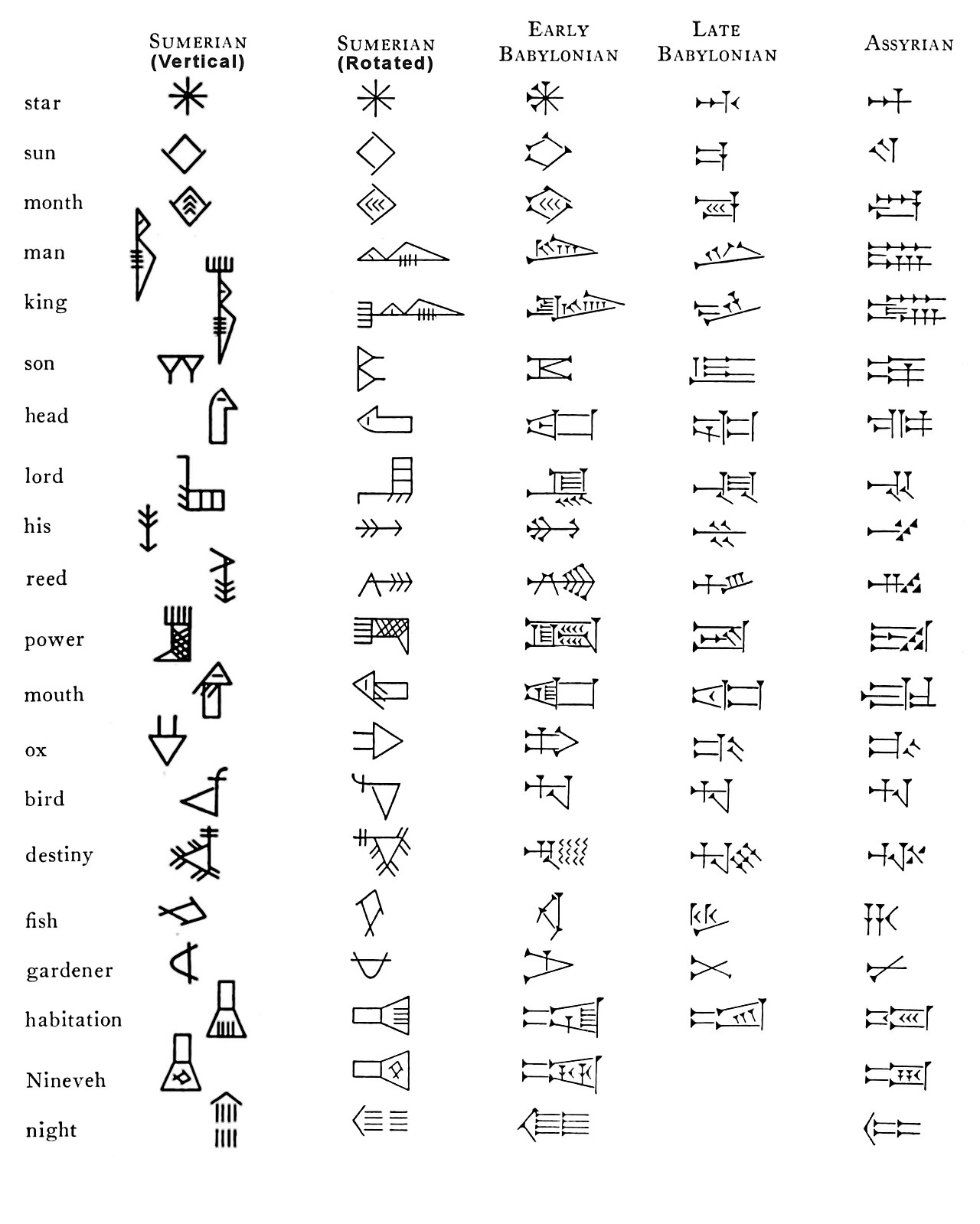
Cuneiform was developed from pictographic proto-writing in the late 4th millennium BC, stemming from a Near Eastern token system used for accounting. The first unequivocal written documents date from the Uruk IV period, around 3300 BC. Originally pictographs were drawn with a sharpened reed stylus, lacking the wedge shape. By about 2800 BC, pictographic elements began to be used for their phonetic syllabic value, allowing recording of abstract ideas and personal names. A new wedge-tipped stylus was introduced in the mid-3rd millennium BC, making writing quicker and easier on soft clay. The direction of writing was top-to-bottom and right-to-left. Cuneiform clay tablets could be fired in kilns to bake them hard, but most surviving tablets were accidentally preserved when fires destroyed storage places.
Reader's Guide
Cuneiform's significance lies in being the earliest known writing system, used for more than three millennia across the ancient Near East. It was adapted to write numerous languages, including Sumerian, Akkadian, Hittite, and others, and its record includes the bulk of Akkadian texts from the 24th century BC onward. The script was rediscovered in the early 17th century through trilingual Achaemenid royal inscriptions at Persepolis and was first deciphered in the early 19th century. Modern study belongs to Assyriology, named after early excavations in ancient Assyria. An estimated half a million tablets are held in museums worldwide, with the largest collections in the British Museum, Vorderasiatisches Museum Berlin, the Louvre, and others. The latest firmly dateable tablet, an astronomical almanac from Uruk, dates to AD 79/80. Cuneiform was completely replaced by alphabetic writing in the Roman era and is no longer in use.
Did You Know?
- Cuneiform is named for the wedge-shaped impressions (Latin: cuneus) that form its signs.
- The latest firmly dateable cuneiform tablet is an astronomical almanac from Uruk dated to AD 79/80.
- An estimated half a million cuneiform tablets are held in museums across the world.
- The script was successfully deciphered by 1857.
From Clay Tokens to the First Written Words
Cuneiform's roots stretch back to the Neolithic period, when people in the ancient Near East used small clay tokens to track livestock and commodities. These tokens were first pressed into the surfaces of round clay envelopes called bullae, then stored inside them. Over time, the tokens gave way to flat clay tablets, and a sharpened reed stylus became the primary tool for recording signs. The earliest unequivocal written documents emerge from Uruk around 3300 BC, during what scholars call the Uruk IV period, followed shortly by tablets from Jemdet Nasr, Ur, and Susa. An ancient Mesopotamian poem preserves the first known narrative of writing's invention: a messenger whose mouth was too heavy to repeat a message prompted the Lord of Kulaba to press words into clay. The proto-cuneiform sign list, still growing and shrinking as new texts surface, currently contains 705 elements, of which 42 are numeric. Most of these earliest records were accounting documents, and the pictographs were arranged in vertical columns—a style that lacked the wedge-shaped strokes that would later define the script.
A Script That Spoke Many Languages
Although cuneiform was born to serve Sumerian in southern Mesopotamia, its logo-syllabic structure proved flexible enough to carry a remarkable range of languages across the ancient Near East. Akkadian texts appear from the 24th century BC onward and constitute the largest body of cuneiform material. In the early second millennium BC, the script was further adapted for Hittite. Significant corpora also survive in Eblaite, Elamite, Hurrian, Luwian, and Urartian. The Old Persian alphabet even borrowed cuneiform-style signs, and recent scholarship has traced links between Safaitic abecedaries, the Amorite language, the Ugaritic alphabet, and Akkadian syllabic cuneiform. The script's active use spanned from the early Bronze Age through the first century BC, with the latest firmly dateable tablet—an astronomical almanac from Uruk—belonging to 79 or 80 AD. By the Roman era, alphabetic writing had fully supplanted cuneiform, and no cuneiform system remains in use today.
The Physical Craft of Wedge and Clay
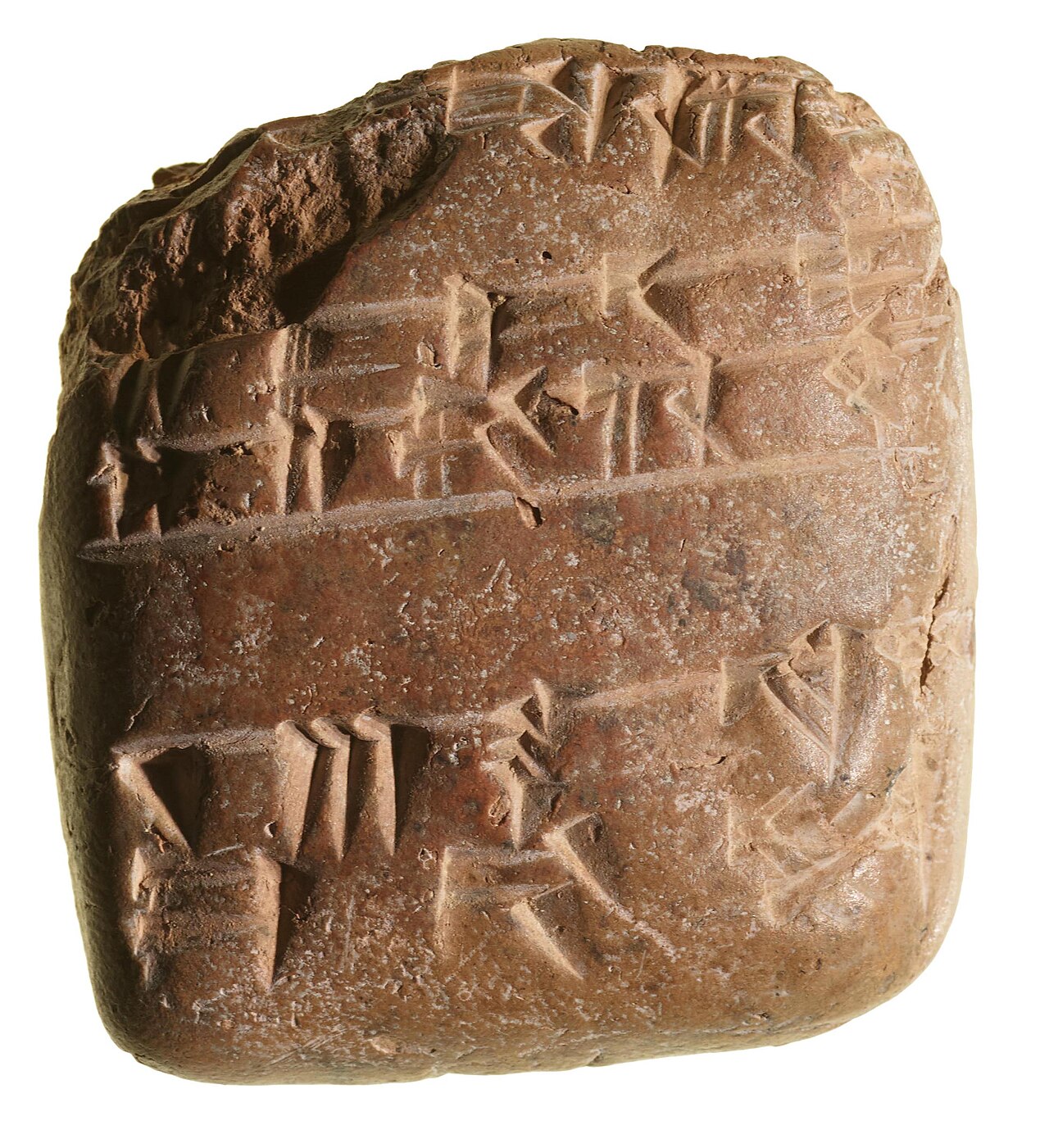
The script takes its name from the Latin word cuneus, meaning wedge, a direct reference to the distinctive wedge-shaped marks that constitute each sign. In its earliest pictographic phase, signs were drawn or incised in vertical columns using a sharpened reed stylus, and the strokes did not yet carry the wedge shape. Around 2800 BC, a crucial transformation took place: certain pictographs began to be used for their phonetic syllabic value rather than their literal picture meaning. This shift allowed scribes to record abstract ideas and personal names, but it also introduced ambiguity, since a single sign could carry multiple meanings depending on context. To counter this, determinative signs—Sumerian signs for gods, places, vessels, birds, and trees—were reintroduced as silent guides for the reader. The sign inventory was trimmed from roughly 1,500 to about 600, and writing grew increasingly phonological. Proper names, however, continued to be rendered in a purely logographic fashion.
Rediscovery, Decipherment, and the Museum Age
For millennia after its last use, cuneiform lay buried and unknown to the modern world. Its rediscovery came in the early 17th century, when the trilingual Achaemenid royal inscriptions at Persepolis were published. Full decipherment, however, was not achieved until the early 19th century, and the system was successfully cracked by 1857. The discipline that grew around this work is called Assyriology, a somewhat ambiguous name rooted in the fact that the earliest large-scale excavations of cuneiform libraries in the mid-19th century took place in the region of ancient Assyria. Today an estimated half a million tablets are held in museums worldwide, though a comparatively small fraction have been formally published. The largest holdings reside in the British Museum with roughly 130,000 tablets, followed by the Vorderasiatisches Museum in Berlin, the Louvre, the Istanbul Archaeology Museums, the National Museum of Iraq, the Yale Babylonian Collection with about 40,000 tablets, and the Penn Museum.
Gallery
Frequently Asked Questions
Who is Cuneiform?
Cuneiform is the earliest writing system known to humanity, first devised to transcribe the Sumerian language in the region of modern-day southern Iraq. Its name references the wedge-shaped strokes (from Latin cuneus) that give every sign its distinctive angular appearance.
What are Cuneiform's powers/role?
It operates as a mixed script, blending whole-word signs with syllabic components to capture the full range of spoken language. This flexible design let it serve as the standard writing medium for several distinct languages throughout the ancient Near East.
Why is Cuneiform important?
Being the first known system for recording human speech, it marks the moment civilization crossed from purely oral tradition into the written age. Its multi-millennia, multi-language career also makes it one of the longest-serving scripts ever devised.
What languages does Cuneiform speak?
It was born as a Sumerian script but was subsequently adapted to write Akkadian (from the 24th century BC onward) and a handful of other tongues across the region. This linguistic versatility is a major reason it dominated Near Eastern record-keeping for so long.
More in Writing Systems 1-24
Spotted an error? Know more?
Reader corrections go straight into our review queue. Suggest an edit · How this site is sourced