
Devanagari
Devanagari is a left-to-right abugida used for over 120 languages.

Symphonicallyu · CC0
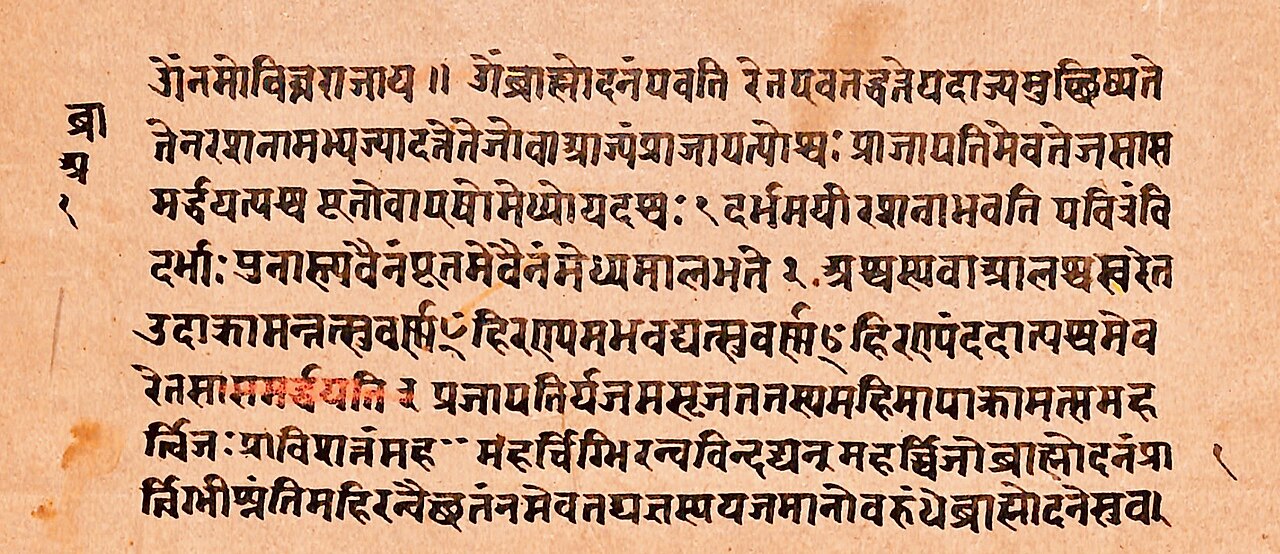
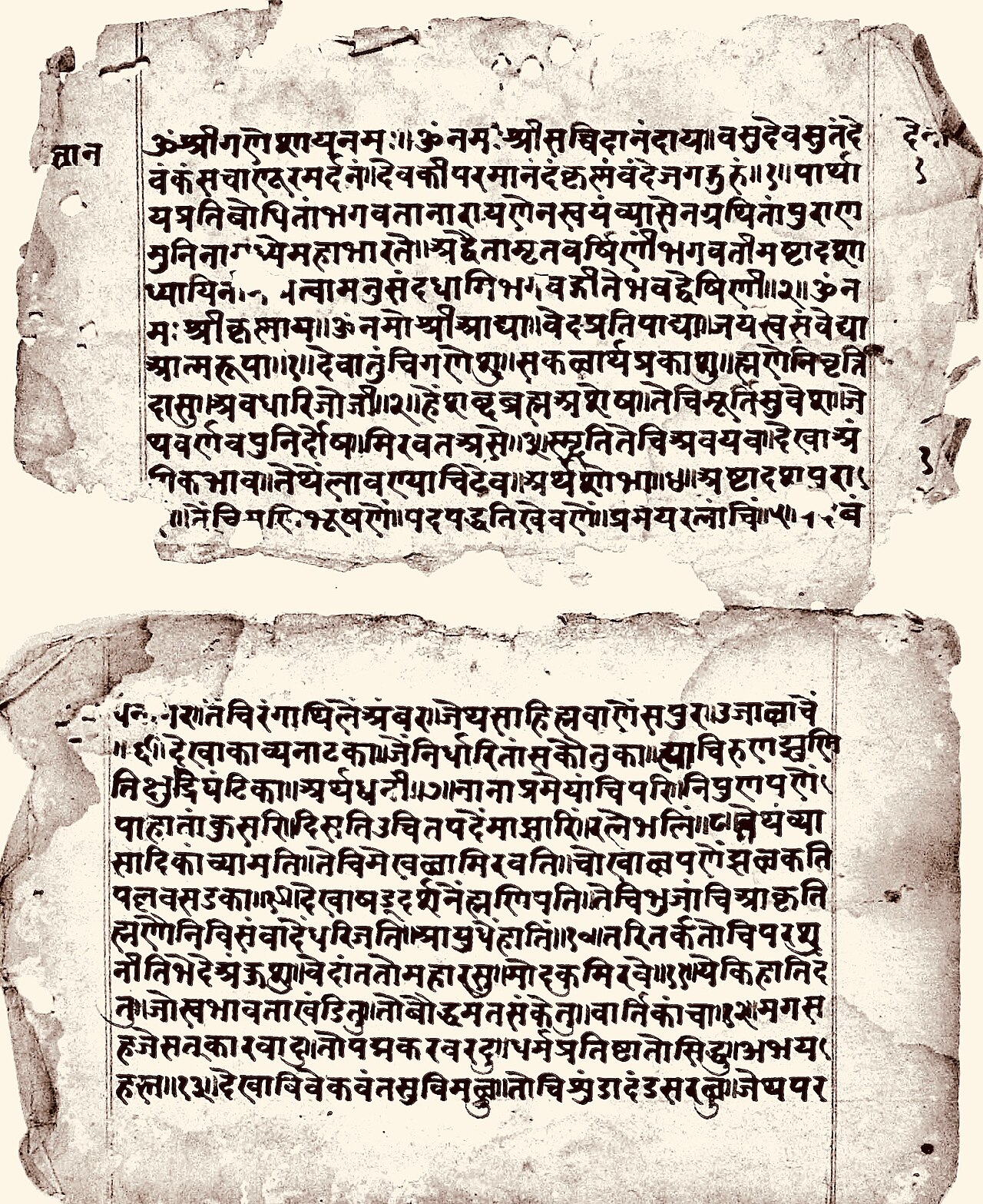
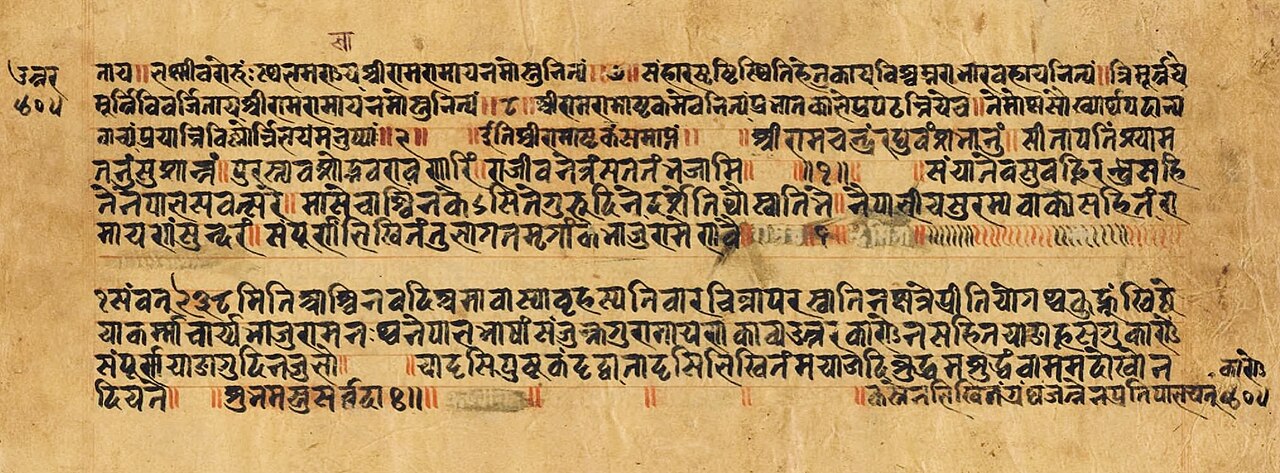
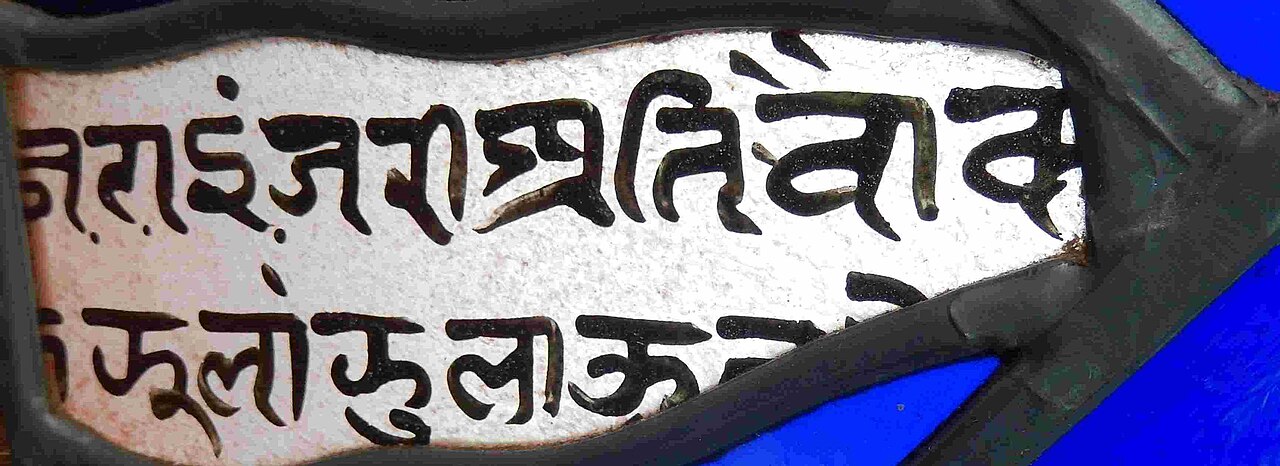
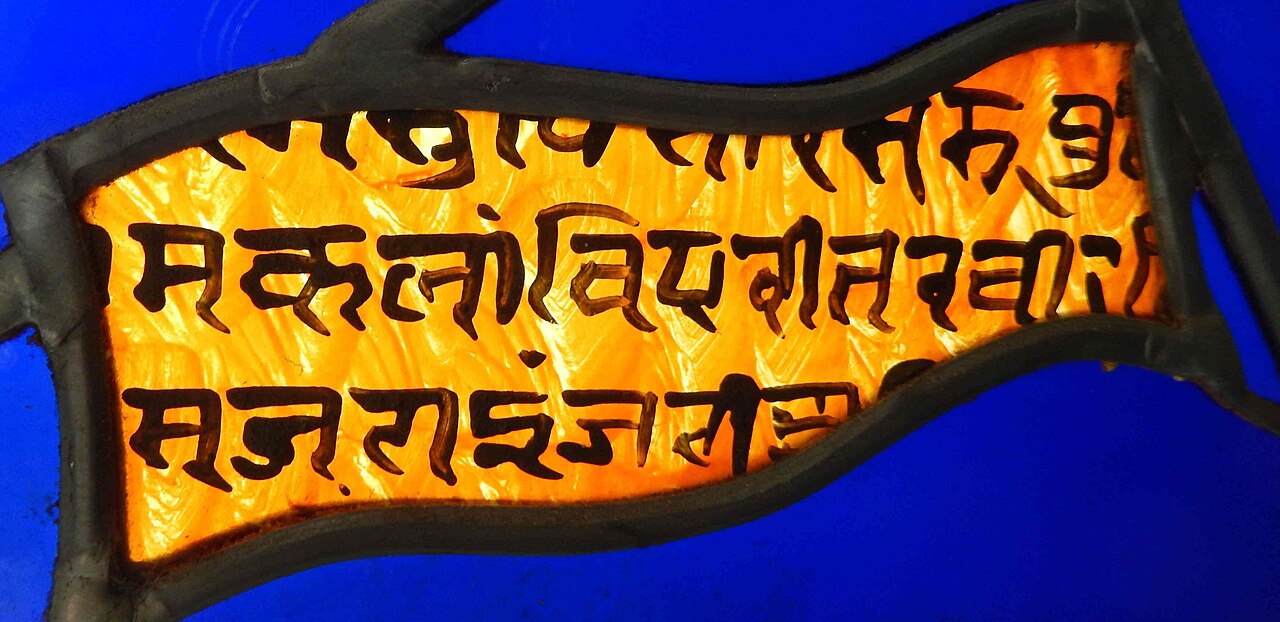
Devanagari (देवनागरी) is an Indic script used in the Indian subcontinent, also called Nāgarī. It is a left-to-right abugida based on the ancient Brāhmī script and is one of the official scripts of India and Nepal. Developed and in regular use by the 8th century CE, it achieved its modern form by 1000 CE. Composed of 48 primary characters (14 vowels and 34 consonants), it is the fourth most widely adopted writing system in the world, used for over 120 languages, most notably Hindi.
Quick Facts
- Time
- 11th century to present
- Official Script
- India · Nepal · Fiji
- Sisters
- Nandināgarī / Kaithī / Gujarātī / Mōḍī
Facts from the source article.
Lore & Background
Devanagari is part of the Brahmic family of scripts, descending from the 3rd century BCE Brāhmī script, which evolved into the Nagari script, giving birth to Devanāgarī and Nandināgarī. The earliest epigraphic evidence of the developing Sanskrit Nāgarī script comes from 1st to 4th century CE inscriptions in Gujarat, but Devanagari itself is not attested that early. Variants called Nāgarī, recognizably close to Devanāgarī, are first attested from the 1st century CE Rudradaman inscriptions in Sanskrit. The script was in regular use by the 7th century CE and fully developed by the end of the first millennium. Medieval inscriptions show widespread diffusion of Nāgarī-related scripts, with biscripts presenting local script alongside Nāgarī, such as the mid-8th-century Pattadakal pillar in Karnataka and the Kangra Jawalamukhi inscription in Himachal Pradesh.
Reader's Guide
Devanagari's significance lies in its widespread adoption across the Indian subcontinent for writing Sanskrit, Hindi, Marathi, Nepali, and many other languages. Its orthography reflects pronunciation, and unlike the Latin alphabet, it has no concept of letter case, making it a unicameral alphabet. The script is recognizable by a horizontal line (śirorekhā) running along the top of full letters. It is closely related to the Nandināgarī script found in South Indian manuscripts and distantly related to several Southeast Asian scripts. The script's use in medieval India is attested by numerous inscriptions, including the 11th-century Udayagiri inscriptions and a 1217 CE inscribed brick held at the British Museum. In East Asia, the Siddhaṃ matrika script, considered the closest precursor to Nāgarī, was used by Buddhists. The Tibetan script was invented based on the Nāgarī used in Kashmir, and other scripts like Siddhaṃ were introduced to Indonesia, Vietnam, and Japan from the 7th to 10th centuries. The Kawi script of Java is similar to Devanāgarī, with early inscriptions from around the 10th century CE.
Did You Know?
- The name Devanāgarī combines deva (देव) and nāgarī (नागरी), with nāgarī literally meaning 'urban' or 'urbane'.
- The 13th-century Sinja Valley inscriptions in mid-western Nepal are in the Khas (early Nepali) script, not Devanagari.
- The scripts of Java, Bali, and Khmer derive from earlier Pallava or Grantha scripts, not from Nāgarī or Devanāgarī.
IAST and the Promise of Lossless Reversibility
The International Alphabet of Sanskrit Transliteration stands as one of the most widely adopted frameworks for rendering Sanskrit, Prakrit, and Pāḷi into Roman script. Operating as a subset of the ISO 15919 standard, IAST relies on diacritical marks to resolve ambiguities between phonetically close but distinct Sanskrit glyphs. A prime example is the underdot: dental द becomes d, while retroflex ड becomes ḍ. Perhaps IAST's most celebrated property is its lossless reversibility—a transliteration can be converted back into correct Devanāgarī or other South Asian scripts without any ambiguity, with the sole exception being Dravidian-language scripts, which demand a distinction between long and short mid vowels. Modern Unicode fonts provide full support for displaying and printing IAST text, making it practical for both academic and digital contexts. Despite the Roman script being long advocated by linguists such as J R Firth and S. K. Chatterji for general use across Indian languages, it has been seriously employed in practice for only one language: Konkani.
The Hunterian System and Its Political Battle
The Hunterian system, developed in the nineteenth century by William Wilson Hunter while he served as Surveyor General of India, holds the distinction of being the national romanisation system officially adopted by the Government of India. Its introduction was far from smooth. When proposed, it faced fierce opposition from defenders of the older, non-systematic Sir Roger Dowler method of phonetic transcription—a practice so distorting that it rendered Siraj ud-Daulah into that absurd form. The conflict culminated in a dramatic showdown at an India Council meeting on 28 May 1872, where the Hunterian method prevailed. Its inherent simplicity and extensibility across multiple Indic scripts gave it a decisive edge. Critics, however, never fully surrendered; they continued mounting unsuccessful challenges to government policy until the turn of the century, with one voice urging the government to abandon scientific transliteration entirely. Over time, the system expanded to cover Burmese and Tibetan scripts and incorporated provisions for schwa deletion in Indo-Aryan languages.
Modern Digital Standards and the ISO 15919 Era
The codification of ISO 15919 in 2001 marked a watershed for the digital representation of South Asian texts. This standard, developed under the International Organization for Standardization, provides a common Unicode basis for Roman transliteration across a wide variety of languages and scripts, making it the foundational convention for modern digital libraries and archives that conform to ISO norms. A key advantage is platform independence: ISO 15919 transliterations function identically across all modern operating systems and software packages that comply with ISO norms. For Devanagari specifically, the ISO 15919 portion is nearly identical to both IAST and the ALA-LC standard used by the United States Library of Congress. The standard employs diacritics to map the extensive set of Brahmic graphemes onto the Latin alphabet. A parallel effort, the United Nations Romanization Systems for Geographical Names, developed by the UNGEGN, also covers many Brahmic scripts, though it diverges from ISO 15919 in certain details. The National Library at Kolkata romanisation extends IAST further, introducing ē and ō for long vowels and a dedicated symbol for the Kannada consonant ಳ.
ASCII-Based Schemes for Practical Typing
For typists who find diacritical marks cumbersome, ASCII-based transliteration schemes offer a practical alternative. Harvard-Kyoto, for instance, strips away all the diacritic marks found in IAST and instead employs capital letters to distinguish sounds. This design choice makes typing considerably easier, though it produces words with internal capital letters that can look unconventional. ITRANS builds directly on the Harvard-Kyoto foundation and was developed specifically for the ITRANS software package, a pre-processor designed for Indic scripts. In the ITRANS workflow, the user types in plain Roman letters, and the software preprocessor converts those Roman letters into the target Indic script. This approach removes the need for any special keyboard layouts or diacritic input methods, lowering the barrier to entry for everyday users who wish to compose text in Devanagari or other Indic scripts without mastering complex character encoding.
Gallery

Frequently Asked Questions
Who is Devanagari?
Devanagari (also called Nāgarī) is an Indic abugida script native to the Indian subcontinent, descended from the much older Brāhmī writing system. It holds official-script status in both India and Nepal.
What are Devanagari's powers/role?
Devanagari operates as a left-to-right abugida built from 48 primary characters—14 vowels and 34 consonants—that together can encode more than 120 languages. Its flagship role is as the principal script for Hindi, though it serves a wide range of other tongues across the region.
When did Devanagari first appear in the canon?
The script is first attested as a distinct writing system in the 8th century CE. It settled into the recognizable modern form scholars recognize today by roughly 1000 CE.
Why is Devanagari important to the writing-systems community?
Ranking as the fourth most widely adopted writing system on Earth, Devanagari underpins literacy for hundreds of millions of speakers across South Asia. Its capacity to serve over 120 languages makes it a linchpin of the subcontinent's multilingual landscape.
What is Devanagari's legacy, and how does its story continue?
Devanagari remains in active, everyday use as an official script of India and Nepal, with no signs of retirement. Its unbroken lineage from Brāhmī through its 8th-century emergence to today's standardized form makes it one of the longest continuously used writing traditions still in circulation.
More in Writing Systems 1-24
Spotted an error? Know more?
Reader corrections go straight into our review queue. Suggest an edit · How this site is sourced