
Constructed language
Languages devised by humans for specific purposes, not naturally emerging.

Chiswick Chap · CC BY-SA 4.0
A constructed language, or conlang, is a language devised by a person or group for a particular purpose, as opposed to languages that naturally emerge from human interaction. Conlangs may include aspects of natural language such as phonology, grammar, orthography, and vocabulary, and are studied within the field of interlinguistics.
- Field
- Interlinguistics
- Known for
- Devised languages for communication between humans, including fictional, artificial, engineered, planned, and invented languages
Lore & Background
The concept of constructed language dates to classical antiquity, with grammatical speculation appearing in Plato's Cratylus. Athenaeus recounts that Dionysius of Sicily created neologisms such as 'menandros' for 'virgin', while Alexarchus of Macedon introduced a peculiar vocabulary, referring to a rooster as a 'dawn-crier'. The earliest entirely artificial language is the Lingua Ignota, recorded in the 12th century by St. Hildegard of Bingen, a form of private mystical cant. In the 16th century, Balaibalan was invented in Middle-Eastern culture. The first Christian project for an ideal language is outlined in Dante Alighieri's De vulgari eloquentia. During the 17th century, projects for philosophical or a priori languages arose, including those by Francis Lodwick, Sir Thomas Urquhart, George Dalgarno, and John Wilkins. These early taxonomic languages produced hierarchical classification systems for spoken and written expression. The 19th and 20th centuries saw a focus on international auxiliary languages, beginning with Volapük in 1879, followed by Esperanto in 1887, and later Interlingua in 1951. More recent engineered languages include Loglan (1955) and Robot Interaction Language (2010).
Reader's Guide
Constructed languages have been devised for a variety of purposes, including experimentation in logic, philosophy, or linguistics (engineered languages), international communication (auxiliary languages), and aesthetic pleasure or humor (artistic languages). The earliest known mention of a constructed language in literature appears in the seventh-century Irish work Auraicept na n-Éces, which claims that Fénius Farsaid created the Irish language by taking the best features of various languages. The 17th-century philosophical language projects, such as John Wilkins' An Essay towards a Real Character, aimed to create a perfect written language through hierarchical classification, influencing the Enlightenment's Encyclopédie. While many early a priori languages fell into obscurity, the success of Esperanto demonstrated the potential for constructed languages to gain significant speaker communities. Modern engineered languages like Loglan and Lojban focus on eliminating syntactical ambiguity, while Robot Interaction Language (2010) is optimized for communication between machines and humans. The study of constructed languages, interlinguistics, continues to explore their design and use.
Did You Know?
- Volapük, proposed in 1879, had 283 clubs worldwide within a decade before falling into obscurity.
- Robot Interaction Language (2010) is a spoken language optimized for communication between machines and humans.
The Line Between Invention and Evolution
All writing systems are, in the broadest sense, human inventions, yet the vast majority of scripts in daily use did not spring from a single designer's mind. Instead, they grew organically over centuries as one language borrowed another's alphabet and gradually reshaped it to fit new phonological needs. The letters w and j, for example, only became formally recognized members of the English alphabet in the mid-1800s, long after they had crept into everyday usage. This slow, cumulative process makes it genuinely difficult to draw a clean boundary between a script that was simply adopted and one that was deliberately created. The Cyrillic and Gothic alphabets illustrate this ambiguity well: both were heavily shaped by the Greek model, yet individual authors are credited with their design. In the exceedingly rare instances where a script emerged directly from proto-writing rather than from a predecessor—Cuneiform, Egyptian hieroglyphs, the Chinese script, and the Mayan script—the process was still one of gradual symbolic evolution, not deliberate engineering from a blank page.
Faith, Vision, and the Drive to Write
A powerful current in the history of neography runs through religious and mystical motivation. Missionaries and scholars frequently devised alphabets for spoken languages that lacked adequate writing, hoping to make sacred texts accessible to new communities. Scripts such as the Cherokee syllabary, the Canadian Aboriginal syllabics, N'Ko, and the Goulsse alphabet all trace their origins to this impulse, often with the Greek alphabet serving as a structural template. Beyond practical translation, religious leaders have promulgated new scripts to strengthen cultural identity and liturgical unity among their followers, as seen in Sorang Sompeng, Medefaidrin, and the script created by Zomi religious leader Pau Cin Hau. A more esoteric branch involves scripts designed for communication with spiritual entities. John Dee and Edward Kelley constructed the Enochian alphabet for their purported angelic language, while Heinrich Cornelius Agrippa and his teacher Johannes Trithemius documented scripts such as Celestial, Malachim, Theban, and Transitus Fluvii. Hildegard of Bingen's litterae ignotae, created for her lingua ignota, may belong to this same tradition. Several of these systems are described by their creators as having been revealed through visionary experiences.
Scripts for the Imagination
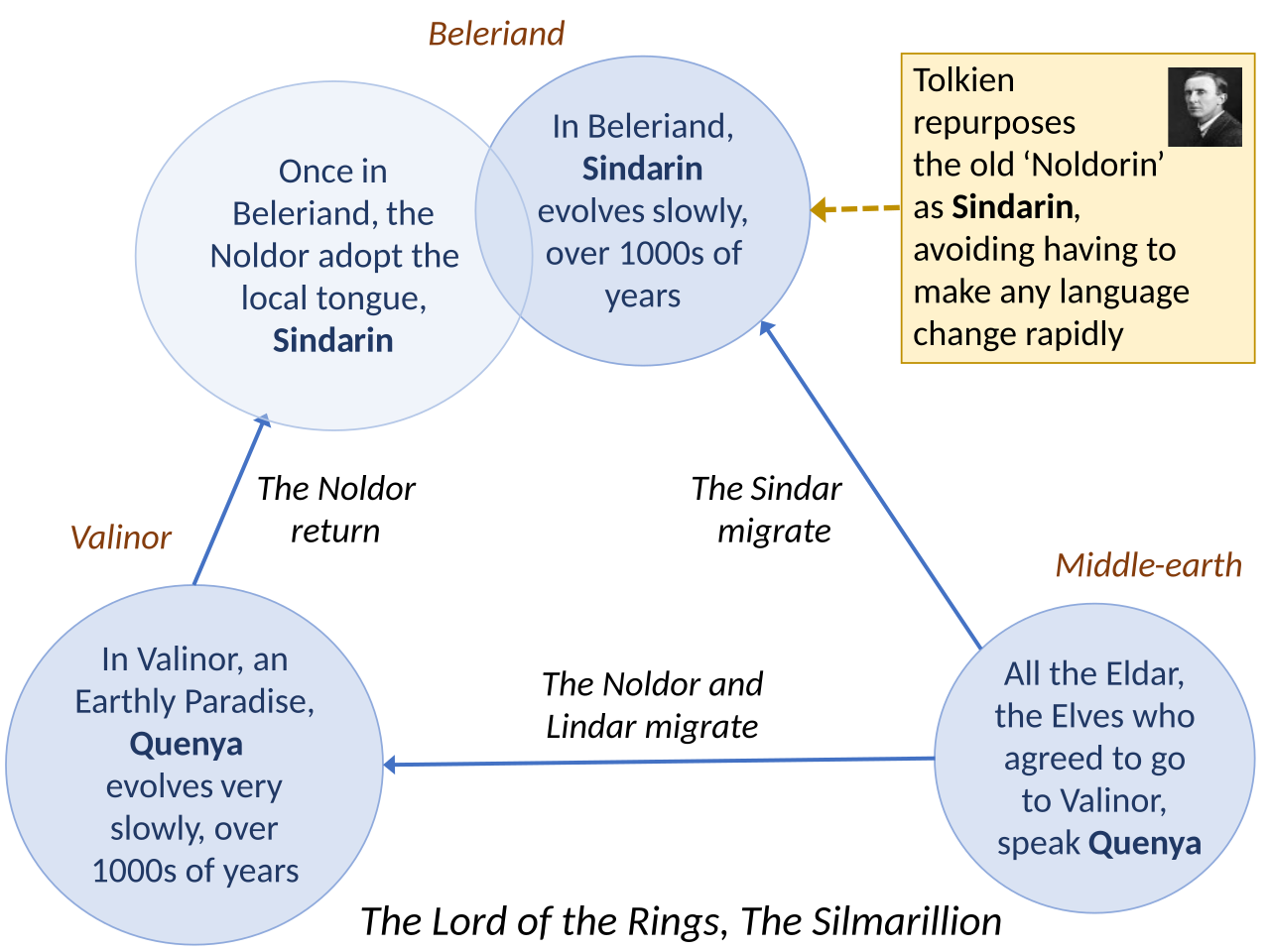
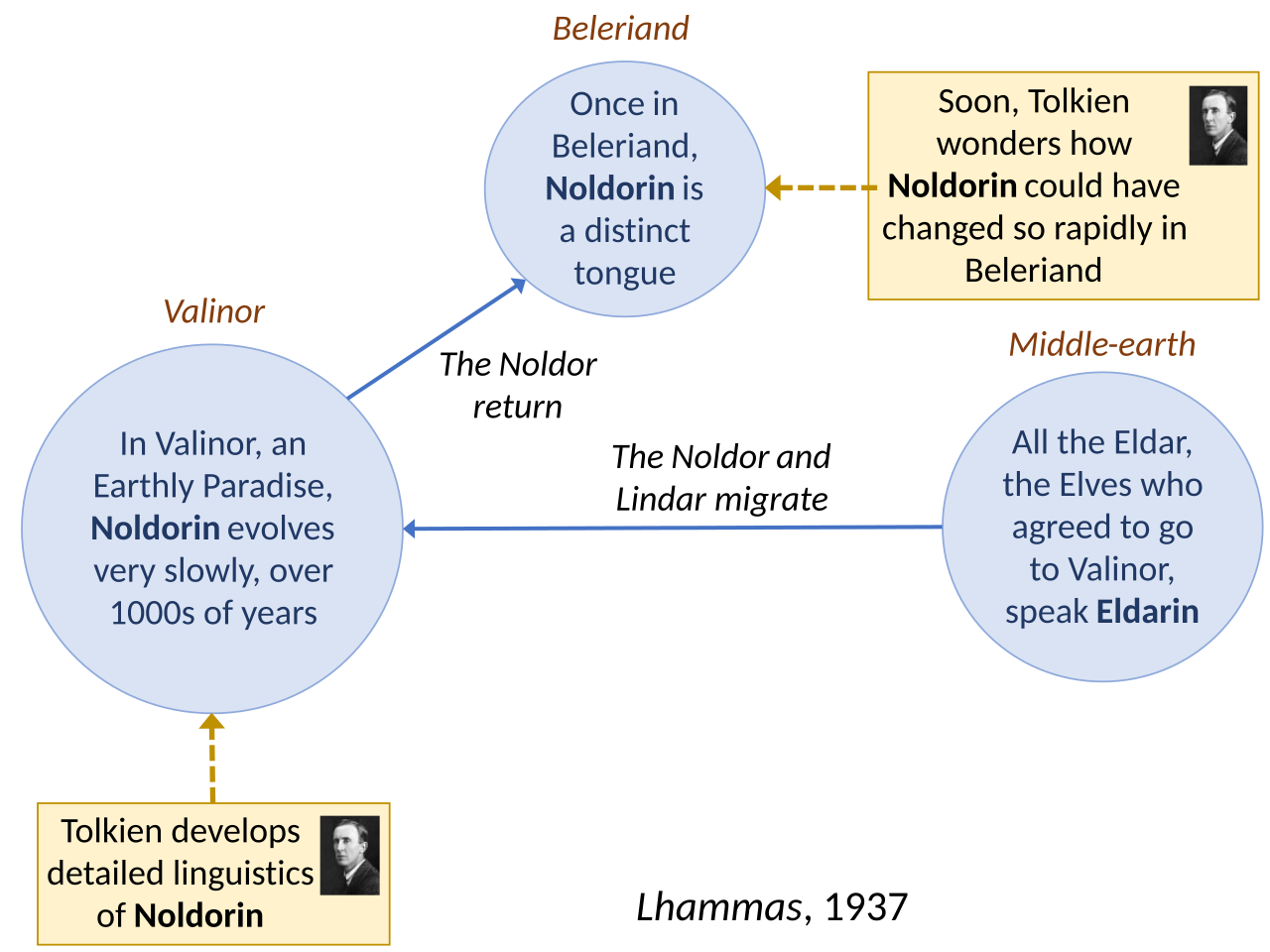
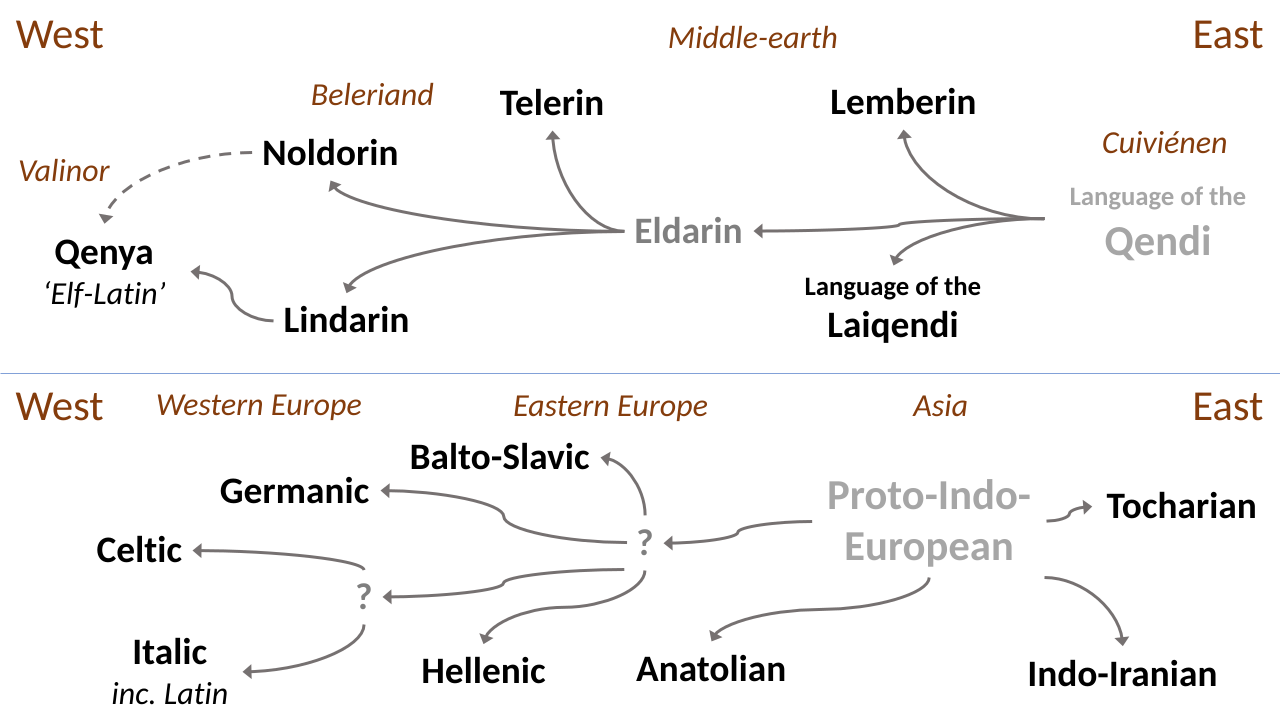
Fictional worlds have become a rich breeding ground for constructed scripts, and few have captured the public imagination as thoroughly as J. R. R. Tolkien's Tengwar and Cirth, which he designed as elaborate writing systems for his invented Elvish languages. Beyond Tolkien, the pIqaD script was created specifically for the Klingon language in the Star Trek universe, and the D'ni script gave the Myst video game series its distinctive visual identity. Not every fictional work goes so far as to build a full language; many settle on a constructed script that functions as a substitution cipher or alternate orthography for an existing language. English-language examples include the Orokin script from Warframe (affectionately called Tennobet by its community, a portmanteau of Tenno and alphabet), the unnamed New World script in Kirby and the Forgotten Land, Aurebesh from the Star Wars franchise, and the alien writing that appears in the animated series Futurama. These scripts, while born in entertainment, often develop dedicated communities of enthusiasts who study, practice, and extend them far beyond their original narrative context.
Precision, Pedagogy, and Reform
Constructed scripts also serve highly practical technical and reformist goals. The International Phonetic Alphabet stands as perhaps the most widely recognized example: a system built on the Latin alphabet but expanded with invented letters, Greek characters, and numerous diacritics so that linguists can transcribe the full range of human speech in exhaustive detail. In the pedagogical sphere, John Malone's Unifon, Sir James Pitman's Initial Teaching Alphabet, and Alexander Melville Bell's Visible Speech were all invented to make reading instruction more systematic. Yerkish, a lexigram-based communication system designed for non-human primates, represents yet another application of constructed visual symbols. On the reform side, the Church of Jesus Christ of Latter-day Saints promoted the Deseret alphabet in the mid-1800s as a better fit for English phonology, and roughly a century later George Bernard Shaw's estate commissioned the Shavian alphabet (later evolved into Quikscript) for the same purpose. Bradbury Thompson's Alphabet 26 pursued a parallel vision. More ambitiously, philosophical languages such as aUI, Solresol, and the system in John Wilkins' 1668 An Essay Towards a Real Character carry their own writing systems, while Charles K. Bliss's Blissymbols propose an international auxiliary language whose primary mode is written rather than spoken.
Gallery


Frequently Asked Questions
What is a constructed language?
A constructed language, often shortened to conlang, is a tongue deliberately designed by one person or a group to fulfill a specific goal, as opposed to a language that grew organically through generations of speakers. It can feature the same building blocks as natural languages, including sound systems, grammatical rules, writing conventions, and word lists.
How is a conlang different from a natural language?
The core difference lies in origin: a conlang is purposefully engineered by its creator, while a natural language emerges gradually through everyday human social interaction. No single individual 'invents' a natural language the way someone might design a conlang from scratch.
Which academic field studies constructed languages?
Constructed languages are examined within interlinguistics, the branch of linguistics dedicated to languages that were planned or invented rather than naturally evolved.
What kinds of languages are considered constructed?
The umbrella term covers fictional tongues from stories, fully artificial systems, engineered designs, planned international languages, and purely invented vocabularies—any language whose existence traces back to human design rather than organic development.
Why would someone create a constructed language?
Creators build conlangs to serve a defined purpose, whether that is facilitating communication across language barriers, populating a fictional universe, or testing theoretical ideas about how language works.
More in Writing Systems 1-24
Spotted an error? Know more?
Reader corrections go straight into our review queue. Suggest an edit · How this site is sourced