
Syria–Lebanon campaign
British invasion of Vichy-held Syria and Lebanon in 1941.

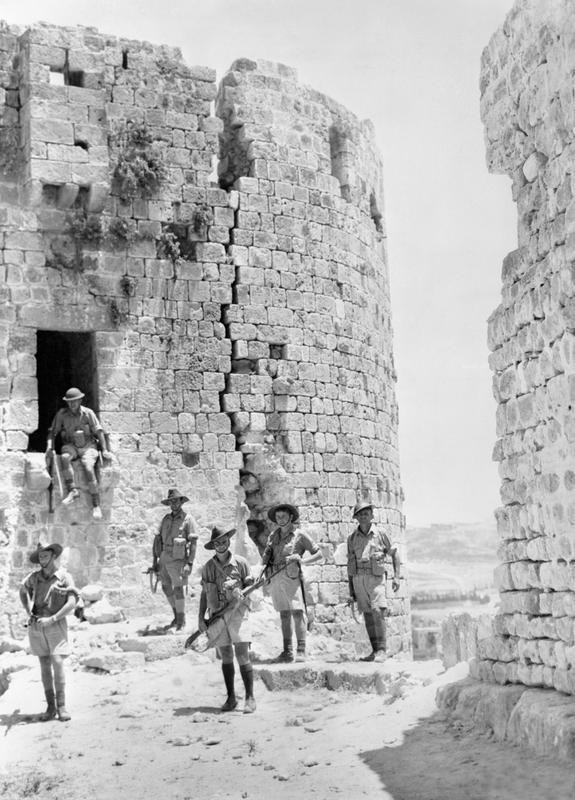
Australian official photographer · Public domain
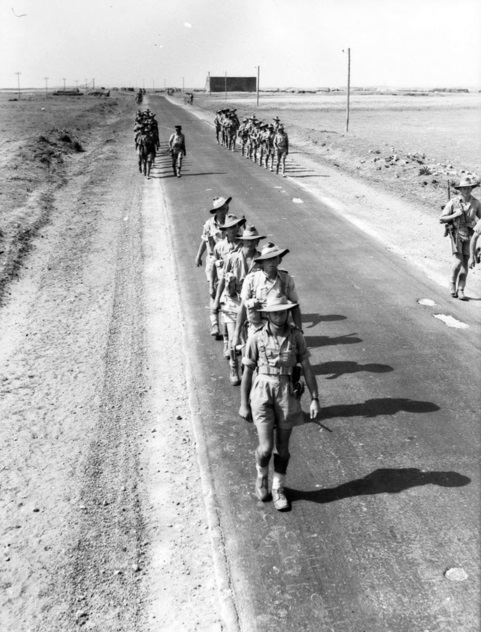
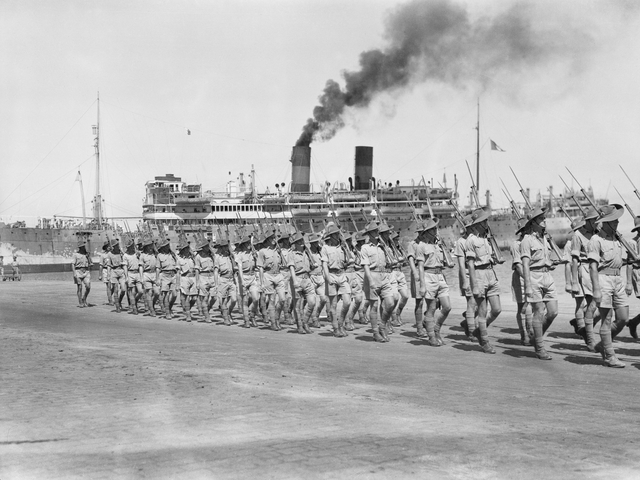
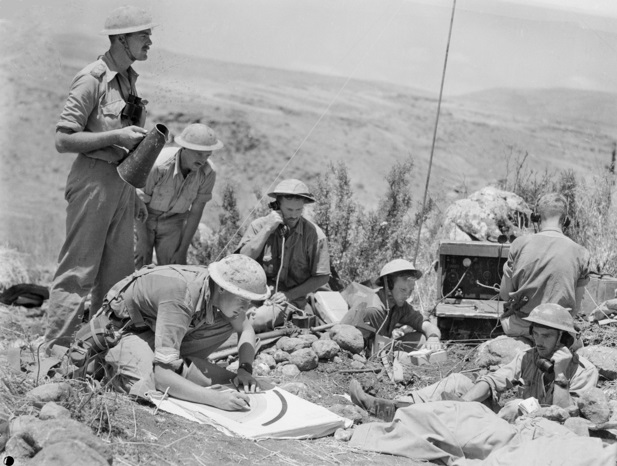
The Syria–Lebanon campaign, called Operation Exporter, was a British Empire invasion of Syria and Lebanon in June and July 1941, during World War II. At the time, both territories were controlled by Vichy France, a Nazi German vassal state. The invasion aimed to stop the Axis from using these areas as launchpads for attacks on Egypt, especially after Axis successes in Greece and Crete.
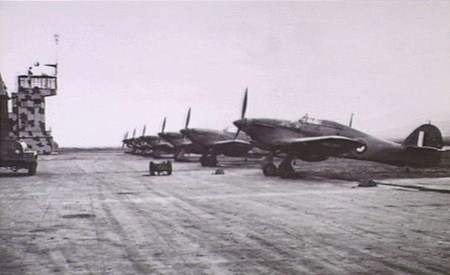
In April 1941, a coup in Iraq brought Rashid Ali al-Gaylani to power, and he sought help from Italy and Germany. The Anglo-Iraqi War in May ended with a pro-British government installed. During that conflict, Admiral François Darlan let German planes refuel at Vichy airfields in Syria for strikes against the British in Iraq. The British then invaded Syria and Lebanon in June to block Axis use of these bases, amid fears for Egypt following the Battle of Greece and the Battle of Crete. Meanwhile, the British were also fighting in North Africa (Operation Battleaxe to relieve Tobruk) and in East Africa.
The French defended Syria vigorously, but on 11 July, as the 21st Australian Brigade neared Beirut, the French asked for an armistice. A ceasefire took effect one minute after midnight on 12 July, ending the campaign. The Armistice of Saint Jean d’Acre was signed on 14 July at the Sidney Smith Barracks outside Acre. *Time* magazine later called the campaign a “mixed show,” and it remains little known, even in the countries that fought.
**Background**
On 28 May 1941, Darlan signed the Paris Protocols with Germany, granting access to military facilities in Vichy-controlled Syria, though the protocols were never ratified. Despite this, Vichy War Minister Charles Huntziger ordered High Commissioner Henri Dentz to let German Luftwaffe and Italian Regia Aeronautica aircraft refuel in Syria. Marked as Iraqi, these Axis planes landed in Syria en route to Iraq during the Anglo-Iraqi War. Darlan, who disliked the British, allowed this partly because the British had seized 167 French ships since July 1940. The Paris Protocols also included a plan for the French to attack British-held Iraqi oilfields, proposed by Darlan. The Germans also asked to use Syrian railways to send arms to Iraqi nationalists in Mosul. In exchange for Darlan’s pro-Axis moves, Germany released 7,000 French prisoners of war, many of them officers.
Quick Facts
- Conflict
- Syria–Lebanon campaign
- Part Of
- the Mediterranean and Middle East theatre of the Second World War
- Location
- Syria and Lebanon
- Result
- Allied victory
- Territory
- Syria and Lebanon taken over by Free France
Facts from the source article.
Lore & Background
The campaign began after Vichy France allowed German aircraft to use Syrian airfields during the Anglo-Iraqi War. British forces, including Australian, Indian, Free French, and Arab Legion units, invaded from Palestine and Iraq. The French mounted a vigorous defense, but on 11 July, as the 21st Australian Brigade neared Beirut, the French sought an armistice. A ceasefire took effect at one minute past midnight on 12 July, and the Armistice of Saint Jean d'Acre was signed on 14 July.
Reader's Guide
The Syria–Lebanon campaign is relatively unknown, even in participating countries, and was described by Time magazine as a 'mixed show.' It secured the eastern flank of British forces in Egypt and prevented Axis use of Syrian bases, but the fighting was costly and the outcome uncertain until the armistice. The campaign also involved complex political dynamics, including Vichy collaboration with Germany and Free French ambitions. Its legacy is overshadowed by larger campaigns in North Africa and the Eastern Front.
Did You Know?
- Admiral François Darlan allowed German aircraft to use Vichy airfields in Syria for attacks against the British in Iraq.
- The French Armée du Levant included 35,000 troops, with 8,000 French and 25,000 Syrian and Lebanese infantry.
- The armistice was signed at the Sidney Smith Barracks on the outskirts of Acre on 14 July 1941.
- Time magazine referred to the campaign as a 'mixed show.'
Strategic Imperatives Behind the Invasion
The decision to launch what became known as Operation Exporter emerged from a cascading series of threats across the eastern Mediterranean in the spring of 1941. After the Iraqi nationalist coup led by Rashid Ali al-Gaylani in early April, British forces fought the Anglo-Iraqi War from 2 to 31 May to restore a pro-British government. During that conflict, Vichy France's Admiral François Darlan permitted German and Italian aircraft to operate from Syrian airfields, staging attacks against British positions in Iraq. On 28 May, Darlan formalized this cooperation through the Paris Protocols, granting Germany access to military facilities in Vichy-controlled Syria. Simultaneously, the Axis victories in the Battle of Greece and the Battle of Crete created a genuine invasion scare for Egypt. British leadership concluded that the Mandatory Syrian Republic and Greater Lebanon could not be allowed to serve as springboards for further Axis aggression. Despite General Wavell's reluctance—driven by the Western Desert situation, the imminent Crete assault, and uncertainty about Free French intentions—the invasion proceeded in June to close this strategic gap before it could be exploited.
The Vichy French Military Machine in the Levant
General Henri Dentz commanded the Armée du Levant, a force that combined metropolitan colonial units with indigenous Syrian and Lebanese soldiers. The army fielded roughly 35,000 personnel, of whom approximately 8,000 were French regulars and 25,000 were local infantry. Among the regular formations were the 6th Foreign Infantry Regiment of the Foreign Legion and the 24th Colonial Infantry Regiment, supplemented by eleven battalions of special troops that included at least 5,000 cavalry in both horsed and motorized units, along with two artillery groups. British intelligence estimated the French possessed around 90 tanks, while the air arm started with 90 aircraft before reinforcements swelled that number to 289. At sea, the French Navy contributed two destroyers, the Guépard and Valmy, a sloop named Élan, and three submarines. Darlan's willingness to cooperate with the Axis was partly rooted in personal grievance: since July 1940, he calculated that 167 French ships had been seized by British forces. In exchange for his pro-Axis gestures, Germany released 7,000 French prisoners of war, many of them professional officers and non-commissioned officers.
The Final Days and the Armistice
Despite the numerical and logistical challenges facing the British Empire forces, the French mounted what observers described as a vigorous defence of their Levantine mandates. The fighting ground on through June and into early July, with the 21st Australian Brigade pressing toward the Lebanese capital. On 10 July, as Australian troops stood on the very verge of entering Beirut, the French command decided the fight was over and sought an armistice. A ceasefire took effect at one minute past midnight on 12 July, bringing the campaign to a close. Two days later, on 14 July, the formal Armistice of Saint Jean d'Acre—also called the Convention of Acre—was signed at the Sidney Smith Barracks on the outskirts of the city. The signing ceremony itself became a moment of quiet history, marking the end of a conflict that had pitted British Empire and Australian forces against a Vichy French army defending territory to which France had ceded autonomy back in September 1936. The armistice effectively removed the Syrian and Lebanese mandates from Vichy control and closed the door on Axis use of those airfields and railways.
A Forgotten Front in a War of Giants
The Syria-Lebanon campaign occupies a peculiar place in the collective memory of World War II. Even at the time of the armistice, Time magazine dismissed the entire affair as a 'mixed show,' a characterization that has lingered in the historical record. To this day, the campaign remains relatively unknown, even in the very countries whose soldiers fought in it. That obscurity is understandable when one considers the competing narratives of 1941: the Western Desert Campaign in North Africa, with its Operation Battleaxe and the siege of Tobruk, dominated British strategic thinking. The East African Campaign in Ethiopia and Eritrea, running from June 1940 to November 1941, added another layer of complexity. Meanwhile, the Anglo-Iraqi War, the Greek and Cretan battles, and the broader Mediterranean struggle all vied for attention. The Levantine campaign, though it involved multiple nations and ended with a formal armistice signed at Sidney Smith Barracks, was overshadowed by these more widely recognized theatres, leaving its participants and their sacrifices largely unremembered.
Gallery
Frequently Asked Questions
What is the Syria–Lebanon campaign?
It was a British-led military operation, code-named Operation Exporter, carried out in June and July 1941 to seize control of Syria and Lebanon from Vichy France. The two territories had been administered by the collaborationist French regime aligned with Nazi Germany.
Why did Britain launch the Syria–Lebanon campaign?
British commanders feared that Axis forces would use Vichy-held Syrian and Lebanese airfields as staging grounds for strikes against British positions in Egypt. The threat became urgent after Germany and Italy secured victories in Greece and Crete earlier that spring.
Who were the main belligerents in the Syria–Lebanon campaign?
The fighting pitted forces of the British Empire—drawing on troops from Britain, India, Australia, and other dominions—against the Vichy French garrison defending the two territories. No other major power committed significant combat forces to the campaign.
How did the Syria–Lebanon campaign end?
The conflict concluded on 14 July 1941 with the signing of the Armistice of Saint Jean d'Acre, which forced the Vichy garrison to stand down. British and allied forces then took administrative control of both Syria and Lebanon.
Why is the Syria–Lebanon campaign considered important in World War II?
It removed a potential Axis springboard in the eastern Mediterranean and helped secure the Suez Canal corridor, which was vital to British supply lines. The operation also demonstrated that Britain was willing to fight its former ally France when Vichy cooperation with Germany threatened imperial interests.
More in World War Ii Topics 1-17
Spotted an error? Know more?
Reader corrections go straight into our review queue. Suggest an edit · How this site is sourced