
Soviet partisans
Soviet-led guerrilla resistance against Axis forces in occupied territories.

Galvm · CC BY-SA 4.0
Soviet partisans were members of resistance movements that fought a guerrilla war against Axis forces during World War II, primarily in the German-occupied territories of the Soviet Union and the previously Soviet-occupied areas of interwar Poland from 1941 to 1945. Their activity emerged after Nazi Germany's Operation Barbarossa was launched in mid-1941, and was coordinated and controlled by the Soviet government, modeled on that of the Red Army. The partisans made a significant contribution to the war by countering German plans to exploit occupied Soviet territories economically, giving considerable help to the Red Army by conducting systematic attacks against Germany's rear communication network, disseminating political rhetoric among the local population, and creating feelings of insecurity among Axis forces.
- Born
- Mid-1941 (emerged after Operation Barbarossa)
- Field
- Guerrilla warfare
- Nationality
- Soviet
- Known for
- Systematic attacks on German rear communication networks and economic disruption
- Peak personnel
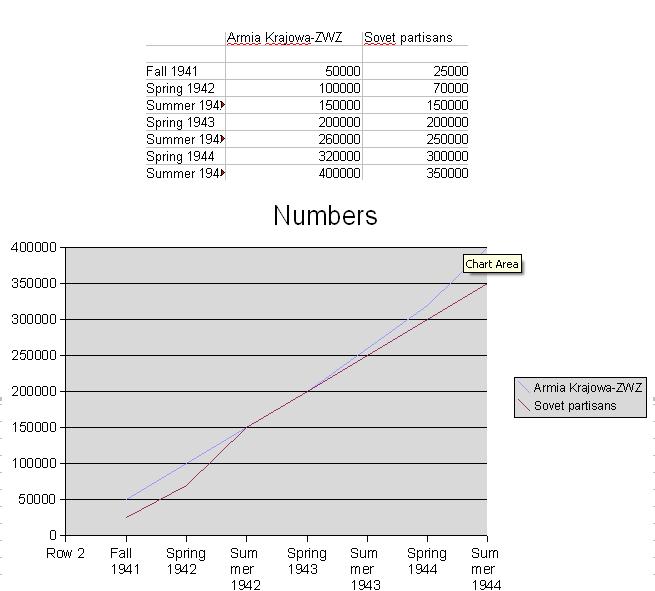
- Around 30,000–40,000 (by end of 1941); 56,000 in Belarus (January 1943)
Lore & Background
The program of the partisan war was outlined in Moscow after the German attack in 1941. Directives issued on July 29, 1941 and in further documents called for the formation of partisan detachments and diversionist groups in German-occupied territories. Joseph Stalin iterated his commands in a radio speech on 3 July 1941 and appointed himself Commander-in-Chief of the Red Army on 20 July 1941. The core of the partisan movement in 1941 consisted of remains of Red Army units destroyed in the first phase of Operation Barbarossa, personnel of destruction battalions, and local Communist Party and Komsomol activists who chose to remain in Soviet-occupied prewar Poland. The first detachments were formed in the first days of the war, including the Starasyel'ski detachment of Major Dorodnykh on June 23, 1941 and the Pinsk detachment of Vasily Korzh on June 26, 1941. By the end of 1941, around 30,000–40,000 partisans operated in German-occupied territories.
Reader's Guide
The Soviet partisan movement was significant for its role in undermining German occupation and supporting the Red Army. By the end of 1943, partisans controlled more than 100,000 square kilometers of Belarus, about 60 percent of the republic's territory, including more than 20 regional centers and thousands of villages. The turning point came with the opening of the Vitsyebsk gate in February 1942, which allowed centralized administrative and logistical support from the Red Army. This enabled partisans to effectively hamper German operations from April 1942 onward. However, in western Belarus and Baltic territories occupied by the Soviet Union in 1939–1940, partisans had significantly less support and often clashed with local national partisan groups and German-controlled auxiliary police. The movement also operated outside Soviet territory, with formations such as Rodina acting in France, and units in Poland and Czechoslovakia in 1944. The legacy includes both military disruption and political influence among local populations.
Did You Know?
- The first awards of the Hero of the Soviet Union to partisans occurred on August 6, 1941, to detachment commanders Pavlovskiy and Bumazhkov.
- By the end of 1943, partisan control was limited to remote forested areas, not a majority of the Byelorussian SSR.
- Some formations calling themselves Soviet partisans operated as far away as France, though specific unit names like 'Rodina' are not widely recognized in standard histories.
- In January 1943, out of 56,000 partisan personnel in Belarus, only 11,000 operated in western Belarus.
Origins: From Collapse to Coordinated Resistance
The partisan war in the Soviet Union was born in the chaos of mid-1941, when Operation Barbarossa shattered Soviet defenses across the western front. In the immediate aftermath, the movement's backbone consisted of scattered remnants of destroyed Red Army units, personnel from destruction battalions, and local Communist Party and Komsomol activists who refused to abandon the occupied territories of prewar Poland. The first detachments were assembled within days of the German invasion: Major Dorodnykh's Starasyel'ski unit in the Zhabinka district on June 23, and Vasily Korzh's Pinsk detachment on June 26. By the end of that summer, over two thousand detachments employing more than ninety thousand fighters were active behind enemy lines. Yet for nearly a year, these units operated in isolation, with no reliable supply lines, no radio contact, and no central command. That changed on May 30, 1942, when the Central Headquarters of the Partisan Movement was established under Stavka, with Politburo member Kliment Voroshilov at its head and Panteleimon Ponomarenko serving as Chief of Staff. From that point forward, partisan operations were coordinated through liaison networks embedded in the Military Councils of the Fronts and Armies, transforming a scattered guerrilla effort into a structured military instrument.
Strategic Impact and International Reach
Beyond their role as a direct military threat, Soviet partisans served as a multi-dimensional instrument of war. Their systematic attacks on German rear communication networks provided the Red Army with critical support and disrupted the logistics that sustained Axis occupation forces. They also worked to undermine the economic exploitation of occupied territories, a key German objective in the conquered lands. On the political front, partisan units published newspapers and distributed leaflets to spread Soviet rhetoric among the local population, while their very presence created a persistent atmosphere of insecurity among Axis troops. The movement's reach extended well beyond Soviet borders. In 1944, seven united formations and twenty-six larger detachments operated in occupied Poland, while twenty united formations and detachments were active in Czechoslovakia, providing what Soviet sources described as 'proletarian internationalist' assistance. Even further afield, a formation called Rodina, composed of former Soviet citizens who had escaped Nazi camps, conducted operations in France. The first recipients of the Hero of the Soviet Union award among partisans were detachment commanders Pavlovskiy and Bumazhkov, honored on August 6, 1941, underscoring how quickly Moscow recognized the movement's significance.
The Belarus Crucible: Hardship and Gradual Victory
Belarus became the crucible of the Soviet partisan struggle, and the early months there were marked by extraordinary hardship. By August 1941, roughly 231 detachments were already operating in the region, and by year's end, 437 units with more than 7,200 personnel had been formed. Yet as the front line receded, conditions deteriorated rapidly. Resources dwindled, radio communication was entirely absent until April 1942, and large-scale support from beyond the front did not arrive until March 1942. The winter of 1941–42 proved especially brutal, with severe shortages of ammunition, medicine, and basic supplies. German pacification operations in the summer and autumn of 1941 further suppressed partisan activity, forcing many units underground. During the leanest period, only about 50 detachments and 50 underground groups remained active in Belarus. For months, partisans were essentially left to their own devices, focusing on organizational survival rather than military operations. The turning point came gradually: by the end of 1943, partisans controlled more than 100,000 square kilometers of Belarusian territory, a testament to the slow but determined process of building local support and re-establishing operational capacity.
Contested Ground: Operations in Annexed Polish and Baltic Territories
The partisan movement's footprint extended into the interwar Polish and Baltic territories that the Soviet Union had annexed in 1939–1940, but the experience there was markedly different from operations within the Soviet Union proper. In these regions, partisan units received significantly less local support and frequently found themselves in conflict with indigenous national partisan groups who had their own political agendas. Clashes with German-controlled auxiliary police units added another layer of complexity to an already fraught environment. The demographic makeup of these territories—home to ethnic Belarusians, Ukrainians, Poles, Jews, Czechs, and others—meant that loyalties were fragmented and the political landscape far more contested than in the core Soviet republics. Soviet-era sources noted that the annexed regions contained a population exceeding twelve million, including more than six million Ukrainians and about three million Belarusians, yet translating that population into partisan support proved far more difficult than in Belarus. The result was a movement that, while officially part of the same coordinated structure under Moscow, operated under fundamentally different social and political conditions, often isolated and contested by rival factions vying for influence in the occupied lands.
Gallery
Frequently Asked Questions
Who were the Soviet partisans?
They were organized resistance fighters who waged guerrilla warfare against Axis occupiers in Soviet and formerly Polish territories throughout WWII. The movement was directed and structured by the Soviet government, modeled on the Red Army's own organization.
What did Soviet partisans actually do during the war?
They systematically struck German supply lines, communication networks, and economic infrastructure deep in the rear areas. Their sabotage directly disrupted the Wehrmacht's ability to harvest resources from occupied land to sustain its army.
How large was the Soviet partisan force at its peak?
Roughly 30,000 to 40,000 fighters were active by the end of 1941, and the Belarusian contingent alone reached about 56,000 by January 1943. The movement continued to grow in scale and coordination as the war progressed.
When did the Soviet partisan movement begin?
It emerged in mid-1941, immediately after Germany launched Operation Barbarossa and pushed deep into Soviet territory. Resistance fighters rapidly organized under central Soviet government coordination as the front lines retreated eastward.
Why were Soviet partisans important to the overall war effort?
They compelled the Wehrmacht to commit large garrison and anti-partisan units, stretching German logistics and manpower thin across the occupied rear. Their economic sabotage directly undermined Germany's strategy of sustaining its army through plundered Soviet resources.
More in World War Ii Topics 1-17
Spotted an error? Know more?
Reader corrections go straight into our review queue. Suggest an edit · How this site is sourced