
Reichstag fire
Arson that enabled Nazi suspension of civil liberties.

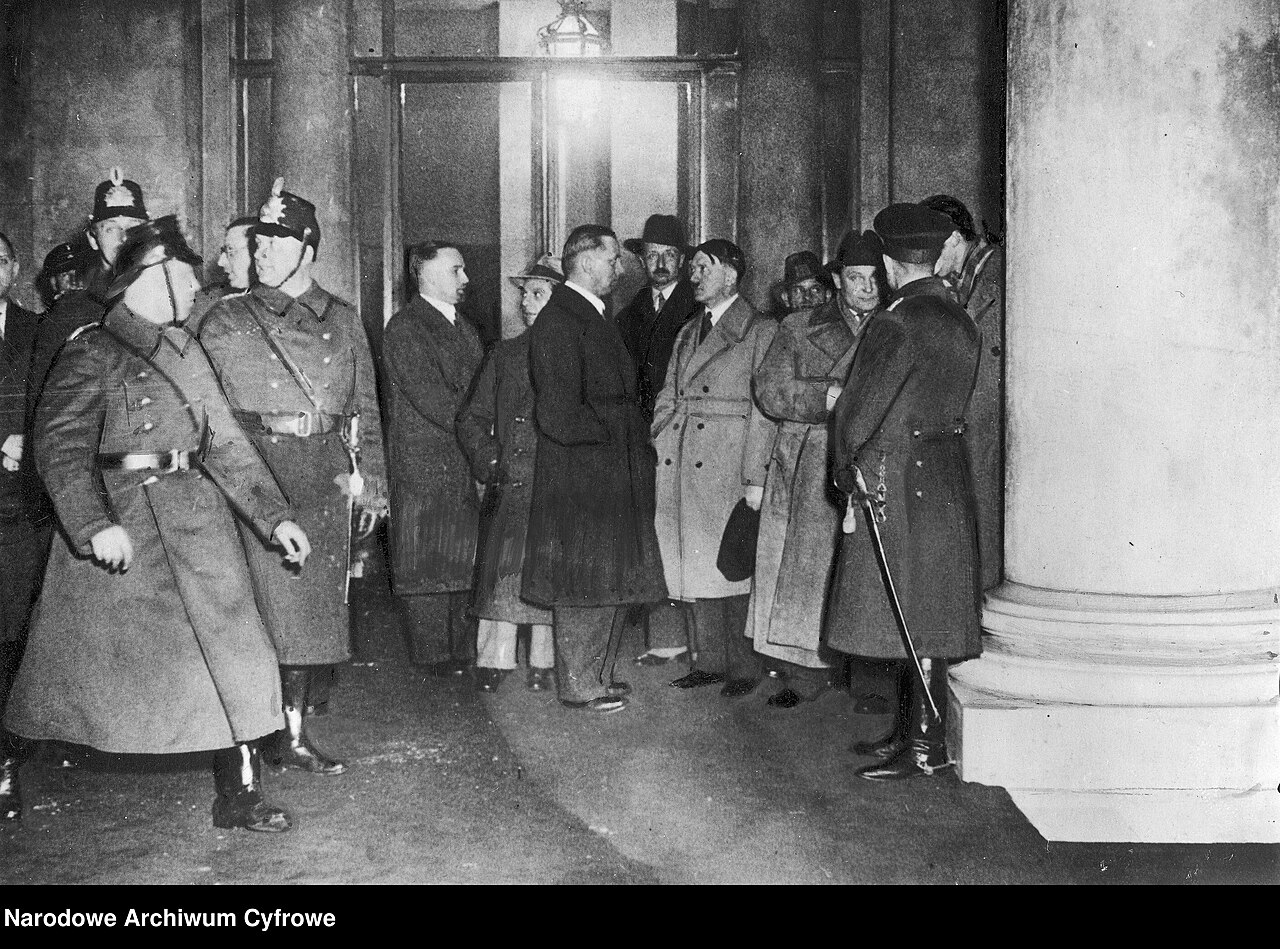
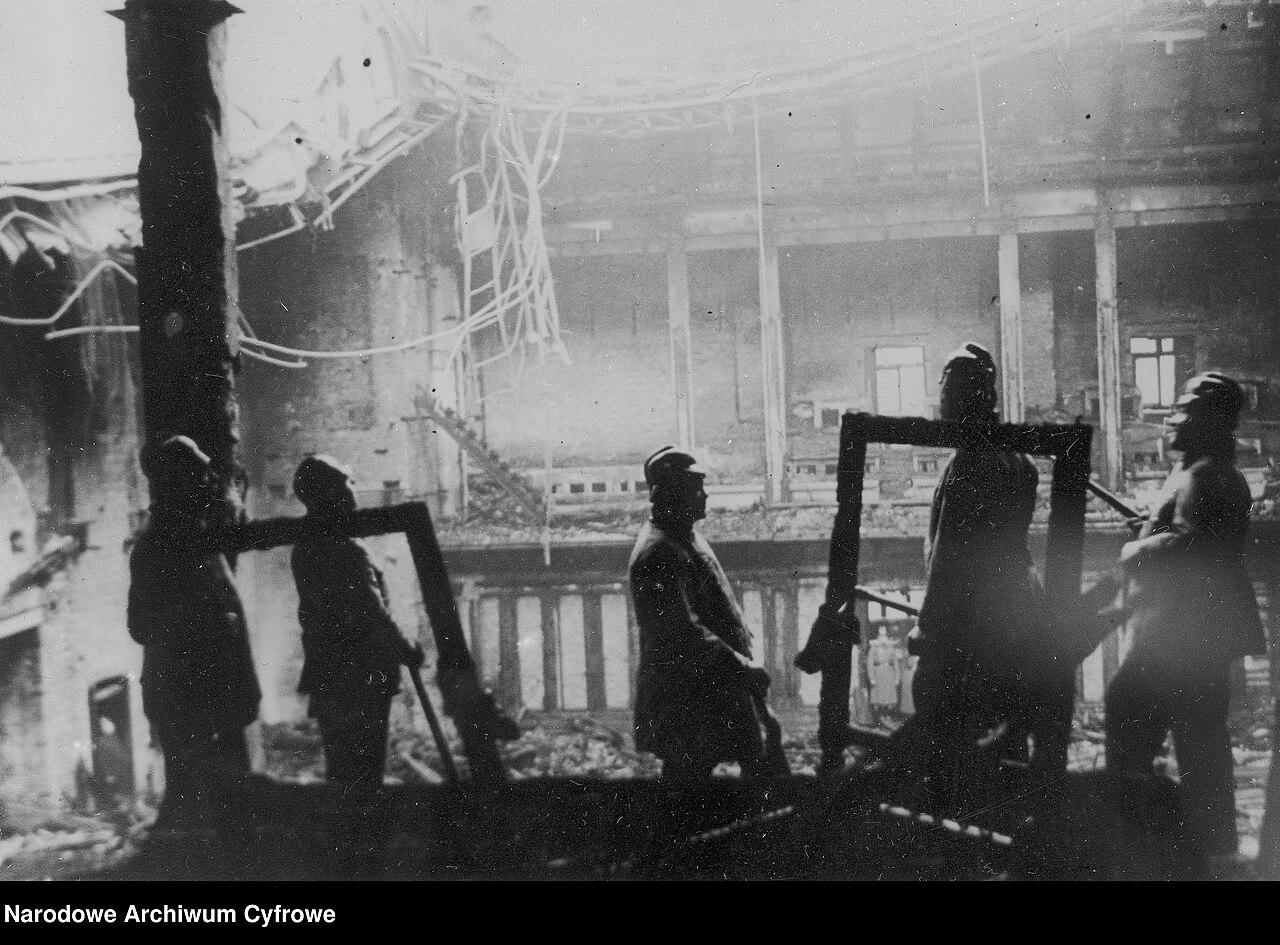
Press photograph by an unidentified photographer, distributed through a news age · Public domain
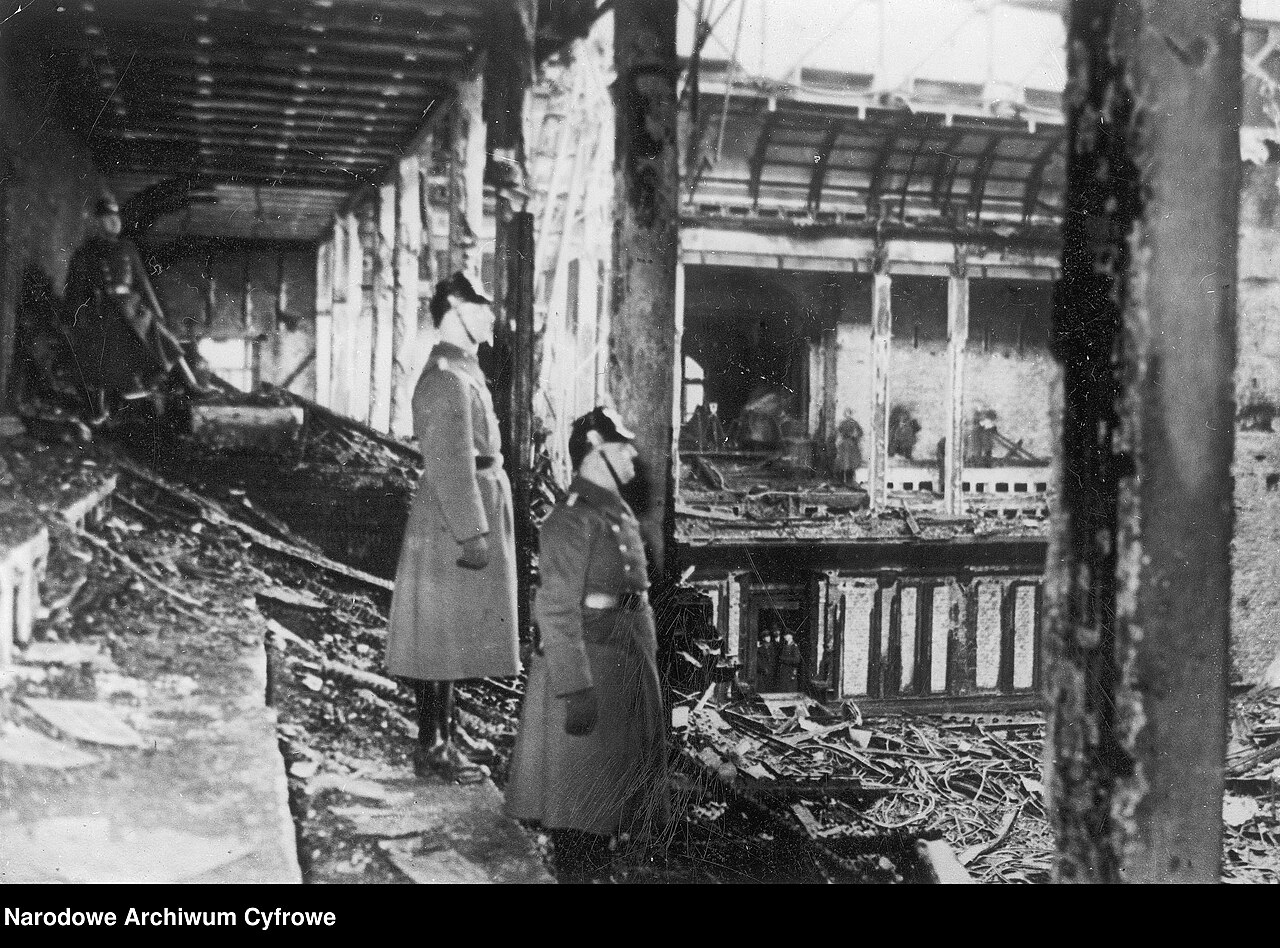
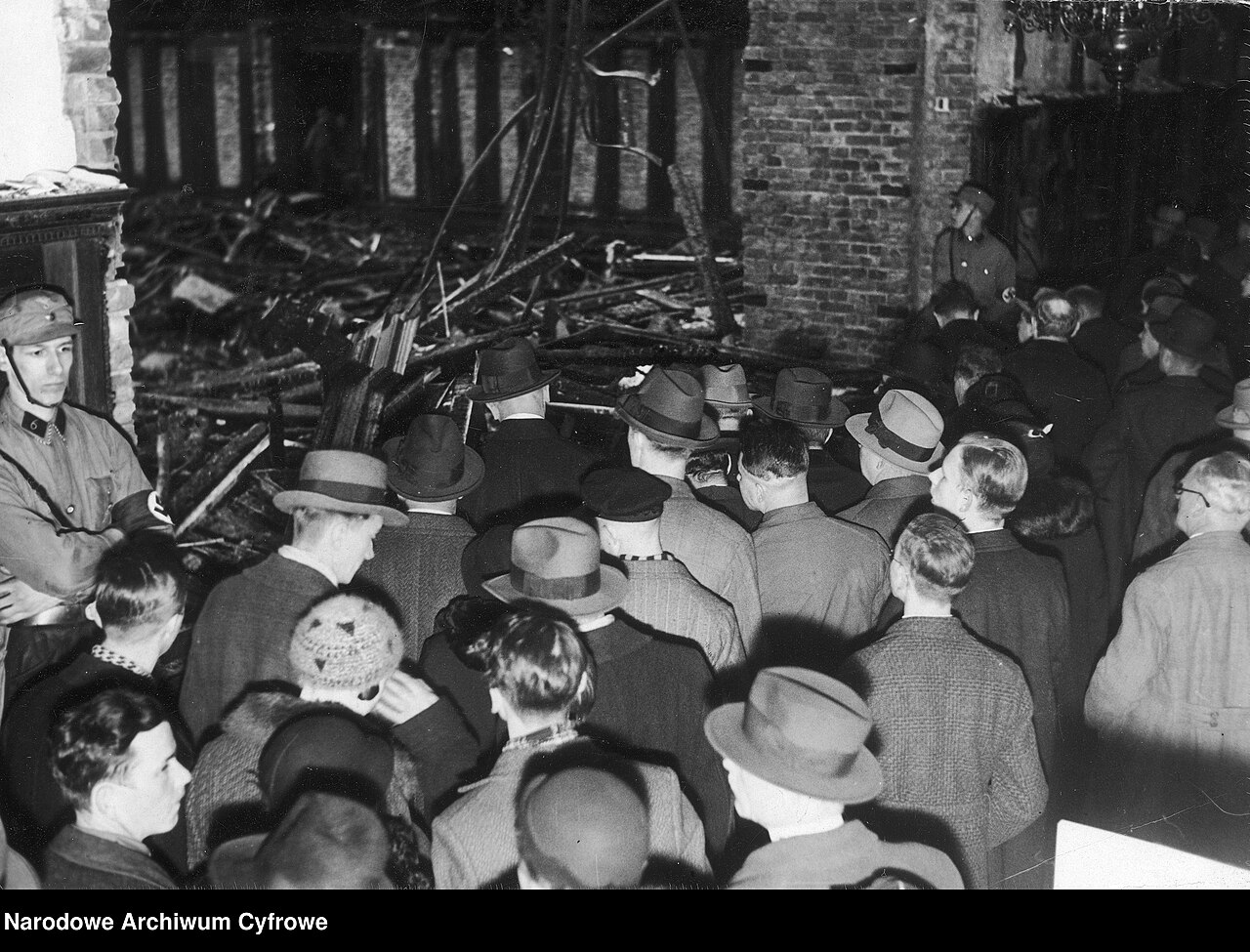
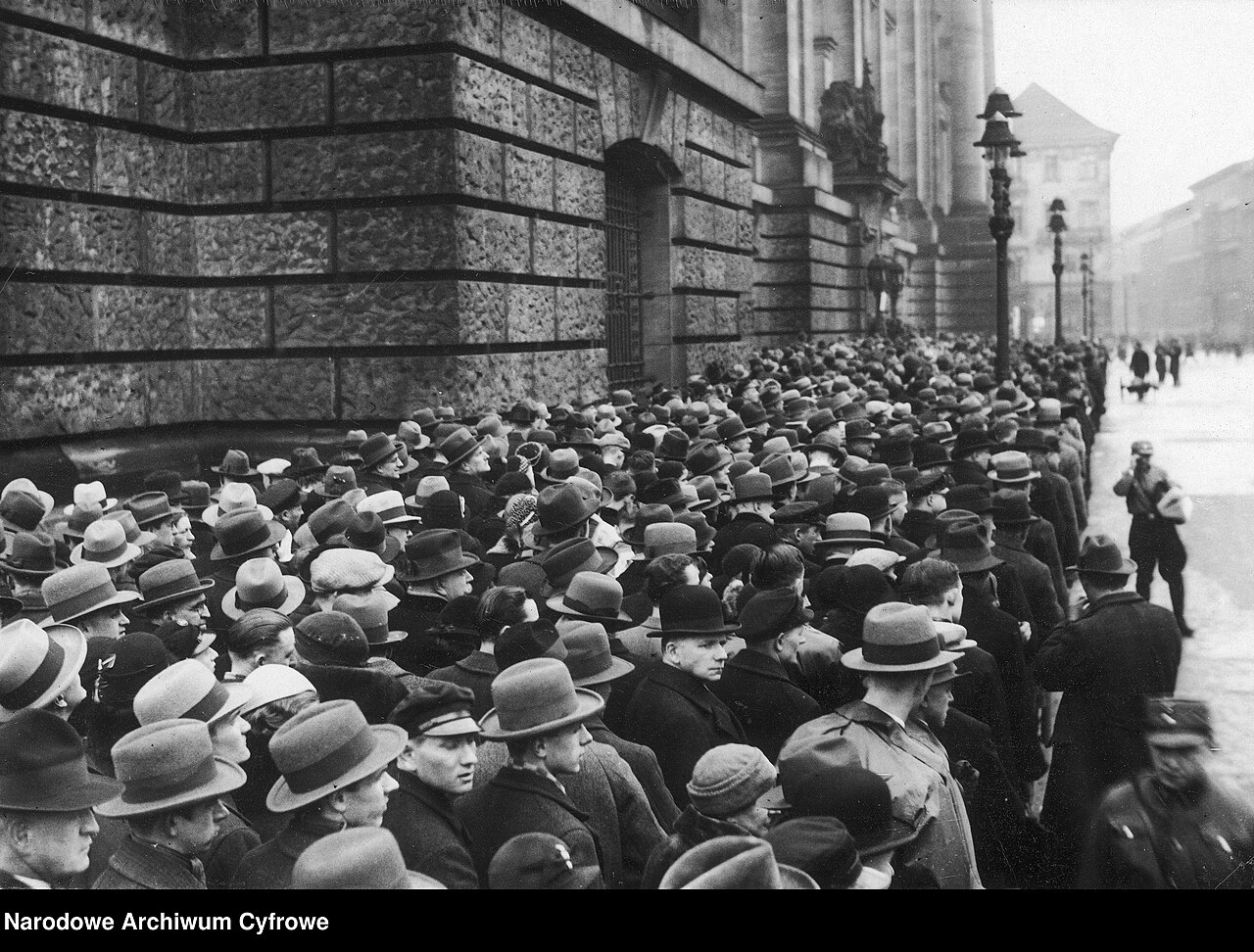
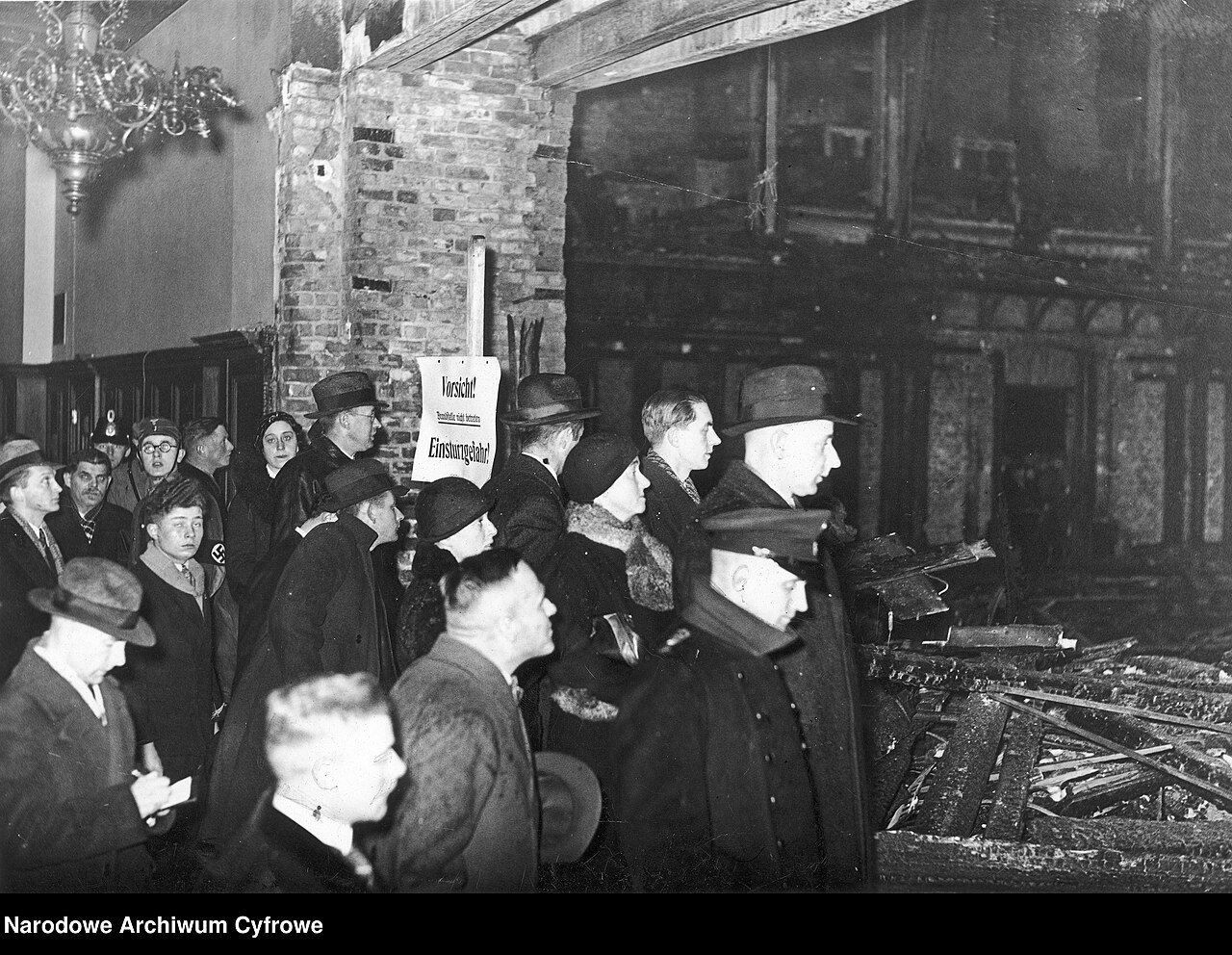
On the evening of Monday, 27 February 1933, the Reichstag building in Berlin—where the German parliament met—was deliberately set on fire. This happened exactly four weeks after Adolf Hitler became Chancellor. The Nazis blamed communist agitators for the blaze, using it as an excuse to claim that Communists were plotting against the government. They pressured President Paul von Hindenburg to sign the Reichstag Fire Decree, which suspended civil liberties and called for a "ruthless confrontation" with Communists. This event was crucial in helping the Nazis consolidate power.
The first alarm reached a Berlin fire station just after 9:00 p.m. When police and firefighters arrived, the building was already in flames. During a thorough search inside, they found and arrested Marinus van der Lubbe, a Dutch council communist.
After the decree was issued, the police—now under Nazi control—arrested masses of Communists, including all Communist Reichstag delegates. This crippled Communist participation in the 5 March elections. Without the Communists, the Nazis expanded their plurality in the Reichstag, which greatly aided their seizure of total power. On 9 March, Prussian police arrested three Bulgarians: Georgi Dimitrov, Vasil Tanev, and Blagoy Popov. They were known Comintern operatives, though the police did not yet know that Dimitrov headed all Comintern operations in Western Europe. Ernst Torgler, chairman of the Communist Reichstag faction, had surrendered to police on 28 February.
Van der Lubbe and the four Communists stood trial starting in September 1933. The court acquitted the four Communists but convicted van der Lubbe, who was executed. In 2008, Germany posthumously pardoned van der Lubbe under a 1998 law meant to overturn unjust Nazi-era verdicts.
Responsibility for the fire remains debated. Although van der Lubbe was found guilty, it is unclear if he acted alone. Most historians agree he set the fire; some believe it was part of a Nazi plot, a view historian Richard J. Evans calls a conspiracy theory.
**Prelude** After the November 1932 federal election, the Nazis held a plurality, not a majority, while Communists gained seats. Hitler became Chancellor on 30 January 1933, heading a coalition. He asked President Hindenburg to dissolve the Reichstag and call new elections for 5 March.
Quick Facts
- Native Name
- Reichstagsbrand
- Participants
- Marinus van der Lubbe (Disputed)
- Location
- Reichstag building, Berlin, Germany
- Date
- 1933-02-27
- Outcome
- Reichstag Fire Decree enacted / Van der Lubbe executed / Civil liberties suspended / Nazi control of government entrenched
Facts from the source article.
Lore & Background
Shortly after 9:00 p.m. on 27 February 1933, a Berlin fire station received an alarm call. By the time police and firefighters arrived, the Reichstag building was engulfed in flames. Inside, police found Marinus van der Lubbe, a Dutch council communist, who was arrested. The Nazis attributed the fire to a group of Communist agitators, and Hitler called it a 'sign from God' and a signal for a communist revolt. The next day, President Paul von Hindenburg issued the Reichstag Fire Decree, suspending habeas corpus, freedom of expression, press, assembly, and postal secrecy.
Reader's Guide
The Reichstag fire was a turning point in the Nazi consolidation of power. The decree allowed the police—now controlled by the Nazi Party—to arrest thousands of communists, including all communist Reichstag delegates, crippling their participation in the 5 March 1933 elections. The absence of communists helped the Nazis expand their plurality and, with the support of the German National People's Party, achieve a majority. This paved the way for the Enabling Act, passed on 23 March 1933, which gave Hitler dictatorial powers. The fire's responsibility remains debated: historians generally agree van der Lubbe set the blaze, but some view it as part of a Nazi plot, a view Richard J. Evans labels a conspiracy theory. The trial ended with van der Lubbe's conviction and execution; the four communist defendants were acquitted. In 2008, Germany posthumously pardoned van der Lubbe under a 1998 law lifting unjust Nazi-era verdicts.
Did You Know?
- The fire occurred precisely four weeks after Adolf Hitler was sworn in as Chancellor.
- Walter Gempp, head of the Berlin fire department, was dismissed for presenting evidence suggesting Nazi involvement; he was later strangled and killed in prison in 1939.
- The Kroll Opera House served as the Reichstag's venue for the remaining 12 years of the Third Reich.
- In 2008, Germany posthumously pardoned Marinus van der Lubbe under a 1998 law.
The Seeds of Conflict: From Versailles to Dictatorship
The European catastrophe of the 1940s did not emerge from a vacuum. The 1919 Treaty of Versailles imposed punitive conditions on a defeated Germany—loss of Alsace-Lorraine, temporary cession of the Saarland, strict military caps, and heavy reparation payments—while also designating the Rhineland as a demilitarized zone. Though historians debate whether these terms were genuinely harsh or comparatively restrained relative to other post-war settlements, many Germans at the time blamed the treaty for their nation's economic collapse. That resentment, compounded by the worldwide Great Depression beginning in 1929, created the political instability that allowed Adolf Hitler and the Nazi Party to seize power in 1933. The February 1933 Reichstag fire gave the new regime a pretext to pass a decree that dismantled freedom of speech, assembly, and press, legalized surveillance, and suspended state autonomy. Communist politicians were rounded up, and by 1934's Night of the Long Knives purge of the SA leadership, Hitler had consolidated an absolute dictatorship. Across the border, Mussolini had similarly transformed Italy into a one-party fascist state after seizing Rome in 1922, outlawing free press, trade unions, and political opposition.
The War Ignites: Expansion and Globalization (1939–1941)
Hitler's annexation of Austria and portions of Czechoslovakia in 1938, driven partly by the Nazi ideology of securing living space for the Aryan race, signaled an aggressive expansion that the international community failed to check. On 1 September 1939, Germany invaded Poland, and within days France and Britain declared war—yet neither was prepared for active combat. The Soviet Union, bound to Germany by a non-aggression pact, simultaneously invaded eastern Poland, and the country was partitioned between the two powers. The following year saw a rapid German sweep through Norway, Denmark, France, the Netherlands, Belgium, and Luxembourg, alongside Italy's invasion of Greece and the aerial bombardments of the Battle of Britain and the Blitz against the United Kingdom under Winston Churchill. In 1941, the conflict widened dramatically: Germany struck Yugoslavia and Greece, then launched its invasion of the Soviet Union, drawing Stalin's vast nation into the Allied camp. Later that same year, Germany declared war on the United States, pulling Franklin D. Roosevelt's country into the fight and transforming a European war into a truly global one.
The Tide Turns: Stalingrad to Liberation (1942–1945)
The momentum of the war shifted decisively in 1942 and 1943. The Soviet forces, under enormous pressure, halted the German advance at the Battle of Stalingrad, while Allied bombers systematically targeted German industrial capacity. That same year, the Allies launched their invasion of Italy, which ultimately toppled Mussolini's regime—though Axis-loyal German and Italian forces continued resisting. The final phase unfolded with extraordinary speed in 1944 and 1945. The Allies liberated Rome, then executed the Normandy landings in northern France, opening a Western front against German-occupied Europe. Simultaneously, the Soviets unleashed a massive counteroffensive sweeping through Eastern Europe. Both campaigns proved successful. The concentration camps that had been the instruments of the Holocaust—a genocide that claimed six million Jewish lives—were finally liberated, and Soviet forces closed in on Berlin. In April 1945, Mussolini was hanged, Roosevelt died of failing health and was succeeded by Harry S. Truman, and Hitler took his own life as Berlin was encircled. Germany's unconditional surrender came on 8 May, now marked as Victory in Europe Day, with fighting in some regions lasting until 25 May.
Aftermath: Justice, Occupation, and the Cold War
The European theatre, which claimed at least 39 million lives, left a continent shattered and a new geopolitical order in its wake. In the immediate aftermath, the Allies occupied much of Europe, working to restore pre-war governments or establish new ones, and funding a broad economic recovery. German military leaders faced prosecution at the Nuremberg trials, a landmark effort to hold individuals accountable for wartime crimes. The Berlin Declaration, signed on 5 June 1945, formally proclaimed Germany's unconditional surrender to the Allied powers. Yet the postwar settlement carried its own tensions. Western Europe coalesced into a bloc of capitalist governments, while Eastern Europe fell under communist control—a division that marked the opening of the Cold War among the very nations that had fought together. The Allied powers, which for most of the conflict had included the United Kingdom, the United States, the Soviet Union, and France, now found themselves on opposing sides. The war's legacy was not merely one of liberation but of a profound and lasting realignment of power across the continent.
Gallery
Frequently Asked Questions
Who set the Reichstag fire?
Dutch communist Marinus van der Lubbe was convicted of deliberately starting the blaze inside the German parliament building. He faced the Leipzig Trial in late 1933 and was ultimately executed.
When and where did the Reichstag fire take place?
The arson occurred on the evening of 27 February 1933 inside the Reichstag building in Berlin, Germany. This was just four weeks after Hitler had assumed the role of Chancellor.
Why was the Reichstag fire so important to the Nazi rise to power?
The Nazis exploited the incident to claim a communist uprising was underway, giving them a pretext to push President Hindenburg into signing the Reichstag Fire Decree. That decree stripped away key civil liberties and cleared the path for the party to consolidate total control.
What was the Reichstag Fire Decree?
It was an emergency order signed by President Paul von Hindenburg that suspended fundamental civil rights such as free speech and assembly. The Nazis used it to justify mass arrests of political opponents, particularly Communists, and to dismantle democratic institutions.
Did the Nazis actually commit the Reichstag fire themselves?
The historical record confirms that Marinus van der Lubbe was the individual who started the fire, though the broader question of whether higher-level Nazis orchestrated or exploited the event remains debated. What is clear is that the party seized on the incident as a political tool to accelerate their grab for power.
More in World War Ii Topics 1-17
Spotted an error? Know more?
Reader corrections go straight into our review queue. Suggest an edit · How this site is sourced