Wolves in heraldry
The wolf as a heraldic symbol of nobility and perseverance.
In medieval heraldry, the wolf was a common charge and supporter, appearing on the arms and crests of many noble families. Though often reviled as a predator of livestock and a man-eater, it was also regarded as a noble and courageous animal. The wolf typically symbolized the rewards of perseverance in long sieges or hard industry.
Quick Facts
- Canting names
- Videlou
- de Lou
- Lupus
- Wolferston
- Wolseley
- Lovett
- Low
- Lovell
- Lupton
- Wolfe
- Louth town council coat
- wolf rampant
- Peter john crabtree crest
- demi wolf
- James thomas flood coat
- wolf heads
- Municipality of greenstone supporters
- wolves
Facts from the source article.
History
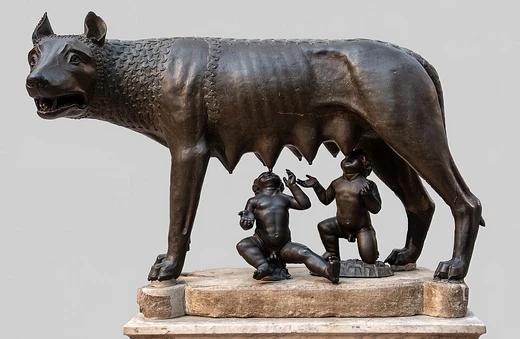
Wolves appear frequently in English heraldry, serving both as a charge and as a supporter. In Scottish heraldry, depictions of wolves' heads without the rest of the body are particularly common. Early heraldic representations of wolves can be ambiguous in appearance, sometimes confused with other creatures such as lynxes and foxes. Edward IV used a white wolf for one of his badges, alongside a white lion, to denote his descent from the House of Mortimer. The wolf or its head is often employed for canting on names including Videlou, de Lou, Lupus, Wolferston, Wolseley, Lovett, Low, Lovell, Lupton, and Wolfe. Specific examples include a wolf rampant in the coat of Louth Town Council in England, a demi wolf in the crest of Peter John Crabtree of Canada, a demi and winged wolf in the crest of Walter William Roy Bradford of Canada, wolf heads in the coat of James Thomas Flood of Canada, wolves as supporters in the bearings of the Corporation of the Municipality of Greenstone, Ontario, and a wolf in the Salish style in the coat of the Village of Belcarra, British Columbia. Wolves also feature prominently in continental European heraldry. In Spanish heraldry, wolves are often shown carrying the bodies of lambs in their mouths or across their backs, a pose referred to as ravissant. German heraldry commonly includes wolves: the town of Passau in Bavaria bears a red wolf rampant on a white shield; in Saxony, a black wolf rampant on a yellow shield appears on the crest of the von Wolfersdorf family; and a green wolf grasping a dead swan in its jaws on a yellow shield is depicted on the crest and arms of the Counts von Brandenstein-Zeppelin. In Italian heraldry, the attributed arms of Romulus and Remus were said to depict the Capitoline Wolf. An undated Milanese badge shows a lamb lying on its back with a wolf standing over it. In French heraldry, the Wolfcatcher Royal had as his official insignia two wolf heads facing frontally.
More in Wolves in Folklore, Religion and Mythology
Spotted an error? Know more?
Reader corrections go straight into our review queue. Suggest an edit · How this site is sourced