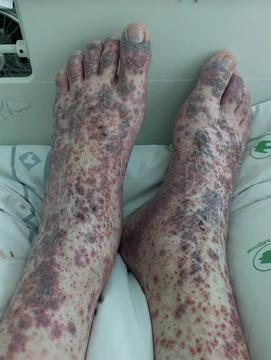
Phlebitis
Inflammation of a vein, usually in the legs.

Phlebitis, also known as venitis, is inflammation of a vein, most commonly occurring in the legs and in superficial veins. It often occurs together with thrombosis, a condition called thrombophlebitis or superficial thrombophlebitis, which has a very low probability of causing a clot to travel to the lungs, unlike deep vein thrombosis.
Quick Facts
- Diseasesdb
- 13043
Facts from the source article.
Lore & Background
Phlebitis is typically caused by local trauma to a vein, most often from the insertion of an intravenous catheter. It can also occur as a complication of connective tissue disorders such as lupus, or of pancreatic, breast, or ovarian cancers. Certain medications and drugs that irritate the veins, such as desomorphine, can also cause phlebitis. Superficial phlebitis often presents as an early sign in thromboangiitis obliterans (Buerger's disease), a vasculitis associated with cigarette smoking.
Reader's Guide
Phlebitis is a common medical condition characterized by inflammation of a vein, usually in the legs and most often in superficial veins. Its significance lies in its frequent association with intravenous therapy and its potential to indicate underlying disorders such as connective tissue diseases or cancers. The condition is distinct from deep vein thrombosis in that the risk of a clot breaking loose and traveling to the lungs is very low. Management typically involves NSAIDs like ibuprofen and local compression, with antibiotics used if bacterial infection is present. For acute infusion superficial thrombophlebitis, evidence as of 2015 was insufficient to determine definitive treatment. The condition's recognition is important for appropriate clinical management and for identifying possible serious underlying causes.
Did You Know?
- Phlebitis most commonly occurs in superficial veins of the legs.
- When phlebitis occurs with thrombosis, it is called thrombophlebitis or superficial thrombophlebitis.
- Superficial phlebitis often presents as an early sign in Buerger's disease, which is associated with cigarette smoking.
More in Vasculitis 1-24
Spotted an error? Know more?
Reader corrections go straight into our review queue. Suggest an edit · How this site is sourced