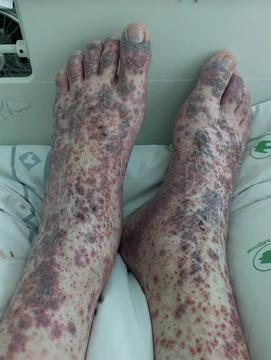
Kawasaki disease
Japanese pediatrician who first described Kawasaki disease in 1967.

Kawasaki disease, also called mucocutaneous lymph node syndrome, is a condition with no known cause that brings on a fever and mostly strikes children under five. It’s a type of vasculitis, meaning medium-sized blood vessels throughout the body become inflamed. In developed countries, it’s the top reason kids acquire heart disease, which can involve coronary artery aneurysms and myocarditis.
The fever usually lasts more than five days and doesn’t respond to antipyretics. Other common signs include swollen lymph nodes in the neck, a rash in the genital area or on the lips, palms, or soles, and red eyes. Within three weeks of the fever starting, the skin on the hands and feet may peel, and then recovery typically follows. The exact cause isn’t known, but it’s thought to come from an overactive immune response to certain infections in kids who are genetically prone to them. It’s not infectious—it doesn’t spread between people. Diagnosis is usually based on symptoms, though heart ultrasounds and blood tests can help confirm it. Doctors must rule out other conditions with similar features, like scarlet fever and juvenile rheumatoid arthritis. Multisystem inflammatory syndrome in children, a “Kawasaki-like” illness tied to COVID-19, seems to have distinct traits. Measles can also start with the same symptoms, such as red eyes, persistent fever, and swollen hands or feet, but Kawasaki disease doesn’t spread like measles does.
Initial treatment typically involves high doses of aspirin and immunoglobulin. With treatment, the fever usually goes away within 24 hours, and full recovery is common. If the coronary arteries are affected, ongoing treatment or surgery may be needed occasionally. Without treatment, coronary artery aneurysms occur in up to 25% of cases, and about 1% die. With treatment, the risk of death drops to 0.17%. People who develop coronary artery aneurysms after Kawasaki disease need lifelong monitoring by heart specialists.
Kawasaki disease is rare, affecting 8 to 67 per 100,000 people under five, except in Japan, where it affects 124 per 100,000. It’s more common in children assigned male at birth than those assigned female. The disorder is named after Japanese pediatrician Tomisaku Kawasaki, who first described it in 1967.
The illness often starts with a high, persistent fever that doesn’t respond well to paracetamol or ibuprofen.
Quick Facts
- Field
- Pediatrics, Rheumatology, Immunology
- Symptoms
- Fever > 5 days, large lymph nodes, rash, sore throat, diarrhea
- Complications
- Coronary artery aneurysms
- Onset
- < 5 years old
- Duration
- ~ 3 weeks
- Causes
- Unknown
- Risks
- Age of < 5 years old, genetics
- Diagnosis
- Based on symptoms, ultrasound of the heart
- Differential
- Scarlet fever, juvenile rheumatoid arthritis, paediatric multisystem inflammatory syndrome
- Medication
- Oral Aspirin and intravenous immunoglobulin
- Prognosis
- Mortality 0.17% with treatment
- Frequency
- 8–124 per 100,000 people under five in Japan, 8-67 per 100,000 in other countries
Facts from the source article.
Lore & Background
Kawasaki disease is named after Japanese pediatrician Tomisaku Kawasaki, who first described it in 1967. The disorder is rare, affecting between 8 and 67 per 100,000 people under the age of five except in Japan, where it affects 124 per 100,000. Children that are male at birth are more commonly affected than children that are female at birth.
Reader's Guide
Kawasaki disease is significant as the leading cause of acquired heart disease in children in developed countries. While the specific cause is unknown, it is thought to result from an excessive immune response to particular infections in children who are genetically predisposed. It is not an infectious disease and does not spread between people. Diagnosis is usually based on signs and symptoms, and other tests such as an ultrasound of the heart and blood tests may support the diagnosis. Without treatment, coronary artery aneurysms occur in up to 25% and about 1% die; with treatment, the risk of death is reduced to 0.17%. People who have had coronary artery aneurysms after Kawasaki disease require lifelong cardiological monitoring.
Did You Know?
- Kawasaki disease is also known as mucocutaneous lymph node syndrome.
- The fever typically lasts for more than five days and is not affected by antipyretics.
- Within three weeks of onset, the skin from the hands and feet may peel, after which recovery typically occurs.
- Multisystem inflammatory syndrome in children is a 'Kawasaki-like' disease associated with COVID-19 but appears to have distinct features.
Frequently Asked Questions
Who is Kawasaki disease?
Kawasaki disease, also called mucocutaneous lymph node syndrome, is an inflammatory condition targeting medium-sized blood vessels that predominantly hits children under five. It carries the name of Japanese pediatrician Tomisaku Kawasaki, who first formally described the syndrome in 1967.
What is Kawasaki disease known for?
The condition unleashes a stubborn fever that typically persists beyond five days and shrugs off standard antipyretics. Its signature moves include swollen cervical lymph nodes, a rash on the lips, palms, soles, or genital area, and inflammation of coronary arteries that can progress to aneurysms.
Why is Kawasaki disease important?
It ranks as the number-one acquired cause of pediatric heart disease in high-income countries, which is why rapid recognition and treatment are so critical. Its exact trigger remains unidentified, keeping it a major focus of ongoing pediatric research.
What's Kawasaki disease's origin story?
Japanese pediatrician Tomisaku Kawasaki identified a distinctive cluster of febrile, rashy children with swollen neck nodes in 1967 and published the first formal description. The syndrome has since been recognized globally and is classified within the vasculitis family.
More in Vasculitis 1-24
Spotted an error? Know more?
Reader corrections go straight into our review queue. Suggest an edit · How this site is sourced